The Best Way to Clean Silver Jewelry at Home
Discover the best way to clean silver jewelry with our expert UK guide. Learn safe DIY methods, pro tips, and how to keep your pieces shining.
The simplest ways to clean your silver often use things you already have in the kitchen. For a light touch-up, a gentle wash with warm water and some phosphate-free washing up liquid does the trick. For more stubborn tarnish, a paste of baking soda and water or the classic aluminium foil and baking soda bath can work wonders without being too harsh on the metal itself.
Why Your Favourite Silver Jewellery Tarnishes
Ever noticed that sterling silver necklace you love slowly losing its brilliant shine? It starts to look a bit cloudy, then develops a dark layer. This isn't a sign that your jewellery is poor quality or ruined—far from it. It's a completely natural and expected chemical reaction.
Understanding what’s happening is the first step to keeping your silver looking its best. The dulling effect is caused by tarnish, which is just a thin layer of corrosion. Sterling silver is 92.5% pure silver, but the other 7.5% is usually copper, added for strength. It's this alloy that reacts with sulphur compounds in the air, creating silver sulphide—the dark stuff that hides your jewellery's sparkle.
Common Causes of Tarnish
Think of it this way: your silver is in a constant conversation with its environment. Certain everyday things speed up that conversation, leading to tarnish. You might be surprised by what’s contributing to the build-up.
Key things that accelerate tarnish include:
- Humidity and Moisture: Water creates the perfect environment for the chemical reaction to speed up, especially when it’s warm. This is why keeping your jewellery in a steamy bathroom is one of the worst things you can do.
- Contact with Your Skin: The natural oils and sweat on our skin contain traces of sulphur and have a unique pH, both of which contribute to tarnishing over time.
- Cosmetics and Perfumes: Lotions, hairsprays, and makeup are full of chemicals that react with silver. A good rule of thumb is to make putting on your jewellery the very last step of your getting-ready routine.
- Household Chemicals: Things like chlorine bleach, ammonia, and even some cleaning sprays are incredibly harsh on silver and can cause significant, almost instant, discolouration.
The most important thing to remember is that tarnish isn't permanent. Unlike rust, which eats away at iron, tarnish just sits on the surface. With the right cleaning method, you can lift it right off and reveal the pristine metal underneath.
The Role of Sulphur in Everyday Life
Sulphur isn't some rare chemical; it's all around us. It’s in foods like eggs, onions, and mayonnaise. Even the wool jumper you’re wearing or the latex gloves you might use for cleaning can release sulphur and speed up tarnishing.
Once you’re mindful of these interactions, you can build better habits. Simply taking off your rings before prepping food or cleaning the house can make a huge difference, dramatically cutting down on how often you need to do a deep clean. This kind of preventative care is the real secret to long-term shine. Understanding the 'why' helps you choose the best way to clean silver jewellery for your specific piece.
Gentle And Effective At-Home Cleaning Methods
You don’t need an arsenal of harsh chemicals to bring back the shine to your beloved silver. In my experience, the best way to clean silver jewellery often involves simple, gentle ingredients you already have in your kitchen cupboards. These at-home methods are not only budget-friendly but, when done correctly, are perfectly safe for your precious items.
Before you start any deep clean, it’s helpful to understand what causes tarnish in the first place. This decision tree shows how everyday exposure to air, your skin, and various chemicals is the real culprit.
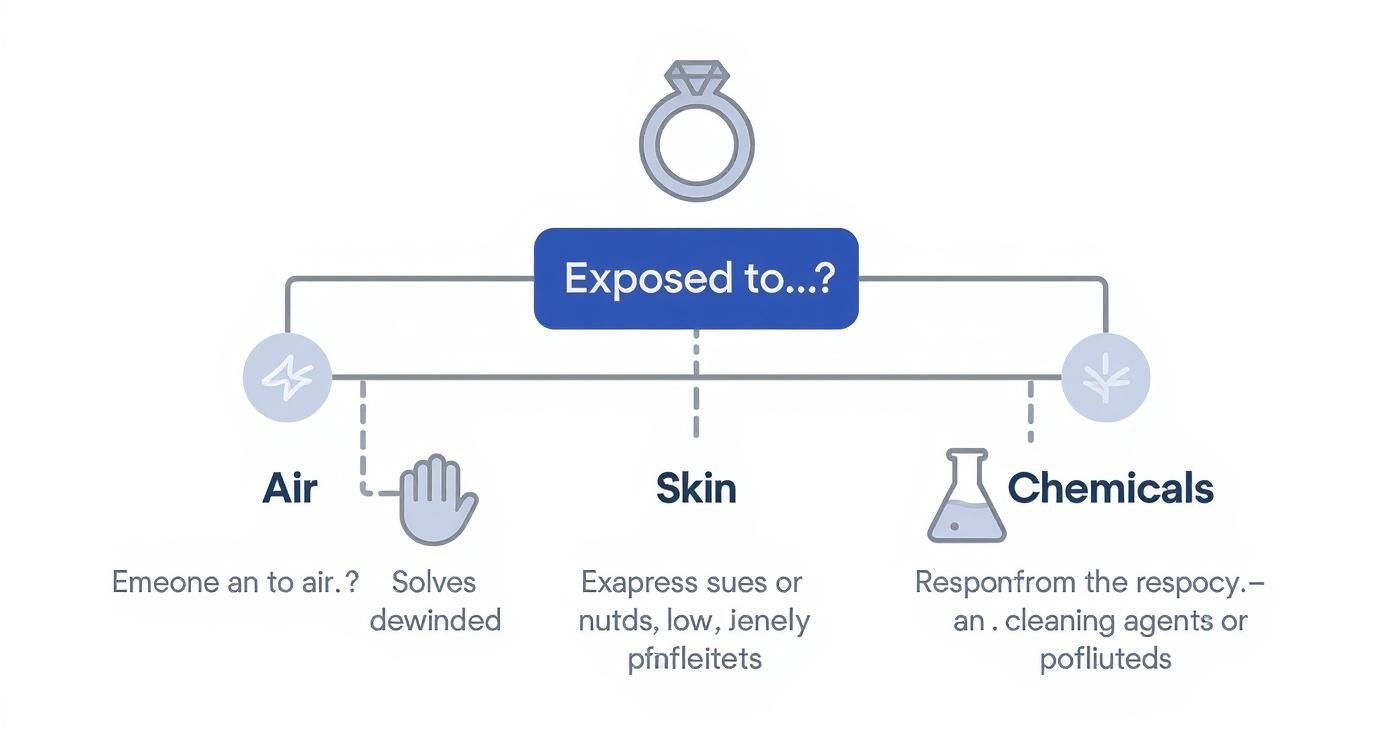
As you can see, tarnish is just a natural reaction to the environment. That’s why regular, gentle cleaning is such a crucial part of looking after your collection.
The Gentle Soap And Water Bath
For light, everyday grime—think fingerprints, dust, or a subtle dullness—your first line of defence should always be the mildest. A simple soap and water bath is perfect for routine upkeep and helps stop significant tarnish from building up.
This is the ideal method for pieces you wear often, like a simple chain or a pair of stud earrings. Just add a few drops of phosphate-free washing-up liquid to a bowl of warm (never hot) water. Let your jewellery soak for a few minutes, then use a soft-bristled baby toothbrush to gently clean any nooks and crannies.
After cleaning, rinse each item thoroughly under cool running water. And this part is critical: dry them completely with a soft, lint-free cloth. A microfibre or designated jewellery cloth works best. Trapped moisture is the number one cause of new tarnish, so making sure your pieces are bone dry is a vital final step. These principles apply to most jewellery; you can find more specific advice in our guide on how to clean rings at home.
The Baking Soda And Water Paste
When you're dealing with more noticeable tarnish spots but don't quite need a full deep-clean, a simple paste can work wonders. This technique gives you targeted control, making it excellent for jewellery with both polished and detailed areas.
To make it, mix two parts baking soda with one part water until it has the consistency of thick toothpaste. Apply a small amount of this paste directly to the tarnished areas using a soft cloth or your fingers, rubbing gently in a circular motion.
Don’t scrub too aggressively, as baking soda is a mild abrasive. Once you’ve worked on the spots, rinse the piece well with cool water and dry it meticulously. I find this method is particularly effective on solid, sturdy pieces like bangles or rings that don't have delicate filigree.
Comparing Popular At-Home Silver Cleaning Methods
Choosing the right DIY method can feel overwhelming. This quick-reference table is designed to help you decide which approach best suits your jewellery's needs based on tarnish level, complexity, and the materials you have on hand.
| Method | Best For | Tarnish Level | Required Materials | Caution |
|---|---|---|---|---|
| Soap & Water Bath | Routine cleaning, light grime | Mild / Early Stage | Warm water, mild washing-up liquid, soft brush, lint-free cloth | Avoid on porous stones like pearls or opals. Ensure pieces are 100% dry. |
| Baking Soda Paste | Targeted spot removal | Moderate | Baking soda, water, soft cloth | Use gentle pressure to avoid micro-scratches. Not for plated items. |
| Foil & Baking Soda Soak | Heavily tarnished items, intricate designs | Heavy / Widespread | Aluminium foil, baking soda, salt, hot water, non-metallic bowl | DO NOT use on pieces with gemstones or oxidised/blackened finishes. |
Think of this table as a starting point. Always begin with the gentlest method first and only move to a stronger one if necessary.
The Electrochemical Cleaning Method
For more significant, widespread tarnish, there's a popular and surprisingly scientific method that feels a bit like a magic trick. This is often the best way to clean silver jewellery when it's heavily discoloured because it actually reverses the chemical reaction that causes tarnish.
Line a bowl with aluminium foil (shiny side up), add one tablespoon each of baking soda and salt, and pour in hot water until the bowl is about half full. Submerge your silver items for 2 to 5 minutes. You’ll see the tarnish lift right off. This process creates an electrochemical reaction that pulls the tarnish away from your silver without any harsh scrubbing.
After the soak, just rinse the jewellery with cool water and dry it completely with a soft cloth to prevent scratching.
Why does this work? The tarnish on your silver is actually silver sulphide. The hot water, salt, and baking soda solution acts as an electrolyte, creating a tiny 'battery' with the aluminium foil. This process transfers the sulphur atoms from your jewellery onto the foil, leaving your silver bright and clean without removing any of the precious metal itself.
This method is fantastic for intricate pieces like detailed chains or filigree designs, as the solution gets into all the tiny spaces a cloth can't reach. However, you must avoid this technique for any jewellery set with soft or porous gemstones (like turquoise, pearls, or opals) or pieces with an intentionally oxidised (darkened) finish, as it can ruin their appearance.
Navigating Commercial Silver Cleaning Products
While at-home remedies are a fantastic, budget-friendly way to tackle tarnish, sometimes you just need the targeted power of a product made for the job. Walking into that cleaning aisle can feel a bit daunting, though. You're faced with a wall of dips, creams, and cloths, all promising a mirror-like shine.
The secret isn't finding one "best" product, but knowing which one to reach for in the right situation. A polishing cloth is your best friend for a quick buff-up, while a chemical dip is the only way to get into the tiny crevices of a filigree piece. It’s about matching the tool to the task to avoid accidentally damaging your jewellery.
Polishing Cloths For Quick Touch-Ups
Think of a silver polishing cloth as your first line of defence against dullness. These two-in-one cloths are brilliant for routine maintenance and lifting light, fresh tarnish before it gets a real grip. One side is usually treated with a very fine, non-abrasive polishing compound, and the other is a simple, soft cloth for bringing up that final lustre.
They couldn't be simpler to use. Just gently rub the treated side over your jewellery in straight lines—never circles, as that can create fine swirl marks. You’ll see black residue appear on the cloth almost instantly; that’s the tarnish (silver sulphide) coming right off. A final once-over with the clean side is all it takes.
These cloths are perfect for:
- Routine maintenance: A quick wipe down after you take your jewellery off can stop tarnish from building up in the first place.
- Smooth surfaces: They work exceptionally well on simple rings, bangles, and flat pendants.
- Travel: They’re clean, dry, and easy to pack for an on-the-go polish.
A cloth has its limits, though. It’s not going to make a dent in heavily tarnished pieces, and it simply can’t reach into the nooks and crannies of detailed designs.
Chemical Dips For Intricate Designs
When you’re dealing with a complex chain or a delicate filigree bracelet, a cloth just won’t cut it. This is where a chemical silver dip shines. These liquid solutions are designed to dissolve tarnish on contact, cleaning every last recess without any need for scrubbing.
The process is fast: you submerge your jewellery for a very short time—often just 10-15 seconds—then pull it out, rinse it thoroughly under running water, and dry it completely. That speed is a huge plus, but it comes with some serious warnings.
Chemical dips are incredibly effective but also incredibly potent. They can be too aggressive for certain finishes and will instantly strip the beautiful, deliberate patina from oxidised silver. Most importantly, they must never be used on jewellery set with porous gemstones like pearls, turquoise, opals, or coral. The chemicals can cause permanent, irreversible damage.
Always read the instructions on the jar and use dips sparingly. They are a powerful tool for the right job, but they can be destructive if used incorrectly.
Polishing Creams And Foams For Deeper Cleaning
For those pieces with moderate to heavy tarnish that need more muscle than a cloth can offer, polishing creams and foams are an excellent middle ground. These products have mild abrasives suspended in a paste or liquid, giving you more cleaning power than a cloth but far more control than a dip.
You just apply a small amount with a soft cloth or sponge, gently working it onto the silver. The formula lifts the stubborn tarnish away. Afterwards, you must rinse the item completely to get rid of all the residue and dry it meticulously.
These are a solid choice for sturdy items that have been in storage and developed a stubborn layer of discolouration. But just like dips, you need to be cautious. Check the label to make sure the cream is non-abrasive and specifically made for sterling silver. I’d advise against using them on silver-plated items, as repeated polishing can eventually wear through that thin top layer. When in doubt, always start with the least aggressive method first—it's the best way to protect your treasured pieces.
Using an Ultrasonic Cleaner for a Deeper Clean
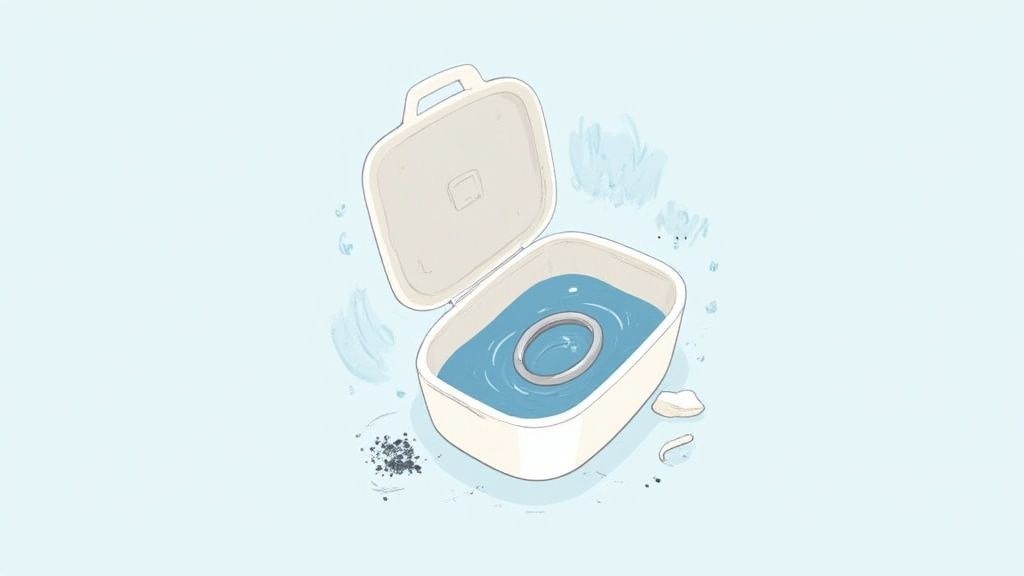
Sometimes, a simple cloth and polish just won’t cut it. For those pieces with intricate filigree, delicate chains, or hard-to-reach crevices, an ultrasonic cleaner is your best bet for getting back that original, dazzling shine. It’s the closest you can get to a professional-grade clean at home, lifting grime from places a brush could never hope to reach.
So, how does it work? An ultrasonic cleaner sends high-frequency sound waves through water, creating millions of microscopic bubbles. This process, called cavitation, produces a gentle but powerful scrubbing action that dislodges dirt, oils, and tarnish from every nook and cranny—all without harsh chemicals or abrasive rubbing. The results on a detailed charm bracelet or a finely worked pair of earrings can be stunning.
It's no surprise that these devices are becoming more popular. The global jewellery cleaner market is expected to reach about USD 638 million by 2025, with a big chunk of that growth coming from home-use machines like ultrasonic cleaners. For more on the numbers, you can check out recent jewellery care sector analyses.
Key Safety Considerations
While incredibly effective, ultrasonic cleaners aren't a magic bullet for every piece in your collection. The powerful vibrations can be too much for certain gemstones, especially those that are soft, porous, or have natural internal fractures (inclusions). Before you drop a treasured item inside, you need to be certain it can handle the process.
Expert Tip: If you're ever in doubt about a specific gemstone or a piece of antique jewellery, it is always safer to skip the ultrasonic cleaner. The risk of causing irreversible damage to a fragile or valuable stone is simply not worth it.
For a clearer picture, our experts have put together a simple guide on what to avoid. You can find even more detailed advice in our articles covering ultrasonic cleaning best practices.
Gemstones To Keep Out Of An Ultrasonic Cleaner
The vibrations from an ultrasonic cleaner can cause certain stones to crack, lose their lustre, or even fall out of their settings. As a rule of thumb, always avoid putting these in your machine:
- Porous Stones: Materials like pearls, opals, coral, turquoise, and amber can be damaged by the heat and cleaning solution. It can cause them to discolour or dry out.
- Treated Stones: Many gemstones, such as emeralds, are often fracture-filled with oil or resin to improve their clarity. The ultrasonic process can strip these fillings out, changing the stone's appearance for the worse.
- Organic Gems: Anything that comes from a living organism—pearls, ivory, amber—is far too soft and delicate for this method.
- "Soft" Gemstones: Stones that rank lower on the Mohs hardness scale, like lapis lazuli or malachite, can be easily chipped or dulled by the vibrations.
For any jewellery featuring these materials, sticking to a gentle soap-and-water wash is the safest approach. An ultrasonic cleaner is a fantastic tool for plain sterling silver or pieces set with hard stones like diamonds (as long as the settings are secure), but a little caution will ensure your entire collection stays beautiful and intact.
Cleaning Silver With Gemstones and Special Finishes
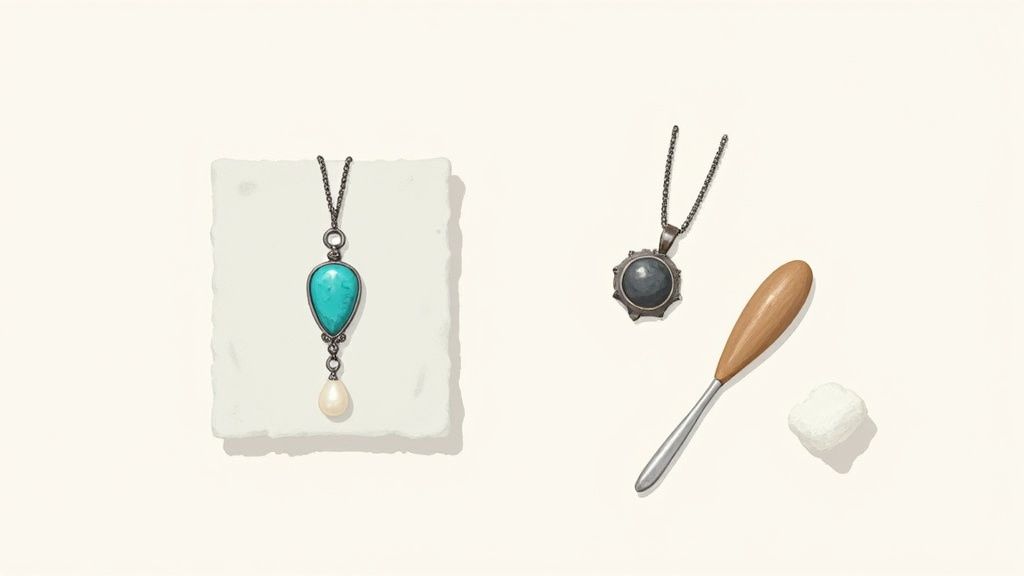
Not all silver is created equal. The moment you introduce gemstones, delicate pearls, or unique textures like an oxidised finish, the cleaning rules change entirely. A one-size-fits-all approach is a fast track to disappointment, risking irreversible damage to the very details that make your piece special.
A method that brings a plain silver chain back to life could permanently cloud a turquoise stone or strip the beautiful, intentional patina from a vintage-style ring. This is where a more measured, thoughtful strategy is essential.
Handling Jewellery With Porous Gemstones
Many of the most beloved gemstones are surprisingly porous. Think of them as tiny, beautiful sponges. Stones like pearls, coral, turquoise, opals, and amber can absorb liquids and chemicals, leading to discolouration or a dulling of their natural fire.
That’s exactly why they must never be submerged in chemical dips or even the at-home baking soda and foil bath. Harsh solutions seep into the stone, causing lasting damage from the inside out. Even soaking in plain water for too long can harm certain gems.
The best way forward is a targeted, gentle approach.
- Dampen a soft cloth: Use a lint-free cloth lightly dampened with a mix of mild, phosphate-free washing-up liquid and water.
- Focus on the silver: Carefully wipe the silver setting, making sure you don’t saturate the gemstone itself.
- Work around the stone: For tight spots right next to the gem, a soft, barely damp cotton bud is your best tool.
- Dry immediately: Pat the entire piece dry with another soft cloth as soon as you’re done. Moisture is the enemy here.
Remember, the goal is to clean the metal without compromising the stone. With these porous beauties, patience is far more valuable than power. A little extra care preserves their unique character for years to come.
The Special Case Of Oxidised Silver
That dark, moody finish you see on some silver pieces isn't tarnish—it's intentional. Jewellers use a chemical process to create a black patina in the recessed areas of a design, adding depth, contrast, and an antique feel.
Aggressive cleaning is the sworn enemy of this finish. Chemical dips and abrasive polishes will strip that patina away, completely changing the look of the piece and undoing the maker's original vision.
If your oxidised piece needs a refresh, think "less is more." Use a soft polishing cloth to very lightly buff only the raised, shiny areas of the silver. This brightens the highlights and enhances the contrast, leaving the darkened details perfectly intact.
Caring For Silver-Plated Jewellery
Silver-plated jewellery gives you the lustrous look of sterling at a more accessible price. It’s made by bonding a thin layer of pure silver over a base metal, like copper or brass. While beautiful, that top layer is delicate and can be worn away.
Because the silver is so thin, abrasive cleaning methods are off the table. Polishing creams with gritty particles or even vigorous rubbing with a coarse cloth can wear straight through the plating, exposing the different-coloured metal underneath.
For silver-plated items, stick to the mildest methods possible. A gentle wash with soap and water or a light wipe with a silver polishing cloth is usually all it takes to remove light tarnish and bring back the shine, preserving the delicate plating for as long as possible.
Safe Cleaning Guide for Gemstone-Set Silver
Navigating the rules for different materials can be tricky. This quick reference table breaks down the do's and don'ts for the most common materials you'll find set in silver.
| Gemstone/Material | Safe Cleaning Methods | Methods to AVOID | Key Tip |
|---|---|---|---|
| Pearls & Coral | Wipe with a soft, damp cloth. | Chemical dips, ultrasonic cleaners, soaking. | Put pearls on last and take them off first to avoid contact with cosmetics. |
| Turquoise & Opals | Gently wipe with a damp cloth; dry immediately. | Harsh chemicals, oils, ultrasonic cleaners, soaking. | These stones are very porous and can easily absorb liquids and change colour. |
| Oxidised Silver | Lightly buff high points with a soft polishing cloth. | Chemical dips, abrasive polishes, foil baths. | The goal is to polish the highlights, not remove the dark patina. |
| Silver-Plated | Gentle soap and water wash; soft polishing cloth. | Abrasive creams, heavy scrubbing. | Frequent, aggressive cleaning will wear through the thin silver layer. |
Ultimately, choosing the right method comes down to understanding what your jewellery is made of. When in doubt, always start with the gentlest option or bring it to a professional.
When You Should Trust a Professional Jeweller
While at-home cleaning is brilliant for routine upkeep, there are times when a DIY approach just won’t cut it. Knowing when to step back and hand your precious items over to a professional is a crucial part of responsible ownership—it protects both their financial and sentimental value.
Sometimes, tarnish becomes deeply set, especially on older pieces that have been tucked away for years. If a gentle clean doesn't lift the discolouration, getting more aggressive at home is a bad idea. You risk scratching the metal or damaging delicate details. That’s a clear sign it’s time for expert intervention.
When Professional Care is Non-Negotiable
Certain situations absolutely call for a jeweller’s trained eye and specialised equipment. Trusting a professional isn't an admission of defeat; it's a smart investment in your jewellery's future.
You should always seek professional help for:
- Fragile Antique Pieces: Heirlooms often have delicate construction or unique patinas that are easily ruined by the wrong cleaning techniques.
- High-Value Items: For jewellery with significant monetary or sentimental worth, the risk of accidental damage from a home clean is simply too great.
- Stubborn, Deep Tarnish: Professionals use ultrasonic baths and steam cleaners that safely remove years of build-up without abrasives.
- Loose Stone Settings: During a professional clean, a jeweller will also inspect prongs and settings, preventing potential stone loss—a vital check you can’t perform yourself.
Entrusting your jewellery to an expert means more than just a deep clean. It includes a full inspection, ensuring its structural integrity is sound and that it’s safe to wear for years to come.
This professional approach is akin to museum conservation. You can read about how cultural institutions manage silver tarnish to understand the science behind it. For your most treasured items, a professional workshop like ours provides that same level of meticulous care. You can learn more about finding the right jewellery cleaning service near you in our detailed guide.
Your Silver Cleaning Questions, Answered
Even with a solid guide, there are always a few specific questions that pop up. Here are some quick answers to the queries we hear most often in the workshop, designed to give you that extra bit of confidence when cleaning your jewellery at home.
How Often Should I Be Cleaning My Silver?
For pieces you wear every day, a quick wipe-down with a soft cloth after taking them off is a fantastic habit to get into. It removes daily grime before it has a chance to build up.
Think about giving your jewellery a proper wash with soap and water every couple of weeks. As for a deep clean to tackle tarnish? That’s only needed a few times a year, or whenever you start to notice it losing its lustre.
Is It Safe To Use Toothpaste To Clean Silver?
You'll see this "hack" all over the internet, but please, we strongly advise against it. Most toothpastes are formulated with abrasive ingredients like silica, which are great for your teeth but terrible for your silver. They’ll create micro-scratches across the surface.
Over time, these tiny scratches accumulate and will permanently dull the shine of your jewellery, something no amount of polishing can easily fix.
When it comes to cleaning silver, the best method is always the gentlest one that gets the job done. Harsh abrasives found in toothpaste can cause more harm than good, especially on a beautiful high-polish finish. Sticking to a dedicated jewellery cloth or a simple baking soda paste is a much safer bet.
For those treasured pieces with stubborn tarnish, delicate stones, or intricate designs, trust the experts at Opulence Jewellery Services. We provide a professional clean that restores brilliance safely. Visit us in Hatton Garden for same-day service, or find out more about our professional jewellery cleaning and polishing.