Difference Between White Gold and Silver: A Definitive Guide
24 November 2025 19 min read Hatton Garden, London
Difference between white gold and silver explained: learn durability, price, hypoallergenic factors, and how to choose the right metal for you.
When it comes to white metals, you’re really choosing between two completely different characters. The main difference between white gold and silver boils down to this: white gold is a tough, high-end gold alloy coated in brilliant rhodium, while sterling silver is a softer, more affordable pure element loved for its classic bright lustre. That fundamental split in their DNA dictates everything from their look and feel to their price tag.
A Guide to Choosing Your Perfect Metal
Navigating the world of white precious metals can feel a bit overwhelming, but once you get the basics, the choice becomes much clearer. Both white gold and sterling silver offer that beautiful, cool-toned look, but they’re built for different jobs and suit different lifestyles. This guide cuts through the noise to give you the clarity you need.
We’ll break down what these differences actually mean for you—from how a piece feels to wear every day to its long-term value. By comparing them on the things that matter, you can confidently pick the metal that truly fits your budget, your style, and how you plan to wear it.
Key Distinctions at a Glance
Before we get into the details, this table gives a quick rundown of what sets these two popular metals apart.
Attribute
White Gold
Sterling Silver
Composition
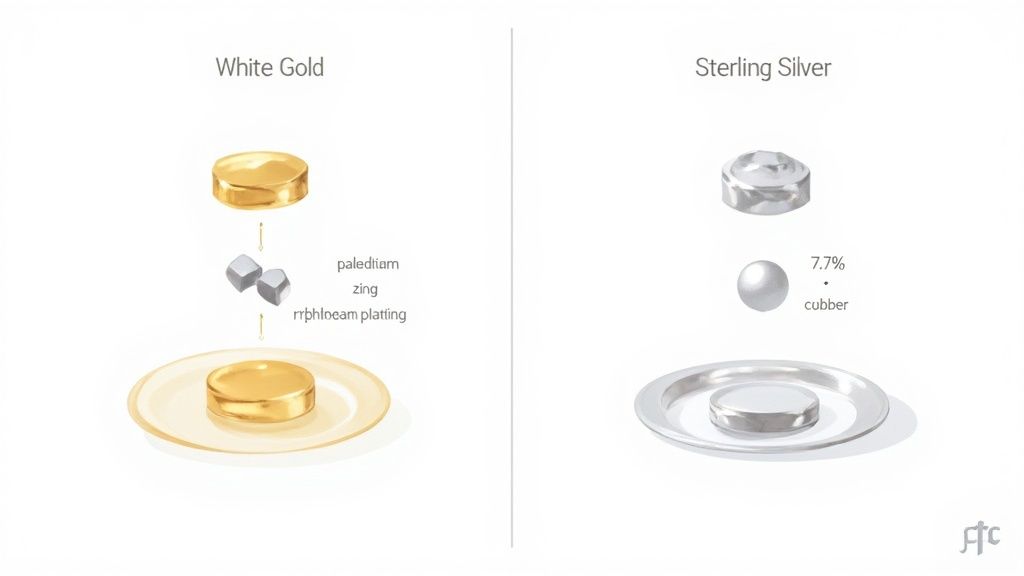
An alloy of pure gold mixed with white metals (like palladium), then plated with rhodium.
An alloy of 92.5% pure silver and 7.5% other metals (usually copper).
Appearance
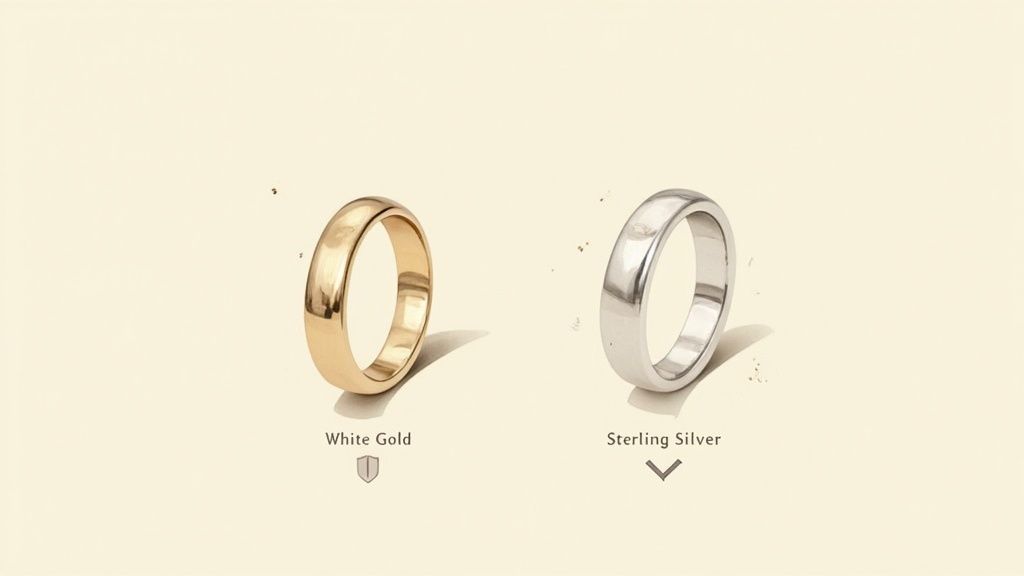
A bright, mirror-like, cool white shine from its rhodium coating.
A lustrous, bright white but with a slightly warmer, creamier undertone.
Durability
Hard, very durable, and highly resistant to scratches and dents. Made for daily wear.
Softer and much more prone to scratching, denting, and bending over time.
Maintenance
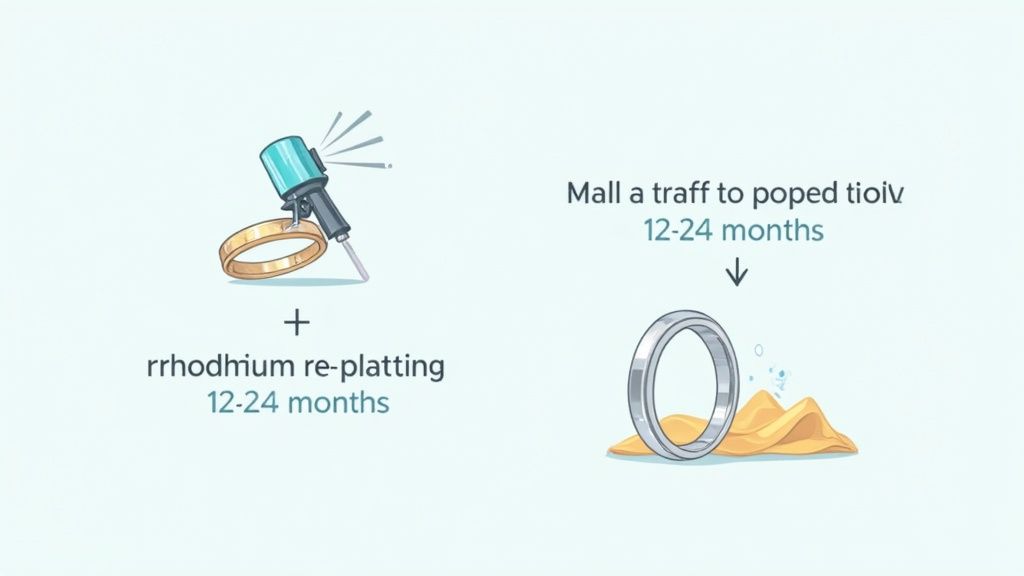
Needs rhodium re-plating every 12-24 months to keep its brilliant white colour.
Prone to tarnishing and needs regular polishing to stop a dark patina from forming.
Cost
Significantly more expensive because of its gold content and complex manufacturing.
A far more affordable and budget-friendly option for all kinds of jewellery.
The Bottom Line: Your choice really comes down to balancing durability and luxury against affordability and style. White gold is the go-to for high-contact, lifelong pieces like engagement rings, while sterling silver gives you unmatched value and versatility for fashion jewellery and bigger, bolder designs.
A Look at Metal Composition and Crafting
To really understand the difference between white gold and silver, we need to look at what they’re actually made of. At a glance they can look quite similar, but their distinct identities are forged in their creation. Each metal’s unique recipe dictates everything from its colour and strength to how it feels on your skin.
This is the fundamental distinction: one is a carefully engineered gold alloy designed for brilliance and resilience, while the other is a softer, purer element valued for its classic lustre and accessibility. Let’s break down exactly what goes into each one.
The Science Behind White Gold
You can’t just dig white gold out of the ground—it’s a man-made alloy. It starts life as pure yellow gold, which is then mixed with white metals to bleach its natural warm colour. This clever process transforms the soft, yellow element into a durable, silvery-hued metal perfect for fine jewellery.
The most common alloying metals you'll find are:
Palladium: A premium, hypoallergenic choice that gives white gold a rich, greyish-white tone.
Nickel: An effective whitener that produces a very hard, strong alloy, though it can cause skin irritation for some people.
Zinc and Silver: Often added in smaller amounts to refine the colour and make the alloy easier to work with.
The karat system—like 9k, 14k, or 18k—tells you how much pure gold is in the mix. An 18k white gold ring, for example, is 75% pure gold, with the remaining 25% being those white metal alloys. This high gold content is what gives it significant intrinsic value.
Key Insight: The final, dazzling step in making most white gold jewellery is rhodium plating. This ultra-thin layer of a platinum-group metal provides an exceptionally bright, mirror-like finish and a protective barrier against scratches.
This plating is essential for achieving that crisp, brilliant white colour people expect from white gold. It does wear away over time, though, and needs a professional re-application to maintain its lustre. Our detailed guide on rhodium plating services explains more about this crucial maintenance step.
Sterling Silver's Pure Composition
Unlike the complex blend of white gold, sterling silver has a much simpler formula. It’s defined as an alloy containing 92.5% pure silver, with the other 7.5% typically being copper. On its own, pure silver is far too soft and malleable to make durable jewellery that stands up to daily wear.
Adding copper gives it the necessary strength and hardness without really changing its beautiful, bright white colour. This specific ratio, stamped with the 925 hallmark, has been the standard for centuries and is recognised worldwide for its quality.
It’s this high percentage of pure silver that gives the metal its signature radiant lustre. However, that’s also the reason for its main drawback: tarnish. The copper in the alloy reacts with sulphur in the air, causing the silver to darken over time. The good news is this is just a surface reaction that’s easily polished away.
Comparing Appearance, Durability, and Long-Term Wear
Beyond the chemical makeup, the most practical difference between white gold and silver is how they look and perform in the real world. A piece of jewellery isn't just an object; it’s something you wear, touch, and live with every day.
Understanding how each metal holds up is the key to choosing something you’ll love for years to come. Let's move beyond the technical specs and focus on the tangible experience—from the initial colour and shine to how each one resists scratches, dents, and the effects of time.
The Visual Difference: First Impressions
At a glance, both metals are beautiful, silvery-white options, but a closer look reveals their distinct personalities.
White gold, thanks to its bright rhodium plating, has a brilliant, mirror-like finish. It’s got a cool, crisp white tone that’s engineered for maximum sparkle—which is precisely why it’s the top choice for setting diamonds.
Sterling silver, on the other hand, has a softer, warmer lustre. Its natural colour is a creamy, bright white with a gentle glow rather than a sharp, reflective shine. It can also develop a subtle patina in detailed areas over time, a quality many people love for the character it adds.
A quick summary of their looks:
White Gold: Delivers a crisp, cool, and highly reflective white colour, almost like a mirror.
Sterling Silver: Presents a warmer, softer white lustre with a gentler, creamy glow.
Hardness and Everyday Durability
This is where the two metals really part ways, and it's a critical factor for anything you plan to wear daily, like an engagement or wedding ring.
White gold is a significantly harder and more resilient alloy. It’s built to withstand the knocks and bumps of everyday life, making it highly resistant to scratches and dents. An 18k white gold ring will hold its shape and smooth finish far better over the long haul.
Sterling silver is a much softer metal by nature. On the Mohs scale of hardness, it scores around a 2.5-3, while 14k gold is up at 3.5-4. This means silver is far more susceptible to dings, scratches, and even bending out of shape with rough wear. It's perfect for earrings or a pendant but is a less practical choice for a ring worn constantly.
A Jeweller's Perspective: For any ring intended for daily, long-term wear, white gold is the superior choice for durability. Its structural integrity ensures it can securely hold precious gemstones and withstand constant use without losing its form.
Long-Term Longevity and Maintenance Needs
Both metals need a bit of upkeep, but their requirements are completely different.
The brilliant look of white gold depends on its rhodium plating. This microscopic layer eventually wears away with friction, typically every 12 to 24 months, revealing the slightly warmer, yellowish-grey tone of the gold alloy beneath. To get that bright white shine back, it needs to be professionally re-plated.
Sterling silver faces a different challenge: tarnish. The copper in the alloy reacts with sulphur in the air, creating a dark layer on the surface. This is a natural chemical process, not a defect. The good news is that tarnish is easily removed with a polishing cloth or a professional clean, restoring the silver's original lustre without any need for re-plating.
To make things simpler, here’s a quick side-by-side look at how each metal ages and what it needs to look its best.
Quick Comparison: White Gold vs Sterling Silver
Attribute
White Gold
Sterling Silver
Primary Wear Issue
Rhodium plating wears off, revealing a duller, yellowish colour.
Surface tarnishes, developing a dark, blackish layer over time.
Maintenance Action
Requires professional re-plating every 1-2 years to restore brightness.
Needs regular polishing at home or professionally to remove tarnish.
Scratch Resistance
High. Resists everyday scratches and maintains a smooth surface longer.
Low. Easily scratched and dented due to its inherent softness.
Ultimately, the right choice comes down to your lifestyle. If you want a low-fuss, highly durable metal for a forever piece, white gold is the clear winner—as long as you’re committed to periodic re-plating. If you appreciate a classic look for less frequently worn items and don't mind an occasional polish, sterling silver offers incredible style and value.
Cost, Resale Value, and Long-Term Worth
When it comes to the financial side of white gold versus silver, the difference is night and day. The initial price is often the biggest factor in any jewellery decision, and it’s a direct result of a metal's rarity, the value of its components, and how complex it is to create the final piece.
White gold comes with a much higher price tag, and for good reason. Its main ingredient is pure gold—a rare and highly prized precious metal. The cost is pushed up further by the alloying process, where it's mixed with other valuable metals like palladium, and finished with a bright layer of rhodium plating.
Sterling silver, on the other hand, is far more plentiful and much cheaper to mine and process. This makes it an incredibly accessible choice, perfect for creating larger, more striking designs without the hefty price of white gold. For anyone balancing style with budget, silver is hard to beat.
The Ever-Changing Market Value
Neither gold nor silver has a fixed price; their values shift daily on the global commodity markets, with London being a major centre for setting these prices. Recent trends have been quite interesting. For example, looking at the UK market in early 2025, silver showed a 22.34% price increase year-to-date, actually outperforming gold's roughly 18% rise in the same timeframe.
Even so, white gold’s value is overwhelmingly tied to its gold content. An 18-karat piece is 75% pure gold, which trades at a vastly higher price per gram than silver. You can see more on these market movements in the LBMA's latest precious metals report. This is the key reason why even a strong market run for silver won’t close the price gap—with white gold, you are paying for the high percentage of gold inside.
Thinking About Resale Value
If you’re considering the long-term financial picture, resale value is a crucial point. This is where white gold truly shows its strength as a store of value. Because so much of its price comes from its gold content, it holds onto its worth far more effectively over the years.
Should you decide to sell an 18k white gold ring, a huge part of its resale price will be determined by the "scrap" value of its 75% gold content. This provides a solid financial foundation that sterling silver simply doesn't have.
Sterling silver jewellery has a much lower resale value in comparison. The price you initially pay is heavily weighted towards labour, design, and retail markup—costs you can't get back. When you resell it, its value is almost entirely based on its weight in silver, which is worth significantly less per gram than gold.
Financial Takeaway: Think of white gold as a luxury purchase that holds its value better over the long term. Sterling silver is an affordable, stylish choice for everyday wear, not a financial investment.
Jewellery as an Investment
It’s important to separate the raw metal from the finished jewellery piece when thinking about investment. Truthfully, neither white gold nor sterling silver jewellery makes for a good financial investment in the traditional sense. The premium you pay for craftsmanship and design means you'll almost always sell it for less than you bought it for, unless it’s a rare antique or a piece from a famous designer.
White Gold: Better for holding onto a percentage of its original cost due to the high intrinsic value of gold. It acts more like a store of wealth than a profitable asset.
Sterling Silver: This is a fashion or personal purchase. Its low metal value and high markup make it a poor choice as an investment.
If your goal is pure investment, buying gold or silver bullion (bars or coins) is a much smarter and more direct strategy. It cuts out the costs of artistry and labour, letting you invest directly in the raw commodity itself.
Choosing the Right Metal for Your Jewellery Piece
Picking the perfect metal is about more than just how it looks; it's about matching the material's character to the life the jewellery will lead. The choice between white gold and silver often boils down to a single question: how, and how often, will you wear it? Getting this right ensures your piece doesn't just look beautiful on day one, but stands up to your lifestyle for years to come.
For jewellery that sees constant action, durability is king. But for a statement piece you only bring out on special occasions, you might care more about design flexibility and cost. Let's break down where each metal really shines.
For Engagement and Wedding Rings
When it comes to something as significant as an engagement or wedding ring, durability is non-negotiable. These aren't just pieces of jewellery; they're daily symbols of commitment that have to endure knocks, bumps, and constant contact.
This is where white gold truly comes into its own. Its inherent hardness makes it far more resistant to scratching and bending, which is crucial for keeping its shape and, most importantly, holding precious stones securely in their settings. The bright, crisp finish of rhodium-plated white gold also acts as the perfect neutral stage, making a diamond's fire and brilliance pop. Yes, it needs re-plating every so often, but that's a small price to pay for its superior strength.
On the other hand, sterling silver is just too soft for a ring you'll wear every day. It dents and scratches far too easily, and a bent shank could spell disaster for a valuable gemstone's setting. For this job, it's best left on the bench.
For Earrings and Necklaces
With pieces that don't face as much direct wear and tear, like earrings and pendants, the decision gets more interesting. Both white gold and silver are fantastic options here, but they serve very different purposes.
White gold remains the premium choice, especially if you're setting valuable gems or have sensitive skin and opt for a hypoallergenic palladium alloy. It offers that unmistakable look of luxury and is wonderfully low-maintenance day-to-day.
But this is where sterling silver makes a very strong case for itself. Its affordability opens up a world of possibilities for bigger, more creative, or trend-led designs without the hefty price tag. Because earrings and necklaces are naturally more protected, silver's softness is much less of a concern. It’s a brilliant, versatile choice.
Expert Tip: If you're buying a piece to pass down through generations, white gold is the clear winner. Its durability and intrinsic value make it a true heirloom metal. For stylish, versatile pieces you might want to update more frequently, sterling silver offers unbeatable value.
The chart below helps visualise how your priority—be it budget or long-term investment—can steer your decision.
As you can see, for those who are budget-conscious, silver is the most practical path. For buyers focused on investment and lasting value, white gold is the way to go.
For Bracelets and Fashion Rings
Bracelets and fashion rings (often called "cocktail rings") usually fall into the statement or occasional-wear category. For these items, sterling silver is often the perfect fit.
The lower price point allows for bold, artistic, and substantial designs that you might not wear every day. You could build an entire collection of diverse silver pieces for the price of a single white gold equivalent. This is where the difference between white gold and silver becomes a huge advantage for your jewellery box.
Keeping your jewellery looking its best comes down to proper care. And while white gold and silver both offer that stunning white finish, how you look after them couldn't be more different. Their unique metal compositions dictate their maintenance routines.
The main distinction is how they age. White gold’s bright, crisp lustre comes from its rhodium plating, a finish that needs professional attention over time. Sterling silver’s biggest challenge is its natural tendency to tarnish—a surface issue you can usually handle right at home.
Maintaining White Gold: The Professional Approach
On a day-to-day basis, white gold is actually quite low-maintenance. The real work comes in periodically, when it needs professional servicing to keep that signature crisp, white shine. That mirror-like finish is thanks to a wafer-thin layer of rhodium, which inevitably wears down from friction against skin, clothes, and everyday surfaces.
This is especially true for rings—engagement rings and wedding bands see the most contact. To bring back that brilliant white colour, a trip to the workshop is in order.
Rhodium Re-plating: This is the key step. Plan to visit a specialist, like us here in Hatton Garden, every 12 to 24 months. We’ll apply a fresh layer of rhodium, which not only restores that bright, cool-toned gleam but also adds a protective barrier.
Professional Polishing: Before any new plating goes on, a jeweller will carefully polish out minor surface scratches. This ensures the new rhodium layer is applied to a perfectly smooth surface, restoring your ring’s original, flawless appearance.
It's a common myth that white gold "turns yellow." What's actually happening is the rhodium plating is wearing thin, revealing the natural, slightly warmer grey-yellow tone of the gold alloy underneath. It's a normal part of its lifecycle, not a flaw.
Caring for Sterling Silver: At Home and Professionally
Sterling silver requires more frequent, but less intensive, care. Its primary foe is tarnish—that dark film that appears when the copper in the alloy reacts with sulphur in the air. The good news? It's purely a surface issue and surprisingly easy to manage.
For light tarnish and general upkeep, a bit of DIY cleaning works wonders. You can find detailed steps in our guide on how to clean rings safely at home, which covers gentle methods perfect for silver.
Effective at-home silver care comes down to a few basics:
Gentle Polishing: Get a soft, non-abrasive polishing cloth made specifically for silver. A regular, light wipe-down after wearing it can dramatically slow the tarnishing process.
Mild Cleaning Solutions: For more stubborn tarnish, a simple mix of mild soap and water or a dedicated silver cleaning dip will do the trick. Just be sure to rinse it well and dry it completely with a soft cloth.
Proper Storage: This is the easiest win. When you’re not wearing it, keep your silver in an anti-tarnish pouch or an airtight box. This simple habit minimises its exposure to air and moisture, stopping tarnish before it even starts.
While you can handle tarnish at home, sterling silver’s softness makes it prone to deeper scratches and dings. When that happens, or if you just want to restore a piece to a like-new state, nothing beats a professional polish. A skilled jeweller can buff out imperfections without harming any intricate details, bringing back its original radiant lustre.
Common Questions: White Gold vs Silver
Even after comparing the metals, a few practical questions often come up. To help you feel completely confident in your choice, here are the direct answers to the queries we hear most often in our Hatton Garden workshop.
These are the final details that matter—from skin sensitivities to what your jewellery will actually look like years down the line.
Can White Gold Cause Skin Allergies?
It can, but it’s easily avoided. The problem usually comes from nickel, a metal sometimes mixed into the alloy to give white gold its strength and colour. Nickel is a common allergen and can cause a reaction, especially in pieces you wear every day like engagement rings.
The simple solution? High-quality white gold is often alloyed with palladium instead, which is hypoallergenic. If you have sensitive skin, just ask your jeweller what the white gold is mixed with. A palladium alloy gives you the look without any risk of irritation.
Does White Gold Turn Yellow Over Time?
This is a classic question, but "turn yellow" isn't quite right. The white gold alloy itself isn't a brilliant, pure white—it’s naturally a soft, warm, greyish-yellow because it's mostly made from pure yellow gold. The bright, mirror-like shine you love is actually a very thin layer of rhodium plating applied on top.
With daily wear, this rhodium coating gradually wears off, usually over 12 to 24 months. As it thins, the warmer tone of the gold alloy underneath begins to peek through. Your ring isn’t changing colour; you’re just seeing its natural, un-plated state. A quick visit for re-plating is all it takes to restore that crisp white shine completely.
Is Sterling Silver Jewellery a Good Investment?
While silver is a precious metal with its own market value, sterling silver jewellery isn't really a financial investment. The price of a finished piece is mostly for the craftsmanship, design, and retail markup—costs you don't get back when you sell it.
For pure investment, buying silver bullion (bars or coins) is the way to go. Think of sterling silver jewellery as an affordable luxury and a form of personal expression, not a financial asset.
Why Is White Gold So Much More Expensive Than Silver?
The price gap is huge, and it’s down to two things: the raw value of the metals and the complexity of making the jewellery.
Gold is simply a far rarer and more valuable metal than silver. Since an 18k white gold piece is 75% pure gold, its material cost is high from the very start. On top of that, creating the white gold alloy and applying the durable rhodium plating is a more skilled, labour-intensive process, which adds to the final price.
At Opulence Jewellery Services, our Hatton Garden experts are always here to answer any other questions you have. We offer professional advice and services from rhodium plating to bespoke design. Visit us for a chat and let us help you care for your treasured pieces. See our full range of services at https://www.opulencejewelleryservices.co.uk.
Explore the difference between white gold and platinum with detailed comparisons on composition, durability, cost, and care to help you choose the right metal.
Shop Fine Jewellery Online
Engagement rings, wedding bands, earrings, necklaces & birthday gifts — beautifully crafted and delivered to your door.