Difference Between White Gold and Platinum Explained
19 November 2025 13 min read Hatton Garden, London
Explore the difference between white gold and platinum with detailed comparisons on composition, durability, cost, and care to help you choose the right metal.
Choosing between white gold and platinum really comes down to four key considerations: composition, durability, cost and maintenance. White gold relies on a rhodium finish to keep its silvery glow, whereas platinum is pure enough to stay naturally white without any extra coating.
Comparing White Gold And Platinum At A Glance
To help you orient yourself quickly, here’s a high-level snapshot of their essential attributes.
Quick Comparison Of White Gold And Platinum
Attribute
White Gold
Platinum
Composition
Gold alloyed with nickel, palladium or silver; finished with rhodium plating
Nearly pure platinum (90–95% purity)
Appearance
Bright, silvery finish that can develop a faint yellow tint as plating wears
Steady, white sheen that gently develops a fine patina
Durability
Hard metal but surface plating may scratch or thin over time
Dense and naturally scratch-resistant, wears evenly
Cost
More affordable up front; replating adds ongoing expense
Higher initial investment; minimal upkeep costs
Hypoallergenic
Nickel alloys can irritate some; nickel-free options exist
Inherently hypoallergenic and kind to sensitive skin
This table gives you a quick way to see where each metal shines before diving into deeper detail.
Platinum’s weight and density give a reassuring heft that many wearers find irresistible.
Ideal for durability-focused rings and treasured heirloom pieces.
White gold works well for budget-savvy buyers who still crave that lustrous look.
Those after the latest styles often opt for white gold’s high-shine finish at a lower price.
Use this snapshot as your starting point, then explore our detailed breakdown on composition, appearance, longevity, cost structures and maintenance tips—including how each metal fares when you eventually sell or trade it.
Material Composition Analysis
You’ll often hear jewellers talk about alloys as the hidden heroes behind a piece’s colour, weight and comfort. In reality, it’s the precise blend of metals that gives white gold and platinum their signature looks—and tells you a lot about how each metal wears over time.
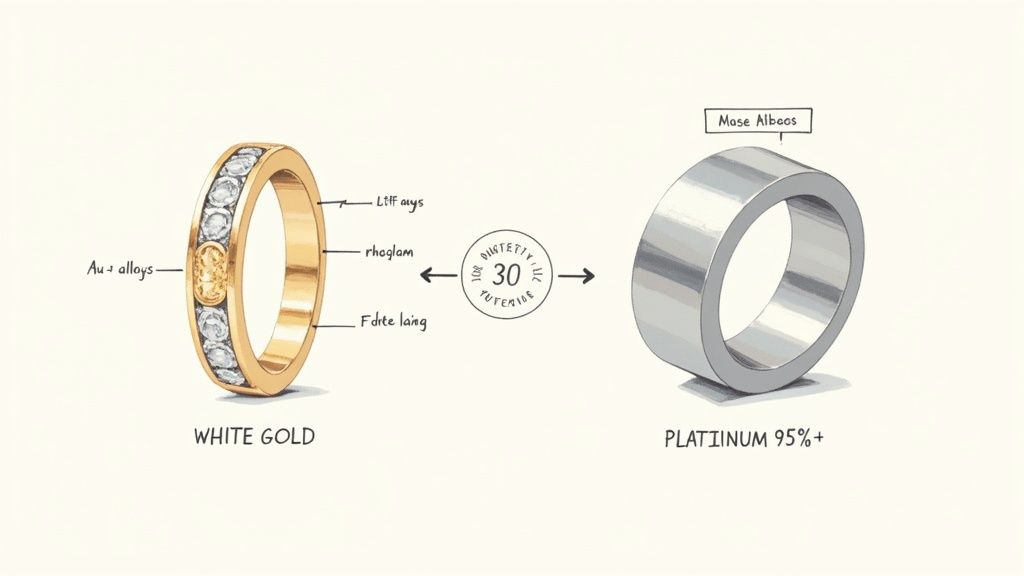
White gold combines pure gold with nickel, palladium or silver to create 14K (58.5%) and 18K (75%) alloys. A final rhodium-plating bath leaves it with a crisp, mirror-like sheen. Platinum, on the other hand, arrives at around 90–95% purity—no plating needed—and boasts a density of roughly 21.45 g/cm³, so it feels reassuringly solid on the finger.
Composition Standards
Hallmarks are more than a stamp of authenticity; they’re a shorthand for exactly what’s inside your ring.
In the UK, gold pieces must carry 375, 585 or 750 marks for 9K, 14K or 18K purity respectively. Platinum is typically hallmarked 950, confirming a 95% pure metal.
These hallmarks guide anyone with skin sensitivities and clarify alloy choices at a glance.
Metal
Purity
Common Alloying Elements
White Gold
14K (58.5%), 18K (75%)
Nickel, Palladium, Silver
Platinum
95% (950)
Iridium, Ruthenium
That density gap shows up in everyday wear. A platinum band of the same dimensions feels notably heavier than its white gold counterpart. And if you’re nickel-sensitive, platinum’s high purity makes it a go-to hypoallergenic option, while white gold can be mixed in nickel-free batches.
“Choosing platinum can significantly reduce skin irritation thanks to its higher purity and minimal reactive alloys.”
Density And Weight Impact
When designers want a piece to feel substantial, platinum is the obvious choice—its density nearly doubles that of most white gold alloys. Yet that same heft can overwhelm more delicate settings.
To hit the sweet spot between strength and lightness, many jewellers favour:
14K White Gold: A feather-light feel for everyday wear.
18K White Gold: A warmer hue with moderate weight.
Platinum 950: Unmatched density and a reassuring weight.
In UK markets, white gold accounts for 49% of demand compared to 25% for platinum. However, there’s a gradual swing towards platinum’s durability. Discover more insights about fine jewellery materials in this report.pdf).
Material choice doesn’t just affect how your ring feels—it drives cost, too. Higher purity metals carry a heftier price per gram and often attract additional hallmark fees.
Armed with these metallurgical details, you can match metal properties to priorities like weight, budget and skin sensitivity.
Appearance And Durability Comparison
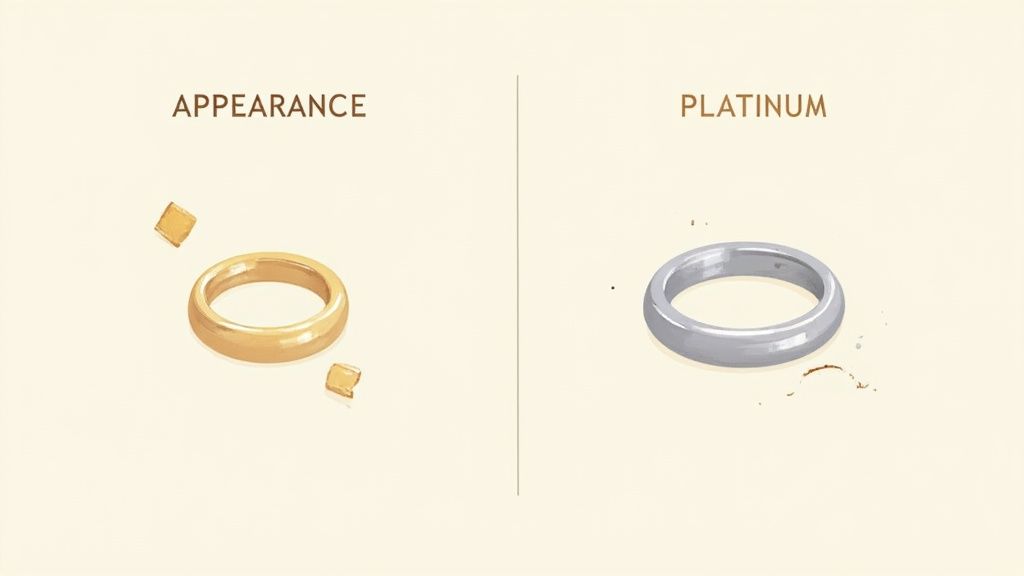
When you place white gold and platinum side by side, their looks tell two different stories. White gold greets you with a bright, mirror-like flash thanks to its rhodium plating, while platinum’s cool, silvery gleam is all natural—and it changes character over time.
Scratch Resistance: The rhodium layer on white gold can wear away with daily knocks, revealing that soft yellow base beneath.
Patina Development: Platinum responds to everyday use by developing a gentle patina in about 12 months, giving jewellery a subtly aged, vintage appeal.
Visual Longevity: To keep white gold’s sparkle, you’ll need to replate every 12–18 months. Platinum, on the other hand, holds its own for years with only an occasional polish.
Rings bear the brunt of daily life—keys in pockets, shopping trolleys, tabletops. In these scenarios, white gold’s plating can dull faster, especially around prongs and shanks. Platinum’s uniform wear, however, means scratches soften into that signature “silk” finish rather than harsh lines.
H3: Finishing And Maintenance Treatments
White gold’s rhodium shield demands bench work for replating. Depending on how often you wear the piece and expose it to chemicals like hand cream or cleaning sprays, you’ll typically plan for 12–18 months between sessions.
By contrast, a quick polish on platinum—often available in-house for roughly £15 at Opulence Jewellery Services—restores its gloss. Fewer visits, less fuss.
Appearance And Durability Metrics
Here’s a concise breakdown to help you decide at a glance how each metal performs under everyday conditions.
Feature
White Gold
Platinum
Scratch Resistance
Surface plating can wear, exposing yellow base
Dense metal that resists surface marks
Patina Development
Plating hides wear, flashes yellow underlayer
Develops a soft, even patina enhancing sheen
Maintenance Cycle
Replate every 12–18 months
Polish every 2–3 years
Long-Term Finish
Shiny when new, slight yellow tint over time
Consistent white tone with gentle ageing
This table makes it easier to match your lifestyle with the right metal—whether that’s a daily-wear engagement ring or a once-in-a-while cocktail pendant.
Real World Performance Examples
Imagine an engagement ring you never take off. A white gold band often needs its plating refreshed after 1 year of constant contact with hand-wash and lotions. Platinum? It simply grows more refined.
Pendants face less friction, so white gold plating lasts longer. Yet even there, platinum pendants drift from bright to softly muted, picking up character instead of showing flank marks.
“Platinum’s ageing process adds character without compromising structure, ideal for sentimental pieces.”
In practice, your choice will hinge on how much upkeep you’re comfortable with. If you’re rushing to work on the Tube every morning, platinum’s rugged grace may suit you. If you wear that ring mainly at the weekend, white gold offers that fresh-from-the-store shine at a friendlier price point.
Opulence Jewellery Services can guide you through finishing options—whether you opt for a regular rhodium replate schedule or a simple polishing plan that keeps your platinum looking effortlessly beautiful.
Cost And Maintenance Insights
Deciding between white gold and platinum goes beyond initial sticker price. You need to weigh both upfront costs and the longer-term upkeep. Small differences in mark-up and service intervals can add up over the life of a piece.
Retail Mark-Up Across Cities
In the UK, jewellers often tack on a 30% mark-up to raw metal prices, so what you pay at retail rarely mirrors spot rates. In other markets, it looks different:
Hatton Garden workshops: 30% on raw ounces
New York showrooms: roughly 40% to cover higher labour costs
Geneva boutiques: about 50%, reflecting exclusivity
For instance, a 1 oz bar of white gold trading at £920 spot will ring up around £1,200 in a London workshop. These premiums influence your overall budget more than you might expect.
Volatility And Price Movements
Platinum and gold don’t march to the same beat. Over a recent quarter, platinum leapt 35.8%, while gold climbed steadily but with less dramatic swings. If market turbulence matters to you, platinum’s wild rides could be a factor. For a deeper dive into price trends, see the LBMA’s Q2 2025 precious metals report.
Cost And Maintenance Data
Below is a snapshot of average pricing and routine care for each metal:
Metal
Average Price per Ounce
Maintenance Requirements
White Gold
£1,200
Replate every 12–18 months (£40–£60)
Platinum
£1,500
Polish every 2–3 years (£15–£25)
This table highlights how scheduled upkeep ties into your total cost of ownership.
Maintenance Schedules Overview
Both metals hold their shine differently. White gold relies on rhodium plating to hit that bright white finish. You’ll typically book a re-plating session every 12–18 months, budgeted at £40–£60 each time.
Platinum, on the other hand, develops a soft patina over time. A gentle polish every 2–3 years—at around £15–£25—usually restores its brilliance without altering the profile.
Budget Planning And Tips
Mapping out a five-year service plan takes the guesswork out of future expenses. Here’s a simple schedule:
Years 1–2: First rhodium plate vs first platinum polish
Years 3–4: Second replate vs second polish
Year 5: Full cost review for each metal
Imagine you wear a white gold engagement ring daily. Over five years, you’d likely spend about £180 on plating versus around £25 for a single platinum polish, excluding mark-up variations.
Tip: Book your service visits in quieter months (January or September).
“Planning service visits in advance can save up to 20% on emergency fees,” advises a Hatton Garden expert.
By laying out these figures and intervals, you can choose the metal that suits both your style and your wallet.
Real World Use Cases
Lab tests only tell part of the story. Once a ring leaves the bench and meets everyday life, small differences between white gold and platinum really stand out.
Put a wedding band on every morning and it gets exposed to everything from hand sanitiser to jangling keys. In my experience, platinum often resists those little scratches far better than rhodium-plated white gold.
One commuter discovered exactly that: her platinum band emerged unscathed, while her white gold ring lost its bright finish after only a few weeks.
Wedding Rings And Daily Wear
Platinum develops a soft, even patina rather than exposing any yellow beneath. White gold, on the other hand, needs replating every 12–18 months, which means extra visits and extra expense.
Platinum’s density stands up to busy hands and urban commutes
White gold suits those on tighter budgets or who swap jewellery regularly
If you’re washing your hands dozens of times a day, many prefer platinum’s natural patina
Heirloom Pieces For Generations
If you’re handing a piece down through the years, platinum often comes out on top. At 95% purity, it’s less reactive to chemicals and holds its shape for decades.
“My grandmother’s platinum wedding band looks as elegant now as it did in 1954,” recalls a Hatton Garden retailer.
Yet when weight matters—thin hoops, layered chains or filigree pendants—white gold provides the same bright finish without pulling at your earlobes or wrists.
Thin hoops and chandelier earrings
Layered chain bracelets
Delicate pendants with intricate filigree
That blend of practicality and flair means you can match your choice to budget, design and lifestyle. Recently, a client picked a platinum tennis bracelet to anchor a heavy diamond setting at a black-tie event.
Your profession and routine often settle the debate. Office workers might favour white gold’s lighter feel, while builders, chefs and healthcare staff rely on platinum’s toughness.
Office professionals love white gold for comfortable, all-day wear
Construction crews value platinum’s scratch resistance under pressure
Occasional wearers find white gold’s replating easy to schedule around events
“Scheduling jewellery service in quieter seasons can reduce turnaround times by up to 20%,” advises a Hatton Garden goldsmith.
Align your metal choice with how you live—and how you plan to gift or sell in future. Seeing these metals in real-world use helps you pick the one that fits your story best.
How To Choose The Right Metal
Deciding between white gold and platinum often feels like a balancing act. You’ll need to weigh allergy concerns, design profile, budget and resale potential against each metal’s unique strengths.
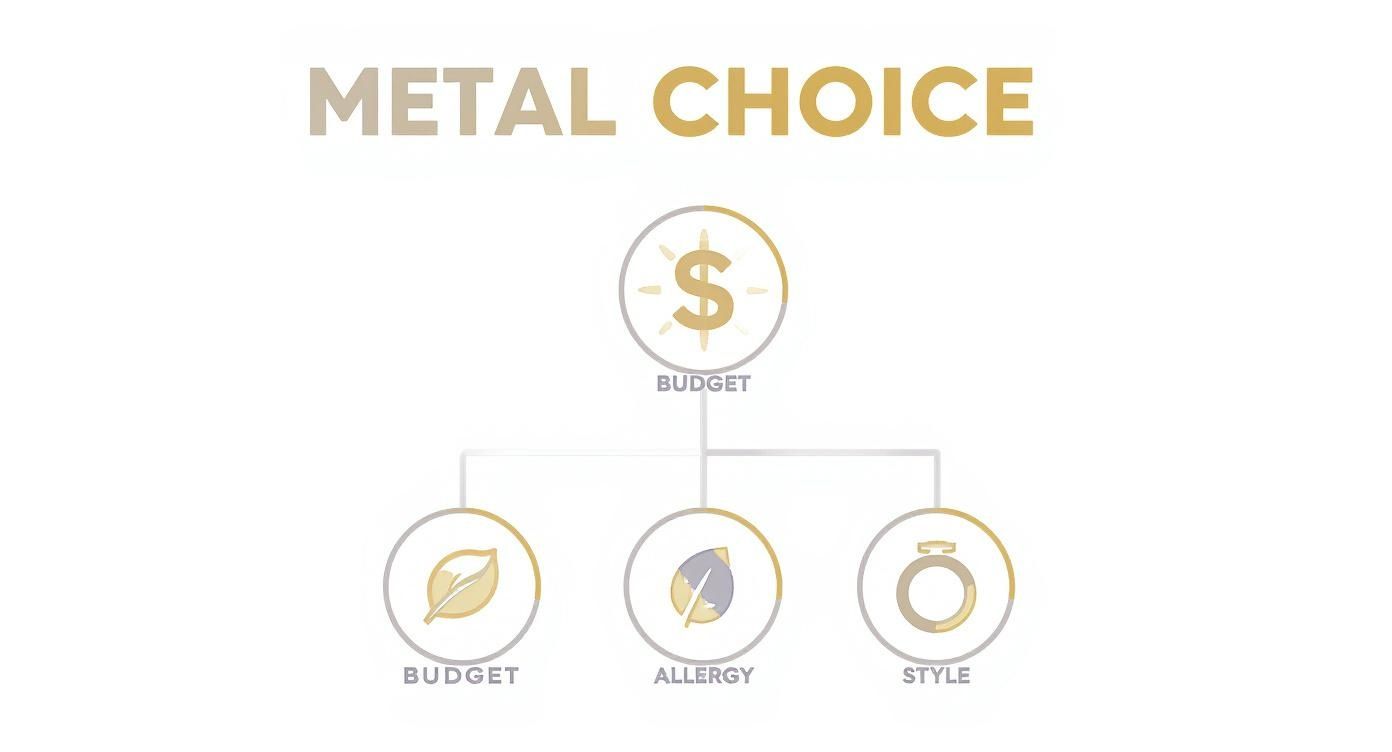
This infographic visualises how factors such as budget, sensitivity and style preferences guide your decision.
It shows that cost-conscious buyers tend to lean towards white gold, while those prioritising hypoallergenic properties and long-term value often choose platinum.
Quick Self-Assessment Checklist
Budget Range
Allergy Sensitivity
Ring Profile
Style Preference
Long-Term Value
Tick your top three and then consult the table below for targeted guidance.
Criteria
White Gold Benefit
Platinum Benefit
Budget
Lower initial price
Invests in long-term value
Skin Sensitivity
Nickel-free alloys available
Naturally hypoallergenic
Maintenance
Rhodium plating restores shine
Occasional polishing maintains look
Weight Preference
Lighter for everyday comfort
Heftier for a substantial feel
Resale Outlook
Value varies with gold market
Stable resale due to rarity
By focusing on the three factors that matter most—whether that’s daily wear comfort, heirloom potential or occasional use—you’ll see which metal aligns best.
For a lasting heirloom piece, platinum’s density and purity ensure decades of wear with minimal alteration.
Balancing Aesthetics And Maintenance
Modern Flair: If you love a pristine, bright finish, budget £40–£60 for rhodium plating every 12–18 months at Opulence Jewellery Services.
Timeless Patina: For a gentle ageing process, plan a £15 polish every 2–3 years in Hatton Garden.
Resale Outlook: White gold resale tracks the gold market; platinum holds value more consistently and appeals to future buyers.
White gold is ideal for trendsetters who enjoy a crisp look and don’t mind regular upkeep.
Before you visit, review your checklist so you know exactly which priorities to discuss. Opulence Jewellery Services provides same-day, while-you-wait expertise and transparent pricing from £15.
FAQ
Everyday wear and longevity often spark questions about white gold versus platinum. This FAQ tackles plating schedules, metal weight, skin reactions and resale value so you can choose with clarity.
When Does White Gold Need Rhodium Plating?
White gold’s bright finish comes from a rhodium layer that naturally wears away. Expect to replated every 12–24 months, depending on how often you wash hands or use cleaning sprays. A fresh rhodium coat brings back that sleek, silvery gleam.
How Does Platinum’s Weight Affect Ring Comfort?
At roughly twice the density of white gold, platinum gives your ring a substantial, reassuring feel. Many see this weight as a mark of quality. If you prefer something lighter, white gold settings can offer a barely-there sensation without sacrificing elegance.
Consider these scenarios:
Everyday Wear: White gold feels almost weightless when you’re on the move.
Statement Pieces: Platinum’s heft underlines the luxury in larger designs.
Mixed-Metal Settings: Combine metals to balance weight and comfort.
Skin Sensitivity and Allergies
Can White Gold Cause Skin Irritation?
Nickel in some white gold alloys can trigger reactions for sensitive skin. Opting for nickel-free or higher-karat blends reduces that risk. Many jewellers now offer palladium-alloyed options that stay kind to even the most delicate skin.
“Choose nickel-free white gold if skin sensitivity is a concern,” advises a Hatton Garden goldsmith.
How Do Resale Values Compare?
Platinum’s rarity and durability help it hold value more consistently than white gold. The latter’s resale price tends to follow spot gold rates and alloy purity. Over time, platinum often secures higher resale prices, while white gold fluctuates with the market.
Factor
White Gold
Platinum
Skin Reactions
May contain nickel alloys
Inherently hypoallergenic
Resale Stability
Variable with gold market
Stable due to scarcity
With these insights on maintenance, density, sensitivity and market trends, you’ll be well equipped to decide between white gold and platinum.
Ready to maintain or refresh your jewellery? Visit Opulence Jewellery Services for expert rhodium plating, polishing and more in Hatton Garden.