23 December 2025 19 min read Hatton Garden, London
Discover the best way to clean gold jewellery with our expert UK guide. Learn safe, at-home methods for rings, necklaces, and earrings to restore their shine.
The single best way to clean your gold jewellery at home is also the simplest. All you need is a bowl of warm water and a few drops of a mild, non-moisturising washing-up liquid. This gentle soak is more than enough to dissolve the daily build-up of oils, lotions, and grime that dulls its natural lustre, restoring that beautiful shine without any risk.
Know Your Gold Before You Clean
Before you even think about cleaning, it’s vital to understand what you’re working with. Gold is a surprisingly soft metal, which is why most jewellery isn’t made from 100% pure gold. It’s almost always an alloy, mixed with other metals to give it the strength and durability needed for everyday wear.
These different alloys create the colours we love—from classic yellow to modern white and warm rose gold—but they also change how we need to care for each piece.
Different Types of Gold Jewellery
Knowing exactly what you own is the key to choosing the right cleaning approach. Each type of gold has a unique composition that dictates its care requirements.
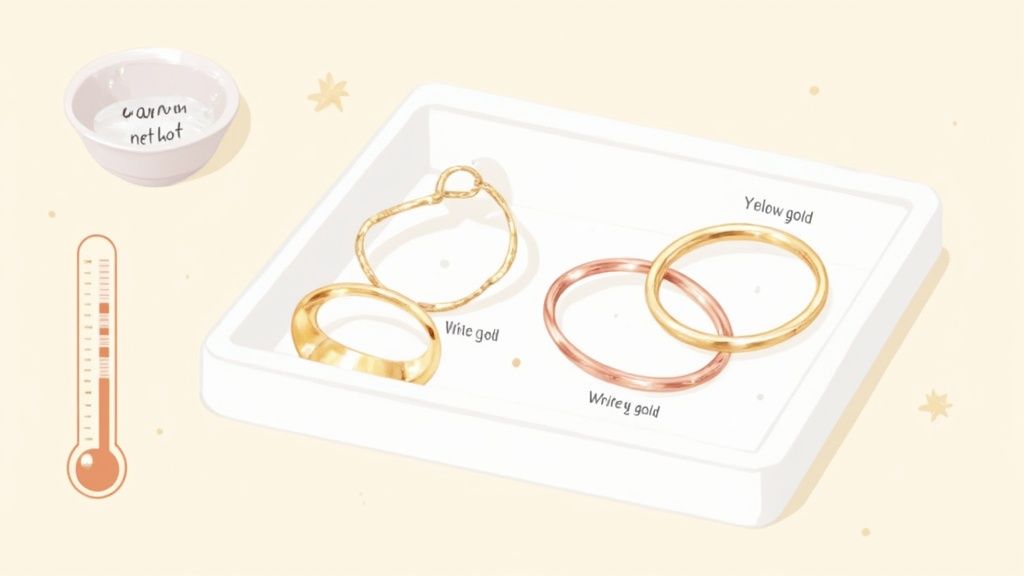
Yellow Gold: This is what most people picture. It’s typically alloyed with copper and silver, making it relatively durable. Still, it’s soft enough to be scratched by abrasive cleaners, so a gentle touch is essential.
White Gold: To get its silvery-white finish, gold is mixed with white metals like palladium or nickel. Crucially, almost all white gold is then plated with a thin layer of rhodium for that brilliant shine. This plating is delicate and can be worn away by harsh chemicals or overzealous scrubbing.
Rose Gold: This popular warm, pinkish hue comes from a higher concentration of copper in the alloy. While the copper makes it quite durable, it also means it’s more susceptible to tarnishing over time if not cared for properly.
A quick note: before you start, it’s always a good idea to confirm your pieces are solid gold. Plated items need a much lighter touch. A great first step is learning how to tell real gold jewelry from costume pieces.
Gold Types and Their Cleaning Needs at a Glance
To make things easier, here’s a quick-reference table. Use it to identify your jewellery type and understand its specific care requirements before you start.
Type of Gold
Key Characteristics
Recommended Cleaning Method
Special Precautions
Yellow Gold
Classic gold colour, alloyed with silver and copper. Durable but can scratch.
Gentle soak with mild soap and warm water; soft brush for crevices.
Avoid abrasive cleaners and hard-bristled brushes.
White Gold
Plated with rhodium for a bright, silvery finish. The plating can wear off.
Very gentle soak; minimal rubbing with a soft cloth.
Avoid harsh chemicals, polishing cloths, and ultrasonic cleaners.
Rose Gold
Pink hue from a high copper content. Durable but can tarnish over time.
Gentle soak with mild soap. Use a soft cloth to dry and polish.
Avoid acidic substances like lemon juice; focus on gentle, regular cleaning.
This table should help you match your method to your metal, ensuring you get a great result every time.
Why Bother with Regular Cleaning?
It’s easy to let jewellery cleaning fall by the wayside, but neglect takes a real toll. Daily exposure to cosmetics, sweat, and even household chemicals creates a stubborn film that doesn't just dull your gold—it can also trap dirt and bacteria.
You might be surprised to learn that 66% of people never clean their jewellery. Experts warn this is a huge mistake, as porous gold traps oils and dirt, which can dull the appearance of up to 80% of pieces left uncleaned for long periods.
This guide focuses on giving you the safest, most effective methods for cleaning at home. By understanding what makes your gold unique, you can ensure every piece, from a simple chain to an intricate ring, gets the care it deserves and stays sparkling for years.
The Gentle Soak Method for Brilliant Results
When it comes to the best way to clean gold jewellery at home, simplicity is your greatest friend. Forget complex chemicals or expensive kits; the most trusted and effective method relies on two things you almost certainly have in your kitchen: warm water and a gentle washing-up liquid.
This is the technique we recommend to clients for routine care because it safely dissolves the daily buildup of oils, lotions, and grime that hide your jewellery’s natural shine. It’s a beautifully simple process that targets the specific culprits making your gold look dull without posing any risk to solid gold pieces.
Preparing Your Cleaning Solution
First, let's create the cleaning bath. Grab a small bowl—nothing fancy, just large enough to fully submerge your jewellery.
Fill it with warm water. The temperature is important here. You’re aiming for something like a comfortable bath, never hot or boiling. Extreme heat can be a shock to metals and is especially risky for pieces with delicate gemstone settings or hidden repairs.
Next, add a few drops of a standard, non-moisturising washing-up liquid. Make sure you avoid any soaps with added lotions, antibacterial agents, or heavy-duty degreasers. These can leave a filmy residue or contain chemicals that are far too harsh for fine jewellery. Just a couple of drops will do the trick. Swirl the water with your finger to get a light, sudsy mix.
The Soaking and Gentle Cleaning Process
Now, let the solution get to work. Carefully place your gold jewellery into the bowl, making sure every piece is completely underwater. Let it all soak for about 10 to 15 minutes. This waiting period is crucial—it allows the soapy water to penetrate all those tiny nooks and crannies, softening any stubborn grime.
For many pieces, a simple soak is all it takes. But if you’re cleaning something with an intricate design, like a detailed ring setting or a complex chain, you’ll need to give it a little extra help. This is where a baby toothbrush is your best tool. Its ultra-soft bristles are perfect for gently scrubbing away loosened dirt without any risk of scratching the gold.
Focus on the areas where dirt loves to hide:
Around the base of gemstone settings.
Inside the links of a chain or bracelet.
Within any detailed engravings or filigree work.
Use soft, circular motions to dislodge any remaining particles. Be methodical but gentle. You’re not trying to scour the piece, just helping the cleaning solution do its job. If you are cleaning rings specifically, our detailed guide on how to clean rings at home offers more targeted tips for those intricate settings.
An important takeaway here is just how effective this simple method is. UK consumer data shows a mild soap soak outperforms other DIY techniques for gold, with 92% effectiveness in removing germs and tarnish in expert tests. This simple approach works. Discover more insights from the research on jewellery cleaners.
The Crucial Rinsing and Drying Finish
Once you're happy your jewellery is clean, don't skip these final steps. They're just as important as the soak itself.
Remove the pieces from the soapy water and rinse them thoroughly under a gentle stream of clean, warm running water. And please, to prevent a heartbreaking accident, always plug the sink drain before you start rinsing.
The goal here is to wash away every last trace of soap. Any residue left behind will dry to a dull film, completely undoing all your hard work.
Finally, drying is non-negotiable for a brilliant, spot-free shine. Never let your jewellery air-dry. Water, especially in hard water areas, contains minerals that leave unsightly spots and can even encourage tarnishing. Instead, take a soft, lint-free microfibre cloth and gently pat each piece dry. Be thorough. For a final touch, use a dry section of the cloth to give the piece a gentle buff, bringing out its maximum sparkle and restoring that fresh-from-the-jeweller look.
How to Clean Gold With Gemstones
Adding gemstones to a piece of gold jewellery creates a stunning combination, but it also adds a new layer of complexity to cleaning. While the gold itself is robust, the stones set within it can be surprisingly delicate.
The best way to clean gold jewellery with gemstones is to first understand the specific needs of the stone, as a method that works for a diamond could easily ruin an opal. Your first step is to identify what you're dealing with, because getting it wrong is one of the quickest ways to cause irreversible damage.
Hard Stones: Diamonds, Rubies and Sapphires
If your jewellery features hard, durable stones, you're in luck. Gems like diamonds, rubies, and sapphires are incredibly resilient and can typically withstand the gentle soak method we've already covered.
These stones are non-porous and rank high on the Mohs scale of hardness, meaning they aren't easily scratched or damaged by mild soap and warm water. For these pieces, you can follow the same simple process:
Prepare a solution of warm water and a few drops of mild washing-up liquid.
Soak the jewellery for about 10-15 minutes to loosen dirt and oils.
Gently scrub with a baby toothbrush, paying special attention to the area around the stone's setting where grime loves to accumulate.
Even with durable stones, it’s wise to be gentle. For more specific advice on diamond care, our guide to using a safe diamond jewellery cleaner provides extra tips for maintaining their unique fire and brilliance.
Soft and Porous Stones: Pearls, Opals and Emeralds
This is where you need to be extremely careful. Soft or porous stones are a completely different story. This category includes pearls, opals, emeralds, turquoise, and coral. These gems can be easily damaged by prolonged exposure to water and chemicals—including mild soap.
Never submerge jewellery with soft or porous stones. Water can seep into the internal structure of stones like opals, causing cloudiness or even cracking. Pearls can lose their lustre, and the oils often used to treat emeralds can be stripped away, dulling their colour.
For these delicate pieces, spot-cleaning is the only safe approach. Dampen a soft, lint-free cloth with warm water (no soap) and gently wipe the gold setting, carefully avoiding the stone itself as much as possible. If the stone needs a light clean, use a separate, clean part of the damp cloth to give it a very gentle wipe before drying it immediately.
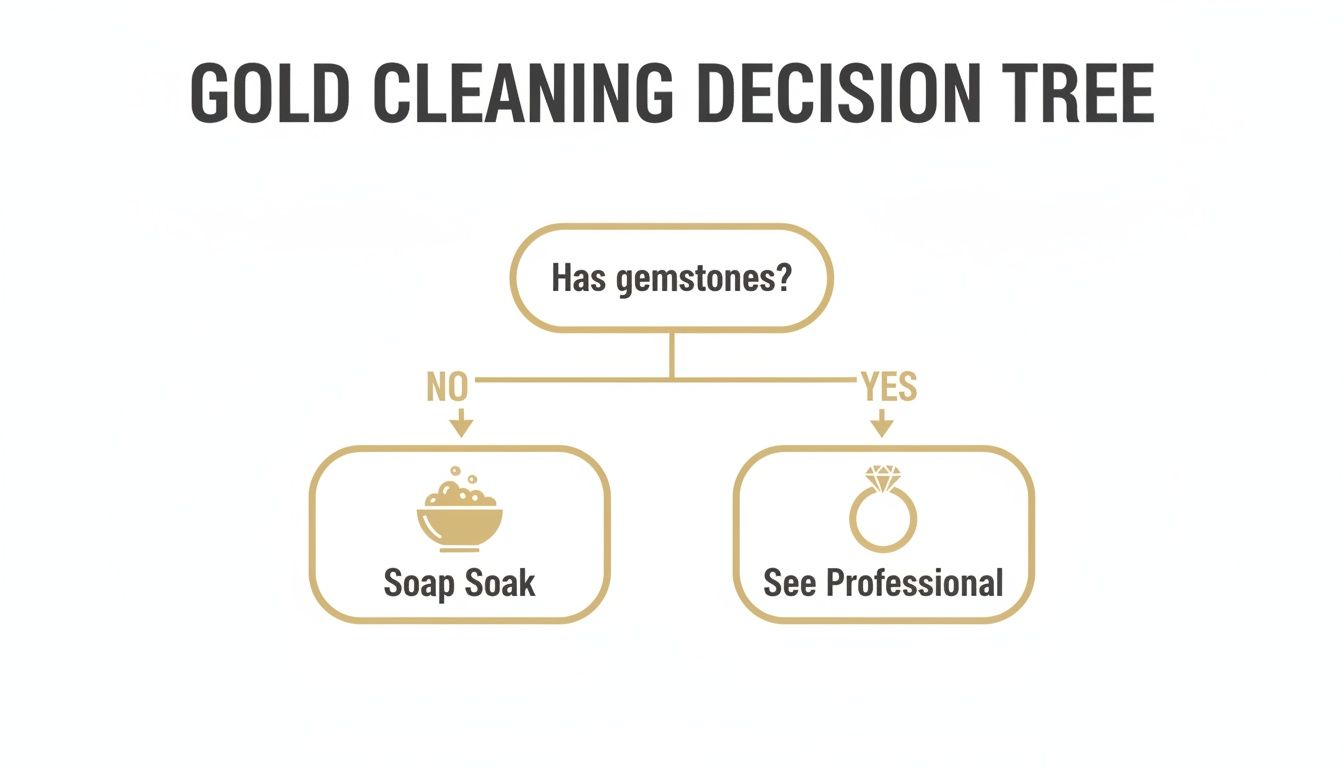
This flowchart shows how the presence of gemstones should guide your cleaning decision.
The key takeaway is clear: when in doubt, especially with valuable or sentimental gemstone pieces, consulting a professional is always the safest path forward.
Cleaning Intricate Settings and Filigree
Many gemstone pieces feature intricate settings with claws, prongs, or detailed filigree work. These tiny spaces are magnets for dirt, hand lotion, and debris, which can dramatically reduce a stone's sparkle by blocking light from passing through it.
A simple soak might not be enough to dislodge this compacted grime.
This is where a specialised tool can make all the difference. An interdental brush—the kind used for cleaning between teeth—is a fantastic tool for this job. Its tiny, soft bristles are perfect for getting into the tightest spaces without scratching the metal or the stone.
After soaking a piece with hard stones, use the interdental brush to gently work around the base of the setting and between the prongs. You'll likely be surprised at how much hidden grime you can remove. This simple trick is one of the secrets to restoring a diamond's brilliance, making it look as bright as the day you got it.
Remember to always rinse thoroughly afterwards to wash away any dislodged particles and soap residue for a perfect finish.
Common Cleaning Mistakes You Must Avoid
Knowing how to clean your gold is only half the story. Knowing what not to do is just as crucial—maybe even more so. A single slip-up with a harsh chemical or abrasive paste can cause irreversible damage, turning a quick spruce-up into a costly repair job.
Plenty of well-intentioned cleaning "hacks" you find online are actively harmful to precious metals. Your kitchen and bathroom cupboards are full of products that should never, ever come near your favourite pieces. The first step to protecting your jewellery is learning to spot these hidden dangers.
The Problem with Abrasive Cleaners
It might seem like a good idea to use something with a bit of grit to scrub away stubborn dirt, but this is one of the fastest ways to ruin your gold's finish. Household staples like baking soda and toothpaste are often recommended in DIY guides, but they are far too aggressive for gold.
These products contain tiny, gritty particles that act like fine sandpaper. They will inevitably leave behind a web of micro-scratches, permanently dulling that beautiful, high-polish shine. This is especially bad for white gold, as any abrasive will quickly strip away its protective rhodium plating, revealing the yellowish gold alloy underneath.
Remember, gold is a soft metal. Even what feels like a gentle scrub with an abrasive will wear down the surface over time, softening intricate details and weakening the delicate prongs holding your gemstones.
Instead of reaching for these, stick to the softest tools you can find. A baby toothbrush or a clean microfibre cloth will get the job done without causing any harm.
Why Harsh Chemicals Are a Major Risk
Chemical damage is often less obvious than a scratch, but it can be far more destructive. Many everyday household cleaners contain chemicals that react badly with the alloys mixed into your gold, leading to discolouration and even structural failure.
The biggest offender to avoid at all costs is chlorine bleach. When chlorine meets gold, it can trigger a chemical reaction that weakens the metal's internal structure, making it brittle and prone to breaking. This is why you should always take your rings off before cleaning with bleach or even swimming in a chlorinated pool.
Other things to keep away from your jewellery include:
Ammonia: While some old advice suggests using diluted ammonia, it’s often too harsh, especially for antique pieces or jewellery set with delicate gemstones.
Acidic Substances: Lemon juice and vinegar are frequently touted as "natural" cleaners, but their acidity can easily damage porous gemstones and may even cause pitting on the surface of lower-karat gold over time.
Unknown Soaps: Only ever use a very mild, non-moisturising washing-up liquid. Soaps with unknown additives, heavy moisturisers, or antibacterial agents can leave behind a stubborn, dull film that’s tricky to remove.
Safe vs. Harmful Gold Cleaning Agents
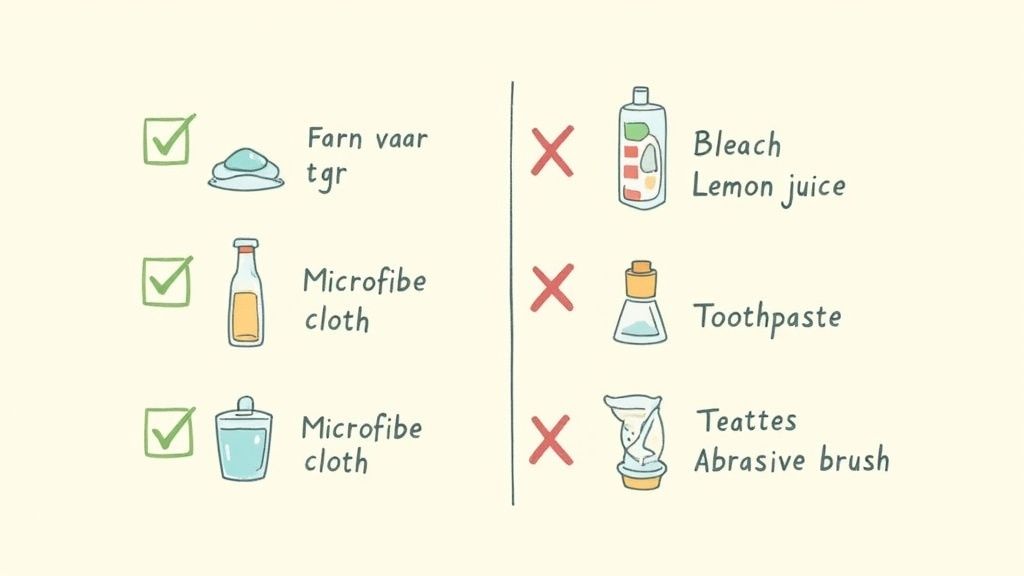
It can feel a bit confusing trying to remember what's safe and what isn't. I've put together this quick table to act as your cheat sheet, helping you make the right call every time you want to give your jewellery a clean.
Safe for Gold Jewellery
Why It's Safe
Harmful to Gold Jewellery
Why It's Harmful
Mild Washing-Up Liquid
pH-neutral and gentle, effectively dissolves oils without leaving residue.
Chlorine Bleach
Causes a chemical reaction that can permanently damage and weaken gold alloys.
Warm Water
Loosens dirt and grime safely without causing thermal shock to gemstones.
Toothpaste/Baking Soda
Contains abrasive particles that will scratch the metal's surface and dull its shine.
Soft Baby Toothbrush
Bristles are fine and gentle, perfect for cleaning crevices without scratching.
Abrasive Cleaners
Can strip away rhodium plating on white gold and damage delicate finishes.
Microfibre Cloth
Lint-free and ultra-soft, ideal for drying and buffing to a high shine.
Acidic Juices (Lemon/Vinegar)
Can damage porous gemstones and may cause pitting on the surface of some gold alloys.
By keeping this list in mind, you dramatically reduce the risk of accidentally damaging your most treasured items. Sticking to a gentle, proven method is the real secret to keeping your gold looking its best for a lifetime.
When to See a Professional Jeweller
While home cleaning is fantastic for keeping up that day-to-day sparkle, there are times when your jewellery needs more than a gentle soak and a soft brush. Knowing when to step back and hand your precious items over to an expert is just as important as knowing how to clean them yourself.
Think of a professional jeweller as a specialist for your most treasured pieces. They have the experience and, crucially, the right equipment to tackle grime and tarnish that DIY methods simply can't shift. If you've tried cleaning a piece and it still looks dull, that’s a clear signal it’s time for a professional touch.
The Power of Professional Tools
Jewellers use specialised equipment that delivers a level of clean you just can't replicate at home. The two main tools of the trade are ultrasonic cleaners and high-pressure steamers.
Ultrasonic Cleaners use high-frequency sound waves to create microscopic bubbles in a cleaning solution. These bubbles implode with incredible force, safely blasting away dirt, oil, and lotion from the most intricate settings and crevices.
High-Pressure Steamers finish the job, using a powerful jet of steam to remove any loosened dirt and residue. This not only deep-cleans but also sanitises the jewellery, leaving it brilliantly polished.
This combination safely restores the original fire to gemstones and brings a factory-fresh lustre back to the gold. When thinking about professional care, it's also smart to consider the long-term safety of your valuable pieces; for a comprehensive overview, see this essential guide to engagement ring protection.
When Cleaning Is Not Enough
Sometimes, what looks like a cleaning issue is actually a sign of a deeper problem that needs a repair. A professional assessment is vital if you notice worn-down claws, a slightly loose stone, or a clasp that doesn't feel secure. Trying to clean around these issues could easily make them worse.
A jeweller will spot these problems during a professional clean and can advise on any necessary repairs. This kind of preventative care is the key to ensuring a loose stone doesn't become a lost one.
A professional clean isn't just about aesthetics; it's a health check for your jewellery. An expert can inspect for worn prongs, loose stone settings, and clasp integrity, catching small issues before they become heartbreaking losses.
Understanding the Cost and Value
Investing in a professional clean is surprisingly affordable. In the UK, you can typically expect to pay between £20–£50 per item. The price might be slightly higher for intricate pieces with multiple gemstones, as these benefit most from a meticulous ultrasonic and steam clean.
This small investment doesn't just restore your jewellery's beauty; it provides peace of mind. While UK surveys show only 8% of people clean their jewellery twice a year, ultrasonic technology can safely remove up to 99% of trapped dirt.
For those needing a fast turnaround, many workshops offer same-day services. You can learn more about how our on-site London workshop provides expert jewellery cleaning services, often with while-you-wait options. Ultimately, a periodic professional clean is one of the best things you can do to preserve the life, beauty, and value of your gold jewellery for years to come.
Your Gold Cleaning Questions, Answered
Let's clear up some of the most common questions that come up when caring for gold jewellery. Getting these details right makes all the difference, keeping every piece in your collection safe and sparkling.
Think of this as your quick-reference guide for those specific situations you'll inevitably run into. From how often you should clean your everyday rings to the truth behind risky internet myths, these answers will fill in the gaps and give you total confidence.
How Often Should I Clean My Gold Jewellery?
The ideal frequency really comes down to wear. For pieces you live in, like an engagement ring or a favourite necklace, a little maintenance goes a very long way.
A quick wipe with a soft, dry microfibre cloth at the end of the week is a great habit. It lifts off the daily layer of oils and lotions before they get a chance to build up and dull the shine. For a more thorough clean, the gentle soap and warm water method is perfect about once a month for these high-contact pieces.
For jewellery you only wear for special occasions, like certain earrings or bracelets, a proper clean every few months is usually plenty. The key is consistency—regular, gentle cleaning is always better than letting grime build up until you need an aggressive scrub.
Can I Use Boiling Water to Clean Gold?
In a word: no. This is a dangerous myth that can cause devastating damage. While solid gold itself can handle high temperatures, the sudden, extreme thermal shock from boiling water is a huge risk for everything else on your jewellery.
Many gemstones are extremely sensitive to heat—especially opals, emeralds, tanzanite, and pearls. Plunging them into boiling water can cause them to crack internally or even shatter completely.
It's not just the stones you have to worry about. Boiling water can also weaken the soldered joints holding delicate pieces together, compromising the entire structure of your jewellery. Always stick to warm water. It’s just as effective for dissolving grime and poses zero risk.
Are Jewellery Polishing Cloths Safe for All Gold?
A great question, because not all polishing cloths are created equal. The answer depends entirely on whether the cloth is treated with chemical cleaning agents.
A simple, untreated microfibre cloth is your best friend. It’s perfectly safe for buffing any type of gold to a brilliant shine after cleaning. No harm done.
However, many cloths sold specifically for jewellery are impregnated with micro-abrasives and chemicals designed to remove tarnish. While these can work well on solid yellow or rose gold, they are extremely damaging to anything plated. They will quickly strip the thin rhodium coating from white gold or the delicate layer from gold-plated pieces. If you absolutely must use one, proceed with extreme caution and the lightest pressure imaginable.
My White Gold Looks Yellowish. Will Cleaning Fix It?
Cleaning will definitely help restore its sparkle by removing dirt, but it won't fix a yellowish tint. This is a common point of confusion for white gold owners. That brilliant, silvery-white colour you love isn't the natural colour of the gold alloy itself.
Most white gold jewellery is plated with a thin layer of rhodium, a precious metal from the platinum family. This plating provides that crisp white finish and adds a layer of scratch resistance. Over time, with normal wear, this rhodium plating gradually wears away.
As it wears, it reveals the natural, slightly yellowish hue of the white gold alloy beneath. So, while a thorough cleaning will make it shine, the only way to get that original bright white colour back is to have it professionally re-plated with rhodium by a jeweller.
For expert cleaning, rhodium plating, or any other professional care your jewellery needs, the skilled team at Opulence Jewellery Services is here to help restore its original beauty. Visit our London workshop or learn more about our services.
Learn the professional secrets to polishing a ring at home. This guide covers safe methods for gold, silver, and platinum to restore your jewellery's sparkle.
Our complete guide to mens wedding rings helps you explore styles, metals, and sizing. Find a ring that truly represents your commitment and personal style.
Shop Fine Jewellery Online
Engagement rings, wedding bands, earrings, necklaces & birthday gifts — beautifully crafted and delivered to your door.