18 November 2025 12 min read Hatton Garden, London
Learn the professional secrets to polishing a ring at home. This guide covers safe methods for gold, silver, and platinum to restore your jewellery's sparkle.
Polishing a ring is far more than a quick wipe-down; it's a careful process of removing microscopic scratches and tarnish to bring back the metal's original, brilliant lustre. For most rings, this involves a specialised polishing cloth or a gentle, non-abrasive cream made specifically for precious metals like gold, silver, or platinum.
Doing this properly is the key to maintaining your jewellery's beauty and value over time.
Why Polishing a Ring Is More Than Just a Shine
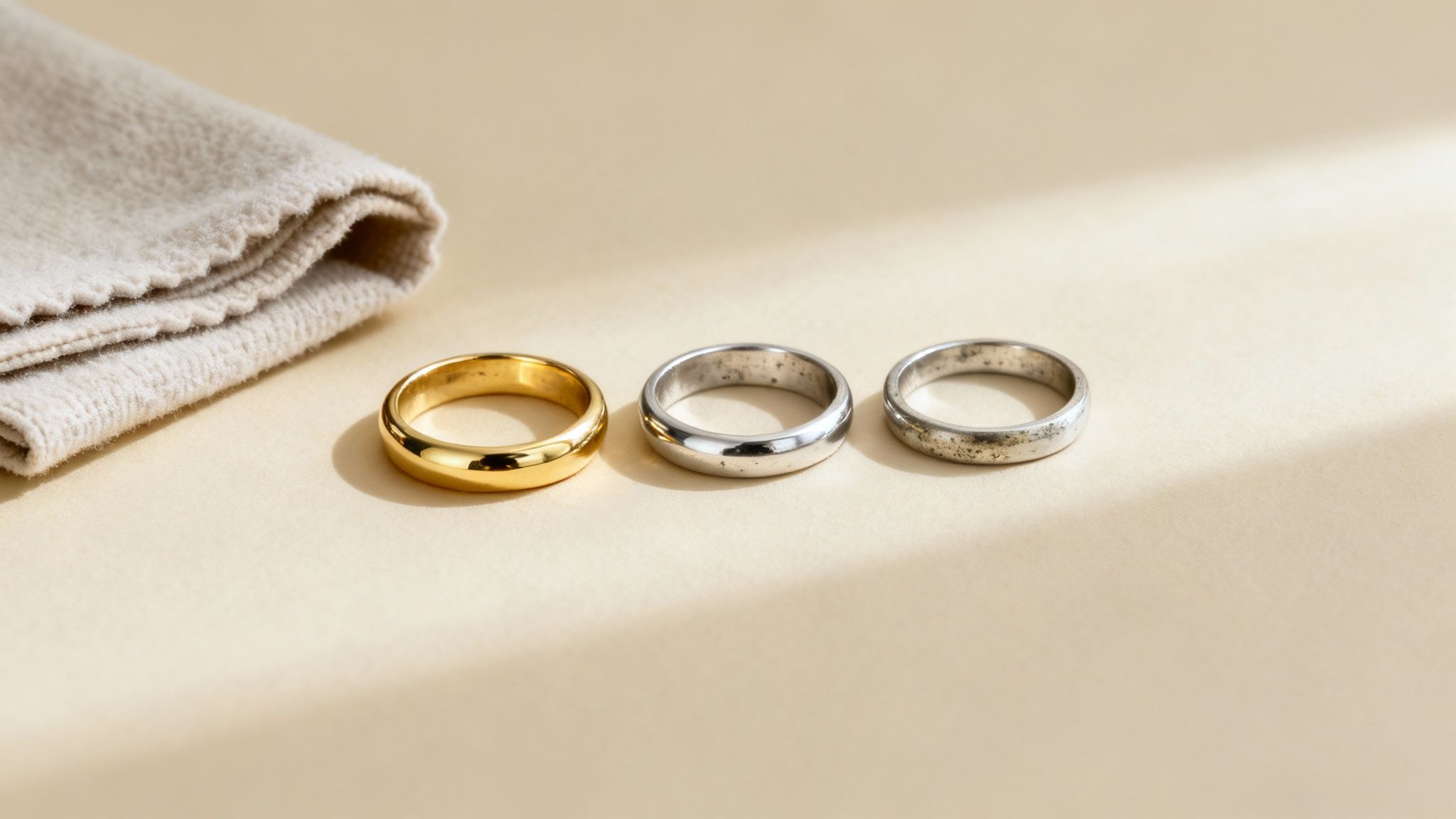
Polishing isn't just about making something look good—it’s an essential act of preservation. Day-to-day wear exposes rings to a barrage of oils, lotions, and environmental aggressors that inevitably dull their surface. This is especially true for softer metals like gold and silver, which easily pick up fine scratches that scatter light and make them look tired and lacklustre.
Regular maintenance has to go beyond simple cleaning. Polishing actively restores that smooth, reflective surface, ensuring your most cherished items look as brilliant as the day you first wore them. It's a crucial step in maintaining both the sentimental and financial value of your jewellery.
The Value in Preservation
Think of professional polishing as preventative care for your most prized possessions. By gently removing the build-up of grime and minor imperfections, you are actively extending the life of the ring. It’s a significant consideration in the UK, where the jewellery market is robust. In fact, the industry, which includes vital services like polishing and refurbishment, was projected to hit an £8.1 billion revenue by 2025. This really highlights how much people value keeping their jewellery in pristine condition.
A proper polish doesn't just make a ring shiny; it protects the metal's integrity. It removes the initial layers of grime and oxidation that can lead to more serious issues down the line, such as pitting or deep-set tarnish.
Protecting Precious Metals
Different metals need different approaches, of course. Gold, for instance, is particularly susceptible to looking dull over time. Understanding what causes this is the first step in proper care, which is why our guide on the tarnishing of gold offers deeper insights into looking after this classic metal.
Ultimately, polishing a ring is an investment in its longevity, ensuring it remains a treasured piece for years—or even generations—to come.
Essential Tools and Materials for Home Polishing
Before you jump into polishing a ring at home, getting the right supplies together is the most important step for a safe, professional-looking result. Using the wrong cloth or a harsh chemical can cause irreversible damage, so it's vital to choose tools specifically designed for your ring's metal. The good news is you don't need a huge, expensive setup; a few key items are all it takes for most jobs.
The star of your kit will be a high-quality polishing cloth. I always recommend a two-part jeweller’s cloth. These typically have one side treated with a very gentle polishing agent and another, softer side for the final buff and shine. This dual system is perfect for lifting light tarnish and bringing back that showroom lustre without being too aggressive. For routine wipe-downs, a simple, clean microfibre cloth is also a must-have.
Matching Your Tools to the Metal
The specific polishing compound you use is just as crucial as the cloth itself. Different metals react in different ways, and what works beautifully for durable platinum might be far too harsh for a softer gold alloy. For a more detailed look at the specifics of gold care, our guide on how to polish gold jewellery has some targeted advice.
Always test a new polishing product on a small, inconspicuous area of your ring first. A quick check on the inside of the band can prevent a costly mistake and confirms the product is compatible with your piece.
To help you get the right kit together, I've put together a quick reference guide for the most common ring metals you'll likely be handling.
Polishing Kit Checklist by Ring Metal
This checklist breaks down the essentials you'll need, ensuring you're prepared for your specific ring.
Metal Type
Recommended Cloth
Polishing Compound/Agent
Important Note
Gold
Jeweller's Polishing Cloth
Mild gold-specific polish or cream
Avoid abrasive agents. Yellow and rose gold are relatively soft and can scratch easily.
Silver
Silver Polishing Cloth
Silver polish liquid or cream
Sterling silver tarnishes easily; a dedicated polish will contain agents to remove it effectively.
Platinum
Microfibre & Polishing Cloth
Platinum-specific or all-metal polish
Platinum is very durable but can develop a patina. A gentle polish will restore its bright white shine.
Having these simple, metal-specific tools on hand makes all the difference between a quick touch-up and an accidental trip to the jeweller for repairs.
A Step-by-Step Guide to Polishing Different Metals
Polishing a ring isn't a one-size-fits-all job. The real secret to that brilliant, just-bought shine lies in understanding the unique character of the metal you're working with. Gold, silver, and platinum each demand a slightly different touch to bring them back to life safely. But don't worry, mastering these gentle techniques at home is surprisingly straightforward once you know how to handle their individual quirks.
This is a skill well worth having, especially when you consider how central rings are to the UK jewellery market. They're the single largest revenue generator, making up a huge 38.08% of the market share in 2024. As they're often the most worn and visible pieces we own, keeping them polished is a key part of their upkeep. You can explore more about these market trends to get the bigger picture.
Polishing Gold Rings
Gold is a relatively soft metal, particularly in higher karats like 18ct, so a gentle hand is absolutely non-negotiable. If you're too aggressive, you can easily create a web of fine scratches, which is the exact opposite of what you’re trying to achieve.
First, make sure the ring is clean and completely dry. Dab a tiny dot of a gold-specific polishing cream onto the treated side of a jeweller’s cloth. Using small, light, circular motions, work your way around the entire band. Think about the pressure you'd use to buff a delicate pair of spectacles—that’s the level of force you should be aiming for.
Pro Tip: For rings with lots of intricate details or filigree, a soft-bristled baby toothbrush can be a great help. Use it to gently work the polish into all the little crevices, then follow up with the soft side of your cloth to buff away any residue.
Restoring Silver's Lustre
Silver is notorious for its tendency to tarnish. That dark layer you see is the result of a chemical reaction with sulphur in the air. So, when polishing silver, the goal isn't just to make it shine; it's about actively removing that discolouration.
For this, you’ll want a silver-specific polishing cloth, which comes impregnated with special compounds designed to lift tarnish right off. Rub the ring firmly but evenly, moving in straight lines rather than circles to avoid creating swirl marks. You'll see the black tarnish transferring directly onto the cloth, which is a very satisfying sign that it’s working. Keep switching to a clean section of the cloth until the whole ring is bright and clear again.
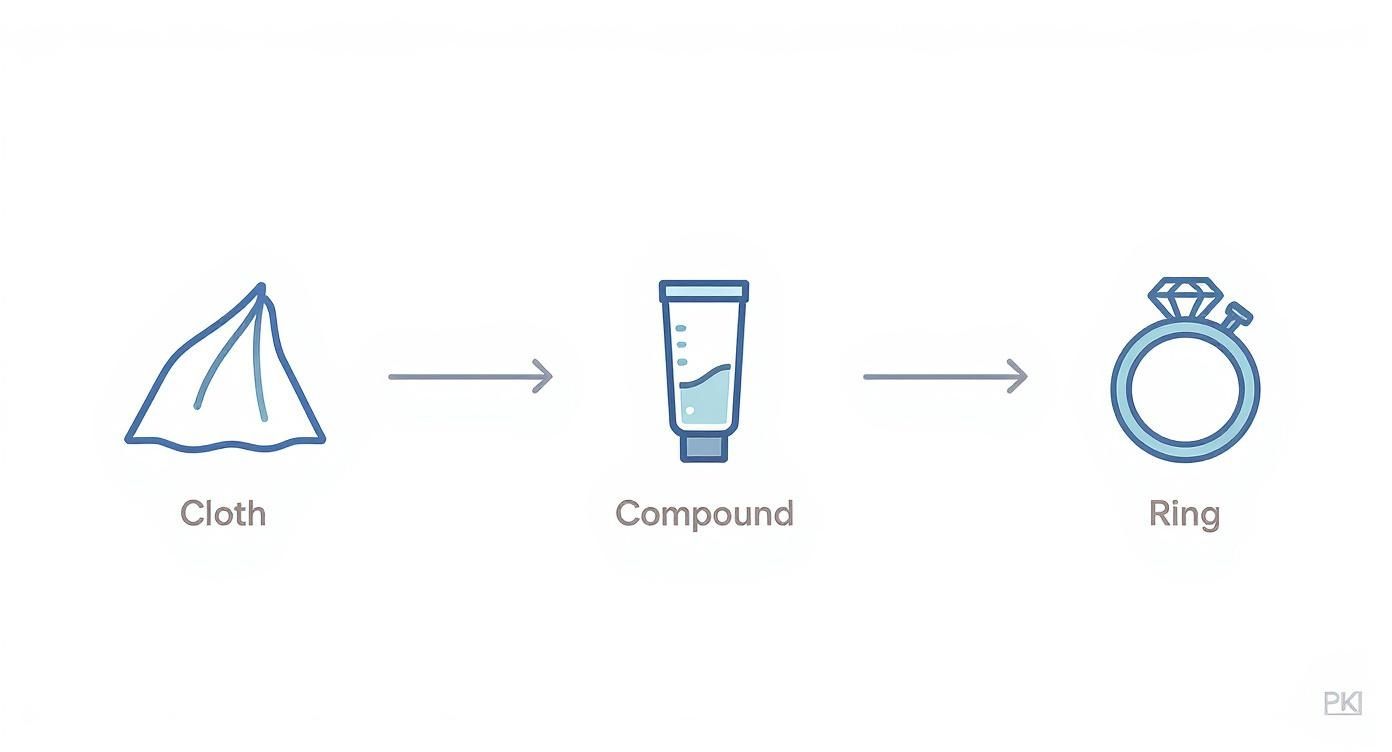
The infographic below shows you the basic tools you'll need for an effective at-home polish.
At its heart, it’s a simple three-part process: the cloth, the compound, and the ring. This is the foundation of any successful polish, no matter what metal you're dealing with.
Tackling Platinum's Unique Patina
Platinum is incredibly durable, but it doesn't scratch in the same way gold does. Instead, over time it develops a unique, soft satin finish known as a patina. When you polish a platinum ring, you're not so much removing scratches as you are restoring its crisp, white lustre.
Because platinum is so dense, you can safely apply a bit more pressure than you would with gold. Use a good all-metal or platinum-specific polish with a clean microfibre cloth. Rub vigorously in a back-and-forth motion along the band. You aren't really removing metal here, but rather smoothing it back into place to create that highly reflective surface. A final, thorough buff with a clean, soft cloth is all it takes to reveal its brilliant shine.
Caring for Rings with Gemstones and Engravings
When you’re polishing a ring, the presence of gemstones and delicate engravings completely changes the game. These are the features that give a piece its character, but they’re also the most vulnerable to damage from the wrong technique or harsh chemicals. It’s a very different process from just buffing up a plain band.
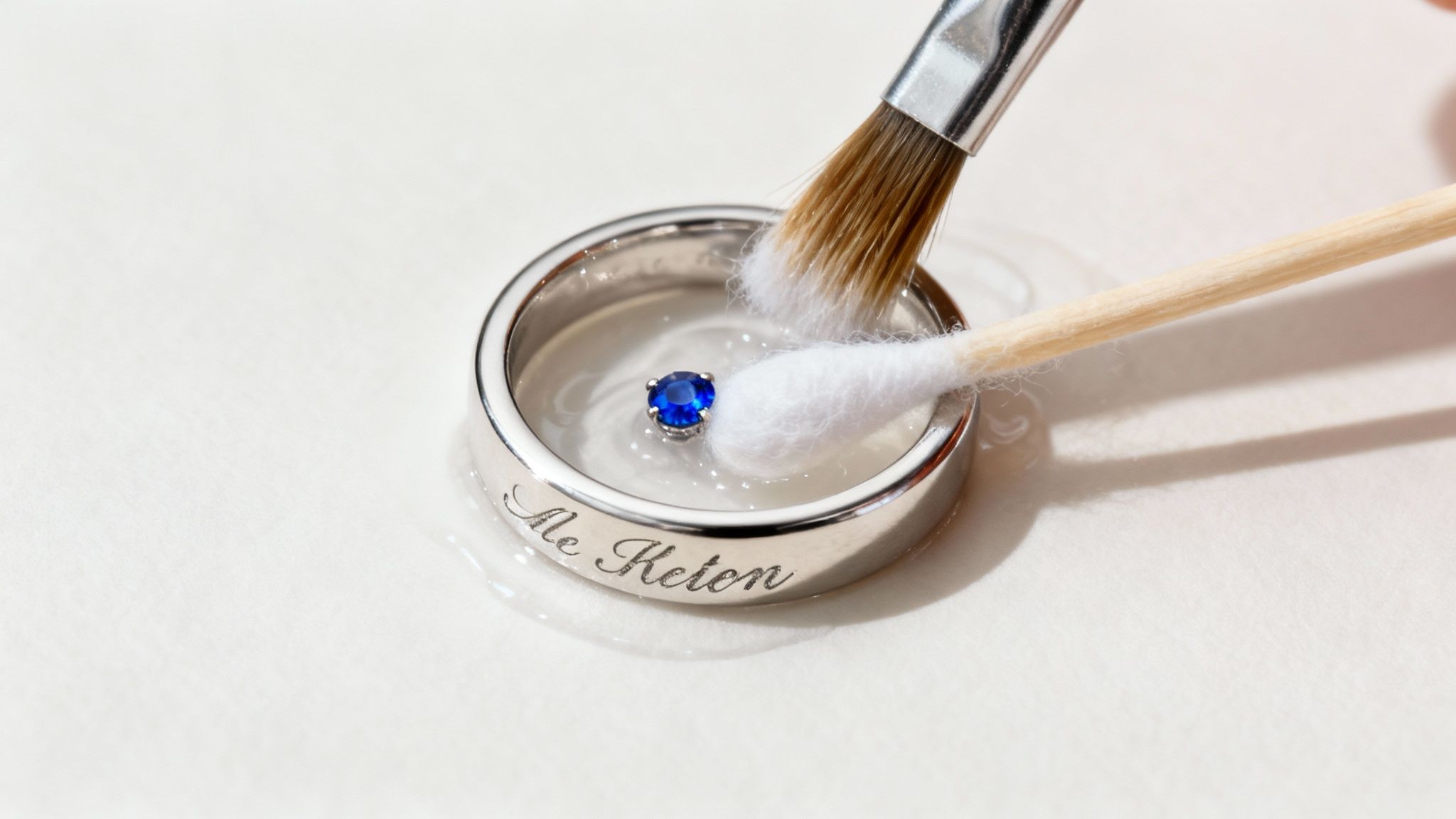
Standard polishing compounds can be abrasive enough to scratch softer stones like opals, pearls, or turquoise. Worse still, aggressive rubbing around the settings can gradually loosen the prongs, putting your precious gemstone at risk of falling out. The trick is to work around these features, not over them.
Protecting Your Precious Stones
First things first, you need to know what stone is in your ring. Some gems are incredibly tough, while others need a much gentler touch. Diamonds, for example, are famously resilient, but porous stones require specialised care.
If you want to get into the details of safe cleaning practices, our guide on choosing a diamond ring cleaner has some brilliant insights that apply to many other durable gemstones too.
To keep your stones safe while you polish, just follow these simple rules:
Avoid Porous Gems: Never let chemical polishes get near pearls, coral, opals, or turquoise. These stones can actually absorb chemicals, which often leads to permanent discolouration.
Use a Soft Brush: For getting into the nooks and crannies around a setting, a baby toothbrush with ultra-soft bristles is your best friend. It’s perfect for dislodging grime without putting any real pressure on the prongs.
Mask the Stone: For a bit of extra security, you can carefully cover the gemstone with a small piece of jeweller's tape before you start polishing the metal band.
Remember, the goal when polishing a ring with stones is to bring back the metal's shine without compromising the integrity of the setting or the beauty of the gem itself.
With engraved rings, the main challenge is preserving all those fine details. Over-polishing can easily wear down inscriptions, especially on softer metals like gold. You need to use a very light touch and always polish with the grain of the metal, not against the engraving. This helps keep those meaningful details looking crisp and clear for years to come.
Knowing When to See a Professional Jeweller
While a quick polish at home can work wonders on minor dullness, some jobs are best left to the experts. Knowing the difference between a simple touch-up and a task needing professional tools is key to protecting your most valuable pieces.
If you're dealing with anything more than light, surface-level scuffs, it’s time to pause. Deep scratches, gouges, or a gemstone that feels even slightly loose are all clear signals that at-home methods just won’t cut it. Trying to buff out a significant scratch yourself can easily remove too much precious metal, changing the ring's shape. And polishing around a wobbly stone? You risk making it even less secure.
The Professional Touch
A professional jeweller doesn't just polish; they restore. Using specialised buffing wheels and polishing compounds, they can safely smooth out deeper imperfections without compromising your ring's integrity. For white gold, they often finish with rhodium plating—a crucial step that restores that brilliant, crisp white finish that a simple polish can never achieve.
Visiting an expert isn't a sign of failure; it's a smart investment in your jewellery's longevity. They have the right equipment to handle complex restorations safely and effectively.
This reliance on expert, hands-on care is a cornerstone of the UK jewellery market. In fact, traditional offline businesses still held 73.49% of the market share in 2023, largely because they provide essential services like professional polishing and refurbishment that simply can't be replicated at home. You can dig deeper into these trends with this in-depth market analysis.
Got Questions About Ring Polishing?
When it comes to looking after your jewellery, a few questions always seem to pop up. After walking through the main polishing methods, it’s a good time to tackle some of the most common queries we hear in the workshop. These quick answers should clear up any lingering doubts.
How Often Should I Polish My Ring?
There’s no single answer—it really comes down to the metal and how you live your life.
A sterling silver ring you wear every day will likely need a good polish every couple of months to keep the tarnish at bay. In contrast, hard-wearing metals like gold and platinum might only need a proper polish once a year, with a bit of gentle cleaning in between.
The best guide is your own eye. If your ring starts to look a bit dull or has picked up minor scuffs, it’s time for a touch-up.
Is It Safe to Use Toothpaste for Polishing?
This is an old myth that just won't go away, but we strongly advise against it. Toothpaste is abrasive—it's designed for tough tooth enamel, not precious metals.
Using it on your ring can create thousands of tiny micro-scratches across the surface of gold or silver. Over time, this permanently dulls the finish, doing the exact opposite of what you want.
Stick to a non-abrasive, purpose-made polishing cloth or a compound specifically created for jewellery. It's the only way to restore that beautiful shine without causing underlying damage to the metal.
Can Polishing Remove Deeper Scratches?
It’s important to have realistic expectations for what a bit of at-home polishing can achieve. A jeweller’s cloth is fantastic for buffing away very fine, surface-level marks and bringing back lustre, but it’s not a fix for significant damage.
Deep scratches or noticeable gouges need a professional’s touch. A jeweller uses specialised buffing wheels and compounds to safely remove a minuscule layer of metal, smoothing the surface back to a flawless finish. Trying to replicate that process at home is far more likely to cause more harm than good.
Think of it this way: home polishing is for maintenance, while professional services are for restoration.
For any restoration work, from deep scratch removal to professional rhodium plating, the expert team at Opulence Jewellery Services is here to help. Visit our Hatton Garden workshop for a same-day assessment and bring your treasured pieces back to their original glory.
Learn the safe, expert way to diamond ring clean at home. Our guide shows you how to restore sparkle and avoid costly mistakes, straight from Hatton Garden.
Discover the truth about rhodium in rings. This guide explains what rhodium plating is, why it's essential for white gold, and how to care for your jewellery.