A Hatton Garden Expert Guide to Diamond Ring Clean at Home
04 January 2026 16 min read Hatton Garden, London
Learn the safe, expert way to diamond ring clean at home. Our guide shows you how to restore sparkle and avoid costly mistakes, straight from Hatton Garden.
That incredible sparkle from your diamond ring doesn't just vanish—it gets hidden. Over time, a thin, almost invisible film of everyday residue builds up, but the great news is, it’s completely reversible. Understanding what's causing the grime is the first step to bringing back that fire.
Why Your Diamond Has Lost Its Sparkle
Ever looked down at your hand and felt your diamond has gone a bit… flat? It’s a common experience, and it almost never means the diamond itself is damaged. The real culprit is the slow, steady build-up of residue from everyday life, which literally smothers the stone's brilliance.
A diamond's magic comes from the way it plays with light. Light enters the top of the stone (the table), bounces around the internal facets, and shoots back out to your eye. When your ring is clean, this process is incredibly efficient, creating that captivating flash we all love. But when a layer of grime coats the surface, it simply blocks the light from getting in and out properly.
The Everyday Culprits Behind a Dull Diamond
You’d be surprised what contributes to this dulling effect. It’s mostly the things your hands come into contact with daily, creating a stubborn, oily film that clings to the diamond and its setting.
Here are the usual suspects:
Hand lotions and moisturisers: They’re designed to stay on your skin, and they’ll do the same to your ring.
Soaps and hand sanitisers: While great for hygiene, many leave behind a film that kills the shine.
Hairspray and perfumes: The fine mist from these products settles easily on your jewellery, creating a sticky layer that attracts dirt.
Natural skin oils: Your own skin produces oils that constantly transfer to the ring, acting like a magnet for dust and grime.
This combination of oils and tiny particles forms an opaque barrier over the facets. Think of it like looking through a greasy window—the view is blurry because the light can’t get through clearly.
The science is simple: a diamond doesn’t create its own light, it only reflects it. Any barrier, no matter how thin, will disrupt this reflection and dial down the sparkle. Keeping those pathways clear is the key to maximum brilliance.
Thankfully, this build-up isn’t permanent. Once you know that the problem is just surface-level grime, you can easily reverse the effect and restore your ring's beauty without worrying about any lasting damage. The solution is simply a good, consistent cleaning routine.
The Safe and Simple At-Home Cleaning Method
You don’t need a jeweller’s workshop to bring back your diamond ring’s sparkle. In fact, the most effective method is often the simplest and gentlest, using just a few things you already have at home. This is the exact process we recommend to our clients in Hatton Garden for safe, routine cleaning between professional visits.
Forget about harsh chemicals or abrasive pastes. All you need is a small bowl, some warm water, a few drops of mild washing-up liquid, and a very soft toothbrush—a baby toothbrush is absolutely perfect for the job. This simple combination is all it takes to gently dissolve the everyday grime that dulls your diamond's fire.
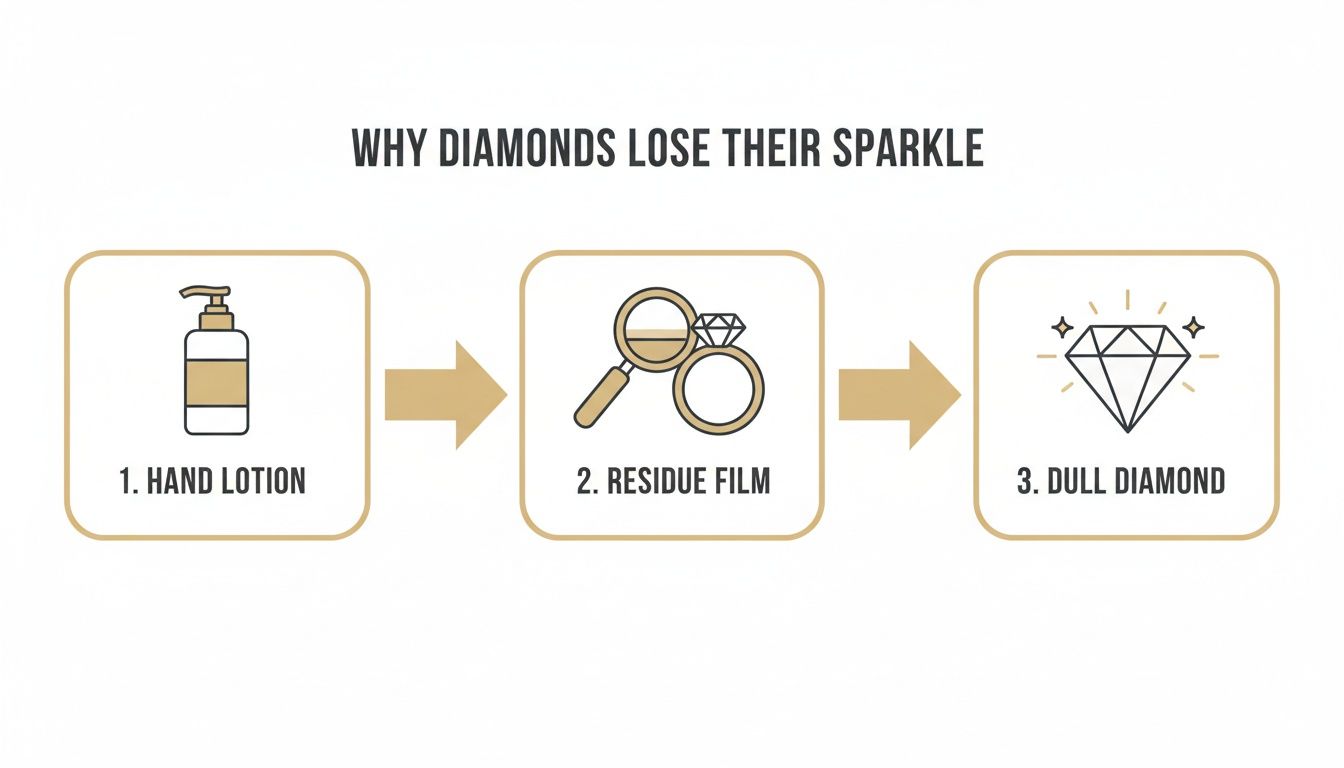
But before you start, it helps to understand what’s making your diamond look dull in the first place.
As you can see, everyday products like hand cream, soap, and even natural skin oils build up a film on the surface. This residue stops light from passing through the diamond correctly, which is why it loses its brilliance. Our main goal is simply to remove that film.
Creating and Using Your Gentle Cleaning Solution
First things first, prepare a small cleaning bath. Fill a bowl with warm water—think bath temperature, warm to the touch, but never hot. Boiling water can cause thermal shock to certain gemstones and may even weaken solders or damage metal alloys over time.
Now, add just a couple of drops of a mild, ammonia-free washing-up liquid. Give it a gentle swirl to create a light, sudsy solution. Pop your ring in the bowl and let it soak for 20 to 40 minutes. This is the most important part; the soak does all the hard work, patiently dissolving the layers of oil and lotion without you having to scrub at all.
Pro Tip: Always, always close the sink drain before you start. An even safer bet is to place a small tea strainer over the drain while you're rinsing. It’s a simple trick that has saved countless rings from a very stressful trip down the plumbing.
Once the soak is done, it’s time for a very gentle brush. Lift the ring out of the water and use your soft-bristled baby toothbrush to carefully clean around the diamond. The most critical area to focus on is underneath the stone and around the claws or setting. This is where dirt gets compacted, blocking light from entering the pavilion (the bottom part of the diamond) and killing its sparkle.
Use soft, circular motions. The idea isn't to scrub aggressively, but just to dislodge the now-softened grime from all those tiny crevices. Be methodical and make sure you get into every nook and cranny of the setting.
Quick Guide to At-Home Diamond Cleaning
To make sure your at-home cleaning is both safe and effective every single time, here’s a simple checklist of our top do's and don'ts.
Practice (Do)
Why It's Recommended
Mistake (Don't)
Why It's Harmful
Use a baby toothbrush
Ultra-soft bristles get into tiny gaps without scratching the metal.
Use a regular or hard toothbrush
Stiff bristles can leave micro-scratches on gold or platinum over time.
Soak for 20-40 mins
Gently dissolves stubborn grime, making removal easy.
Scrub aggressively
Can loosen delicate claws (prongs) or damage intricate settings.
Use mild, clear dish soap
Effectively cuts through oils without leaving a chemical film.
Use bleach or harsh chemicals
Can discolour precious metals and damage porous or treated gemstones.
Rinse thoroughly
Removes any lingering soap residue that could dull the stone's surface.
Use paper towels to dry
Can leave behind lint fibres that get caught in the setting and may scratch soft metals.
Following these simple rules will keep your diamond looking its best and protect the integrity of your ring for years to come.
Rinsing and Drying for a Flawless Finish
After brushing, rinse your ring thoroughly under warm, running water—again, with the drain safely blocked! A good rinse is crucial to wash away any last trace of soap film, which can create its own dulling layer if left behind.
To dry, grab a soft, lint-free cloth. A microfibre cloth or even an old, clean cotton t-shirt works perfectly. Steer clear of paper towels, as their fibres can scratch softer metals like gold and leave tiny bits of lint caught in the setting. Gently pat the ring dry, then let it air dry completely before putting it back on.
This simple yet effective process is perfect for regular upkeep. And don't forget, the metal of your ring needs care too. For great advice on that, have a look at these safe at-home gold cleaning methods. For a deeper dive into jewellery care, you can also explore our own comprehensive guide to diamond jewellery cleaning.
Adjusting Your Cleaning for Different Ring Styles
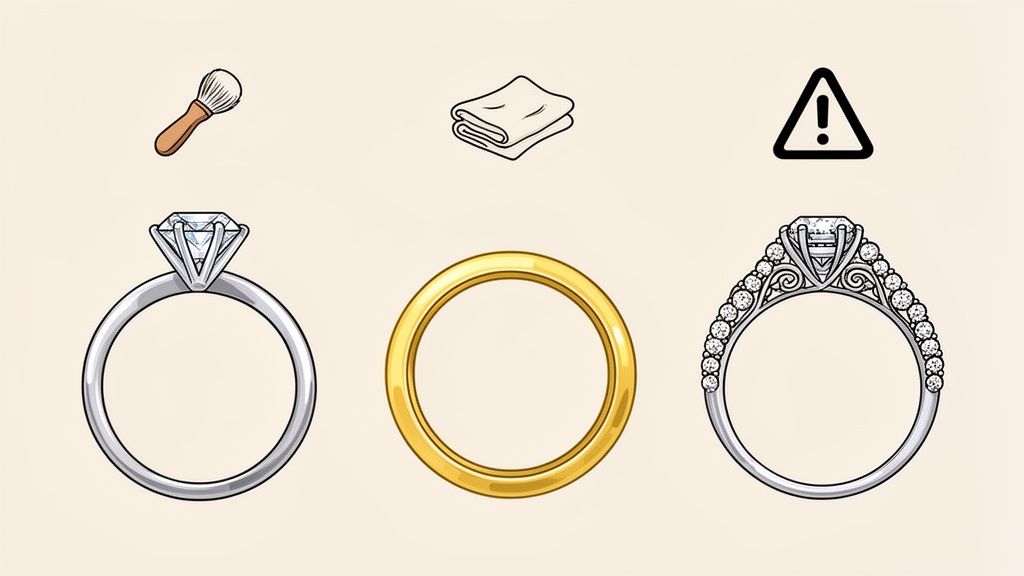
That gentle soap-and-water method works beautifully for most diamond rings, but it's important to remember that not all rings are created equal. A classic solitaire has very different needs from an intricate vintage piece, so tweaking your technique is key to a safe and effective clean.
The two things you really need to consider are the metal type and the setting style.
For instance, a sturdy platinum ring can handle slightly more frequent cleaning than a delicate gold one. Getting these small details right means you’re not just cleaning your ring, but genuinely caring for it.
Tailoring Your Approach to Precious Metals
Different metals have unique properties that dictate how they should be cleaned. Being too vigorous with a softer metal or using the wrong solution on a plated one can cause unintended damage over time.
Yellow Gold and Rose Gold: These are relatively soft, especially in higher karats like 18k. While durable enough for daily life, they can pick up tiny scratches. Always use the softest baby toothbrush you can find and resist any temptation to scrub hard. A gentle touch is all that’s needed.
Platinum: As one of the toughest metals in jewellery, platinum is highly resistant to scratching. You can be a little more confident when brushing around platinum settings, though a soft brush is still the best choice to protect the diamond itself.
White Gold: This metal needs special attention. It's almost always plated with rhodium to get that bright, silvery-white finish. Abrasive cleaning can wear this plating away, exposing the slightly yellowish gold underneath. For white gold, stick strictly to soaking and use minimal, gentle brushing to keep its lustre.
Remember, the goal is always to dissolve grime, not to scrub it away. The gentler you are with the metal, the longer its original polished finish will last, saving you trips for professional repolishing.
Special Care for Delicate Settings
The way your diamond is held in place—its setting—determines how carefully you need to work. Some designs are far more fragile than others and need an extremely light hand to avoid loosening stones. A robust bezel setting can handle more direct cleaning than a pavé band where dozens of tiny diamonds are held by small beads of metal.
For a deeper dive into jewellery care, you might find our guide on the best ways to use a diamond jewellery cleaner for various pieces helpful.
Setting-Specific Cleaning Tips
Think about these common ring styles and their unique cleaning needs:
Pavé and Micro-Pavé Settings: These feature lots of small diamonds set closely together. Be incredibly gentle here, as vigorous brushing can easily dislodge a stone. Focus on soaking and use your soft brush with a light dabbing or tapping motion, not a scrubbing one.
Tension Settings: Here, the diamond is held in place by the pressure of the band itself. They're secure, but can be sensitive. Clean carefully around the open sides of the diamond and avoid putting any direct pressure on the stone.
Vintage and Filigree Rings: Older, intricate designs often have delicate metalwork and countless tiny crevices. A long soak is your best friend here. Be patient and use your brush to lightly flick debris out of the detailed areas.
This focus on careful maintenance over aggressive cleaning is becoming more widespread. The UK jewellery cleaners market is growing, partly because people are realising that proper care is far more cost-effective than repairs, especially with rising metal costs. It’s a smart way to protect your investment.
Common Cleaning Mistakes That Can Damage Your Ring
We’ve all been there—you want to give your ring a quick clean and bring back that sparkle. While the intention is good, reaching for the wrong thing from under the sink can cause real, lasting damage. Knowing what not to do is just as important as knowing the right way to clean your jewellery.
Some household products might seem like a quick fix, but they pose a serious risk to your ring’s metal and even the stones themselves. A little bit of knowledge here will save you a lot of heartache later.
Steer Clear of Harsh Household Chemicals
It’s tempting to grab a powerful cleaner for stubborn grime, but please don't. This is one of the fastest ways to ruin a piece of fine jewellery. The chemicals in many everyday products can wreak havoc on precious metals and gemstones.
Keep your ring far away from these:
Bleach and Chlorine: These are incredibly aggressive. They can actually break down the alloys in gold, leading to pitting, corrosion, and permanent discolouration. Even a quick dip in a chlorinated swimming pool can do more harm than you'd think.
Acetone: Found in most nail polish removers, acetone is another one to avoid. It can easily dull the finish on your ring's band and cause damage to more porous or treated gemstones.
The rule of thumb we live by is simple: if you wouldn't put it on your skin, don't put it on your fine jewellery. Stick to mild, pH-neutral soaps to stay safe.
The Problem with Abrasive "Hacks"
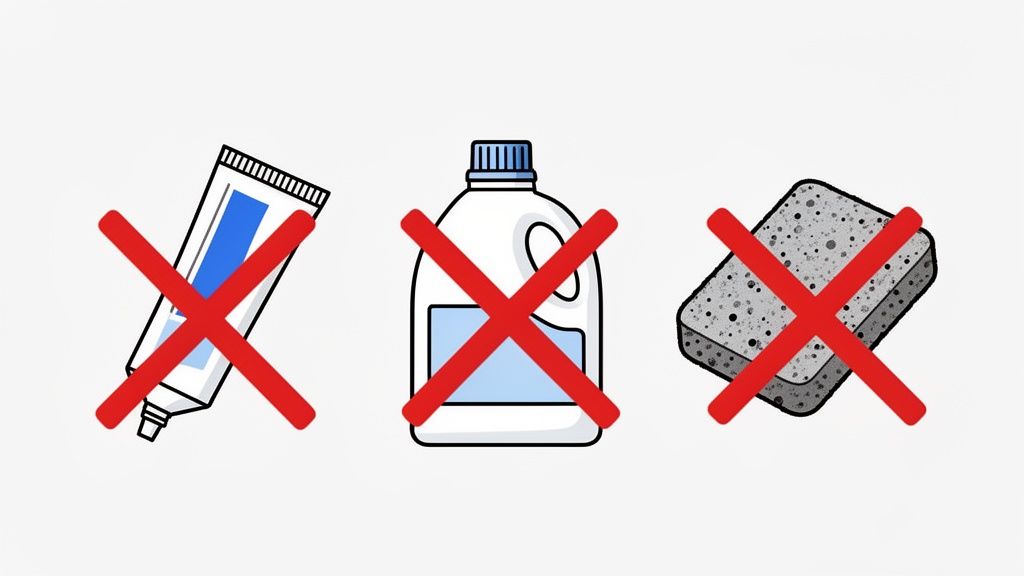
You’ve probably seen online tips suggesting toothpaste or baking soda as a DIY ring cleaner. This is terrible advice. While these might feel soft to the touch, they contain fine abrasive particles that act like sandpaper on the metal of your ring.
Using them creates thousands of micro-scratches across the surface of the gold or platinum. Over time, these tiny scratches build up, turning a beautiful, bright polish into a dull, hazy mess. They essentially strip away that lovely lustre, and the only way to get it back is with a professional polish.
The Hidden Dangers of Home Ultrasonic Cleaners
At-home ultrasonic cleaners sound like a brilliant idea, using vibrations to shake dirt loose. And while the professional-grade machines we use in our workshop are fantastic, the consumer models can be risky.
The intense, untuned vibrations can easily loosen small stones, especially in delicate pavé or tension settings, and you might not even realise it's happened until a stone is gone. There's been a real surge in people bringing in jewellery for repair after using these home devices. While the market for at-home care products is growing, as highlighted by market analysis on dataintelo.com, a professional service remains the safest bet to avoid costly repairs.
Here at Opulence, our BSI-compliant equipment is precisely calibrated to clean deeply and powerfully without ever putting your ring's integrity at risk.
When to See a Hatton Garden Professional
Regular at-home cleaning is your first line of defence against dullness, keeping your diamond ring looking bright from week to week. But even the most diligent routine can’t replace the deep, restorative clean and expert inspection that a professional jeweller provides.
There are a few tell-tale signs it’s time to pause the DIY methods and let us take a look.
Stubborn, deeply ingrained grime is a classic one. If you’ve soaked and gently brushed your ring but a hazy film or dirt packed into the setting just won’t budge, it's time to stop. Pushing harder risks damaging the metal or, even worse, loosening a precious stone.
Another major red flag is any kind of movement or sound. If you hear a tiny rattle or suspect a claw is even slightly out of place, professional help isn't just a good idea—it's essential.
The Professional Difference: Deep Cleaning and Inspection
In our Hatton Garden workshop, we use equipment that goes far beyond a simple soak. Our professional-grade ultrasonic machines use high-frequency sound waves to create microscopic bubbles in a cleaning solution. These bubbles gently but powerfully dislodge dirt, oil, and debris from even the most inaccessible nooks and crannies of your ring, all without any abrasive scrubbing.
Next comes a high-pressure steam clean, which blasts away any remaining residue. The result is completely pristine diamond and metal surfaces that are brilliantly reflective. It’s a level of clean that just can’t be matched at home, restoring that fresh-from-the-box sparkle.
At Opulence Jewellery Services, cleaning is only half the story. Every ring we handle undergoes a thorough inspection under magnification. We check every single prong for integrity, ensure all stones are secure in their settings, and look for any signs of wear and tear that could become a problem later.
More Than Just a Sparkle: Our While-You-Wait Services
We get it—you don't want to be without your cherished ring for long. That's why we offer a same-day, while-you-wait service right here in our state-of-the-art workshop. You can often watch our skilled jewellers as they work, giving you complete peace of mind.
Beyond a deep clean, we offer a range of services to fully restore your ring’s original beauty:
Professional Polishing: Over time, all precious metals develop micro-scratches that create a dull appearance. Our expert polishing removes these, bringing back a flawless, mirror-like shine. For a detailed look, check out our guide on how to professionally polish a diamond ring.
Rhodium Plating: For white gold rings, we can re-apply a fresh layer of rhodium to restore that bright, crisp, silvery-white finish.
Claw Retipping: If we spot a worn-down prong during inspection, we can rebuild it on the spot, making sure your precious diamond remains secure for years to come.
This commitment to comprehensive care is vital in the UK's thriving jewellery market. Valued at £4.4 billion in 2023 and projected to hit £7.8 billion by 2025, the sector's growth shows just how much we value fine jewellery and its proper maintenance. Our BSI-compliant ultrasonic cleaning and affordable polishing, starting from just £15, provide the expert care your treasured pieces deserve.
Your Diamond Ring Cleaning Questions Answered
To finish up, let's run through a few of the most common questions we hear from clients in our workshop. Getting these answers straight can make all the difference in looking after your ring with real confidence.
How Often Should I Clean My Diamond Ring?
Honestly, this really comes down to your lifestyle. If you have a very hands-on job—maybe you're a chef, a nurse, or a gardener—you're exposing your ring to lotions, oils, and general grime constantly. In that case, a quick at-home clean once a week is a brilliant habit. It stops that dulling build-up in its tracks and keeps the sparkle alive.
For most people with office jobs or less demanding daily routines, giving it a gentle clean every two to four weeks is more than enough. The most important thing isn't sticking to a rigid schedule, but simply keeping an eye on it. If your diamond starts to look a bit cloudy or lacks its usual fire, it’s telling you it’s time for a soak.
Are At-Home Ultrasonic Cleaners a Good Idea?
We get asked this one a lot. While the professional-grade ultrasonic cleaners we use are fantastic tools, the consumer models you can buy online are a different story. They often vibrate far too aggressively and aren't calibrated for delicate jewellery, which can easily shake small pavé or channel-set stones loose.
We regularly see rings come into the workshop for stone replacement right after someone has used a home ultrasonic machine. It’s just not worth the risk.
For home care, it's so much safer to stick with the simple soap-and-water method. Leave the heavy-duty ultrasonic work to the professionals.
What’s the Best Way to Clean an Antique or Heirloom Ring?
With any antique or heirloom piece, the golden rule is to be exceptionally careful. These rings often have intricate filigree work, older setting styles, or stones that are more fragile than modern-cut diamonds. Never, ever use harsh chemicals or anything abrasive.
For these irreplaceable treasures, we strongly advise against anything more than a gentle wipe with a soft, lint-free cloth at home. The risk of damaging the delicate metalwork or dislodging a stone that's been secure for decades is just too high. It's always the wisest choice to bring it to a professional jeweller who understands how to assess its unique condition and clean it safely.
Ready to see your ring with that original, breathtaking sparkle again? The experts at Opulence Jewellery Services offer professional, while-you-wait cleaning and inspection right here in our Hatton Garden workshop. Visit us for a same-day service and let us make your jewellery look as good as new.
Discover the timeless elegance of the engagement ring emerald cut. Our guide covers choosing the perfect diamond, setting, and provides expert care tips.
Discover how to get the perfect fit for your big day. Our expert guide covers sizing wedding rings, resizing costs, and finding the right jeweller in London.
Shop Fine Jewellery Online
Engagement rings, wedding bands, earrings, necklaces & birthday gifts — beautifully crafted and delivered to your door.