A Jeweller's Guide to Sizing Wedding Rings in the UK
05 January 2026 15 min read Hatton Garden, London
Discover how to get the perfect fit for your big day. Our expert guide covers sizing wedding rings, resizing costs, and finding the right jeweller in London.
Your wedding ring is more than just a piece of jewellery. It's a symbol you wear every single day, a constant reminder of your commitment through every season of life. So when it doesn't fit properly, it's a real source of frustration. Too tight, and it's just plain uncomfortable. Too loose, and you're always worried you might lose it.
Getting the size right from the very beginning means your ring will feel like it’s truly a part of you.
Why the Perfect Wedding Ring Fit Matters
A wedding ring should feel secure, but not restrictive. You want it snug enough that it won't slip off, yet comfortable enough to handle the natural swelling and shrinking your fingers go through. It's something most people don't think about, but your finger size can change quite a bit during a single day, for reasons that have nothing to do with weight.
For instance, your fingers are often a bit smaller first thing in the morning or when you're feeling cold. On the other hand, they can swell up after a workout, during a flight, or in hot, humid weather. Even a particularly salty meal can make your ring feel tighter for a while. This is exactly why getting a professional fitting is so crucial—an experienced jeweller knows to account for these little fluctuations to find your true, comfortable size.
A perfectly sized ring should slide over your knuckle with a little bit of resistance, then sit comfortably at the base of your finger without spinning or pinching. That balance is the secret to all-day comfort and peace of mind.
Planning for a Lifetime of Comfort
Choosing and sizing your wedding bands is a big moment in your preparations. It’s an important detail to consider right from the start, as you begin exploring the first steps to planning your wedding. A ring that fits just right will be a joy to wear for decades to come.
Here in our Hatton Garden workshop, we guide couples through the nuances of ring sizing every day. We always take these key factors into account:
The Ring's Width: A wider band takes up more real estate on your finger, which means it will feel much snugger than a skinny band of the exact same size. For chunkier styles (6mm and above), we almost always suggest going up by a quarter or half a size.
Stacking with Other Rings: If you plan on wearing your wedding band right next to your engagement ring, the combined width will make both feel tighter. We always recommend sizing them together on your finger to get a realistic feel for the fit.
Your Unique Hand Shape: The difference in size between your knuckle and the base of your finger is a huge factor. We'll help you find that sweet spot where the ring is secure enough to get over the knuckle but doesn't feel loose once it's on.
How to Confidently Measure Your Ring Size at Home
While nothing beats a professional fitting in our workshop, getting a good estimate at home is a brilliant first step. This initial measurement arms you with knowledge, making your visit to a jeweller far more productive. It gives you a solid idea of what to expect when discussing sizing for wedding rings. The process is simple, but a few insider tips can make a world of difference.
First things first, let's get your tools. You don't need anything fancy; a thin strip of paper or a piece of non-stretchy string and a ruler will do just fine. The real key here is when you measure. Your fingers naturally swell and shrink throughout the day, so for the most reliable reading, measure towards the evening when your hands are warm and at their largest.
Crucial Tip: Never measure your fingers when you're cold. The cold makes your fingers shrink to their smallest, which could lead you to pick a ring that feels uncomfortably tight during warmer weather or after a bit of exercise.
Getting an Accurate Measurement
When you're ready, wrap the paper or string snugly around the base of your ring finger. It needs to be firm, but not so tight that it's digging into your skin. You're trying to mimic how a real wedding ring should feel—secure enough that it won't just fall off, but loose enough to slide over your knuckle with a little bit of a push.
With the paper or string wrapped around your finger, grab a pen and carefully mark where the end overlaps. Accuracy here is vital; even a single millimetre can be the difference between one size and the next. Now, unwrap the paper or string and lay it flat against a ruler. Measure the distance from the end to your mark in millimetres (mm). That number is your finger's circumference.
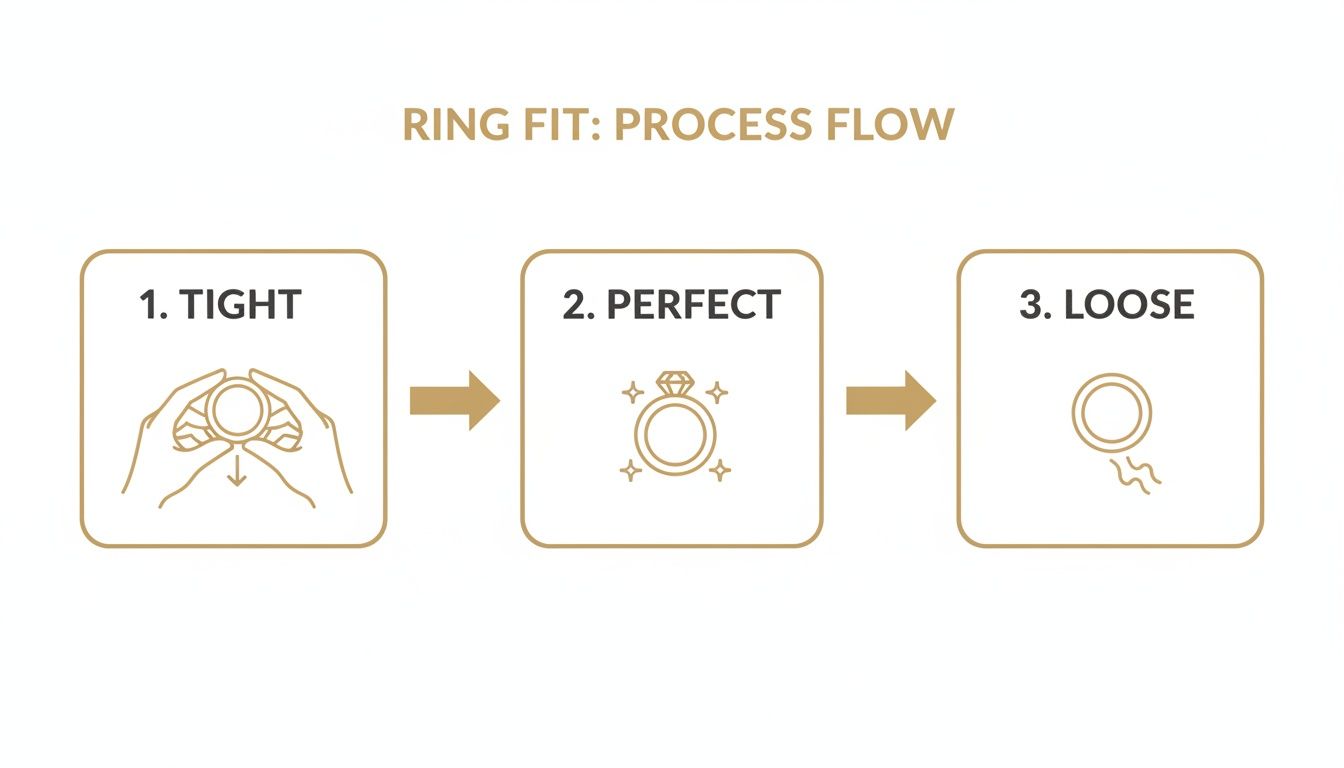
This chart gives you a quick visual on what you're aiming for—not too tight, not too loose, but just right.
As you can see, the ideal fit sits comfortably at the base of your finger without pinching or leaving a big gap.
Converting Your Measurement to a UK Size
With your circumference measurement in hand, you can now figure out your approximate UK ring size, which uses a lettered system. You can easily compare your number against a standard conversion chart.
For a quick reference, here's a simple conversion table covering the most common sizes.
Circumference (mm)
UK Ring Size
Common For
49.0 mm
J
Women
51.5 mm
L
Women
53.8 mm
N
Women (Avg.)
56.3 mm
P
Women/Men
58.9 mm
R
Men
61.5 mm
T
Men (Avg.)
63.8 mm
V
Men
66.3 mm
X
Men
Remember, this is a starting point. For a more detailed guide and a comprehensive chart, you can learn more about how to measure a ring size in the UK.
A few final points to keep in mind:
Measure a few times: Your finger size can fluctuate. Take your measurement three or four times on different days to find a consistent average.
Consider your knuckle: If your knuckle is much larger than the base of your finger, measure both areas. You'll need a size that can comfortably slide over the knuckle without being too loose at the base.
Think about the band's width: A wider wedding band takes up more space and will always feel tighter. If you're planning on a band wider than 5mm, you might need to go up half a size from your measurement.
This at-home measurement is your first step in the journey of sizing wedding rings, providing a fantastic baseline before you come in for a professional consultation.
Inside the Workshop: The Art of Professional Ring Resizing
When you step inside a jeweller's workshop, you’re entering a world of precision and craft. Sizing a wedding ring is far more intricate than just a quick snip and solder; the approach a master jeweller takes is dictated entirely by the ring itself—its metal, its design, and any stones it might hold.
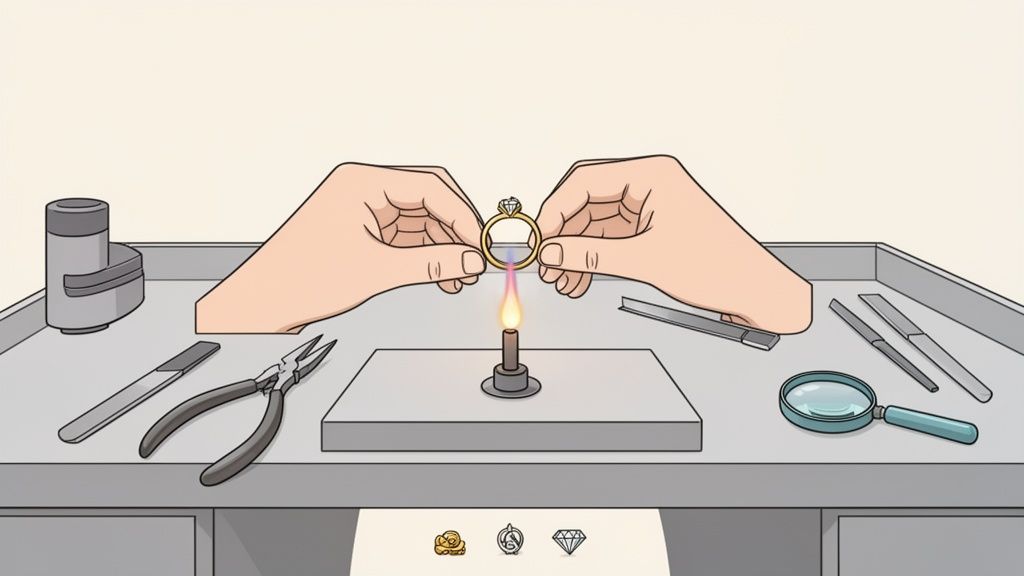
Take a classic plain gold band. It’s relatively straightforward work. Gold is a wonderfully malleable metal, so we can make adjustments with very predictable results. To make it smaller, we carefully cut a small piece from the shank (the bottom of the ring), reshape it into a perfect circle, and then meticulously solder the ends back together. A final polish makes the join completely invisible.
To go up in size, we cut the shank and gently open it up before soldering a new, perfectly matched piece of gold into the gap. This keeps the band's thickness and integrity consistent.
Handling Different Metals and Designs
Not all metals are as obliging as gold, though. Platinum, for instance, is prized for its strength and purity, but it has a much higher melting point. This demands specialised tools and a higher level of skill. Soldering platinum requires intense, focused heat to forge a seamless bond that’s just as strong as the original metal.
The real challenge comes with intricate designs and gemstone settings. Eternity rings, with their continuous line of diamonds, are notoriously tricky to resize. Any cut risks disrupting the pattern and, more importantly, compromising the security of the stones.
For rings like this, traditional resizing often isn't an option. We might explore alternatives like adding small sizing beads inside the band, which create a snugger fit without altering the ring's exterior at all.
The Role of Modern Technology
Modern technology has genuinely changed how we approach delicate jobs. For rings with heat-sensitive gemstones like emeralds or opals, the high temperatures from a traditional soldering torch pose a huge risk—the heat can easily cause them to crack or change colour.
This is where advanced techniques come in. Many modern workshops now use specialised equipment to protect these precious gems. For a closer look, you can explore our guide on the precision of laser welding in jewellery repair. This method allows us to work incredibly close to stones without transferring any damaging heat.
When a ring needs a significant size increase (usually more than two sizes), or if the shank has become thin from years of wear, a full shank replacement is often the safest and most durable solution. We simply remove the bottom section of the band and replace it with a brand new, thicker piece of metal, ensuring the ring is ready for many more years of wear.
While resizing is a common request, it's interesting to note that in the UK, the most popular wedding ring size for women is between L and M, and for men, it’s typically between S and T. Even so, statistics suggest up to 30% of new rings need an adjustment after being purchased—a service we specialise in right here in Hatton Garden.
What to Expect from Ring Resizing Costs and Timelines
When you bring a ring in for resizing, the two biggest questions are always the same: "How much will it cost?" and "How long will it take?" The truth is, the answer is different for every ring.
The final price tag comes down to a few key variables. Making a ring smaller is usually less expensive than making it bigger, simply because sizing up requires the goldsmith to add more precious metal.
The type of metal is a huge factor, too. A platinum band, for instance, has a much higher melting point and demands more specialised skill (and time) to work on than a simple gold one.
Breaking Down the Costs
A straightforward resizing job, like for a plain gold wedding band, might start from around £50. But that's just a baseline. The price will climb depending on the ring's complexity and the metal it’s made from.
Here’s what really influences the quote:
Metal Type: Platinum and palladium cost more to work with than gold or silver.
Size Adjustment: Going up by more than two sizes costs more because of the extra gold or platinum needed.
Ring Design: A plain band is simple. A ring covered in pavé-set diamonds or intricate engravings? That requires painstaking work to protect every detail.
It's worth remembering the value you're protecting. UK buyers in 2023 spent an average of £2,285 on both wedding bands combined, with platinum leading the way. With up to 40% of people needing a resize at some point, professional work is vital to preserve that investment. Find more on this in the 2024 wedding ring trends on county.wedding.
Understanding the Timelines
The time it takes to get your ring back can range from a couple of hours to over a week. Most high-street jewellers will quote you three to ten working days because they often send pieces to a central workshop.
That timeline doesn't work for everyone, especially when it's a piece you wear every day. This is where a specialist workshop like ours in Hatton Garden makes all the difference.
Many London workshops with on-site facilities can offer a same-day, while-you-wait service for most standard resizing jobs. You can often have your ring perfectly fitted and back on your finger in just a couple of hours.
This express service is a lifesaver for busy schedules or for anyone who feels anxious about parting with such a meaningful item. For a closer look at what to expect, check out our full guide on how long ring resizing takes.
Of course, more complex jobs will naturally take longer. Resizing a full eternity ring or replacing the entire back of the band (a full shank replacement) requires more time and care. A good jeweller will always give you a clear, realistic timeline before they start any work, so there are no surprises.
Solutions for Rings That Are Difficult to Size
Some wedding rings present a genuine puzzle when it comes to resizing. Eternity bands, with their unbroken circle of gemstones, leave no plain metal to work with. Likewise, rings made from super-hard metals like titanium or those covered in detailed engravings can't be cut and soldered without ruining their design.
But a challenge doesn't mean it's impossible. When a traditional resize isn't on the table, we turn to a range of clever, specialised solutions.
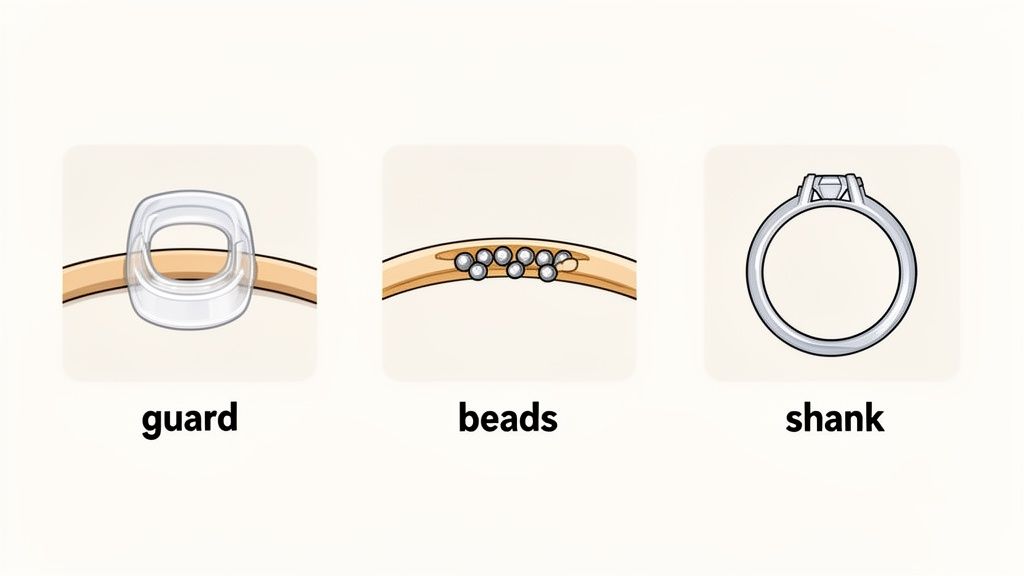
For a ring that's just a little too loose, a simple plastic ring guard can be a great temporary fix. These small coils slip onto the bottom of the band, taking up a bit of extra space to create a snugger fit without any permanent alteration.
However, for a more lasting and elegant solution, we often recommend other methods.
Permanent and Semi-Permanent Adjustments
For a permanent fix that doesn't involve cutting the ring, one of the most effective techniques is adding sizing beads. A jeweller can solder two small metal beads onto the inner surface of the shank. These beads anchor the ring, preventing it from spinning or slipping, and can effectively reduce the fit by about half a size. They're a brilliant solution for top-heavy rings.
Another excellent option is installing a spring insert or an adjustable shank. This involves replacing a small portion of the band with a hinged mechanism that can open to slide over a larger knuckle and then close securely at the base of the finger.
The goal is always to find a solution that respects the ring's original design while delivering the comfort and security you need. Expert craftsmanship can almost always find a way, even for the most complex pieces.
For rings where the design is only on the top half, a full shank replacement might be the best course of action. This is where we remove the entire bottom half of the band and replace it with a new piece of metal, perfectly sized to your finger. It's an intensive process, but it provides a seamless, durable, and perfectly fitted result.
The need for these creative solutions is often influenced by current styles. Engagement ring trends, for instance, have a direct impact on wedding band choices and the complexities of sizing wedding rings. With oval diamonds now accounting for 33% of sales and wider ring styles becoming more popular, ensuring a wedding band stacks perfectly is key.
This often means a wedding band needs to be slightly larger, contributing to why an estimated 20-30% of rings require some form of adjustment after the proposal. You can discover more insights into how trends affect ring sizing on queensmith.co.uk.
Your Wedding Ring Sizing Questions, Answered
When it comes to resizing something as precious as a wedding ring, a few questions always pop up. Getting clear, honest answers from a jeweller takes the stress out of the whole process. We’ve put together the most common queries we hear in our workshop to give you that confidence.
Our job is to demystify the resizing process so you can make the right call for your most important piece of jewellery.
How Many Sizes Can a Wedding Ring Be Changed?
For most rings made from gold or platinum, resizing up or down two full sizes is usually straightforward. This range handles the natural fluctuations most people experience over a lifetime. Pushing it further can start to affect the ring's structure, especially if it has stones set along the band.
If you need a more significant change, a master jeweller might suggest a more involved solution. This could mean adding a larger piece of matched metal or, in some cases, replacing the entire bottom half of the ring (the shank). It’s a more complex job, but it ensures a strong, seamless finish that protects the ring for the long haul.
Does Resizing a Ring Damage It?
When a skilled jeweller does the work, resizing will not damage or devalue your ring. An expert leaves a clean, nearly invisible join that keeps the ring's strength and shape perfectly intact. The whole point of the service is to make your ring safer and more comfortable to wear, which only adds to its value.
We use precise techniques to protect every detail, from delicate engravings to the settings holding your gemstones. The ring you get back will look completely untouched, just a perfect fit.
Can You Get a Ring Resized the Same Day in London?
Absolutely. Many specialist workshops in Hatton Garden—including our own—offer a same-day, while-you-wait resizing service. Because we have a fully equipped workshop right here on-site, our experienced jewellers can handle most standard resizing jobs quickly and professionally, often in just a couple of hours.
This is a lifesaver for clients visiting London for the day, anyone on a tight schedule, or simply if you can’t bear to be without your ring for too long.
Why Does My Ring Fit Differently Throughout the Day?
It’s completely normal for your finger size to change slightly from morning to night. A whole host of things can cause your fingers to swell or shrink a little, and it's rarely a cause for alarm.
A few common culprits include:
Temperature & Humidity: Fingers often swell a bit in the heat and shrink when it's cold.
Physical Activity: Exercise gets the blood flowing, which can make rings feel tighter temporarily.
Diet: A salty meal can cause a little water retention, making fingers puff up slightly.
That’s exactly why we always recommend getting your finger sized when you’re calm and at a normal body temperature, usually in the afternoon. A perfectly sized ring should feel snug enough that it won't fall off, but still have just enough wiggle room to handle these daily changes comfortably.
At Opulence Jewellery Services, our master jewellers are here to answer all your questions and provide expert resizing with the care and precision your ring deserves. Visit our Hatton Garden workshop for a professional fitting or same-day service.
Discover the timeless elegance of the engagement ring emerald cut. Our guide covers choosing the perfect diamond, setting, and provides expert care tips.
Learn the safe, expert way to diamond ring clean at home. Our guide shows you how to restore sparkle and avoid costly mistakes, straight from Hatton Garden.