Why Does White Gold Turn Yellow: Causes, Prevention, and Restoration
02 January 2026 16 min read Hatton Garden, London
Why does white gold turn yellow? Discover the science behind alloys and rhodium plating, how to prevent yellowing, and steps to restore its shine.
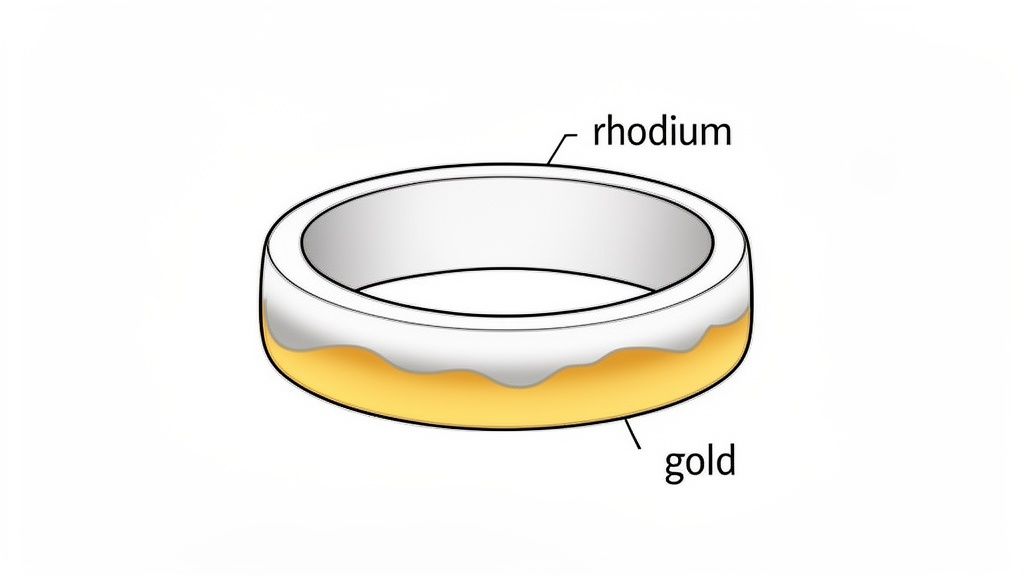
That gentle yellow hue you've noticed on your white gold ring isn't a flaw—it's just the metal's true colour peeking through. White gold isn't naturally white, you see. It's actually yellow gold that's been mixed with other metals and then coated with a brilliant white layer called rhodium. Over time, that coating simply wears away.
Uncovering the Truth About White Gold
To really understand why your white gold is turning yellow, it helps to know how it's made. The whole process involves two crucial steps. Together, they create that stunning, silvery-white metal you love, but they also explain why its colour eventually changes.
Think of it like baking. First, pure, naturally yellow gold is mixed with white metals. It’s a bit like a baker adding flour to a rich, yellow egg yolk mixture to lighten it. The aim is to pale the base colour, but that original yellow never disappears completely.
The Gold Alloy Base
The core of your jewellery is an alloy—a carefully blended mix of metals. Pure 24-karat gold is far too soft for daily wear, so it’s combined with durable white metals to give it strength and dilute that intense yellow.
Common metals used in this alloy include:
Palladium: A premium, hypoallergenic metal from the platinum family that gives the alloy a lovely greyish-white tone.
Nickel: An effective and very durable whitening agent, though some people can have skin sensitivities to it.
Silver: Adds a cooler, whiter tone to the final metal mixture.
The resulting alloy is strong, but its natural colour is a pale, off-white—often with a slightly warm or champagne-like tint. This is the true colour of white gold. And with white gold accounting for 42% of engagement ring sales in England (a big jump from 28% in 2015), it's something over 150,000 new ring owners each year should know about. You can discover more insights about white gold composition and its popularity.
The Rhodium Plating Finish
To get that crisp, mirror-like shine everyone associates with white gold, jewellers add one final, essential layer: rhodium plating. Rhodium is a rare, incredibly reflective, and extremely hard metal from the same family as platinum.
To help you visualise it, let's break down the two parts that give white gold its look.
The Two Components of White Gold's Colour
Component
What It Is
Its Role in the Overall Colour
Gold Alloy
A mixture of pure yellow gold with white metals like palladium or silver.
Forms the strong, durable core of the jewellery. It has a natural, slightly warm, off-white hue.
Rodium Plating
An ultra-thin coating of rhodium, a brilliant and hard platinum-group metal.
Applied as a final layer to give the piece its bright, reflective, pure-white finish and added scratch resistance.
This table shows how the warm base and the cool coating work together. It's the plating that really defines the look.
Rhodium plating is the secret ingredient. It acts like a brilliant, protective top coat, giving the piece its signature bright white finish and adding a layer of scratch resistance.
This coating is applied using an electroplating process, which bonds a micro-thin layer of rhodium to the surface of the gold alloy. But this layer is incredibly thin—often just 0.05 to 0.1 microns. Through daily wear, friction from your skin, clothes, and surfaces gradually erodes this delicate coating.
Once it's gone, the warmer, yellowish alloy beneath is revealed. And that, in a nutshell, is why your white gold is turning yellow.
Everyday Habits That Cause White Gold to Yellow
That brilliant white finish on your jewellery comes from an incredibly thin layer of rhodium plating. Think of it like a coat of paint, only far more precious. Because it’s so fine, it’s vulnerable to the small, repeated pressures of daily life.
You might not even notice it happening, but many of your day-to-day actions are slowly wearing away this protective surface. Over time, this reveals the naturally warmer, yellowish gold alloy hidden beneath.
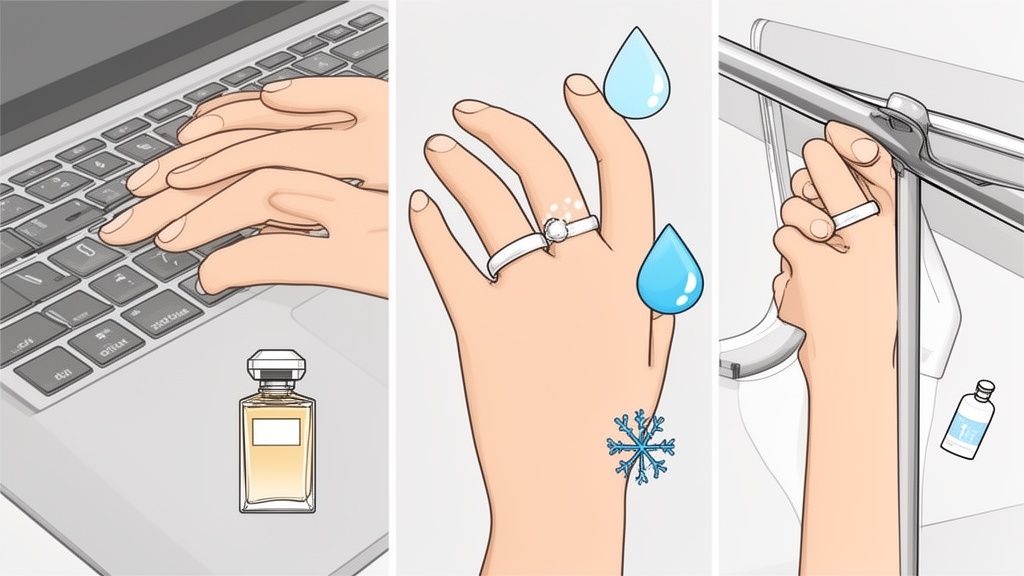
The main culprit? Friction. Simple things like typing at a keyboard, gripping a steering wheel, or holding the handrail on the Tube create countless tiny abrasions. This constant contact slowly but surely grinds away at the rhodium finish, especially on the underside of a ring's band where it sees the most action.
The Impact of Chemicals and Your Environment
Physical wear is only half the story. The chemicals you encounter every day can be surprisingly harsh, accelerating the process and causing your white gold to turn yellow much faster.
Common culprits that attack rhodium plating include:
Cosmetics and Skincare: Hand creams, perfumes, and even hairspray contain compounds that can react with and weaken the plating over time.
Household Cleaners: Bleach, ammonia, and other aggressive cleaning products are particularly damaging. Always remove your jewellery before cleaning.
Chlorine: Found in swimming pools and tap water, chlorine is a major enemy of rhodium and will cause it to break down much more quickly.
Living in London presents its own unique challenges. The urban environment can strip the plating far quicker than you might expect. For instance, the chlorine in Thames Water supplies—which serves 15 million Londoners—can combine with soaps to wear away the rhodium layer up to 40% faster.
Even your commute plays a part. The acidic pH in sweat during a packed journey on the Underground can corrode the finish, while London's air, often high in PM2.5 particulates, may abrade the plating 25% quicker than in a rural setting. You can learn more about how environmental factors affect your white gold.
Your Body's Natural Chemistry
Finally, your own body can influence how long the plating lasts. Everyone's skin has a unique pH level, and if yours is naturally more acidic, you may find your white gold jewellery shows that tell-tale yellowing much sooner.
Your personal body chemistry is an invisible factor. The natural oils and acidity of your skin can interact directly with the rhodium, meaning two people could wear the exact same ring and see completely different rates of wear.
This is why there’s no universal timeline for when a piece might need replating. It's a unique mix of your lifestyle, the products you use, and even your own physiology. By understanding these factors, you can make small changes to protect your jewellery and keep that brilliant white shine for as long as possible.
How to Spot the First Signs of Yellowing
Catching the moment your white gold starts to turn yellow is easier than you might think. It’s never a sudden, dramatic change. Instead, it’s a subtle shift in colour that creeps in, usually starting in very specific, high-wear areas.
If you know where to look, you can spot it early and get it sorted before the yellowing becomes obvious to everyone else. The trick is to inspect your pieces regularly, especially rings, under good, natural light. This helps you tell the difference between a genuine colour change and a simple build-up of dirt.
Where to Look First
The rhodium plating doesn’t wear away evenly across the whole piece. It thins out fastest on the surfaces that see the most action and friction. By focusing on these high-contact zones, you’ll be the first to notice when the warm gold alloy underneath starts peeking through.
Pay close attention to these key areas:
The Base of a Ring's Band: This is the part that’s always rubbing against things—a door handle, a keyboard, or the steering wheel. It’s almost always the first place to show yellow.
The Edges of Settings: The sharp edges and corners around a gemstone setting tend to get more knocks and scrapes than flat surfaces.
The Tips of Prongs or Claws: These tiny points hold your gemstone securely, but they’re constantly exposed to bumps and abrasion, causing the thin plating to wear away quickly.
Distinguishing Wear from Dirt
It’s surprisingly easy to mistake a bit of everyday grime for the early signs of yellowing. A build-up of hand lotion, soap, and general dirt can give your jewellery a dull, sometimes yellowish film.
The real difference is in the tone. Dirt looks like a dull film that you can clean off. True yellowing, however, is a distinct, warm, buttery hue that’s part of the metal itself. It won’t simply wash away.
Before you jump to conclusions, give your piece a gentle clean with some mild soap and warm water. If that faint yellow tint is still there, especially on those high-contact spots we mentioned, then you’re seeing the natural colour of the white gold alloy.
The good news? Catching it at this stage means a straightforward re-plating is all it takes to restore that brilliant, crisp white shine.
Your Guide to Restoring White Gold's Brilliance
So, now you know exactly why white gold starts to show that familiar yellow tint. The good news is that the solution is refreshingly simple. It isn't about scrubbing harder or finding some miracle cleaning product; the only true fix is a professional process called rhodium replating.
This is the only way to bring back that original, crisp white lustre to your jewellery.
Think of it like restoring a classic car. You wouldn't just give it a wash; you'd want a flawless new top coat to get that showroom shine back. Rhodium replating does exactly that, applying a fresh, pristine layer of rhodium right over the top of the warmer-toned gold alloy beneath.
The Professional Replating Process
When you bring a piece into our Hatton Garden workshop, our goldsmiths follow a meticulous process. Every single step is crucial, not just for restoring your jewellery's beauty but for making sure that new plating lasts as long as possible.
It's a three-step journey back to brilliance:
Deep Ultrasonic Cleaning: First, your piece gets an ultrasonic bath. This uses high-frequency sound waves to create microscopic bubbles that gently, but very effectively, lift away every trace of dirt, oil, and grime from even the tightest corners.
Expert Polishing: Next, our jewellers expertly polish the entire piece. This is a critical stage that buffs out any fine surface scratches and creates a perfectly smooth, mirror-like canvas. Without this, the new rhodium layer just won't bond properly.
Meticulous Electroplating: Finally, the piece is ready for electroplating. It's carefully placed in a special rhodium solution, and a precise electrical current is passed through, bonding a new, micro-thin layer of brilliant white rhodium to the surface.
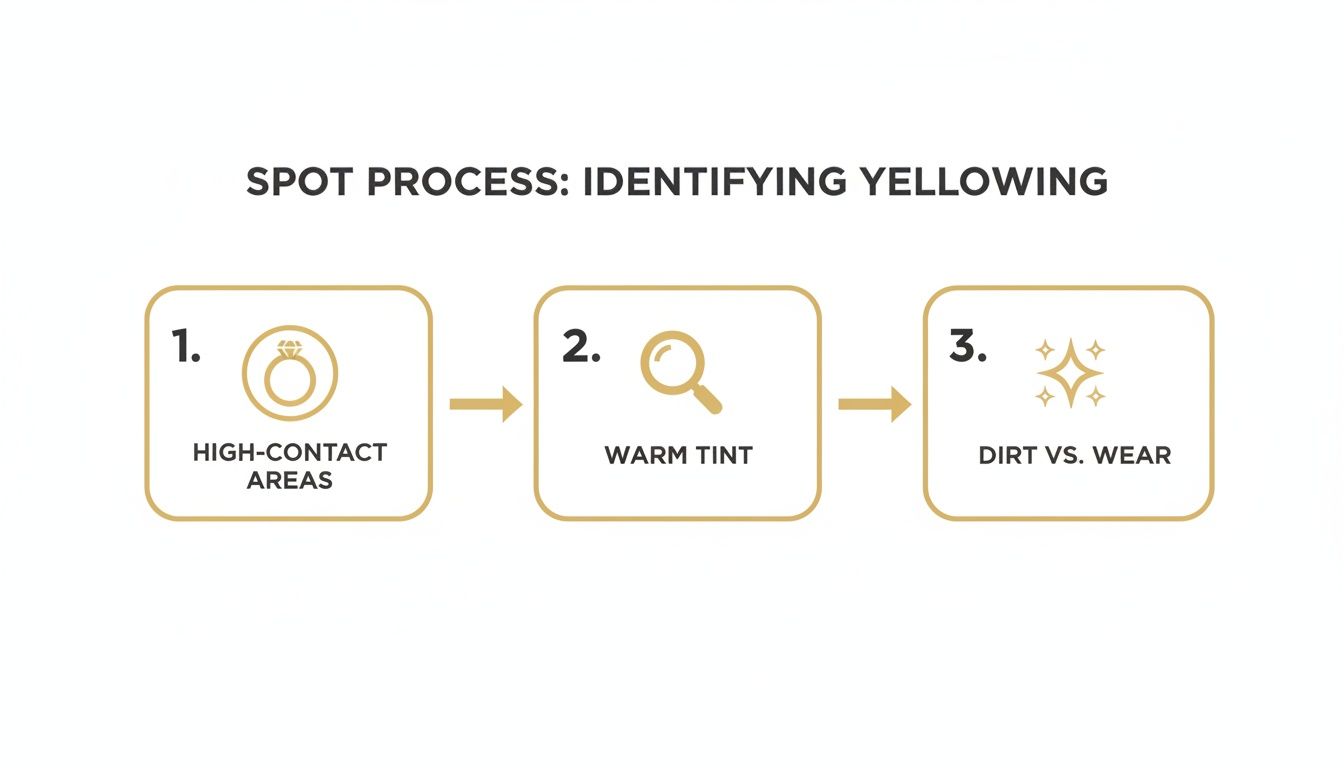
This infographic helps you spot the signs that your white gold is ready for this professional touch.
As you can see, the yellowing usually starts on high-contact areas, appears as a warm, creamy tint, and is very different from just a bit of dirt.
Comparing DIY Kits with Professional Restoration
You've probably seen DIY rhodium plating kits for sale online, but they are a very poor substitute for a professional service. Deciding between a quick home fix and a proper workshop visit comes down to results, risk, and longevity.
Method
Best For
Effectiveness on Yellowing
Risk Level
DIY Home Kits
Quick, temporary cosmetic touch-ups on non-valuable items.
Low. Often results in a patchy, uneven finish that wears off in weeks.
High. Risk of damaging the jewellery, uneven application, and poor bonding.
Professional Service
Restoring valuable white gold jewellery to its original, durable finish.
Very High. Achieves a flawless, mirror-like finish that lasts 12-18 months or more.
Very Low. Handled by experienced goldsmiths using professional-grade equipment.
Simply put, DIY kits lack the power and precision needed for a strong, even bond. Attempting it at home can lead to a patchy finish that wears off in a matter of weeks, not years, and you risk damaging your jewellery in the process.
Professional replating is an investment in quality and longevity. The expertise of a skilled jeweller ensures the preparation is perfect and the rhodium layer is applied for maximum durability and brilliance.
For a finish that truly lasts and restores your piece’s original beauty, nothing beats professional craftsmanship. Our experts have the tools and experience to do it right. If you want to learn more about the specifics, you can find all the details in our guide to white gold replating. It's the guaranteed way to make your jewellery look brand new again.
How to Keep Your White Gold Whiter for Longer
While it's true that white gold will eventually show its warmer undertones, you have a huge amount of control over how quickly this happens. A few simple, mindful habits can easily extend the life of that brilliant rhodium plating, meaning fewer trips to the workshop.
The golden rule is one we tell all our clients: treat your jewellery as the last thing you put on and the first thing you take off. It’s a simple mantra that shields your pieces from the most common culprits of wear. Think of that rhodium layer as a delicate, protective shield that needs safeguarding.
Your Daily Care Routine
You don't need a complicated routine to protect your investment—just a bit of mindfulness. Before you start any activity that involves chemicals or abrasion, simply take your jewellery off.
Here are the key moments to remove your white gold:
Before cleaning the house: Harsh chemicals in cleaning products, especially bleach and ammonia, are incredibly damaging to rhodium.
Before swimming or using a hot tub: Chlorine is one of the biggest enemies of rhodium plating, causing it to degrade rapidly.
Before applying lotions or perfumes: The chemicals in cosmetics can react with the plating, slowly weakening it over time.
Before exercising: Sweat can be acidic, and the friction from gripping weights or equipment will wear the plating down much faster.
Proactive care is your best strategy. By minimising your jewellery’s exposure to friction and chemicals, you can easily add months, or even a full year, to the life of your rhodium plating.
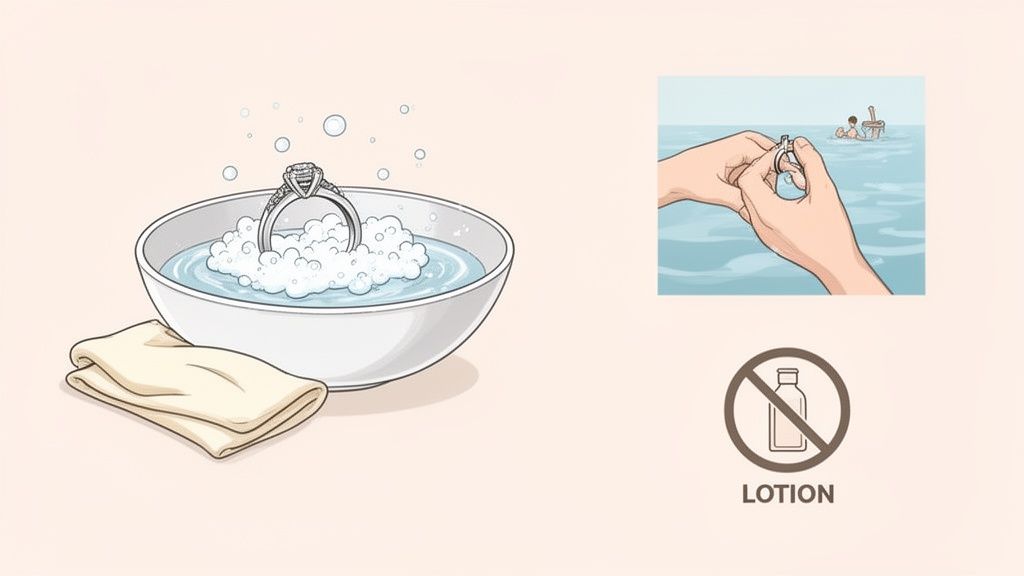
A gentle clean at home can also keep your pieces looking bright between professional services. Just soak your jewellery in a bowl of warm water with a few drops of mild dish soap. Use a very soft toothbrush to gently remove any buildup, then rinse thoroughly and pat dry with a soft, lint-free cloth. This lifts away surface grime without harming the finish.
Your Same-Day White Gold Restoration in Hatton Garden
So, you understand why your white gold is showing a yellow tint. That’s the first step. But what really matters is finding a fast, reliable way to fix it. Life in London moves quickly, and you shouldn’t have to part with your cherished jewellery for weeks on end.
At Opulence Jewellery Services, we’ve built our entire workshop process around your schedule and peace of mind.
Imagine you notice that familiar warm hue on your engagement ring one morning. Instead of posting it away and waiting anxiously, you can bring it straight to our modern workshop in the heart of Hatton Garden. There’s no guesswork here. We give you a clear, on-the-spot quote, and our expert jewellers get to work right away.
See the Craftsmanship for Yourself
Our while-you-wait service, available from Tuesday to Friday, is designed for busy Londoners who value both their time and their treasures. You can relax in our comfortable studio while we meticulously restore your piece, often finishing the entire rhodium replating process in just a couple of hours.
This isn’t just about speed; it’s about total transparency.
For most repairs, you can actually watch our skilled artisans as they:
Perform a deep ultrasonic clean to lift every trace of dirt and oil.
Expertly polish the metal back to a flawless, mirror-like surface.
Apply a fresh, brilliant layer of rhodium for that durable, dazzling white finish.
This direct approach removes all the uncertainty that usually comes with jewellery repair. You see the care, the precision, and the modern equipment we use, so you leave knowing your piece was in the best possible hands.
There's no substitute for seeing the process firsthand. Our on-site workshop lets you witness the transformation, turning a simple repair into a reassuring and engaging experience.
Your Immediate Solution Awaits
Why let a yellowing ring dull your day when the solution is so simple? Our same-day service means you could drop your ring off on your lunch break and wear it to dinner that evening, looking brand new. It’s the perfect blend of traditional Hatton Garden craftsmanship and the efficiency our clients expect.
We combine 15+ years of experience with a dedication to your convenience, offering a service that’s both swift and superior. If you want to know what to look for in a trusted artisan, our guide to finding the best jewellery repair in Hatton Garden is a great place to start.
Don’t wait for the yellowing to get worse. Visit our workshop today, and let us restore that bright, white sparkle to your jewellery while you wait.
Common Questions We Hear in the Workshop
To round things off, here are a few quick answers to the questions we get asked most often at our Hatton Garden counter. This should help you feel much more confident about looking after your white gold.
How Often Should I Replate My White Gold?
Honestly, there’s no single, perfect answer—it really depends on you. For something you wear every day, like an engagement ring, you can expect to need it replated every 12 to 18 months to keep that crisp, bright white finish.
But for pieces that see less action, like a pair of earrings or a pendant, you might go several years before you even notice a hint of warmth coming through. The real key is just to keep an eye on it; you'll spot that tell-tale yellowish tint on the areas that get the most contact.
Is Rhodium Plating Safe for My Gemstones?
Absolutely. The rhodium plating process is perfectly safe for the vast majority of gemstones, especially hard-wearing stones like diamonds, sapphires, and rubies. Our goldsmiths are meticulous and take immense care to protect your stones during every step, from the initial deep clean and polish right through to the final plating.
Now, for softer or more porous stones—think pearls, opals, or emeralds—we do take extra precautions. It's always best practice to have an expert jeweller assess the piece first, just to ensure every part of it gets the safest, most effective treatment.
A professional assessment guarantees that every part of your jewellery, from the metal to the gemstones, receives the correct and safest treatment for a perfect restoration.
What Makes a "Good" White Gold Alloy?
It all comes down to the base recipe. A truly superior white gold alloy uses high-quality whitening metals, like palladium, which create a much paler, silvery-grey base colour before any rhodium is even applied. Palladium is part of the platinum family, so it’s naturally very white and hypoallergenic, making it a premium choice.
Using a palladium-rich alloy means that when the rhodium plating eventually wears thin, the colour underneath is far less of a contrast. Cheaper alloys might rely more heavily on nickel or silver, which leaves a distinctly warmer, more yellow-toned base. That warmer base shows through much more obviously as the plating fades, which is why some white gold pieces seem to turn yellow so much faster than others.
Ready to restore your jewellery's brilliance? The team at Opulence Jewellery Services offers same-day, expert rhodium replating right here in our Hatton Garden workshop. Visit us today to bring back that brand-new shine.
Discover the timeless elegance of the engagement ring emerald cut. Our guide covers choosing the perfect diamond, setting, and provides expert care tips.
Discover how to get the perfect fit for your big day. Our expert guide covers sizing wedding rings, resizing costs, and finding the right jeweller in London.
Learn the safe, expert way to diamond ring clean at home. Our guide shows you how to restore sparkle and avoid costly mistakes, straight from Hatton Garden.
Shop Fine Jewellery Online
Engagement rings, wedding bands, earrings, necklaces & birthday gifts — beautifully crafted and delivered to your door.