A Guide to White Gold Replating and Restoring Your Jewellery
25 December 2025 18 min read Hatton Garden, London
Discover the complete white gold replating process. Learn how to restore your ring's shine, understand costs, and find expert aftercare tips.
Ever wondered why your white gold ring has lost its brilliant shine and started to look a little… warm? It’s a common story. Most white gold jewellery isn't naturally that crisp, bright white. The stunning, mirror-like finish you fell in love with comes from a micro-thin layer of rhodium, a precious metal applied to give it that dazzling look.
The Real Story Behind White Gold
To get what white gold replating is all about, you first need to understand what white gold actually is. Pure gold (24-karat) is a deep, rich yellow, but it’s far too soft for jewellery meant to be worn every day, like an engagement ring.
To make it durable enough for life’s bumps and knocks, jewellers mix pure gold with other metals, creating an alloy. This process strengthens the gold and, crucially, changes its colour.
For Yellow Gold: The alloy often includes copper and silver to keep that classic warm hue.
For Rose Gold: A higher amount of copper is mixed in to get that signature pinkish tone.
For White Gold: The gold is blended with white metals like palladium, silver, or zinc.
Even after mixing, the final alloy is rarely a pure, brilliant white. It usually has a subtle yellowish or sometimes greyish undertone. That’s completely normal—it’s just the natural colour of the metal mix.
Why Rhodium Plating Is Essential
To get that cool, silvery finish everyone associates with white gold, there’s one final step: rhodium plating. Rhodium is part of the platinum family of metals. It’s incredibly rare, brilliantly reflective, and very hard-wearing. The process of applying it is a form of electroplating.
Think of rhodium plating like a glossy topcoat on a freshly painted car. It provides that final dazzling sheen and, just as importantly, shields the metal underneath from scratches and daily wear.
This protective layer is what gives your white gold jewellery its initial "brand new" look. It makes diamonds pop and creates a flawless, mirror-like surface. Understanding the difference between the base alloy and its coating is key; you can learn more about the unique properties of rhodium in jewellery to see why it’s the industry standard.
The Inevitable Fading Process
Over time, this ultra-thin rhodium layer simply wears away from friction. It’s an unavoidable part of owning and loving your jewellery.
Everyday activities all play a part:
Washing your hands
Applying lotions and hand sanitisers
Simple contact with surfaces like desks or steering wheels
Cleaning with harsh chemicals
As the rhodium thins out, the slightly warmer tone of the white gold alloy underneath starts to show through. This is why your ring might look dull or develop yellowish patches, especially on the bottom of the band where it gets the most contact. White gold replating is simply the professional process of reapplying this rhodium layer to bring back its original beauty and protection.
The Replating Process at Our London Workshop
Ever wondered what actually happens when you leave your treasured white gold ring with us for a refresh? It’s not just a quick dip and polish. The journey from a dull, tired-looking piece back to its brilliant best is a meticulous process, blending traditional craftsmanship with modern, precise techniques. It's a full-on restoration, carried out by skilled hands right here in our workshop.
Before any work begins, the first step is always a jeweller’s expert assessment. At our Hatton Garden workshop, we examine your piece under magnification, checking for loose stones, worn-down claws, or any deep scratches that need attention. This is crucial—it ensures the final result isn't just beautiful, but also secure and built to last.
Deep Cleaning and Surface Preparation
Once we’ve given it the all-clear, the hands-on work starts with an intensive clean. Your jewellery is placed into an ultrasonic cleaner, which uses high-frequency sound waves to create microscopic bubbles in a special cleaning solution. These bubbles are tiny but mighty, gently dislodging every speck of dirt, oil, and grime from even the most intricate corners—places a brush could never hope to reach.
Next, it’s over to the polishing station. This is where real artistry comes into play. Our jewellers use a series of professional polishing wheels and compounds, carefully working the metal's surface. The goal is to gently buff out the tiny scratches and scuffs that build up from daily wear, creating a perfectly smooth, flawless canvas for the new rhodium layer.
This step is absolutely vital. The final rhodium plate will highlight any imperfections left on the surface, so a perfectly polished piece is the key to that stunning, mirror-like finish.
The Magic of Electroplating
With the jewellery perfectly cleaned and polished, it’s ready for the most transformative step: electroplating. This is the scientific process that restores that brilliant, crisp white colour. The easiest way to think of it is like magnetically bonding a brand-new, pristine surface onto the old one.
Your ring is carefully submerged in a bath containing a solution of rhodium salts.
An electric current is then passed through this solution. This current causes the rhodium particles to chemically bond to the surface of your white gold, forming a strong, even, and dazzlingly bright new layer.
The thickness of this new layer is measured in microns—thinner than a human hair—but it's incredibly durable and provides the protection and lustre your jewellery needs. Our experts control the voltage and timing with extreme precision to guarantee a consistent and high-quality finish, every single time.
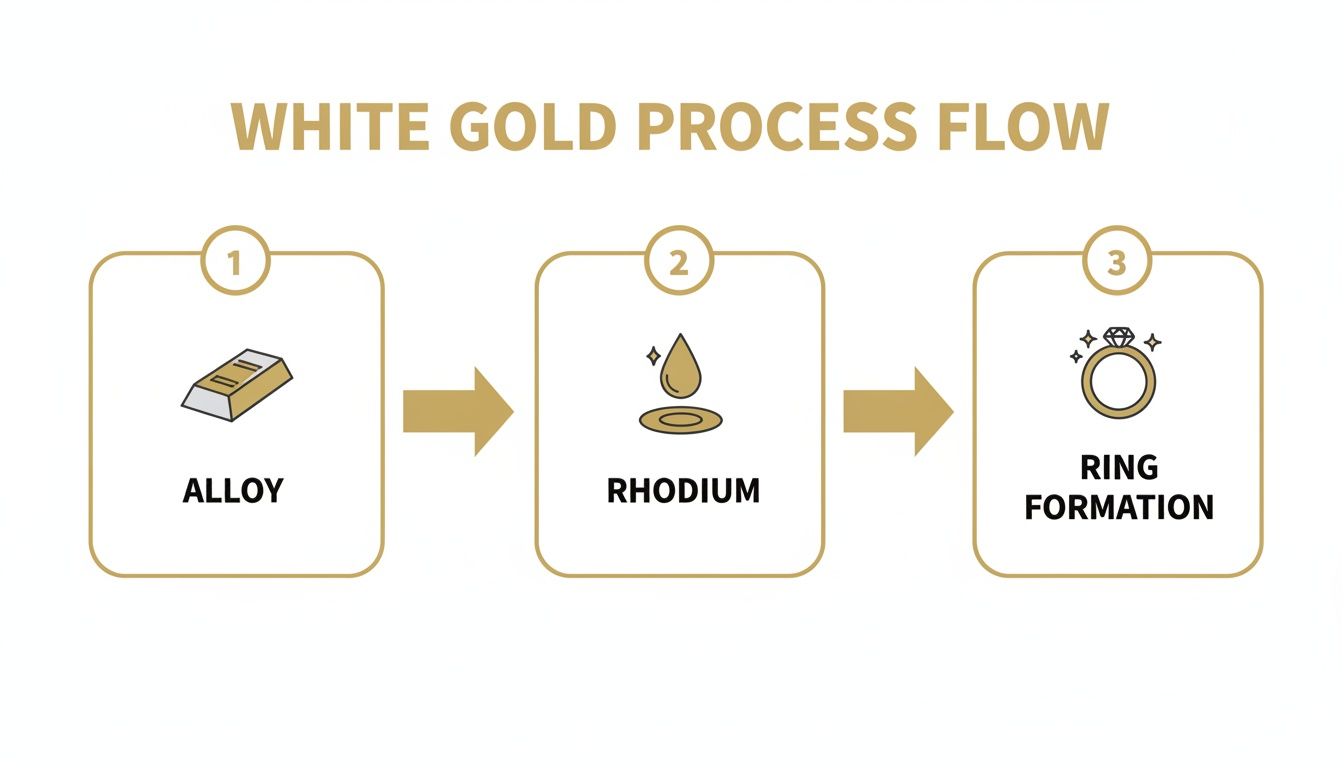
This diagram shows how the core materials come together to create the final, beautiful piece.
As you can see, the final ring is a combination of the strong gold alloy at its core and the brilliant, protective rhodium coating on the outside.
Final Inspection and Quality Control
The journey isn't over when the piece leaves the rhodium bath. The last stage is a rigorous quality check. Our jeweller inspects the item under magnification one final time, making sure the plating is perfectly even, with no spots missed. We check that the lustre is consistent across the entire surface and that any gemstones are sparkling and secure in their settings.
Only when it meets our exacting standards is the job done. This step-by-step approach—combining a deep clean, expert polishing, and precise electroplating—is how we guarantee a flawless finish. It’s a testament to the skill and care that goes into every white gold replating we do, restoring your jewellery's original beauty so it’s ready for many more years of enjoyment. At Opulence, you can often see this happening right here in our on-site workshop, giving you complete peace of mind.
How to Know When Your Jewellery Needs Replating
Your favourite white gold ring is part of your daily life, but over time, all that love and wear takes a toll on its brilliant, silvery finish. Spotting the signs that it’s time for a refresh is actually quite straightforward. You don’t need a jeweller’s loupe—you just have to know what to look for.
The most common clue is a subtle change in colour. You might notice a faint yellow or even a dull, warm-toned patch appearing on your ring, necklace, or bracelet. This isn't a flaw. It's simply the natural colour of the white gold alloy underneath, showing itself as the protective rhodium layer wears away.
This discolouration almost always appears first on the high-friction spots. On a ring, that’s usually the bottom of the band (the shank), which is constantly rubbing against desks, steering wheels, and door handles.
The Colour Comparison Test
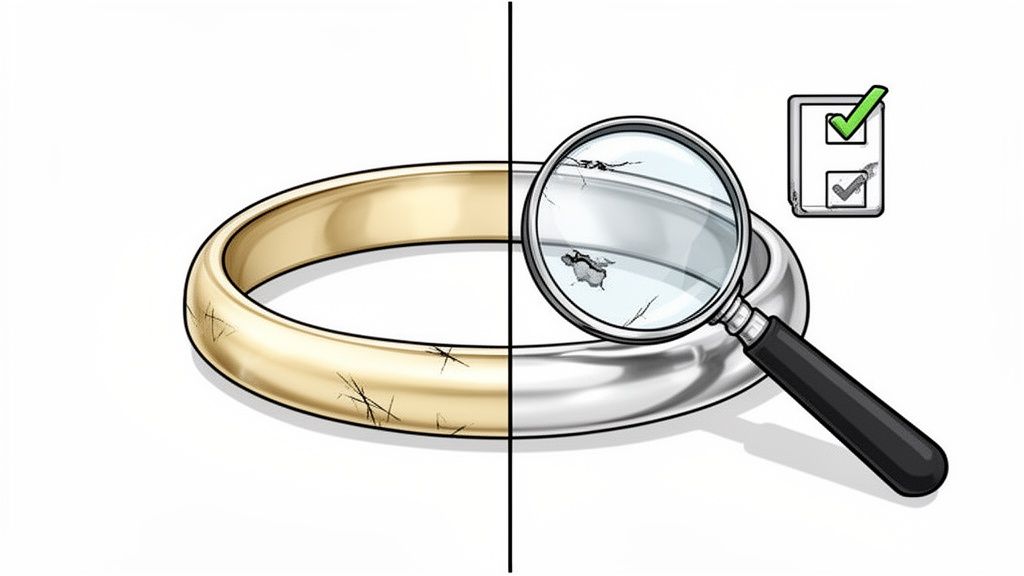
Here’s a simple trick to check your ring. Hold it in good, natural light and compare the colour of the bottom of the band to the areas near the gemstone setting. The metal around the setting is far more protected from wear, so it tends to hold onto its original rhodium plating much longer.
If you can see a clear difference—bright, silvery-white near the top and a warmer, yellowish hue on the bottom—that’s your confirmation. The rhodium has worn thin, and it's time to consider a professional white gold replating service.
Another tell-tale sign is a general loss of lustre. Your piece might just look dull, even after you’ve given it a good, gentle clean at home. If that brilliant, mirror-like shine just won’t come back, it’s because the highly reflective rhodium coating has gone. The white gold alloy beneath simply doesn't have the same bright reflectivity.
The goal of white gold replating isn't just to hide a yellow tint; it's to restore that crisp, bright lustre that makes your jewellery look brand new. A dull finish is often the first sign that the protective rhodium layer is compromised.
Finally, you might start noticing fine scratches seem more obvious than before. Rhodium plating provides a hard, protective barrier that helps fend off minor scuffs. As this layer disappears, the slightly softer gold alloy beneath is more exposed and picks up scratches from daily life much more easily.
Your Replating Checklist: Signs to Look For
Still not sure if your piece is ready for a refresh? Use this simple checklist to determine if your white gold jewellery is ready for professional replating.
Visual Sign
What It Looks Like
Is It Time To Replate?
Yellowish Tint
A warm, creamy, or yellow hue appears, especially on high-contact areas like the bottom of a ring's band.
Yes. This is the underlying gold alloy showing through the worn rhodium.
Dull Finish
The metal looks lacklustre and doesn't have a bright, mirror-like shine, even after being cleaned.
Yes. The highly reflective rhodium layer has worn away.
Visible Scratches
Fine surface scratches and scuffs seem more prominent and appear more easily than they used to.
Likely. The hard, protective rhodium coating is gone, exposing the softer gold.
Over 18 Months
It has been more than 12-18 months since its last plating, and you wear the item regularly.
Probably. Daily wear means the rhodium is almost certainly thinning by this point.
Catching these signs early means you can easily maintain the beauty and integrity of your most cherished pieces, keeping them looking as stunning as the day you first put them on.
When you’re thinking about getting a piece of white gold replated, two questions always come up: "How long will this shine last?" and "What's it going to cost me?" It helps to see replating not as a one-off cost, but as essential maintenance—a smart investment in keeping your favourite jewellery looking its best.
So, how long does a fresh rhodium finish last? There’s no single answer, as it really comes down to your lifestyle. For most people, a professional replating will keep their white gold looking crisp and bright for 12 to 24 months. But this can change quite a bit depending on how you wear and look after your jewellery.
Think about it: an engagement ring you wear every day will show signs of wear far quicker than a pair of earrings you only bring out for special occasions. It’s almost always the bottom of the ring’s band—the part that’s always in contact with desks, door handles, and everything else—that shows the warmer gold alloy peeking through first.
Factors That Affect Longevity
A few everyday things can speed up the wear-and-tear on that rhodium layer. If you’re mindful of them, you can keep that brilliant, just-serviced shine for longer.
How Often You Wear It: A daily-wear wedding band will need a refresh much sooner than a necklace you only wear once a month.
Chemicals Are the Enemy: Hand sanitisers, lotions, perfumes, and even harsh cleaning products can slowly eat away at the rhodium coating.
Your Job Matters: If you work with your hands or type all day, that constant friction will wear the plating down much faster.
Your Own Body Chemistry: Believe it or not, the natural pH level of your skin can also play a part in how quickly the plating wears away.
Now, let's talk numbers. Most people are pleasantly surprised by how affordable white gold replating is, especially when you weigh it against the price of buying a brand-new piece. It’s easily one of the most effective ways to completely restore an item’s appearance, making it look like it just came out of the box.
Think of replating like servicing a quality watch or a car. It's a small, periodic investment that protects the much larger value of your asset and keeps it looking pristine.
Here at Opulence Jewellery Services, we're all about clear, straightforward pricing. Replating a standard ring is a simple way to breathe new life into a piece that holds huge sentimental value. The cost covers a meticulous, multi-step process that includes professional cleaning, expert polishing, and precise electroplating with a precious metal.
This kind of maintenance is more important than ever. With the UK jewellery market set to hit USD 6.02 billion in 2025 and gold prices touching £1,870 per ounce in 2024, more people are looking to care for what they already own rather than buy new. Expert services like ours give you an affordable way to preserve the treasures you have.
Ultimately, the price of replating is a tiny fraction of your jewellery's original cost and emotional worth. It’s a smart, practical choice for anyone in the UK who wants to maintain the beauty and integrity of their white gold for years to come.
Caring For Your Newly Replated Jewellery
So, your jewellery is back from the workshop, looking brilliant and bright with its mirror-like shine restored. To keep it that way, a little mindful care goes a long way. Think of that fresh rhodium plating as a beautiful, protective shield; a few simple daily habits can make it last months, or even years, longer.
The two biggest culprits that wear down that delicate rhodium layer are friction and harsh chemicals. By getting into a few easy routines, you’ll make a huge difference in how long that stunning, fresh-from-the-jeweller finish lasts.
Everyday Habits to Adopt
The most effective strategy is just making small tweaks to your daily routine. A great rule of thumb is to treat your jewellery as the last thing you put on in the morning and the first thing you take off at night.
Here are a few practical tips to get you started:
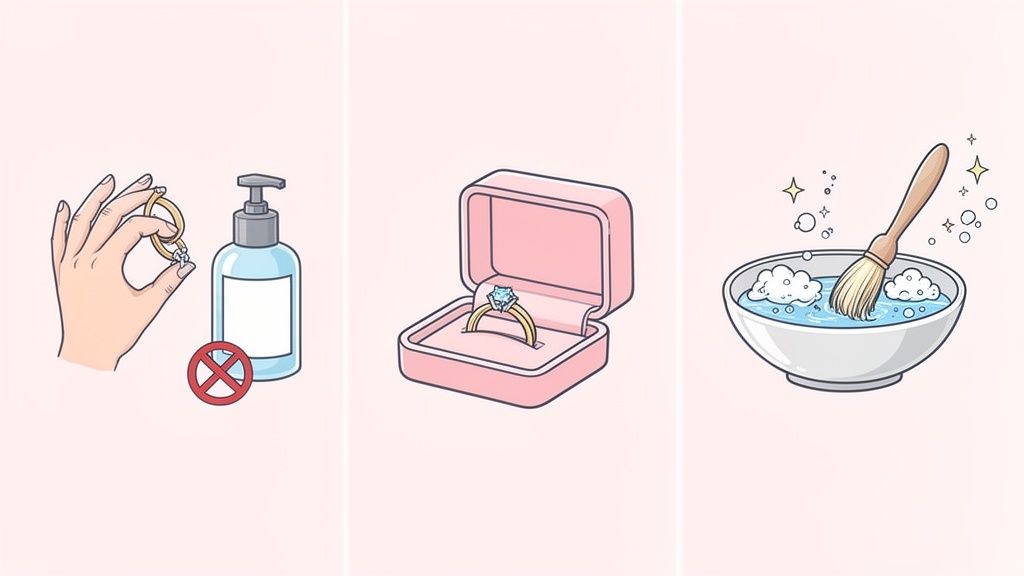
Chemicals First, Jewellery Last: Always apply lotions, perfumes, hairspray, and especially hand sanitisers before putting on your jewellery. Let everything dry completely. The ingredients in these products can slowly eat away at the rhodium plating.
Remove During Manual Tasks: Take your rings off before you start gardening, cleaning, hitting the gym, or doing any heavy lifting. This protects the plating from scratches, scuffs, and accidental knocks.
Avoid Water Exposure: While a quick hand wash is fine, it’s best to take your jewellery off before swimming. Chlorine in pools and hot tubs is particularly corrosive to both precious metals and their plating.
By simply being mindful of when you wear your jewellery, you can dramatically slow down the natural wear process. Protecting your piece from chemicals and friction is the secret to a longer-lasting brilliant shine.
Cleaning Your Replated Jewellery at Home
Even with careful wear, daily life means skin oils and dust will build up, making your jewellery look a bit dull. Thankfully, you can safely clean it at home without damaging the new finish. Just remember: abrasive cleaners or rough cloths are a big no-go—they’ll strip that rhodium right off.
Instead, stick to this simple and safe method:
Prepare a Gentle Solution: Mix a few drops of mild, phosphate-free washing-up liquid into a small bowl of warm water.
Soak Briefly: Let your piece soak for about 10-15 minutes. This will gently loosen any built-up grime.
Gently Brush: Use a very soft-bristled brush (a baby toothbrush is perfect for this) to carefully clean around any settings and small gaps.
Rinse and Dry: Rinse the jewellery thoroughly under clean, lukewarm running water. Then, pat it completely dry with a soft, lint-free cloth.
Proper storage is just as important. When you’re not wearing your pieces, keep them in a soft-lined jewellery box or an individual pouch. This stops them from scratching against your other items, protecting both the rhodium layer and the gold itself. A few small efforts like these will ensure your newly replated jewellery keeps its incredible lustre for as long as possible.
Finding an Expert Jeweller in London
Choosing where to take your treasured jewellery for white gold replating isn't a decision to take lightly. The quality of the finish, the security of your piece, and your peace of mind all hang on the skill of the jeweller you trust. London has countless options, but knowing what to look for is key to avoiding a disappointing, or worse, damaging result.
The single most important factor? An on-site workshop. Many high-street jewellers are just middlemen, sending your precious items off to some third-party facility. This not only invites risk—things get lost or damaged in transit—but it also adds unnecessary delays and cost. A jeweller with their own workshop, like ours in Hatton Garden, gives you transparency, security, and a much faster turnaround.
Why On-Site Expertise Matters
An on-site workshop is the clearest sign of a jeweller’s commitment to their craft. It means they’ve invested in the specialist equipment and, more importantly, the skilled artisans needed to perform delicate work like rhodium plating.
Going with less experienced providers can open a can of worms:
Uneven Plating: A patchy, inconsistent finish that looks worse than when you brought it in.
Poor Preparation: If the piece isn't properly cleaned and polished first, the new coating will be dull and lacklustre.
Damage to Gemstones: Incorrect handling during the process can easily harm delicate stones.
When you're searching online, it helps to know how professional businesses present themselves. Guides on topics like Mastering Google Business Profile Management can give you clues about what a serious, reputable jeweller looks like online.
A trusted jeweller doesn't just offer a service; they provide peace of mind. Knowing your sentimental pieces are being handled by experts in a secure, professional environment is priceless.
At Opulence Jewellery Services, our expertise is rooted right here in Hatton Garden, London’s historic jewellery quarter. Our state-of-the-art on-site workshop is the heart of our operation, letting us offer a unique same-day service for busy Londoners who need quality without the wait.
We believe in transparent pricing and exceptional craftsmanship, ensuring you get a flawless finish every time. You can even see our experts at work, connecting you directly with the care we take. If you're looking for a trusted local expert, our guide on finding rhodium plating near you has more practical advice. We bring together a proven track record with a reliable, expert service you can count on for your most cherished possessions.
Common Questions About White Gold Replating
Even after reading a detailed guide, it's normal to have a few more questions rattling around. To help you feel completely confident, here are some straightforward answers to the queries we hear most often from our clients here in London.
Is Rhodium Plating Safe for My Jewellery and Skin?
Absolutely. This is one of the most important questions we get asked, and for good reason. Rhodium is part of the platinum family of metals, highly valued for being both inert and hypoallergenic. This means it’s extremely unlikely to cause a skin reaction, making it a perfect choice for those with sensitive skin or allergies to other metals like nickel.
It’s also completely safe for your gemstones. Rhodium won't harm durable stones like diamonds, sapphires, or rubies. In fact, quite the opposite—the brilliant white gleam of a fresh rhodium coat makes gems appear even brighter and more fiery against their crisp, clean background.
What’s the Difference Between Polishing and Replating?
It's easy to mix these two up, but they do very different jobs. Think of it like caring for a classic car: polishing buffs out the small scuffs in the paintwork, while a new coat of paint restores the original colour and protective finish.
Polishing: This is about removing material. A jeweller uses special mops and compounds to take off a microscopic layer of metal, smoothing away light scratches and scuffs. Polishing brings back a smooth surface but won't change the underlying, slightly yellow-ish colour of the white gold.
Replating: This is about adding material. After a thorough polish, we use an electroplating process to apply a brand-new, thin layer of rhodium over the entire piece. This is what restores that brilliant, silvery-white colour and mirror-like shine that polishing alone can't.
Simply put, polishing fixes the surface texture, while replating restores the colour and finish.
A professional white gold replating service will always start with a full polish. The new rhodium layer needs a perfectly smooth surface to bond to, otherwise you won't get that flawless, mirror-like shine.
Can You Replate Rings with Complex Designs or Engravings?
Yes, intricate designs are no problem for a skilled jeweller. Our workshop team in Hatton Garden handles detailed pieces every day, taking immense care to ensure the replating process highlights—not hides—your ring's unique character.
The rhodium layer we apply is incredibly thin, measured in microns, so it follows every contour of the original design perfectly. It won’t fill in or soften fine details. Our meticulous process ensures that every tiny groove in an engraving and every delicate prong holding a stone gets an even coating, bringing a uniform, bright finish back to the entire piece and making its craftsmanship pop.
Discover the timeless elegance of the engagement ring emerald cut. Our guide covers choosing the perfect diamond, setting, and provides expert care tips.
Discover how to get the perfect fit for your big day. Our expert guide covers sizing wedding rings, resizing costs, and finding the right jeweller in London.
Shop Fine Jewellery Online
Engagement rings, wedding bands, earrings, necklaces & birthday gifts — beautifully crafted and delivered to your door.