Rhodium in jewellery: What It Is, Plating, Durability, and Care
15 December 2025 17 min read Hatton Garden, London
Discover rhodium in jewellery: learn what rhodium plating is, its benefits, care tips, and how long it lasts.
Ever wonder how white gold gets that brilliant, mirror-like shine? That’s rhodium at work. It’s a rare, silvery-white metal from the platinum family, used as a tough, protective coating on fine jewellery. This plating doesn't just deliver a stunning, reflective finish—it shields your favourite pieces from scratches and tarnish, too.
What Is Rhodium and Why Is It So Important for Jewellery?
Think of rhodium as the ultimate luxury finish for your jewellery. Many people assume white gold is naturally bright and silvery, but the truth is quite different. Because it’s an alloy of pure yellow gold mixed with white metals like palladium or nickel, natural white gold has a subtle, warm, yellowish hue.
This is where rhodium plating becomes essential. Jewellers apply a micro-thin layer of rhodium to give white gold the crisp, cool-white finish everyone loves. Without this crucial step, white gold jewellery would simply lack its signature lustre.
The Protective Power of Rhodium Plating
But rhodium's role goes far beyond looks. A good analogy is the high-performance clear coat on a luxury car. It adds that breathtaking visual pop while creating a strong, protective barrier against daily wear and tear.
This thin but mighty layer serves several key functions:
Scratch Resistance: Rhodium is incredibly hard and durable, offering a robust shield against the minor scuffs and scrapes that happen with everyday life.
Tarnish Prevention: Unlike silver, rhodium doesn’t tarnish or corrode. When plated over sterling silver, it keeps the piece looking bright and new for much, much longer.
Hypoallergenic Barrier: Rhodium is a godsend for anyone with sensitive skin. It’s a nickel-free, hypoallergenic metal, and its plating creates a safe barrier between your skin and any alloys in the base metal that might cause irritation.
More Than Just a Pretty Face
Because of these properties, rhodium isn't just an optional extra; it's a vital part of what makes modern fine jewellery so beautiful and long-lasting. It elevates a piece's appearance while fortifying it, ensuring that treasured items like engagement and wedding rings keep their brilliance for years.
A common misconception is that rhodium plating is a sign of lower quality. In reality, it is a standard and necessary practice in high-quality jewellery making—especially for white gold—to achieve the most desirable look and durability.
Ultimately, using rhodium in jewellery is the perfect blend of form and function. This precious metal provides the flawless, reflective surface that catches the eye and the robust protection that lets you wear and enjoy your jewellery without worry.
The Rhodium Plating Process From Start to Finish
Ever wondered how a beloved but tired-looking ring gets its brilliant shine back? The journey from a dull, slightly yellowish piece to a dazzling white treasure is a meticulous one, blending scientific precision with skilled artistry. This isn't a simple DIY job; it's a transformation that happens inside a professional workshop.
The process starts long before the jewellery ever touches the rhodium solution. First, the piece has to be impeccably prepared. This means professionally polishing the item to a flawless, mirror-smooth finish. It’s a critical step, as any remaining blemish would only be magnified by the plating.
Meticulous Cleaning and Preparation
Once polished, the jewellery gets an intensive deep clean. It’s submerged in an electro-cleaning bath, where an electrical current strips away any residual oils, polishing compounds, or microscopic debris. Think of it as a power wash at a molecular level, ensuring the surface is pristine and ready to bond perfectly with the rhodium.
After this, the piece is dipped in an acid solution to remove any oxides and fully "activate" the metal's surface. A thorough rinse in distilled water is essential after each step to prevent any cross-contamination. This painstaking preparation is the foundation of a durable, even finish.
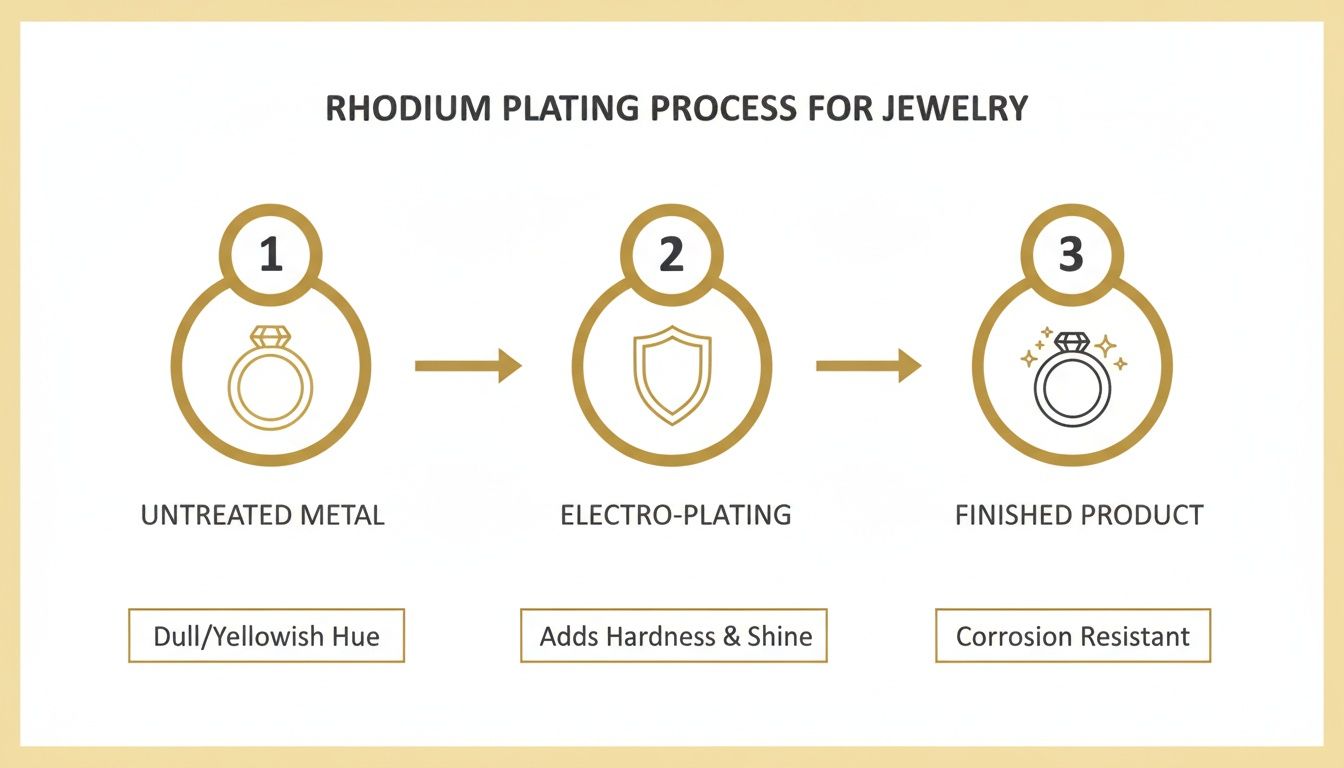
This visual shows the journey of a ring, from its original state to a protected, brilliant finish after plating.
The infographic highlights how rhodium plating doesn't just improve the look—it adds a vital layer of durability.
The Art of Electroplating
Now for the main event. The piece is carefully submerged in a specialised rhodium solution. Using a process called electroplating, a precise, low-voltage electrical current is passed through the bath. This current causes tiny rhodium particles to permanently bond to the surface of the jewellery, building up a new, brilliant white layer.
The thickness of this rhodium layer is measured in microns (one-millionth of a metre). A skilled jeweller has to control the voltage and plating time perfectly to get the ideal thickness—enough for durability, but not so thick that it becomes brittle.
This delicate balance is exactly why expert hands are non-negotiable. An inexperienced attempt can easily result in a patchy, uneven coat that wears away in no time, wasting both time and valuable materials. It’s a craft where precision makes all the difference.
The Pros and Cons of Rhodium Plating
Rhodium plating gives fine jewellery some incredible advantages, but like any specialist finish, it’s not without its practical side. Understanding both the good and the not-so-good is key to appreciating what this precious metal coating really does for your pieces. It’s more than just looks; it’s about protection, performance, and day-to-day wear.
Let’s start with the most obvious benefit: that breathtaking shine. Rhodium delivers a brilliant, crisp white lustre that’s more reflective than even platinum or sterling silver. It’s this mirror-like quality that gives modern white gold its signature cool, icy appearance, covering the metal’s naturally warmer, yellowish undertones with a dazzling finish.
The Hidden Strengths of a Rhodium Finish
Beyond its stunning looks, rhodium adds a tough, protective shield to the metal underneath. It's an incredibly hard material, meaning it provides a significant layer of scratch resistance. This is a huge plus for rings and bracelets that take a lot of knocks, helping to fend off minor scuffs and keep the surface looking pristine for longer.
This protective quality is a game-changer for sterling silver, too. A layer of rhodium in jewellery creates a barrier that stops the silver from oxidising and turning dark. That means less time spent polishing and more time enjoying your jewellery’s bright, clean shine.
Perhaps one of its most important jobs is protecting sensitive skin. Rhodium is completely hypoallergenic because it's nickel-free.
For anyone who gets a rash or irritation from certain metal alloys, a rhodium coating creates a safe, inert barrier between their skin and the base metal. It makes it possible to comfortably wear pieces that might otherwise cause a reaction.
Understanding the Practical Side
The main trade-off with rhodium plating is that it isn't permanent. It's a surface coating, not a solid metal through-and-through. Over time, friction from daily wear will gradually cause this thin layer to wear away, especially on high-contact spots like the back of a ring band.
This wear is completely normal and expected. It simply means that to keep that brilliant white finish, your jewellery will need to be professionally replated from time to time. How often really depends on your lifestyle, but for a ring you wear every day, you might need it done every 12 to 24 months.
Another thing to keep in mind is the ongoing cost. While a single replating service is generally quite affordable, it is a recurring expense to factor into the lifetime cost of your jewellery. To see what the process looks like, you can explore our detailed guide on replating white gold and how we bring back its original sparkle.
To give you a quick overview, here's a simple breakdown:
Pros and Cons of Rhodium Plating at a Glance
Benefit
Drawback
Brilliant White Shine - Creates a crisp, mirror-like finish.
It's a Coating - Not permanent and will wear over time.
Highly Durable - Adds scratch resistance to softer metals.
Hypoallergenic - Creates a nickel-free barrier for sensitive skin.
Ongoing Cost - A recurring expense to maintain the finish.
Prevents Tarnish - Keeps sterling silver bright and shiny.
Quality Varies - A poor application will wear off very quickly.
Ultimately, the lifespan of your plating depends heavily on how well it was applied in the first place. A cheap, poorly executed job with a layer that’s too thin will wear off in no time. That’s why choosing a skilled, experienced jeweller for both the initial plating and any future maintenance is absolutely essential for a beautiful, lasting finish.
How Long Rhodium Plating Realistically Lasts
It's the first question everyone asks: "How long will my rhodium plating last?" While we all wish it were a forever-finish, rhodium plating is a surface layer, and its lifespan isn't set in stone. The honest answer is, it depends almost entirely on how you live with your jewellery.
Think of it like the tread on a car tyre. Someone who only drives on smooth motorways will get far more mileage than a person who regularly bumps along rough country lanes. In the same way, the wear and tear on your rhodium plating is a direct result of the friction it faces every single day.
Key Factors That Influence Durability
Several things determine how quickly that brilliant white finish wears away. Understanding them helps you set realistic expectations and keep your jewellery looking its best for longer.
Type of Jewellery: Where you wear the item is the single biggest factor. A pair of rhodium-plated earrings or a pendant rarely makes contact with anything, so the finish can last for years. A ring or a bracelet, on the other hand, is constantly rubbing against skin, clothes, and everything you touch. That means much faster wear.
Lifestyle and Habits: Your daily routine plays a huge part. If you have an active job, hit the gym regularly, or wash your hands without taking your rings off, the plating will wear down quicker. Even gripping a steering wheel or typing on a keyboard contributes to that slow, steady erosion.
Skin Chemistry: It sounds strange, but your body’s unique chemistry can affect the plating. Some people have naturally more acidic skin, which can speed up the process of breaking down that fine rhodium layer.
For an average person, the rhodium plating on a daily-wear ring—like an engagement or wedding band—will typically last between 12 to 24 months. Of course, pieces you wear less often will hold their shine for much longer.
Spotting the Signs It’s Time for a Replate
Knowing when your jewellery needs a refresh is simple once you know what to look for. The signs are subtle at first, but they become more obvious over time.
With white gold, the most common giveaway is a faint, warm, yellowish hue starting to peek through. This is the natural colour of the underlying white gold alloy showing itself as the cool-white rhodium layer wears thin. You'll usually spot this first on the bottom of a ring's band, where it gets the most contact.
Another clear sign is a loss of that crisp, mirror-like shine. The piece might just look a bit dull or less reflective than you remember. For a deeper dive, check out our comprehensive guide on how long rhodium plating lasts and all the variables involved.
Here are the main indicators to watch for:
Yellowing Tones: You'll see a faint, creamy or yellowish tint appearing on high-contact areas.
Uneven Colour: The finish can start to look patchy, with some spots looking brighter and whiter than others.
Reduced Shine: The jewellery loses its brilliant, highly reflective quality and starts to look lacklustre.
Once you notice these changes, it's a clear signal that the protective rhodium barrier has worn down. That's the perfect time to bring it to a professional jeweller for a replate, which will restore your piece to its original, dazzling glory.
How to Properly Care for Rhodium Plated Jewellery
A little bit of simple, consistent care goes a long way in keeping that brilliant rhodium finish looking its best. It's less about intensive cleaning and more about gentle prevention. The key is to remember that while rhodium is tough, it's still a very thin layer.
Think of it like a delicate topcoat on a painting. Harsh chemicals and anything abrasive will strip that protective layer away, leaving the metal underneath exposed and dulling its shine much sooner than you’d like.
The Jeweller-Approved Cleaning Method
When your pieces need a clean, forget about abrasive toothpastes or aggressive scrubbing. The safest and most effective way to clean rhodium-plated items at home is incredibly simple: just mix a few drops of mild, phosphate-free washing-up liquid into a bowl of warm water.
Let your jewellery soak for a few minutes, then gently clean it with your fingers or a very soft, clean cloth. Rinse the piece thoroughly under clean, lukewarm running water and pat it completely dry with a lint-free microfibre cloth. This simple wash removes everyday grime without damaging the plating.
Crucial Care Tip: Never use an ultrasonic cleaner at home on your rhodium-plated jewellery. The high-frequency vibrations can cause the delicate plating to flake or chip, especially around intricate settings and sharp corners.
Daily Habits That Make a Difference
The best way to preserve your rhodium in jewellery comes down to mindful daily habits. What you avoid doing is just as important as how you clean. Certain everyday chemicals and activities are notorious for wearing down that precious rhodium layer.
To keep your jewellery shining for as long as possible, adopt a "last on, first off" rule. Your jewellery should be the last thing you put on after applying lotions, hairsprays, and perfumes, and the first thing you take off at night. This one simple habit drastically minimises its exposure to chemicals.
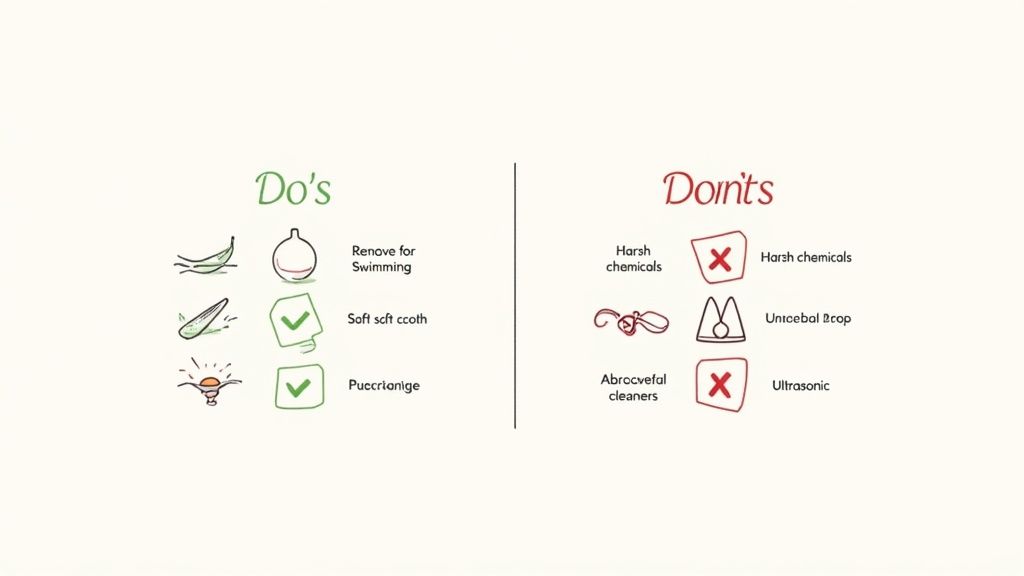
Here’s a clear guide to help protect your pieces:
Do:
Remove jewellery before swimming: Chlorine in pools and salt in the sea are highly corrosive and will eat away at the rhodium finish.
Take rings off before washing hands: Frequent contact with soaps and water can dull the brilliant shine over time.
Store pieces separately: Keep plated items in a soft pouch or a lined box to prevent them from getting scratched by harder gemstones or other jewellery.
Don't:
Wear jewellery during chores: Household cleaners contain harsh chemicals that will strip the plating right off.
Apply hand sanitiser while wearing rings: The high alcohol content is extremely damaging to the rhodium layer.
Use abrasive cleaners: Avoid silver polishes, chemical dips, or anything harsher than mild soap and water.
Following these straightforward tips will help you maintain that brilliant, mirror-like finish for much longer. These preventative steps are the best way to extend the time between professional replating services, ensuring your treasured jewellery stays as beautiful as the day you got it.
What to Expect From Our Professional Replating Service
When the brilliant, mirror-like shine on your jewellery starts to look a bit tired or dull, it’s a sure sign the protective rhodium layer has worn thin. That’s perfectly normal. A professional replating service is exactly what’s needed to restore its original beauty and durability, and at Opulence Jewellery Services, we’ve made the process straightforward and transparent.
It helps to understand what goes on behind the scenes, so you can feel confident your treasured pieces are in the best hands. The moment you bring your item to our workshop, our expert jewellers give it a thorough assessment. We check for any underlying issues, like loose stones or worn prongs, that ought to be addressed before we even think about plating.
The Restoration Journey, Step by Step
Once your jewellery gets the green light, our meticulous work begins. It’s far more than just dipping the item into a solution; the real secret to a lasting, quality finish is all in the preparation.
Professional Polish: First, we carefully polish your piece to buff out any surface scratches and bring back a perfectly smooth finish. This step is absolutely critical for achieving that flawless, mirror-like result.
Intensive Cleaning: Next, your jewellery goes through a deep electro-cleaning process. This powerful clean removes every last trace of oil, dirt, and polishing residue, making the surface pristine for a strong, even bond.
Expert Plating: Finally, your item is submerged in our premium rhodium solution. We apply a precise electrical current, which bonds a fresh, brilliant layer of rhodium evenly across the entire surface.
This multi-stage process guarantees a durable, beautiful finish that completely revitalises your piece. Our skilled jewellers manage every single variable to ensure your rhodium in jewellery is applied to the highest possible standard.
Cost and Turnaround Time
We believe in clear, honest pricing. The cost for rhodium replating a standard ring typically starts from around £40–£60, though this can vary depending on the size and complexity of the piece. We’ll always give you a firm quote after we’ve had a chance to assess your item in person.
One of the biggest worries for our clients is being without their cherished jewellery, especially wedding or engagement rings. Many high-street jewellers send items away to a central workshop, which often means waiting several weeks.
This is where our Hatton Garden workshop makes all the difference. We perform every service right here on-site, which allows us to offer a same-day, while-you-wait service. You can bring your ring in and have it restored to its former glory in just a few hours, not weeks. Our commitment to convenience and quality means your jewellery is back where it belongs—on your hand—without any frustrating delays.
Finding a trusted local expert is key, and our guide on locating rhodium plating near me can help you know what to look for.
At Opulence Jewellery Services, we combine decades of hands-on expertise with a focus on great service to restore the heart and shine of your most valued possessions.
Your Questions About Rhodium, Answered
Even after getting to grips with the basics, it's normal to have a few practical questions. We get asked about rhodium all the time in our workshop, so we’ve put together some straight answers to the most common queries we hear.
We'll clear up the myths and give you the facts, so you can feel confident about caring for your jewellery.
Is Rhodium Plating Safe for Sensitive Skin?
Absolutely. In fact, this is one of its biggest advantages. Rhodium is part of the platinum family of metals, which are known for being incredibly stable and non-reactive.
Most importantly, it's completely nickel-free and hypoallergenic. If you have a metal allergy, especially to the nickel often found in white gold alloys, that rhodium layer acts as a safe, protective barrier between the metal and your skin. It’s the perfect solution for preventing irritation and allergic reactions.
Can You Rhodium Plate Yellow or Rose Gold?
Technically, you can. It's possible to plate yellow or rose gold to give it a bright white look. However, we almost never recommend it, for one simple reason: as soon as the plating starts to wear, the strong, warm colour of the gold underneath will peek through.
This creates a patchy, uneven look much faster than it would on white gold, where the underlying colour is already quite similar. That's why rhodium plating is almost exclusively reserved for white metals like white gold and sterling silver, where it enhances what's already there.
Rhodium plating isn’t a permanent colour change. It’s a surface finish meant to enhance and protect, which is why it works best on metals that are already white or silver-toned.
What Does Rhodium Replating Cost in the UK?
The price for a professional rhodium replating service can vary, but for a standard ring, you should expect to pay somewhere in the range of £40 to £60. The final cost depends on a few things:
Size of the Item: A chunky bangle will naturally need more rhodium and workshop time than a delicate ring.
Complexity: Intricate pieces with lots of detail or gemstones require more careful preparation before they can be plated.
Condition: If a piece has deep scratches that need to be polished out first, that extra prep work can add to the cost.
Does Rhodium Plating Devalue Jewellery?
Not at all—quite the opposite. Rhodium plating is a standard, essential part of maintaining high-quality white gold jewellery. Far from reducing its value, it actually preserves the piece's beauty and protects the gold underneath from scuffs and scratches.
Think of it like servicing a luxury watch or polishing a classic car; it's just good practice to keep it in prime condition. Regular replating ensures your jewellery holds its value and looks its best for years to come.
Ready to bring back that brilliant, mirror-like shine to your favourite pieces? The expert jewellers at Opulence Jewellery Services in Hatton Garden offer a same-day, while-you-wait rhodium plating service, blending meticulous craftsmanship with unbeatable convenience.
Discover the truth about rhodium in rings. This guide explains what rhodium plating is, why it's essential for white gold, and how to care for your jewellery.