Replating White Gold: The Essential Guide to replating white gold
12 December 2025 19 min read Hatton Garden, London
Discover replating white gold essentials: steps, UK costs, and tips to extend your jewellery's shine. Click for expert guidance now.
Replating your white gold is simply the process of applying a fresh, new layer of rhodium to bring back that brilliant, silvery-white finish you loved when it was new. It’s essential, routine maintenance because the rhodium coating naturally wears away over time, slowly revealing the slightly warmer, yellowish metal underneath.
Think of it as a cosmetic refresh that keeps your most treasured items looking their absolute best.
Understanding Why White Gold Jewellery Needs Replating
Ever glanced at your white gold ring and noticed a faint, warm, or even yellowish tint that wasn’t there before? It’s a very common experience, and it's certainly not a sign of poor quality. In fact, it’s a natural characteristic of the metal itself and the very reason replating is a standard part of looking after your jewellery.
The secret is that most "white gold" isn't naturally a brilliant, pure white colour. It's actually an alloy made by mixing pure yellow gold with white metals like palladium, silver, or zinc. This process dilutes the yellow, creating a durable metal with a subtle, off-white or pale yellowish tone.
To get that stunning, mirror-like shine you fell in love with, jewellers add one final, crucial layer.
The Role of Rhodium Plating
Think of this final layer like the glossy clear coat on a new car. For white gold, this protective coating is rhodium—a rare, precious metal from the platinum family, known for its incredible lustre and durability. It provides that signature, crisp white finish that makes diamonds and gemstones truly pop.
But this rhodium layer is incredibly thin, often just a few microns thick. Over time, everyday life causes it to wear away.
The friction from your skin, contact with surfaces, and exposure to chemicals in lotions, soaps, and perfumes all contribute to the gradual erosion of the rhodium plate. This isn't a flaw; it's an expected part of owning and wearing white gold jewellery.
Once the rhodium wears thin, the natural, warmer tone of the white gold alloy beneath begins to show through. This is why replating white gold isn't a repair, but essential maintenance to restore its original beauty and protect the metal underneath. The rising popularity of white gold jewellery in the UK has made this service more important than ever. In fact, the UK's jewellery manufacturing sector is projected to reach £1.0 billion in revenue by 2025-26, driven partly by the ongoing demand for maintenance services like replating that keep these popular pieces looking their best.
Signs Your White Gold Needs Replating
It can be hard to spot the subtle changes over time. This table breaks down the common signs of rhodium wear to help you decide if it's time for a refresh.
Sign of Wear
What to Look For
What It Means for Your Jewellery
Yellowish or Warm Tones
Check the back of a ring shank or high-contact areas. You'll see patches of a creamier, warmer colour.
This is the most obvious sign. The rhodium has worn away, revealing the natural white gold alloy beneath.
Dull or Lacklustre Finish
The metal no longer has that bright, mirror-like shine. It looks flat, even after cleaning.
Rhodium is highly reflective. A dull appearance means the layer is thinning and losing its lustre.
Visible Scratches
Fine scratches and scuffs seem more apparent than they used to be.
The rhodium layer provides some scratch resistance. As it wears, the softer gold alloy underneath is more exposed.
Uneven Colour
The top of your ring might look bright white, while the bottom looks darker or yellowish.
Wear is fastest on areas with the most friction. This unevenness is a clear signal that it's time for a new coat.
If you notice any of these signs, don't worry. A professional replating service will restore that flawless, bright-white finish in no time.
Comparing White Gold to Other Metals
This need for maintenance is one of the key differences between white gold and naturally white metals like platinum. While platinum is inherently white and won’t change colour, it does come with a higher price tag.
White gold offers a beautiful and more affordable alternative, with replating as a predictable and simple part of its long-term care. If you want to dive deeper into this topic, you might be interested in our detailed comparison of white gold and platinum.
By understanding this process, you can appreciate that a yellowish tint is simply a sign that your beloved jewellery is ready for a refresh, not a defect.
The Professional Replating Process From Start to Finish
Handing over a cherished piece of jewellery, even to a professional, can feel a bit nerve-wracking. We get it. That’s why we believe in demystifying the process, showing you the incredible craftsmanship that happens behind the workshop door.
Replating white gold isn’t just a quick dip; it’s a multi-stage procedure requiring precision, skill, and specialised equipment to achieve that flawless, mirror-like finish. Think of it less like painting a wall and more like preparing a classic car for a showroom finish—every stage, from stripping the old layer to the final polish, is crucial for a perfect result.
Let's walk through the journey your jewellery takes.
Step 1: Initial Inspection and Preparation
The moment we receive your item, it begins with a thorough inspection. Using a jeweller's loupe, our goldsmiths examine the piece for any loose stones, worn-down claws, or existing damage that needs attention before plating can even start. Sorting these issues first is non-negotiable for the integrity of your jewellery.
Once it's cleared, the piece is meticulously cleaned. This isn't a simple wipe-down; it involves a deep clean in an ultrasonic bath. This machine uses high-frequency sound waves to dislodge dirt, oils, and debris from every tiny crevice, even those hidden under settings.
Step 2: Meticulous Polishing and Smoothing
After cleaning, the real artistry begins with polishing. A skilled jeweller uses a series of polishing motors with progressively finer compounds to carefully buff out surface scratches and scuffs. This restores the smooth, uniform surface of the gold itself, creating the ideal canvas for the new rhodium layer.
This stage demands a delicate touch to remove blemishes without altering the piece's original shape or fine details. A perfectly polished surface is vital because rhodium plating replicates the texture underneath—any remaining scratches would show right through the final finish.
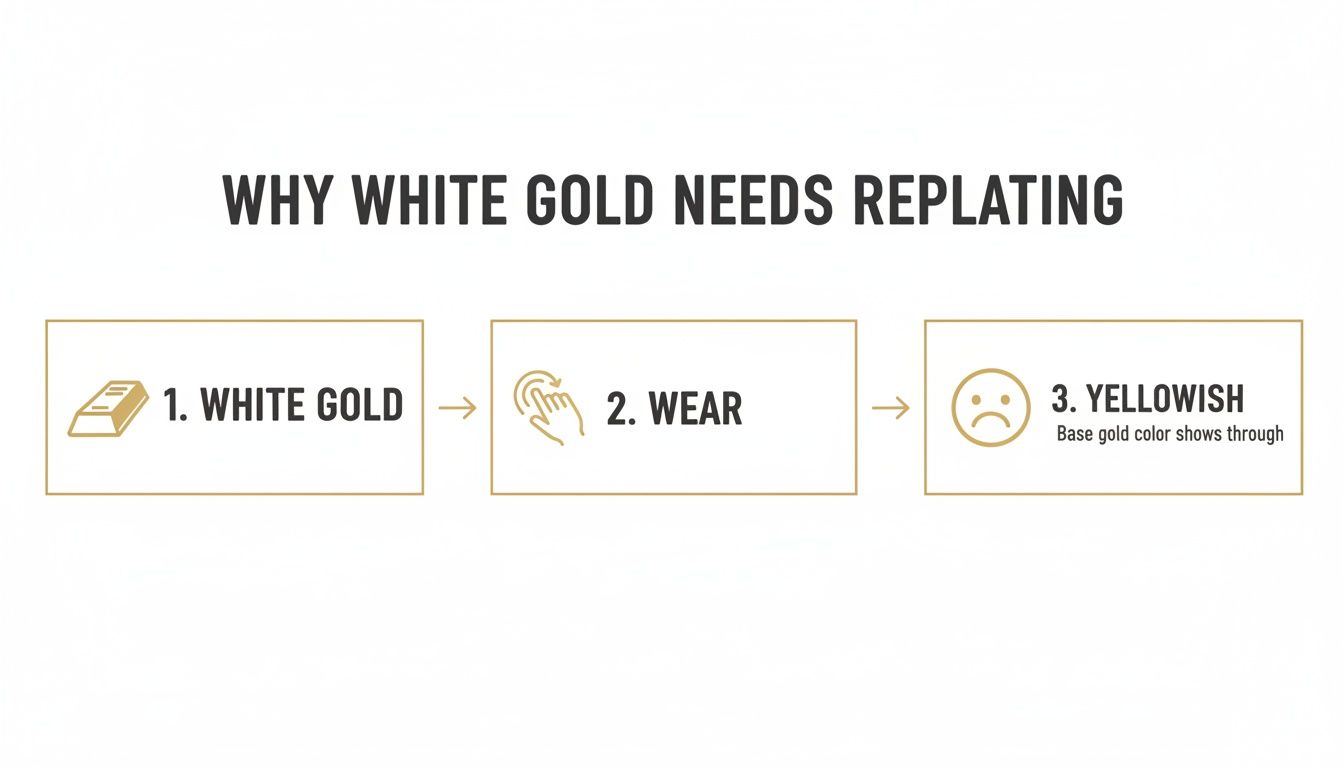
The diagram below shows exactly why this professional process is so necessary over time.
This visual journey, from pristine white to a worn, yellowish state, highlights why that rhodium layer is so essential.
Step 3: Electro-Cleaning and Plating
With the piece perfectly polished, it moves to the electroplating station. First, it’s submerged in an electro-cleaning solution, which uses an electric current to strip away any residual polishing compounds. This ensures the metal surface is chemically pristine, allowing the rhodium to form a strong, seamless bond.
Then comes the main event. The item is carefully submerged in a bath containing a rhodium solution. An electric current causes rhodium particles to fuse onto the surface of the white gold in an incredibly thin but durable layer. Our jeweller controls the voltage and timing with expert precision to achieve the perfect thickness and brilliance.
This intricate scientific process, known as electroplating, is what transforms the slightly warm-toned, polished gold back into the crisp, bright white you remember. It’s a delicate balance of chemistry and skill.
Step 4: Final Finish and Quality Control
Once plated, the piece is rinsed and dried. It undergoes a final, light steam clean to enhance its lustre before a final quality control inspection. Here, our jeweller checks for a completely uniform coating, a brilliant shine, and ensures all stones are still perfectly secure.
The result is a piece that looks indistinguishable from new. While the process is detailed, an experienced workshop can perform it efficiently. Many clients are surprised to learn that our services for expert gold plating and rhodium finishing are often completed quickly—we even offer a same-day service right here in London’s Hatton Garden.
What Does Replating White Gold Cost in the UK?
So, you understand that replating is an essential bit of upkeep for white gold. The next logical question is always: what’s it going to cost?
The good news is that this is one of the most affordable ways to make a huge visual impact on your jewellery. It’s less of a costly repair and more of a predictable, high-value investment in keeping your pieces looking their absolute best.
Across the UK, the price for a standard rhodium replate on a straightforward piece like a wedding band or a simple engagement ring is surprisingly consistent. You can generally expect to pay somewhere between £40 and £70. This price covers the full professional job: deep cleaning, polishing, and the final rhodium electroplating.
Of course, that’s just a baseline. The final quote will always depend on the specifics of your piece.
Key Factors That Influence the Final Price
Not all jewellery is made equal, and the cost of replating reflects the time, skill, and materials needed for each unique item. A simple, smooth band is a much quicker job than a complex, multi-stone ring.
Here’s what a jeweller will look at when giving you a quote:
Item Size and Surface Area: It’s simple, really. A wider band or a larger piece requires more rhodium and more time to polish and plate evenly. A delicate chain or a pair of earrings will naturally cost less than a heavy gent’s signet ring.
Design Complexity: An ornate ring with detailed filigree, pavé settings, or intricate patterns needs a far more delicate touch during the polishing stage. A jeweller has to work meticulously to avoid softening those beautiful details, which adds to the labour time.
Condition and Necessary Repairs: If your ring has deep scratches, worn-down claws holding a gemstone, or needs resizing, that work needs doing before it can be plated. Any extra goldsmithing will be quoted separately from the standard replating fee.
The Market Price of Rhodium: Just like gold and platinum, rhodium is a precious metal traded on global markets. Its price can fluctuate, which might have a minor effect on the cost of the service over time.
Think of the cost as a reflection of expert time. The more complex the "canvas" your jeweller has to prepare, the more the service will cost. A simple, smooth ring is a straightforward job, while a vintage-style engagement ring is a delicate operation.
The Bigger Economic Picture
When you step back, the affordability of replating makes perfect sense. With the UK jewellery market valued at £1.0bn by 2025 and gold prices hitting nearly £1,870 per ounce in 2024, maintaining the jewellery you already own is a smart and efficient choice.
A typical £50 replating job is a tiny fraction of the cost of replacement, making it a crucial service that protects the value and beauty of your cherished pieces. You can find out more about the trends shaping the gold plating market and why maintenance is so important.
Ultimately, when you get a quote for replating, you're paying for skilled craftsmanship. It’s a small investment to restore that incredible brilliance and protect a piece you love for years to come.
How Long Should a Fresh Rhodium Plate Last?
So, you’ve restored your jewellery’s brilliant white shine. The big question now is, how long will it last? The answer isn’t a fixed date on the calendar; it's deeply connected to your lifestyle and how often you wear your piece.
Think of it like the tread on a new tyre. A car that sits in the garage will keep its tread for years, while one driven daily on rough roads will wear it down much faster. Your jewellery is no different.
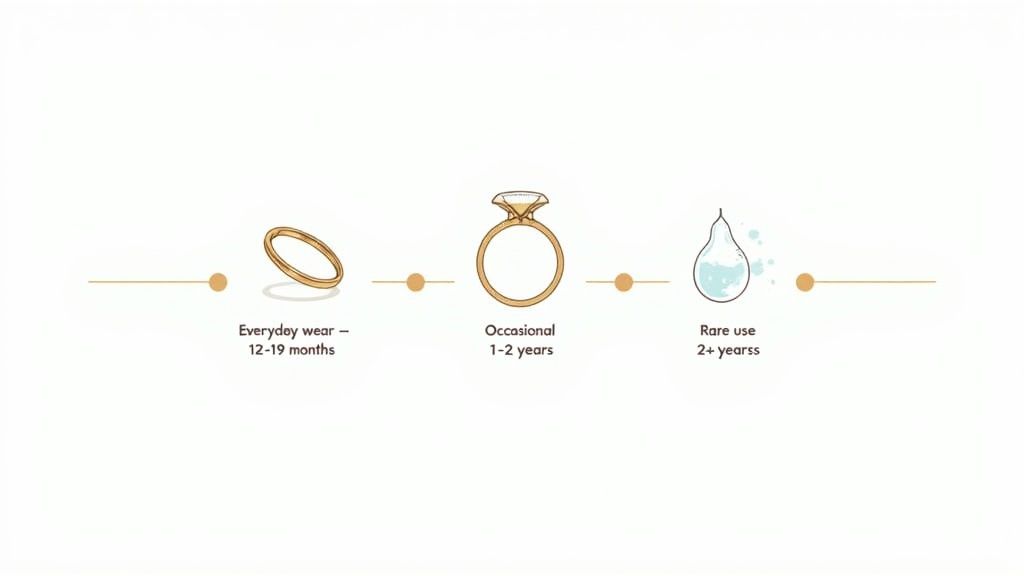
A fresh rhodium plate on a high-contact item, like an engagement ring you wear every day, will typically keep its pristine finish for around 12 to 18 months. In contrast, a pair of white gold earrings or a pendant worn only for special occasions might stay brilliant for several years.
What Makes Rhodium Wear Down Faster?
The lifespan of your new plating comes down to one main thing: friction. Anything that rubs against the surface of your jewellery will gradually wear away that microscopic layer of rhodium. Some culprits are obvious, while others might surprise you.
Knowing what to avoid helps you protect your jewellery's finish and make it last longer. The most common causes of accelerated wear include:
Frequent Handwashing and Sanitisers: Soaps and alcohol-based gels can be abrasive and chemically harsh, speeding up the erosion of the rhodium layer.
Lotions and Perfumes: The chemicals and oils in cosmetics create friction and can react with the plating, causing it to break down more quickly.
Household Chemicals: Cleaning products, especially those containing bleach or ammonia, are extremely damaging to rhodium plating.
Chlorine: Swimming pools and hot tubs are a major no-go. Chlorine is a harsh chemical that will quickly strip the rhodium finish.
Keeping jewellery looking its best is a huge part of the industry. In fact, while gold plating held a 64.6% market share in 2024, the specific demand for restoring white gold is on the rise, aligning with the UK jewellery sector's projected growth to £1 billion by 2025. You can see more on the European electroplating market here.
Knowing When It’s Time to Replate
Spotting the signs that it's time for another visit to the jeweller is key. They’re often subtle at first, appearing in the areas that see the most contact.
For rings, check the back of the shank—the part that sits against your palm. You'll likely notice a faint, warm, yellowish hue peeking through as the rhodium thins. On necklaces, the clasp and the links that rub against your skin will be the first to show wear.
Think of replating not as a one-time fix, but as routine maintenance. It's like servicing your car; a little upkeep ensures your pieces always look their absolute best.
When you see these early signs, it’s the perfect time to book a replate. Acting promptly prevents the underlying white gold alloy from getting scratched or damaged, which makes the next restoration simpler and more effective. To get a deeper understanding, check out our guide on how long rhodium plating lasts. By taking a few preventative steps and knowing what to look for, you can keep that brilliant white shine for as long as possible.
Finding a Trusted Jeweller and Avoiding DIY Risks
Choosing the right professional to replate your white gold is just as important as the decision to get it done. This isn't a simple cleaning job. It’s a highly skilled process that brings back the beauty of your jewellery and protects its value for years to come.
When you're looking for a jeweller, experience and honesty are what matter most. A good workshop will be completely open about their process, from the first look at your piece to the final polish. They should give you a clear quote and explain every step, including any small repairs needed before plating can even begin.
One of the best signs of a trustworthy service is a jeweller with their own on-site workshop. Facilities like ours in Hatton Garden give us total control over quality from start to finish. It guarantees a better result and often means a much faster turnaround—we can even offer same-day replating for clients on a tight schedule.
The Dangers of DIY Replating Kits
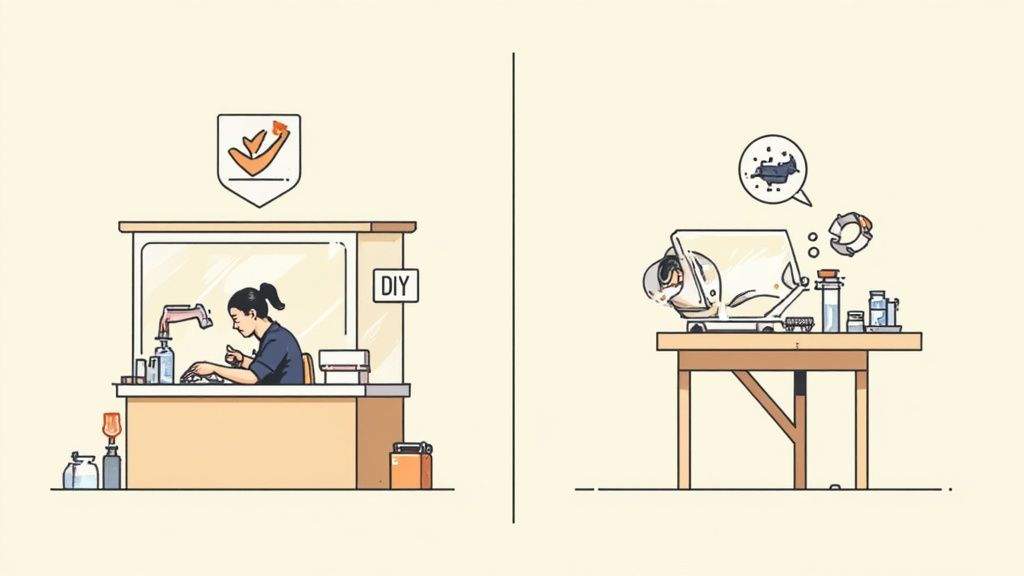
It's easy to find DIY rhodium plating kits online, all promising a quick and cheap fix. But when it comes to valuable jewellery, taking this route is a huge gamble. These kits are no match for professional equipment and expertise, and the risk of causing expensive, irreversible damage is incredibly high.
The biggest problem is the finish. Without professional-grade cleaning and polishing, the new rhodium layer just won't bond properly to the gold. The result is a patchy, dull coating that looks far worse than what you started with. It's a waste of time and money.
Attempting to replate white gold at home is like trying to respray a luxury car with a can of paint in your garage. You might cover the old colour, but you will never achieve the smooth, durable, and brilliant finish of a professional workshop.
Worse still, the chemicals used in electroplating can be hazardous if handled incorrectly. DIY kits rarely come with proper safety gear, putting both your skin and your jewellery at risk. A single drop on a delicate gemstone like an opal or emerald could cause permanent clouding or pitting, ruining it forever.
Professional Service vs DIY Replating Kits
The difference between a professional job and a home attempt is night and day. One restores your jewellery to its former glory; the other often leads to disappointment and a bigger repair bill.
Here’s a clear breakdown of what to expect:
Feature
Professional Jeweller
DIY Replating Kit
Preparation
Deep ultrasonic cleaning and expert polishing to remove all scratches and impurities for a perfect surface.
Basic cleaning wipes that cannot properly prepare the metal surface for a strong bond.
Finish Quality
A smooth, brilliant, and uniform layer of rhodium that is both beautiful and durable.
Often results in a patchy, streaky, or dull finish that wears away almost immediately.
Gemstone Safety
Jewellers are trained to protect delicate stones, ensuring they are not exposed to harmful chemicals.
High risk of permanent damage to porous or soft gemstones like opals, pearls, or emeralds.
Longevity
A professionally applied plate will typically last 12-18 months with daily wear.
The finish from a DIY kit may only last a few weeks before flaking or wearing off.
Ultimately, replating white gold is a precise science that requires specialised equipment and a deep understanding of metallurgy. Trusting your precious items to a skilled professional is the only way to guarantee a safe, effective, and beautiful restoration.
Your Replating Questions, Answered
You’ve got the basics down, but it’s only natural to have a few more questions. After all, we’re talking about your most treasured possessions. To put your mind at ease, here are the most common queries we handle every day in our Hatton Garden workshop, with clear, straightforward answers.
Our aim is to give you total confidence in the process, covering everything from the safety of your gemstones to the long-term value of your jewellery.
Will Replating Harm My Diamonds or Other Gemstones?
This is usually the first thing people ask, and thankfully, the answer is a reassuring one. For the vast majority of jewellery, the replating process is perfectly safe for gemstones. Stones like diamonds, sapphires, and rubies are incredibly tough and aren't affected by the cleaning solutions or the electroplating bath.
That said, a skilled jeweller is always careful. Softer, more porous gems need a little extra attention.
Porous Stones: Gems like opals, pearls, turquoise, and emeralds can be sensitive to chemicals. An experienced goldsmith will either carefully shield these stones or, in some cases, remove them from the setting before starting any work.
Expert Assessment: The first step is always a close inspection. A professional will spot any delicate stones and adjust their methods to make sure every part of your piece is protected.
You can rest assured that a reputable jeweller’s priority is to preserve the integrity of your entire piece—stones and all.
Can You Plate Yellow Gold to Look Like White Gold?
Yes, absolutely. We can plate a yellow gold piece with rhodium to give it that crisp, bright-white finish. It's a popular request for updating an older piece's style without committing to a full redesign. The process is identical to replating existing white gold.
It’s important, however, to think of this as a cosmetic update rather than a permanent change. The rhodium layer will eventually wear away, and the contrast between the silvery coating and the yellow gold underneath will be much more obvious than it is on white gold.
Think of it like painting a dark wall with a light colour. The first scratch is going to show that darker base layer much more dramatically. The same principle applies here.
This means you’ll probably need to have the item replated more often to maintain its white appearance. It's a great option for a style refresh, but it does require a commitment to regular upkeep.
Does Replating Lower the Value of My Ring?
This is a common worry, but the reality is quite the opposite. Professional replating doesn't lower the value of your ring; it actually helps preserve and maintain its value. Jewellery appraisers look at the overall condition of a piece, and regular maintenance is a clear sign of good ownership.
Think of it the same way you would a classic car or a piece of antique furniture. Regular servicing and restoration are seen as essential upkeep, not harmful alterations.
Preserves Condition: Replating restores the protective rhodium layer, shielding the gold alloy from scratches.
Enhances Appearance: A bright, well-maintained ring has far more appeal—both aesthetically and monetarily—than one that looks dull and discoloured.
Demonstrates Care: It shows the piece has been looked after, a key factor in its long-term value.
Putting off this routine maintenance can lead to a worn appearance that would almost certainly lower its appraisal value. Investing in replating is a smart way to protect your investment.
How Can I Make My New Plating Last Longer?
Once your jewellery looks brilliant and new again, you'll want to keep it that way. While wear is inevitable—especially for a ring you wear daily—a few simple habits can significantly extend the life of your fresh rhodium plate.
It all comes down to minimising friction and exposure to chemicals. Being mindful of how and when you wear your jewellery makes a huge difference.
Here are our most effective tips:
Remove Jewellery During Chores: Take rings off when cleaning, gardening, or doing manual work. Cleaners with bleach or ammonia are particularly harsh.
Apply Cosmetics First: Put jewellery on after you’ve applied lotions, perfumes, and hairspray. The chemicals can speed up wear.
Avoid Chlorine: Never wear white gold in swimming pools or hot tubs. Chlorine is one of the fastest ways to strip rhodium.
Store It Properly: Keep your jewellery in a soft pouch or a separate compartment in a jewellery box to prevent scratches from other pieces.
Following these simple practices will help you enjoy that stunning, like-new shine for much longer.
At Opulence Jewellery Services, our highly skilled jewellers combine decades of experience with state-of-the-art tools to provide meticulous repairs and finishing. From simple polishing to complex restorations, we treat every piece with the care it deserves. Visit our Hatton Garden workshop for a same-day service and see the craftsmanship for yourself. Learn more about how we can restore your cherished jewellery at https://www.opulencejewelleryservices.co.uk.
Discover the truth about rhodium in rings. This guide explains what rhodium plating is, why it's essential for white gold, and how to care for your jewellery.