29 December 2025 18 min read Hatton Garden, London
Discover the truth about rhodium in rings. This guide explains what rhodium plating is, why it's essential for white gold, and how to care for your jewellery.
Ever noticed that dazzling, mirror-like shine on a white gold ring? That brilliant flash isn't actually the gold itself. It's a whisper-thin layer of rhodium, a rare and precious metal from the platinum family. Think of it as the secret ingredient behind that crisp, pure white look everyone loves.
Why Your White Gold Ring Needs Rhodium Plating
Rhodium plating is like the high-end, protective clear coat on a luxury car. It delivers that final, stunning finish while shielding what’s underneath.
Natural white gold, despite its name, isn’t a pure, bright white. To create it, jewellers mix pure yellow gold with white metals like palladium or silver. This creates a strong alloy, but its natural colour is a soft, off-white with a subtle champagne or greyish hue.
While this warm tone is beautiful in its own right, it doesn't quite deliver the icy-white brilliance most people expect from a "white gold" ring. This is where rhodium steps in. By applying a microscopic layer of this precious metal, a jeweller transforms the warmer-toned alloy into a reflective, mirror-bright masterpiece.
A Protective and Hypoallergenic Barrier
Beyond its good looks, rhodium plating serves a crucial, practical purpose. Rhodium is incredibly tough and corrosion-resistant. It adds a hard-wearing protective layer that helps shield the softer gold alloy from everyday scratches and scuffs.
This barrier is also a big deal for anyone with sensitive skin. In the past, nickel was a common ingredient in white gold, but it's a well-known allergen, affecting roughly 10% of Europeans. While strict UK regulations now ensure white gold is nickel-free, rhodium plating provides an essential hypoallergenic barrier, creating a safe layer between your skin and the metal alloys in the ring.
Rhodium plating isn’t just a cosmetic touch-up; it's a standard industry practice that provides the brilliant colour, added durability, and hypoallergenic properties expected from modern white gold jewellery.
The Science Behind the Shine
So, how is this layer applied? The process is called electroplating. First, the ring is meticulously cleaned to ensure a perfect bond. Then, it's submerged in a special rhodium solution. A precise electrical current is passed through this bath, causing rhodium ions to fuse securely onto the ring's surface.
The result is a flawless, even coating that's typically just 0.2–0.5 micrometres thick. That's thinner than a strand of spider silk, yet it’s strong enough to completely change the ring's appearance and resilience. This perfect fusion of artistry and science is why rhodium in rings is so important. You can explore the process and its benefits in more detail in our complete guide to white gold replating.
Ultimately, rhodium isn't just an optional extra. It's a fundamental part of what defines the beauty and longevity of most white gold rings on the market, ensuring your cherished piece stays as brilliant as the day you first put it on.
The Rhodium Plating Process Explained
Step into a jeweller's workshop, and you'll find a world where careful artistry meets precise science. The process of applying that brilliant white rhodium finish to a ring—known as electroplating—isn't just a quick dip. It's a meticulous, multi-stage transformation where every single step is vital for that flawless, mirror-like result.
It all starts with preparation, which is arguably the most critical part of the job. Before any new rhodium can be applied, the ring has to be absolutely pristine. A jeweller will begin by expertly polishing the entire piece, carefully buffing away every scratch, scuff, and trace of the old, worn plating. This isn't just about making it look nice; any microscopic flaw left on the surface will stop the new layer from bonding properly, leading to a patchy, uneven finish that won't last.
The Electro-Cleaning and Plating Stages
Once the ring is perfectly polished and smooth, it’s time for a deep clean. We submerge it in a specialised ultrasonic bath filled with an electro-cleaning solution. A gentle electrical current is passed through the liquid, which acts like a magnet to lift off any lingering particles of polishing compound, dirt, or oils. This step ensures the metal surface is chemically pure and ready to accept the new coating.
With the ring perfectly prepped, the main event begins. It's carefully placed into a bath containing a rhodium solution—a liquid filled with microscopic rhodium particles. We then send a positive electrical charge through this solution, while the ring itself is given a negative charge.
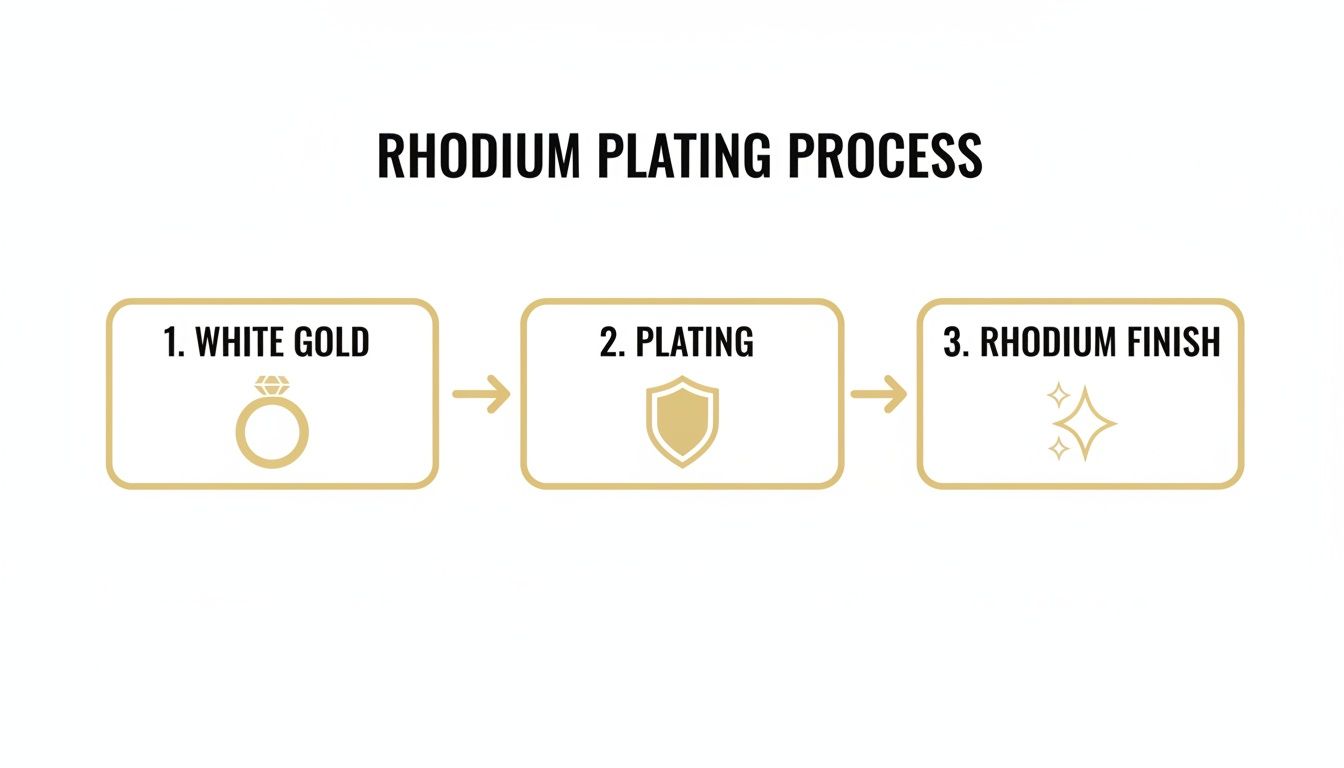
This diagram shows how a standard white gold ring is transformed through the plating process to achieve its brilliant rhodium finish.
As you can see, the final sparkle isn't from the base metal itself but from this specialist finishing step.
Why a Jeweller's Skill Is Essential
This is where the magic of electrochemistry happens. Like tiny magnets, the positively charged rhodium ions in the solution are drawn directly to the negatively charged ring. They bond firmly to its surface, molecule by molecule, building up a strong, consistent, and brilliantly white new layer.
The success of rhodium plating hinges on precision. The voltage of the electrical current and the time the ring spends in the solution must be perfectly controlled to achieve the ideal thickness—typically between 0.2 and 0.5 micrometres.
An experienced jeweller’s skill is paramount here. Too little time or a weak current will result in a thin, flimsy layer that wears away in no time. Too much, and you risk a brittle coating that can crack or flake. A true expert ensures the rhodium is applied evenly across every curve and crevice, from the intricate claws holding a diamond to the smooth inner band. It’s this professional touch that guarantees a durable and beautiful finish, restoring your ring to its original, dazzling splendour.
The Pros and Cons of Rhodium Plating
Choosing a ring is about more than just the design; it’s about understanding the metal on your finger. Rhodium plating offers some brilliant advantages, but like any specialist finish, it has its trade-offs. To make the right choice, you need a clear, balanced view of what rhodium on rings really means for you day-to-day.
Think of rhodium plating as a high-performance upgrade for your ring. It’s like adding a protective, premium clear coat to a car for a flawless look. This thin layer completely transforms the appearance and resilience of white gold, but it's crucial to remember it’s a coating, not a permanent state. This is the key balance to understand: stunning looks versus a little ongoing care.
The Dazzling Advantages of Rhodium
The first thing you’ll notice is the incredible visual pop. Rhodium delivers a bright, reflective, silvery-white finish that’s even whiter and more brilliant than platinum. This mirror-like lustre makes diamonds pop, creating a crisp, clean backdrop that seriously enhances their sparkle.
But it’s not just about looks. Rhodium brings some powerful practical benefits to the table:
Exceptional Durability: Rhodium is a seriously hard and tough metal. It acts as a protective shield over the softer white gold alloy underneath, helping to fend off the scratches and scuffs of daily life.
Corrosion Resistance: It’s highly resistant to tarnish and corrosion. That means your ring will keep its pristine colour and shine for much longer, shrugging off things that might dull other metals.
Hypoallergenic Properties: As a member of the platinum family, rhodium is completely inert and hypoallergenic. It creates a safe barrier between your skin and any nickel in the white gold alloy, making it a fantastic choice for anyone with sensitive skin.
The real magic of rhodium is how it combines superior brilliance, robust protection, and hypoallergenic comfort. It’s a trio of benefits that elevates the quality and wearability of any ring.
The Practical Considerations and Drawbacks
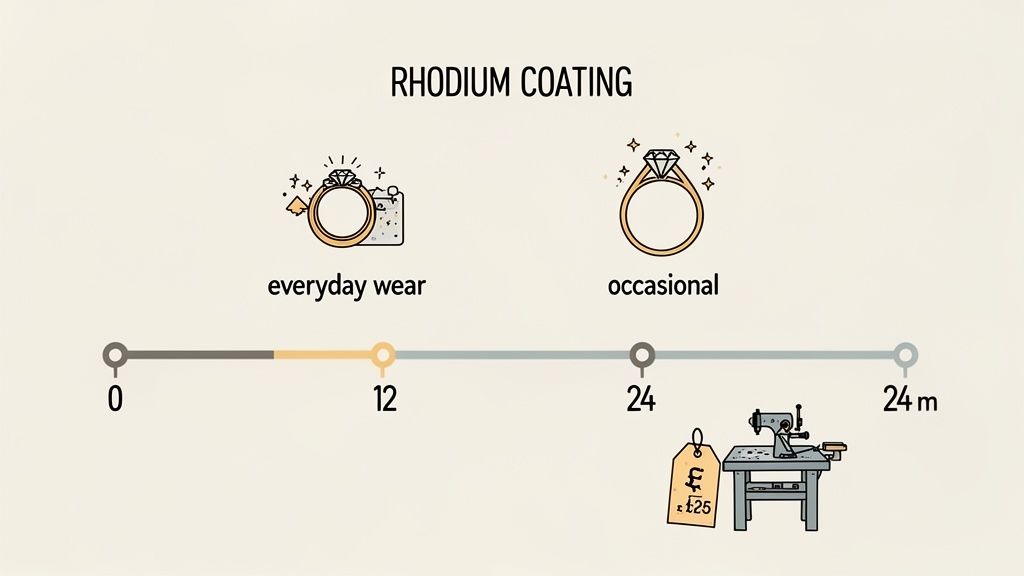
The main drawback of rhodium plating is simple: it doesn't last forever. Because it’s an external coating, everyday friction will eventually wear it away. The lifespan of the plating can vary hugely, often lasting between 12 to 24 months, but this really depends on your lifestyle. A ring worn daily by someone with an active job will show wear far quicker than one that’s only brought out for special occasions.
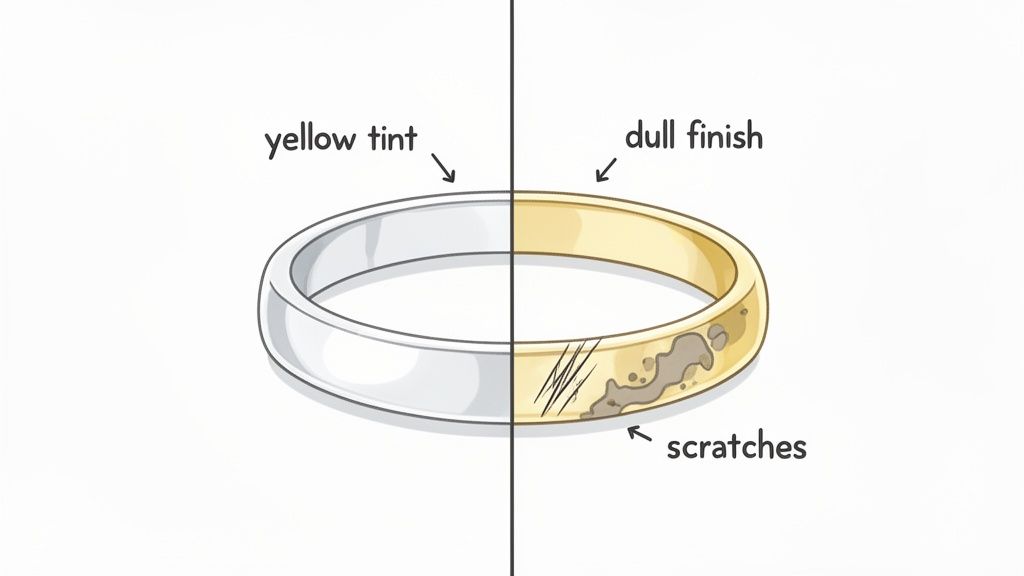
When the plating wears thin, the slightly warmer, yellowish tone of the natural white gold underneath will start to peek through. You’ll usually spot this first on high-contact areas, like the back of the band or the tips of the claws. This is a completely normal part of the ring's life cycle, not a sign of a defect.
This brings us to the main consideration: the need for a bit of maintenance. To bring back that original brilliant white finish, the ring will need to be professionally replated. This involves a cost and a trip to a jeweller. Think of it less like a repair and more like routine servicing—the essential upkeep needed to keep your treasured piece in showroom condition. For most people, this small, ongoing investment is a worthy trade-off for the unmatched beauty and protection rhodium provides.
To help you decide, here’s a quick overview of what you’re getting with rhodium plating.
Rhodium Plating At a Glance
Benefit
Consideration (Drawback)
Superior Brilliance: Creates a bright, mirror-like white finish.
Temporary: The coating wears off over time with friction.
Scratch Resistance: Adds a hard, protective layer to the metal.
Requires Replating: Needs professional maintenance every 1-2 years.
Hypoallergenic: Provides a safe barrier for sensitive skin.
Ongoing Cost: Replating involves a recurring service fee.
Tarnish Proof: Prevents corrosion and keeps the ring looking new.
Wear Varies: Lifespan depends heavily on lifestyle and wear.
Ultimately, the choice comes down to priorities. If you value that crisp, brilliant-white look and extra durability, the routine of replating is a small price to pay for a ring that looks its absolute best.
How Long Plating Lasts and What Replating Costs
So, how long does this brilliant coating actually last? It’s one of the first questions people ask. The best way to think about it is like the tread on a car tyre—it’s made to perform, but it naturally wears down with use. How quickly that happens comes down almost entirely to your lifestyle.
On average, you can expect a fresh rhodium plating to last between 12 and 24 months. But this is just a guideline. The biggest factor is friction. If you wear your ring every day and have a hands-on job, it’s going to see a lot more contact than a ring that only comes out for special occasions. Everyday actions like gripping a steering wheel, typing, or even carrying a handbag all contribute to gradual wear.
Factors That Influence Plating Durability
A few things can speed up the wear process. Knowing what they are can help you keep that bright-white finish for longer.
How Often You Wear It: An engagement ring worn daily will need a new coat far sooner than a cocktail ring you wear once a month.
Your Skin's Chemistry: Some people have more acidic skin, which can react with the plating and cause it to break down faster.
Exposure to Chemicals: Harsh substances are the enemy. Think hand sanitisers, cleaning products, lotions, and even the chlorine in swimming pools—they can all degrade the rhodium layer.
The lifespan of rhodium plating is a direct reflection of your daily life. It’s not a flaw in the ring but a natural consequence of wearing and enjoying your beautiful jewellery.
When you start to see the warmer, yellowish tone of the white gold peeking through, it’s time for a refresh. The great news is that replating is a routine and very affordable service. It’s not a major repair, just a small investment in keeping your ring looking its absolute best.
In a specialist workshop like those in London's Hatton Garden, you’ll typically find the cost to rhodium plate a standard ring falls between £40 and £75. This price almost always includes the full prep work: a professional polish to buff out any scratches and a deep clean to make sure the new rhodium layer bonds perfectly.
The final quote can vary slightly based on a few things:
Ring Complexity: An intricate design with lots of nooks and crannies might take a little more time and care, nudging the price up.
Metal Condition: If the ring has deep scratches, it will need more intensive polishing beforehand, which could affect the cost.
Other Services: You might want to bundle the replating with other maintenance, like checking the security of stone settings.
Ultimately, replating is a simple, cost-effective way to restore that original showroom sparkle. Think of it as essential upkeep that keeps your treasured ring looking as bright and captivating as the day you first saw it.
Caring for Your Rhodium Plated Jewellery
While rhodium plating is incredibly tough, it’s not invincible. You play a massive part in keeping that beautiful, mirror-bright finish looking its best. A few simple daily habits can make a huge difference, protecting your investment and keeping your jewellery looking pristine between professional services.
The key is to minimise friction and keep it away from harsh chemicals. That rhodium layer is only a few microns thick, and aggressive substances will wear it down much faster than you’d think. By adopting a gentler approach, you can easily add months, or even years, to its lifespan.
The Dos and Don'ts of Daily Wear
Think of your rhodium-plated ring as the last thing you put on before you leave and the first thing you take off when you get home. This simple rule is your best defence against cosmetics, lotions, and perfumes that can dull its shine over time.
Here are a few essential habits to get into:
Do remove your ring before swimming. Chlorine is a major enemy of rhodium plating and will cause it to break down surprisingly quickly.
Don't wear your ring while cleaning the house. Household chemicals, especially anything with bleach or ammonia, are far too harsh and will damage the finish.
Do take off your jewellery before any heavy manual tasks. Gardening, lifting weights, or any activity that causes repeated friction will physically wear away the plating.
Don't sleep with your ring on. It can easily catch on bedding, and the constant contact with your skin and sweat can contribute to wear.
Protecting your ring is all about being mindful. When you treat your jewellery with care, you're actively preserving the rhodium in rings that gives it that signature lustre and durability. It’s a small effort for a long-lasting sparkle.
How to Clean Your Ring at Home
Regular, gentle cleaning will keep your rhodium-plated jewellery free from the everyday dirt and oils that make it look dull. The process is simple, and you don’t need any special equipment to keep it looking brilliant between professional appointments.
Just use a bowl of warm water with a few drops of mild, ammonia-free washing-up liquid. Let the ring soak for a few minutes, then gently wipe it with a very soft, lint-free cloth. For more intricate settings, a baby-soft toothbrush is perfect for carefully dislodging any grime around the gemstones.
Always rinse it thoroughly under clean water and pat it completely dry with another soft cloth before you wear or store it. Our guide on the best way to clean gold jewellery offers more detailed steps for various pieces. It's crucial to avoid abrasive materials, chemical dips, and ultrasonic cleaners unless they're specifically approved for plated items, as these can strip the rhodium layer right off.
Beyond physical care, presenting your rhodium-plated rings in their best light is also important. You can find helpful tips for effectively photographing your jewelry to capture its true brilliance.
How to Know When Your Ring Needs Replating
Like the tread on a great pair of shoes, the rhodium plating on your ring is built for performance but will show signs of wear over time. This is a totally normal and expected part of your ring’s life. Knowing how to spot the early signs lets you act quickly, making sure your piece never loses its captivating sparkle.
Fortunately, your ring gives you clear visual clues when it's ready for a refresh. Learning to recognise these subtle changes means you can book a quick visit to a jeweller before minor wear becomes noticeable. Think of it not as a repair, but as routine maintenance that keeps your rhodium in rings looking flawless.
The Most Common Sign: A Yellowish Tinge
The most obvious signal that your rhodium is wearing thin is a different colour peeking through from underneath. Since white gold is naturally a warm, slightly yellowish off-white, you’ll start to see this warmer hue showing through the brilliant white rhodium.
This colour change almost always appears first on the parts of the ring that get the most friction. Check the underside of the band—the part that sits against your palm and constantly touches desks, steering wheels, and door handles. This area typically shows wear long before the top of the ring does.
Other Key Visual Cues to Look For
Beyond the tell-tale yellowing, there are other signs that your ring is due for replating. Keep an eye out for a general decline in its overall brilliance and uniformity. A fresh rhodium coat has a consistent, mirror-like lustre that’s unmistakable.
As it wears away, you might notice:
A Patchy or Splotchy Appearance: Instead of a uniform shine, the finish may start to look uneven, with dull spots contrasting against the remaining shiny areas.
A Lack of Lustre: The ring may simply look tired and less reflective than it used to, even after a thorough clean at home.
Increased Visibility of Scratches: Rhodium is incredibly hard and acts as a scratch-resistant shield. When it wears off, the much softer gold alloy underneath is exposed, making it more likely to show minor scuffs and scratches.
If you find yourself cleaning your ring and it still doesn’t get that 'brand new' sparkle back, it’s a strong sign the problem isn't dirt—it’s plating wear. The metal underneath simply can’t achieve the same bright-white shine as rhodium.
What to Expect When You Get Your Ring Replated
When you decide it’s time for a refresh, the process is straightforward and usually very quick. A professional jeweller will first inspect the ring for any damage, like loose stones or deep scratches that need attention.
Next, they’ll meticulously polish the entire ring to remove any surface scratches and buff away the last remnants of the old plating. This preparation is crucial for a flawless new coat. After a deep electro-cleaning, the ring is replated with a fresh layer of rhodium, completely restoring its original brilliance.
Many specialist workshops, especially in places like London's Hatton Garden, offer a same-day, while-you-wait service. This means you can often drop your ring off and have it back, looking brand new, in just a couple of hours. It’s a small investment of time and money that makes a huge difference in preserving the beauty of your jewellery.
Rhodium Plating: Your Questions Answered
To wrap things up, let's tackle some of the most common questions people have about rhodium plating. These quick, clear answers will fill in any gaps, giving you a complete picture of this essential jewellery finish.
Can You Rhodium Plate Yellow or Rose Gold?
Yes, absolutely! It's a popular way to temporarily change a ring's appearance. Applying a rhodium plate to yellow or rose gold gives it the brilliant, crisp white finish of a brand-new white gold piece.
Just remember, this is a temporary makeover. As the rhodium layer inevitably wears away, the original warm yellow or pink hue of the gold underneath will start to peek through. This simply means it will need replating more often than a white gold ring to maintain that bright white look.
Is Plating Safe for Delicate Gemstones?
For the most part, rhodium plating is perfectly safe for rings set with gemstones. The electroplating process is gentle and won't harm durable stones like diamonds, sapphires, or rubies. Our jewellers are well-versed in handling these precious items with the utmost care.
There are, however, a few exceptions. Porous gemstones like pearls, opals, coral, and turquoise can be sensitive to the chemicals in the plating bath. A skilled jeweller will always take precautions, often applying a special protective lacquer to shield these delicate stones before starting. It's crucial to trust an expert who knows exactly how to protect every part of your ring.
A common misconception is that plating is risky for fine jewellery. In reality, when performed by a professional, it's a safe and standard procedure designed to enhance and protect your treasured pieces without harming the gemstones.
Does Rhodium Plating Devalue a Ring?
Not at all—in fact, it does the exact opposite. Rhodium plating is standard, essential maintenance that helps protect a ring's value. Think of it like servicing a luxury watch or polishing a classic car.
The hard rhodium layer acts as a shield for the softer gold alloy beneath, protecting it from scratches and daily wear. By keeping the ring looking its brilliant best, you're maintaining its aesthetic appeal and structural integrity, which are key parts of its overall worth. It's a sign of good care, not a flaw.
Is White Gold Better Than Platinum?
This really comes down to personal preference and budget. Rhodium-plated white gold gives you the brightest white finish possible at a more accessible price point than platinum.
Platinum, on the other hand, is a naturally greyish-white metal that never needs plating. While it’s more expensive upfront and isn't quite as dazzlingly white as fresh rhodium, its colour is permanent. The choice is yours: the unmatched brilliance and lower initial cost of white gold (with its need for occasional replating), or the durable, natural colour and higher price of platinum.
At Opulence Jewellery Services, our expert jewellers handle every piece with precision and care, restoring its original beauty with specialist rhodium plating services right here in our Hatton Garden workshop. Bring your ring back to life by visiting us for a same-day service. Find out more at https://www.opulencejewelleryservices.co.uk.
Learn the safe, expert way to diamond ring clean at home. Our guide shows you how to restore sparkle and avoid costly mistakes, straight from Hatton Garden.