A Complete Guide to Resizing Wedding Rings in the UK
09 January 2026 19 min read Hatton Garden, London
Discover how resizing wedding rings works, the costs involved, and what to expect. Get expert advice from UK jewellery specialists for a perfect fit.
It happens to almost everyone. That wedding ring that felt so perfect on the day you said “I do” is now a bit too snug, or maybe worryingly loose. This isn’t something you did wrong; it’s just life. Our bodies change, and thankfully, a professional resize is a straightforward fix to get you back to wearing that cherished symbol with total comfort.
So, Why Doesn’t My Wedding Ring Fit Anymore?
It’s a story we hear all the time in the workshop: a beautiful, meaningful ring ends up tucked away in a jewellery box because it won’t slide over a knuckle or it spins freely on the finger. This is completely normal. Your body isn’t static, and a few common factors can easily change how your ring fits over the years.
Think of it like tailoring a favourite suit or dress. You wouldn't stop wearing it; you'd have it adjusted to fit you perfectly again. Resizing your ring is the exact same principle, ensuring it stays a part of your daily life.
Common Reasons Your Ring Size Changes
Most changes in finger size come down to everyday life, some are temporary and others more permanent. Figuring out which one applies to you helps decide the best time to pop in for an adjustment.
Natural Body Changes: It's completely normal for our weight to fluctuate over the years. Even a small shift can make a big difference to how your ring feels.
Pregnancy and Parenthood: Hormonal changes and fluid retention during pregnancy are well-known for causing fingers to swell, sometimes quite significantly.
The British Weather: Ever notice your rings feel tighter in a summer heatwave and looser in the dead of winter? Your body reacts to temperature, causing your fingers to swell or shrink slightly.
Lifestyle and Diet: Things like a new exercise routine, how much salt you eat, or your hydration levels can cause temporary swelling in your hands.
Here in the UK, resizing is one of our most common jobs. While the average ring size for women often falls between L and N, life events mean that original size rarely stays perfect forever. In fact, industry estimates suggest 20–30% of all wedding rings in the UK will need adjusting at some point, making it a core service for any jeweller.
The most crucial thing is to make sure the fit is perfect for you right now. A ring that’s too loose is a lost ring waiting to happen, while one that’s too tight is uncomfortable and can even affect circulation. Before you commit to a resize, getting an accurate measurement is key—our guide on how to measure a ring size in the UK can walk you through it.
How Jewellers Resize Your Wedding Ring
When you hand your wedding ring over for resizing, it can feel a bit like a mystery. What actually happens behind the workshop door? It’s not magic, but a blend of precision skill and artistry—techniques our goldsmiths have perfected over years.
Think of it less like surgery and more like expert tailoring for your most precious piece. A skilled jeweller doesn’t just change the size; they preserve its character and strength, making sure it comes back to you looking completely flawless. The right method always depends on whether the ring needs to go up or down in size, and by how much.
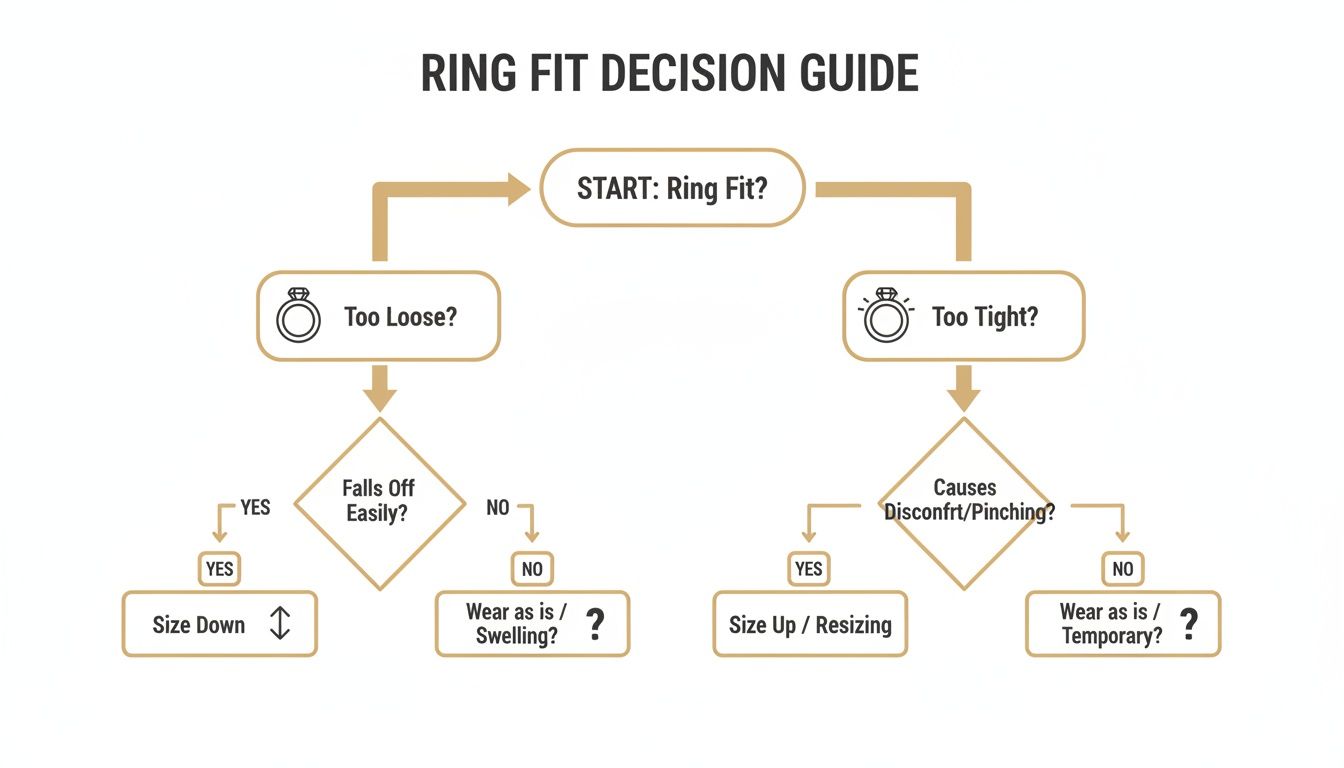
This quick guide can help you figure out the best path forward based on how your ring fits right now.
As you can see, whether your ring is too loose or too tight, there’s always a solution, from a simple adjustment to a more involved workshop procedure.
Making a Wedding Ring Smaller
The most common and reliable way to downsize a ring is the 'cut and solder' technique. It’s the industry gold standard for achieving a perfect, smaller fit while keeping the ring's integrity completely intact.
Precise Measurement: First, we confirm your exact new ring size with professional gauges. No guesswork.
The Cut: A tiny piece of the shank (the plain part of the band at the bottom) is carefully cut out. The amount removed corresponds exactly to the size reduction needed.
Soldering and Reshaping: The two ends are then brought together and expertly soldered with a perfect match for your ring's metal in both colour and quality. We then re-round the ring on a mandrel to restore its perfect circular shape.
Finishing: Finally, the join is meticulously filed, sanded, and polished until it’s completely invisible. When done right, even you won’t be able to spot where the work was done.
It’s just like getting a high-end suit tailored. A master tailor doesn't just fold the fabric; they remove a section and create a new, invisible seam so the garment fits as if it were custom-made from the start.
Making a Wedding Ring Larger
If your ring is too tight, there are a couple of ways to go, depending on how much bigger it needs to be and its design.
The Stretching Method
For a very small increase—usually no more than half a size—we might use a stretching technique. The ring is placed on a specialised tool that gently and evenly expands the metal until it reaches the target size.
Think of it like easing a slightly snug jumper over your shoulders. You’re not adding new material, just carefully working with what’s already there. This is quick and effective for plain bands but isn’t suitable for rings with gemstones, as it could loosen the settings.
Adding Metal for a Larger Size Increase
For any increase over half a size, adding metal is the only way to go. It’s the safest and most professional method, essentially the reverse of making a ring smaller.
The process involves cutting the shank and inserting a small, perfectly matched piece of metal. This new piece is soldered into place on both sides, and the ring is then reshaped and polished for a seamless finish. This ensures the entire band stays strong and thick, without thinning out any part of the original ring.
Adding metal ensures the structural integrity of your wedding ring is never compromised. It's the most reliable way to increase a ring's size significantly without distorting its shape or weakening the band.
Non-Permanent Sizing Solutions
Sometimes, a permanent resize isn’t the best option. Maybe your ring is only slightly loose, or you expect your finger size to change again. In these cases, we have a few clever, non-invasive alternatives.
Sizing Beads: These are two small metal balls soldered onto the inner back of the ring. They act as tiny cushions, gripping your finger to stop the ring from spinning. They can reduce the fit by about half a size and are fantastic for people with larger knuckles.
Spring Inserts: A small metal strip, shaped like a horseshoe, is soldered inside the ring. This spring gently hugs your finger for a snug fit while still allowing the ring to expand over your knuckle.
Ring Guards or Adjusters: These are temporary, DIY solutions. They are typically small plastic or metal strips that wrap around the bottom of the band to take up extra space. While not a permanent fix, they’re useful for a quick adjustment in a pinch.
Can Every Wedding Ring Be Resized?
It’s the most important question we get asked: can my ring be resized? While the answer is often "yes," it's certainly not a guarantee. Whether we can adjust a ring comes down to two critical factors: the metal it’s made from and the complexity of its design.
Think of a jeweller working with metal like a sculptor working with clay. Some materials are soft and forgiving, allowing for easy reshaping. Others are rigid and will crack under pressure. The exact same principle applies to wedding rings; the material and structure dictate what’s possible.
Metals That Play Nicely with Resizing
The type of metal your ring is crafted from is our first consideration. Certain metals are a dream for goldsmiths to work with, while others present significant, often insurmountable, challenges.
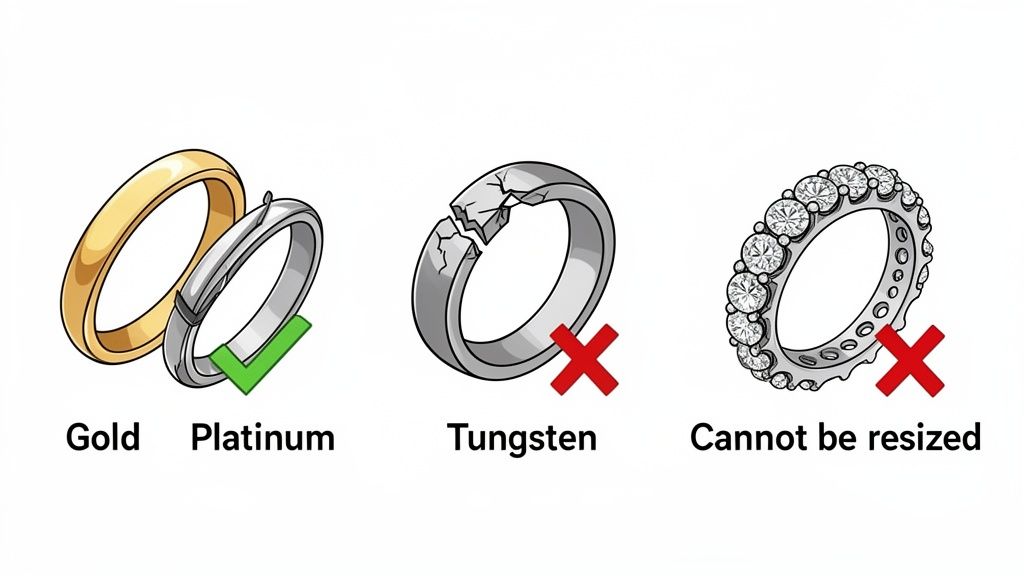
Gold (Yellow, White, and Rose): Gold is highly malleable, making it one of the easiest metals to resize. It can be cut, soldered, and stretched with predictable, beautiful results.
Platinum: Like gold, platinum is a noble metal that is excellent for resizing. It demands higher temperatures and specialised tools, but a skilled jeweller can adjust it seamlessly.
Palladium: A member of the platinum family, palladium is also very workable and can be resized effectively by an experienced professional.
These metals share a key trait: they can be heated, reshaped, and joined without losing their strength or beauty. This flexibility is what makes resizing so successful for the vast majority of rings we see.
Problematic Materials and Why They Resist Change
On the other end of the spectrum are modern, alternative metals. While prized for their durability and unique look, their very strength makes them nearly impossible to adjust.
Attempting to resize these materials is less like tailoring a suit and more like trying to bend concrete—it’s just going to fracture.
Important Note: Metals like tungsten, titanium, and stainless steel are too brittle or hard to be cut and soldered in the traditional way. Trying to resize them will almost certainly cause the ring to shatter or crack, making them a one-size-only commitment.
How Your Ring’s Design Affects Resizing
Beyond the metal, the ring’s design is the second piece of the puzzle. An intricate structure can create roadblocks for even the most straightforward resizing job, as any change could disrupt the entire aesthetic.
A simple, plain band is the easiest to work on. The jeweller has a clear, uncomplicated area to make adjustments without disturbing any features. However, many rings are far more complex.
Here are some common design elements that can make resizing difficult or impossible:
Full Eternity Bands: These rings feature gemstones set all the way around the band. Removing a section to make it smaller would break the continuous pattern of stones. Adding a piece would create an obvious blank space, ruining the design's symmetry.
Intricate Engravings or Patterns: If a pattern wraps around the entire ring, cutting into it will create a visible interruption. While a master engraver can sometimes replicate the pattern over the join, it's a highly specialised task that isn’t always possible.
Tension-Set Stones: In a tension setting, the gemstone is held in place by the pressure of the band itself. Changing the ring's circumference alters this precise tension, which could cause the stone to become loose or fall out entirely.
Channel-Set Stones: Similar to eternity bands, rings with stones set in a channel can be tricky. Resizing can distort the channel, compromising the security of the gemstones within it.
Essentially, the more complex and continuous the design, the less room there is for alteration. A skilled jeweller can assess your ring’s specific structure to determine if a safe and invisible resize is achievable.
Understanding Resizing Costs and Timelines
When you're thinking about getting a ring resized, two questions usually pop up first: "How much will it cost?" and "How long will it take?" The short answer is, it depends—just like getting a suit tailored. The final price and timeline are shaped by the metal, the complexity of your ring's design, and just how much bigger or smaller it needs to be.
Getting a handle on these variables means you can budget properly and know exactly when you'll have your cherished ring back on your finger. A reputable jeweller won't hit you with surprise fees; they'll walk you through a clear process based on your ring's specific needs.
Key Factors Influencing the Cost
The final price for resizing your wedding ring isn't just a number plucked from thin air. It’s carefully calculated based on the materials, time, and specific skills needed to get a flawless result.
Type of Metal: Different precious metals behave differently. Platinum, for example, demands much higher temperatures and specialised tools than gold. That makes it more labour-intensive and, as a result, more expensive to resize.
Sizing Up vs. Sizing Down: Making a ring smaller is generally more straightforward because it just involves cutting out a tiny piece of the band. Sizing up is more complex; it requires us to source a perfectly matched piece of metal and expertly solder it into place, which adds to both material and labour costs.
Ring Complexity: A simple, plain band is the easiest job. But a ring with delicate engravings, a whole row of gemstones, or a detailed setting needs far more time and painstaking care to make sure the design isn't disturbed during the resizing.
For a basic job here in the UK, like making a simple gold band one size smaller, you can expect to pay between £50 to £90. For more involved work, like sizing up a platinum ring set with diamonds, the cost could be anywhere from £100 to £250 or more, depending on the specifics. To get a broader idea, you can find helpful guides on general jewelry repair costs, including ring resizing, from other industry experts.
Comparing Turnaround Times
How long it takes to resize a ring also varies quite a bit. A typical high-street jeweller might quote you one to two weeks, mainly because they often send pieces out to an off-site workshop. It's a reliable option, but it means being without your ring for a while.
In contrast, specialist workshops with on-site facilities—like ours here in Hatton Garden—can offer a much faster service.
For many people, having a ring resized on the same day is a game-changer. It’s not just about convenience; it’s about the peace of mind you get from knowing your treasured item never leaves the premises.
This kind of rapid, expert service is a cornerstone of the UK’s multi-billion-pound jewellery market, where skilled aftercare helps protect valuable assets for a lifetime.
For a more detailed breakdown of what to expect, have a look at our guide on how long ring resizing takes, where we explain the difference between standard and express services.
A Look Inside the Resizing Process
So, you’ve decided resizing is the right move. But what actually happens when you hand your ring over to a goldsmith? It’s not magic, but a series of meticulous steps performed with precision and care. Understanding the journey can give you real peace of mind, knowing your cherished piece is in expert hands.
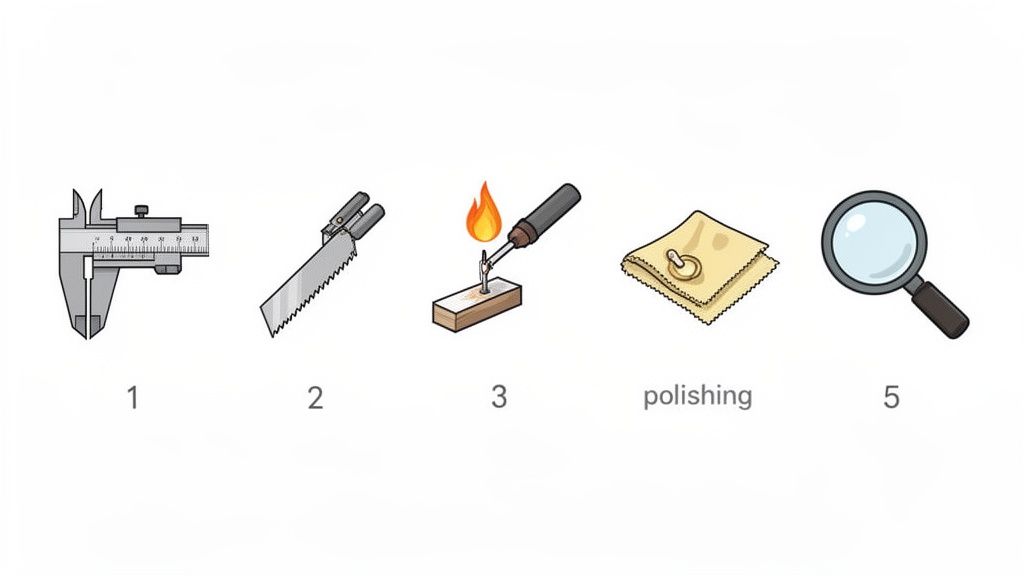
Think of it like a master watchmaker repairing a fine timepiece. Every stage is deliberate, requiring specialised tools and a deep understanding of how precious metals behave. Let’s walk through the five key stages of a typical ring resizing, from the first measurement to the final, gleaming result.
Step 1: Precise Measurement for a Perfect Fit
The whole process hinges on one thing: accuracy. Before any work begins, a jeweller will use professional ring sizers to find your perfect fit. This isn’t just about getting a ring that slips on; it’s about finding a size that feels comfortable all day long, even when your fingers swell slightly.
We make sure the ring glides over your knuckle with minimal resistance but sits snugly at the base of your finger without spinning. This initial consultation is the foundation for a flawless resize.
Step 2: The Delicate Cut for a Seamless Change
Once the new size is confirmed, the real work starts. To make a ring smaller, the jeweller makes a single, precise cut at the bottom of the shank (the plain part of the band). Using a jeweller’s saw, they carefully remove a tiny piece of metal that corresponds exactly to the size reduction needed.
If the ring needs to be larger, a similar cut is made to open the shank up, preparing it for a new piece of metal.
This step is where craftsmanship truly shines. A clean, precise cut is essential for creating an invisible join later on. It’s a delicate operation that sets the stage for a structurally sound and aesthetically perfect finish.
Step 3: Expert Soldering and Reshaping
This is the heart of the operation. To downsize a ring, the two cut ends are brought together perfectly. To go up in size, a small piece of matching metal—the same carat and colour—is inserted into the gap.
Using a high-temperature torch, the jeweller applies solder to fuse the metal pieces. The goal is to create a bond just as strong, if not stronger, than the original metal. Once soldered, the ring isn’t perfectly round anymore, so it’s placed on a steel tool called a mandrel and gently tapped with a rawhide mallet to restore its perfect circular shape.
Step 4: Professional Cleaning and Polishing
After soldering and reshaping, the ring looks a bit rough. The join area is often discoloured from the heat, and the surface is unpolished. This is where the magic of finishing comes in.
The jeweller meticulously files, sands, and buffs the soldered area until it’s completely smooth and blends seamlessly with the rest of the band. After that, the entire ring gets a professional clean and polish. This not only makes the repair invisible but also restores the ring’s original lustre, making it look as brilliant as the day you first received it.
Step 5: Final Quality Inspection
Before your ring is ready, it undergoes a final, rigorous quality inspection. The jeweller examines the piece under magnification to check that:
The join is completely invisible: There should be no visible line or seam.
The shape is perfectly round: The ring must be symmetrical and structurally sound.
The finish is flawless: The polish must be even, with no scratches or blemishes.
The size is exact: The final size is double-checked against the measurement taken in step one.
This last look guarantees the work meets the highest standards of quality and that your ring is ready to be worn and cherished for many more years to come.
Finding Same-Day Resizing Services in London
In a city as fast-paced as London, waiting weeks for a ring resize often just isn't an option. You might have a special event coming up, or perhaps you simply can't bear to be without your most cherished piece of jewellery. This is where same-day, while-you-wait resizing makes all the difference.
For busy professionals, the convenience is a game-changer. Instead of two trips to the jeweller—one to drop off, one to collect—you can have the entire job done in just a few hours. It slots neatly into a packed schedule, removing all the usual logistical hassle.
More than that, a while-you-wait service offers genuine peace of mind. Your ring is a priceless symbol, and the thought of it leaving your sight or being sent to an unknown workshop can be unnerving. When the work is done on-site, you know your ring is secure from start to finish.
The Hatton Garden Advantage
So, how is this kind of rapid service even possible? It’s a blend of deep expertise, the right technology, and a streamlined workflow—something you'll find at the heart of London’s famous jewellery quarter, Hatton Garden.
Master Goldsmiths On-Site: Workshops here are staffed by highly experienced jewellers who can perform complex adjustments with speed and absolute precision.
State-of-the-Art Equipment: Access to modern tools like laser welders and advanced polishing machines means faster, cleaner work with flawless results.
Efficient Workflow: Everything happens under one roof. This cuts out the delays of sending pieces to external workshops, which is common practice for many high-street jewellers.
This combination makes same-day resizing the premium choice for anyone who values quality, speed, and security. It turns what could be a long, drawn-out process into a convenient and reassuring experience. And when you're organising all the elements of a wedding, finding reliable service providers is key; a helpful tool like this wedding vendor checklist template can be invaluable.
Choosing a reputable same-day service means you don’t have to compromise. You get the highest standard of craftsmanship delivered in a timeframe that respects your schedule and prioritises the security of your most treasured possession.
When looking for the right jeweller, always seek out transparent pricing and ask for a clear explanation of their process. Top workshops are proud of their craft. For a deeper dive, explore our guide on finding same-day ring resizing in London and learn what to expect.
Of course. Here is the rewritten section, crafted to match the expert, human-written style of your examples.
Common Questions About Resizing Wedding Rings
It’s completely normal to have a few questions before you hand over a piece as precious as a wedding ring. To give you peace of mind, here are the straightforward answers to the queries we hear most often in our Hatton Garden workshop.
How Much Can My Wedding Ring Be Resized?
This is usually the first thing people ask. As a general rule, we can comfortably resize most wedding rings up or down by two full UK sizes. This range is the sweet spot for making adjustments without affecting the ring's strength or the security of its settings.
Going beyond two sizes can sometimes be done, but it gets riskier. A drastic change can warp the ring’s shape, make the band too thin, or even cause gemstones to become loose. For bigger adjustments, we’d likely recommend a better solution, like replacing the bottom half of the band (what we call a half-shank replacement) to guarantee a result that’s both beautiful and built to last.
Will Resizing Weaken My Wedding Ring?
This is a big concern for many, but when the work is done by a skilled goldsmith, the answer is a definite no. A professionally soldered join is incredibly robust—often just as strong as the original, seamless metal, if not stronger.
It all comes down to the quality of the workmanship. An expert ensures the metal fuses perfectly, leaving no weak spots behind. That said, resizing the same ring in the exact same place over and over again across many decades could eventually take a toll. It’s why getting the size right with a professional from the start is so important.
When an expert resizes your ring, the goal isn’t just to change the size—it’s to restore its original strength and flawless look. A perfect, invisible solder joint is the hallmark of true craftsmanship.
Will I Be Able to See Where the Ring Was Resized?
Absolutely not. A meticulous finish is the final, crucial step of any professional resizing. After the ring is soldered and shaped, our jewellers carefully file, sand, and polish the area until any trace of the work has vanished. The new join is blended seamlessly into the rest of the band.
The ring we hand back to you should look completely untouched. The finish will be so flawless that even you won't be able to spot where the adjustment was made. It will look just as pristine as the day you first put it on.
At Opulence Jewellery Services, our master jewellers combine years of experience with state-of-the-art tools to deliver flawless, invisible resizing while you wait. Visit our Hatton Garden workshop for transparent pricing and expert care you can trust. Learn more about our ring resizing services.
Discover the timeless elegance of the engagement ring emerald cut. Our guide covers choosing the perfect diamond, setting, and provides expert care tips.
Discover how to get the perfect fit for your big day. Our expert guide covers sizing wedding rings, resizing costs, and finding the right jeweller in London.
Learn the safe, expert way to diamond ring clean at home. Our guide shows you how to restore sparkle and avoid costly mistakes, straight from Hatton Garden.