How to Prevent Jewelry from Tarnishing a Practical Guide
01 January 2026 16 min read Hatton Garden, London
Discover how to prevent jewelry from tarnishing with expert tips on storage, daily care, and cleaning to keep your silver and gold pieces shining.
The secret to keeping your jewellery looking its best often starts the moment you take it off. How you store your pieces is your most powerful tool in the fight against tarnish, creating a vital barrier between them and the environmental culprits that cause discolouration.
This is especially true in a damp climate like ours here in the UK.
Your First Line of Defence: Smart Jewellery Storage
Think of your jewellery box as less of a container and more of a personal vault. It’s there to protect your cherished items from their two biggest enemies: air and moisture. When you leave jewellery on an open tray or a wooden dresser, it’s constantly exposed to humidity and atmospheric gases that speed up the tarnishing process—a particular problem for sterling silver.
This isn’t just a theory. In places like London, where the damp air can be tough on metals, proper storage is the single most effective preventive measure. Studies have shown that simply using airtight containers can slow down the rate of tarnish by up to 65% in just 30 days compared to leaving items out. Add in urban pollution, which can double the speed of discolouration, and taking storage seriously becomes a no-brainer. If you're curious about the science, this ultimate guide to prevent tarnish is a great read.
Key Storage Strategies to Stop Tarnish
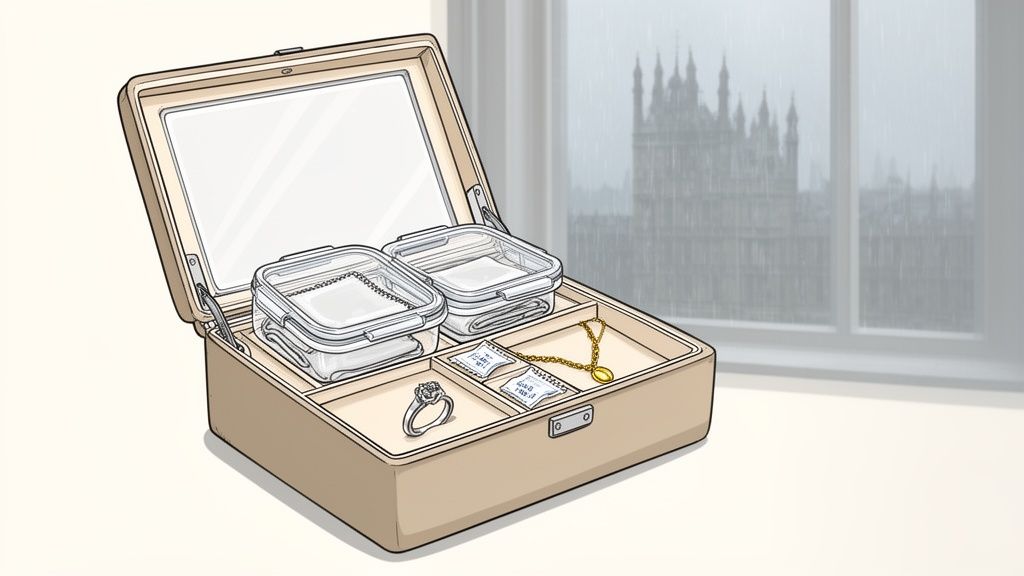
To create a safe haven for your jewellery, your two main goals are limiting air exposure and controlling moisture. The ideal starting point is an airtight jewellery box lined with a soft, non-reactive fabric. If you don't have one, individual zip-lock bags or small pouches made from anti-tarnish cloth are fantastic alternatives.
Here are a few practical upgrades for any storage setup:
Add Anti-Tarnish Strips: These small paper tabs are brilliant. They absorb airborne pollutants like sulphur, neutralising the very gases that cause tarnish before they ever reach your jewellery.
Use Silica Gel Packets: Don’t throw away those little white packets from new shoe boxes! Pop one or two inside your jewellery box. They’ll absorb any excess moisture, keeping the environment perfectly dry.
Keep Your Pieces Separate: Storing items in individual compartments or pouches does more than just prevent tangles—it stops them from scratching each other. Scratches create more surface area where tarnish can form and can even damage the protective plating on some items.
The goal is to create a micro-environment for your jewellery that is as dry and chemically inert as possible. It’s a simple change that yields significant results, extending the life and lustre of every piece you own.
Choosing the Right Storage for Your Collection
The best storage method often comes down to the material and sentimental value of the piece. A basic compartmentalised box is great for daily-wear items, but you might want to consider individual airtight containers for precious heirlooms or silver that’s especially prone to tarnishing.
To help you decide, here’s a quick comparison of the most effective storage solutions.
Smart Storage Solutions for Your Jewellery
Storage Method
Tarnish Prevention Level
Best For
Expert Tip
Lined Jewellery Box
Good
Daily wear, costume jewellery, gold
Look for a box with a tight-fitting lid and separate compartments. Velvet or felt linings are ideal.
Anti-Tarnish Pouches
Very Good
Sterling silver, plated pieces, travel
These chemically-treated fabric bags neutralise sulphur. Store each piece in its own pouch.
Airtight Containers
Excellent
Fine silver, heirlooms, long-term storage
Small, individual plastic containers or zip-lock bags offer the best protection against air and humidity.
Jewellery Cabinet/Armoire
Moderate
Large collections, easy access
Best for less reactive metals. Add silica packets and anti-tarnish strips to multiple drawers to boost protection.
Choosing the right home for your jewellery makes a world of difference. For pieces that already show signs of wear or need a professional touch-up, understanding your options for ongoing jewellery maintenance services can help restore their original beauty and preserve them for years to come.
The "Last On, First Off" Rule in Your Daily Routine
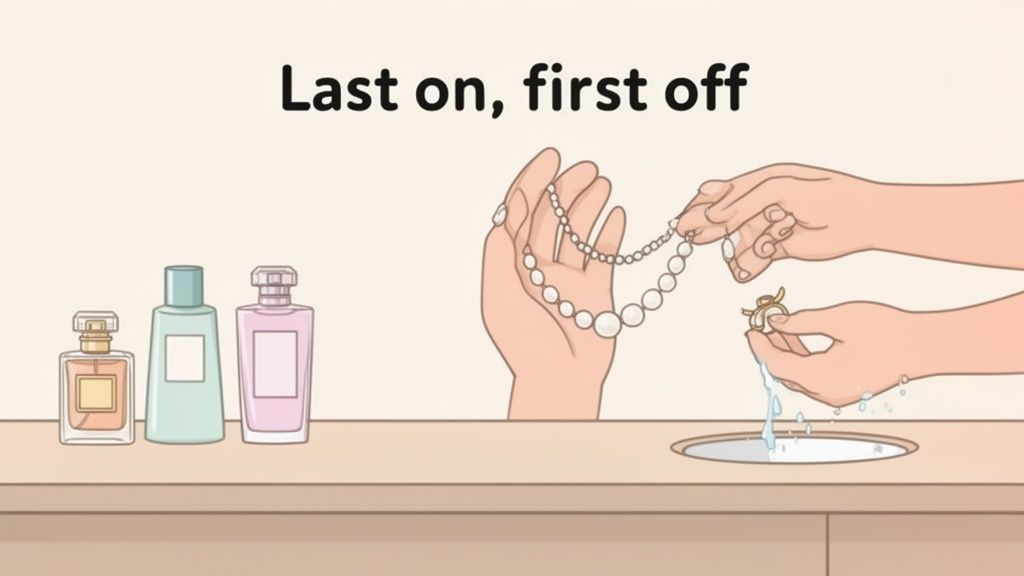
While good storage is half the battle, the small habits you build into your day make an enormous difference. If you learn just one thing, make it the 'last on, first off' rule. It’s a simple mantra that shields your pieces from their biggest enemies: the chemicals we put on our bodies without a second thought.
Think about your morning. It’s usually lotion, then perfume, then hairspray, and finally, your jewellery. Each of those products is packed with chemicals that, while safe for us, are incredibly corrosive to metal alloys. They leave behind a film that traps moisture and speeds up the exact chemical reactions that cause that dreaded discolouration.
Why Your Products Are the Enemy of Shine
Everyday cosmetics are full of compounds that simply don't play well with precious metals. The acids, alcohols, and oils found in them can instantly dull the surface of gold and put the tarnishing process on fast-forward for silver.
It happens in scenarios we don't even think about:
Perfumes & Hairspray: The alcohol content is particularly harsh and reacts directly with the metal alloys in your jewellery.
Lotions & Creams: These leave an oily residue that acts like a magnet for dirt and pollutants, creating the perfect breeding ground for tarnish.
Hand Sanitiser: With its high alcohol percentage, sanitiser can strip away protective rhodium plating and aggressively tarnish silver.
By making your jewellery the absolute last thing you put on—after all those creams have absorbed and sprays have settled—you dramatically cut down on this direct chemical assault. It’s a tiny shift in your routine that pays huge dividends.
First Off: The Essential Evening Habit
The other half of the rule is just as important. Your jewellery should be the very first thing you take off when you get home. Over the day, your skin's natural oils and sweat build up on your rings, necklaces, and earrings. Sweat, in particular, is a major culprit because it contains salts and sulphides that are highly reactive with silver.
Taking off your rings before doing the dishes, your necklace before hitting the gym, or your earrings before a shower isn’t just about comfort—it's a critical maintenance step. Each activity bombards your jewellery with moisture and chemicals that will absolutely dull its shine over time.
Research from the Sheffield Assay Office confirms that water can enhance the sulphide reaction by over 55%, while the acids in our sweat can make silver tarnish three times faster. In fact, a huge number of jewellery complaints in the UK are directly linked to damage from being worn while showering or swimming.
Following this simple rule can help you preserve up to 90% of your jewellery's original lustre. You can learn more about the science behind why sterling silver tarnishes from Lord of London. Adopting the 'last on, first off' habit is the easiest, most cost-effective way to extend the life and brilliance of your entire collection.
Gentle At-Home Jewellery Cleaning Techniques
Consistent, gentle cleaning is your secret weapon against the slow build-up that leads to deep-set tarnish. This isn’t about aggressive scrubbing or harsh chemicals; it’s about a simple maintenance routine that stops discolouration before it can truly take hold, keeping your pieces looking brilliant between professional services.
The most effective method is often the simplest: a weekly wipe-down.
Just take a soft, lint-free cloth—like one you’d use for eyeglasses—and gently polish your most-worn items. This small act is surprisingly powerful. According to the Sheffield Assay Office, this simple habit removes 60% of surface oxides before they can permanently bond with the metal.
This proactive approach is particularly vital in the UK's climate. With winter humidity in London spiking to 85% and the natural sulphides in our skin oils, tarnish can be accelerated by up to 50% on items like bracelets and chains. Regular cleaning prevents an incredible 75% of tarnish progression, a fact supported by findings that 68% of tarnished pieces sent for repair showed dullness that could have been reversed with mild methods. Learn more about how fine jewellery tarnishes and the best ways to avoid it.
The Mild Soap and Water Method
For a slightly deeper clean, especially for pieces that have come into contact with lotions or sweat, a simple bath in lukewarm water with a few drops of mild, phosphate-free washing-up liquid is ideal. This works wonders for solid gold, sterling silver, and even many types of costume jewellery.
Here's how to do it safely:
Prep Your Solution: Fill a small bowl with lukewarm water and add just a couple of drops of gentle washing-up liquid. Never use hot water, as it can damage certain gemstones.
A Quick Soak: Let the jewellery soak for two to five minutes. This is just enough time to loosen any accumulated dirt, oils, and grime.
Use a Soft Touch: Gently scrub the piece with a very soft-bristled brush, like a baby's toothbrush. Pay close attention to crevices and settings where dirt loves to hide.
Rinse and Dry Completely: Rinse the jewellery under cool running water and—this is critical—dry it completely with a soft, clean cloth. Moisture is a primary driver of tarnish, so ensuring your piece is bone-dry before storing is essential.
A common mistake is reaching for toothpaste or bicarbonate of soda. While they may seem effective, these substances are abrasive and will create microscopic scratches on the metal's surface, which ironically makes your jewellery more susceptible to future tarnishing.
Material-Specific Cleaning Advice
Different materials need slightly different approaches. What works for a sturdy gold band might be too harsh for a delicate plated necklace.
Sterling Silver: The soap and water method is perfect. For any light tarnish, a dedicated silver polishing cloth is your best friend.
Gold Jewellery: Gold is less reactive than silver, but it still benefits from regular cleaning to remove oils and dirt that dull its shine. You can find more specific advice in our guide on the best way to clean gold jewellery.
Costume & Plated Jewellery: Be extra gentle here. A quick wipe with a damp cloth followed by immediate and thorough drying is often enough. Avoid soaking these pieces, as moisture can seep under the plating and cause it to flake or discolour from within.
By integrating these gentle cleaning habits into your routine, you can effectively manage the daily factors that lead to dullness and keep your entire collection looking its absolute best.
Caring for Different Jewellery Materials
Not all metals are created equal, and a one-size-fits-all approach to care simply won’t cut it for your collection. You have to know the metal to know how to handle it. Understanding what makes each material unique is the real secret to preventing tarnish and keeping every piece looking brilliant.
Sterling silver, for example, is notoriously prone to darkening. That’s because it’s an alloy, usually 92.5% pure silver mixed with 7.5% other metals like copper. It's the copper that reacts with sulphur in the air, creating that familiar dark layer we call tarnish.
For silver, consistent care isn't just a good idea—it's essential. The best defence is actually wearing it regularly, as the natural oils from your skin can act as a temporary protective barrier. When it's not being worn, airtight storage with an anti-tarnish strip is the gold standard.
Keeping Gold and Plated Pieces Gleaming
Even solid gold jewellery can sometimes discolour, especially pieces with a lower karat value. An 18k gold ring has more pure gold than a 9k one, which means there are fewer other metals present to react with the environment. Still, any gold can dull over time from contact with skin oils, cosmetics, and everyday grime.
For these pieces, gentle cleaning is everything. If you're looking for specific tips, there are some great guides on how to clean gold jewelry at home that show you how to maintain its lustre without damaging the metal.
Gold-plated and costume jewellery are the most delicate of all. Their beauty is literally skin-deep; a thin layer of gold or another precious metal covers a base like brass or copper. Once that plating is scratched or wears away, the more reactive metal underneath is exposed, leading to rapid tarnishing and discolouration.
To really extend their life, you have to be meticulous:
Avoid all moisture. Never, ever wear them in the shower, pool, or while exercising.
Be gentle. A soft, dry cloth is all you need. Stay away from polishing cloths, as they're often too abrasive and can wear down the plating faster.
Store them separately. Keep them in their own soft pouches to prevent scratches that would expose the base metal.
With plated and costume pieces, the goal isn't to stop tarnish forever—it's to delay the inevitable for as long as possible. Careful handling is the only way to get the most wear out of them.
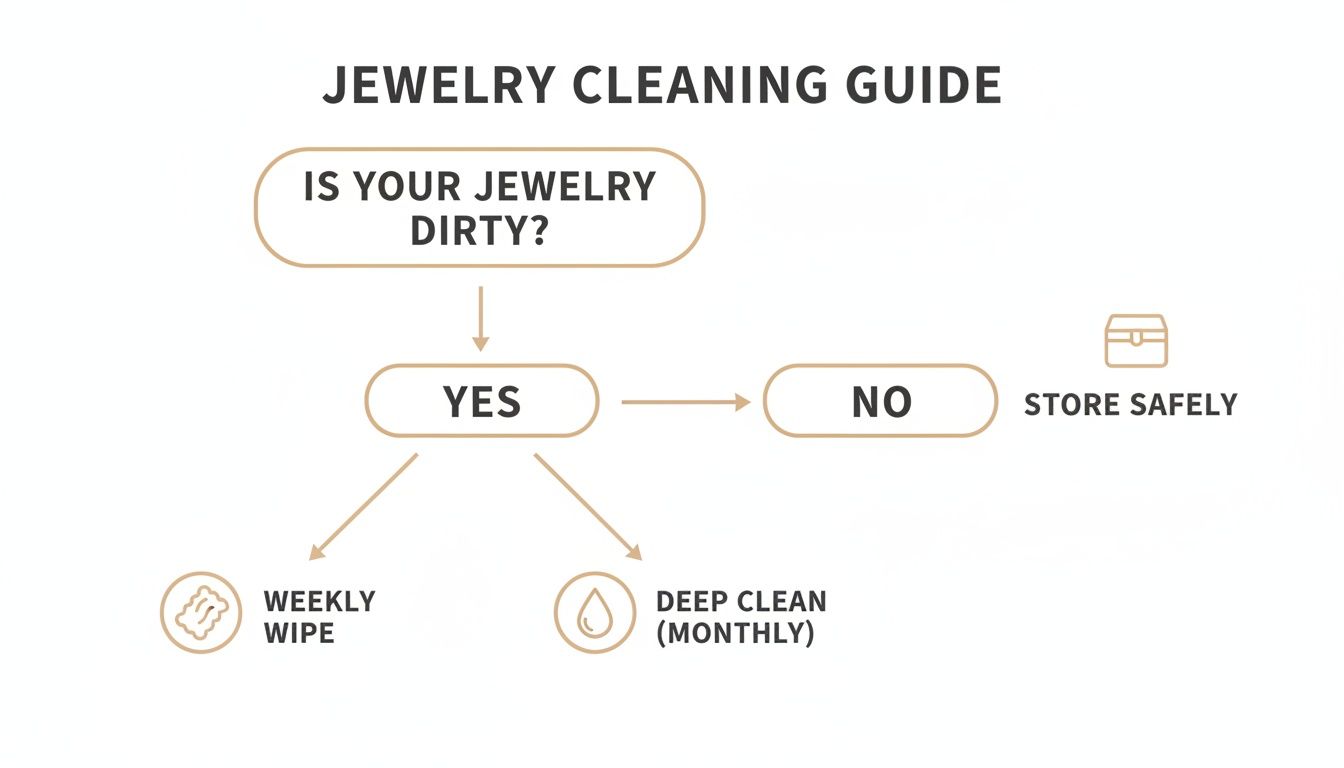
This flowchart gives you a simple way to decide on your weekly care routine.
It’s a straightforward visual guide: if a piece isn’t dirty, secure storage is your top priority. If it is, a quick wipe or a deeper clean is in order.
Jewellery Material Care Guide
To make things even easier, I've put together a quick-reference table. It breaks down the tarnish risk and best care practices for the most common materials you'll find in your jewellery box.
Material Type
Tarnish Risk
Recommended Daily Care
Best Cleaning Method
Sterling Silver
High
Wear often; wipe after use.
Mild soap and water; silver polishing cloth.
Solid Gold
Low
Remove during heavy activity.
Mild soap and water; soft brush for details.
Gold-Plated
Very High
'Last on, first off'; avoid all moisture.
Gentle wipe with a dry, soft cloth only.
Costume Jewellery
Very High
Keep dry and away from chemicals.
Damp cloth wipe, followed by immediate drying.
By tailoring your approach to each specific item, you give every piece in your collection the best possible chance to shine for years to come.
When It’s Time to Call in a Professional
Consistent home care is your best defence against tarnish, but there comes a point where a polishing cloth and elbow grease just won't cut it. Knowing when to step back and let an expert take over is key to protecting your most precious pieces, from family heirlooms to that irreplaceable engagement ring.
Sometimes, the tarnish is simply too stubborn. If you're tackling dark, deep-set patches that refuse to budge with gentle cleaning, or the entire piece has a dullness that won't lift, it's time for a professional. Jewellers have specialised tools and cleaning solutions that can safely remove years of build-up without harming the metal underneath.
Another clear sign is physical damage. Scratches and scuffs aren't just cosmetic flaws; they create tiny grooves where tarnish can take hold more easily. A professional jeweller can polish these imperfections away, restoring a smooth, brilliant surface that’s far simpler to keep clean. This process brings back a piece's original sparkle in a way home methods never could.
Beyond a Basic Polish
Professional restoration goes far beyond a simple clean. These services don't just restore your jewellery's beauty—they add a powerful layer of protection against future discolouration, a smart move for anyone serious about keeping their collection in top condition.
Here are a few key services to consider:
Rhodium Plating: Absolutely essential for white gold, which naturally yellows over time. A fresh layer of rhodium restores that bright, silvery-white finish and provides a hard, protective barrier against scratches and tarnish.
Gold Re-plating: If the gold layer on a plated item has worn thin, revealing the base metal, re-plating is the only real fix. A jeweller can apply a fresh, even layer of gold, making the piece look brand new.
Stone and Setting Check: While cleaning your jewellery, a professional will also inspect the prongs and settings to make sure every gemstone is secure. This simple check can prevent a devastating loss down the line.
Handing your jewellery over to an expert isn't an admission of defeat. Think of it as a proactive investment in your piece's future, ensuring it stays beautiful and wearable for generations to come.
For busy Londoners, having a trusted local workshop is invaluable. When you notice the finish on your white gold ring starting to look a bit tired, understanding the benefits of professional white gold replating services can make all the difference. Don't wait until the damage becomes severe. A timely visit to a jeweller can reverse the effects of time and wear, reviving your favourite pieces to their former glory.
Answering Your Tarnish Prevention Questions
Even with the best storage habits, specific questions about tarnish always come up. I get asked these all the time in the workshop, so I've put together some direct answers for those tricky "what if" moments.
Think of this as your quick-reference guide to keeping every piece in your collection looking its best.
Why Does My Silver Jewellery Tarnish So Quickly in London?
It’s not just you; it’s the London air. The city’s high humidity and pollution are full of sulphur compounds, which are the main culprit behind tarnish. Silver reacts with these compounds, and the process speeds up dramatically in damp, urban environments.
Even a daily commute on the Tube exposes your jewellery to more sweat and airborne pollutants. This is exactly why proactive care, especially airtight storage, is so critical for Londoners.
Can I Stop Gold Plated Jewellery From Tarnishing Forever?
Not forever, but you can dramatically extend its life. With plated jewellery, "tarnish" usually means the thin gold layer has worn away, exposing the base metal underneath. That base metal is what reacts and discolours.
To delay this, make your plated pieces the absolute last thing you put on and the first thing you take off. Keep them away from water, lotions, and perfumes, and never use abrasive cloths on them—you’ll just scrub the gold layer right off. Storing each piece separately also prevents scratches that accelerate wear.
When the plating eventually fades, a professional re-plating service is a great option to restore its original look and protective barrier.
Are Commercial Silver Dip Cleaners Safe To Use at Home?
I always advise using these with extreme caution. Yes, dip cleaners are fast and effective on heavy tarnish, but they are incredibly aggressive chemical solutions.
They can easily ruin porous gemstones like pearls, opals, and turquoise. They will also strip the beautiful, desirable patina from antique or vintage pieces, which can affect their value.
Overuse can actually make silver more prone to tarnishing in the future. Honestly, for most situations, a soft polishing cloth is a much safer bet. If a piece is severely tarnished, bring it to a professional—it’s the best way to avoid accidental damage.
Does Wearing My Silver Jewellery More Often Prevent Tarnish?
Surprisingly, it can. The natural oils in your skin create a temporary buffer that slows down the chemical reaction with sulphur in the air. So, wearing your silver frequently can genuinely help keep it shiny.
Of course, this only works if you remember to give the piece a quick wipe with a soft cloth after wearing it. This removes any sweat, makeup, or lotions that might be lingering. Finding that perfect balance between enjoying your jewellery and protecting it when stored is the goal. For a deeper dive, there are some essential jewelry maintenance tips to keep your pieces shining longer that cover this in more detail.
At Opulence Jewellery Services, our Hatton Garden workshop is here to help when home care isn't enough. From professional polishing to expert rhodium plating, we restore the brilliance of your most cherished items. Visit us for a while-you-wait service and see your jewellery shine like new again. https://www.opulencejewelleryservices.co.uk