A Guide to Using a Diamond Jewellery Cleaner Safely
02 December 2025 15 min read Hatton Garden, London
Learn how to use a diamond jewellery cleaner safely at home. Our guide offers expert tips for restoring your diamond's sparkle without causing damage.
The truth is, the best diamond jewellery cleaner is probably already in your kitchen. A simple mix of mild dish soap and warm water is often all you need to cut through the daily grime without harming delicate settings or precious metals.
For a deeper clean that really brings back that showroom brilliance, an ultrasonic cleaner can be a fantastic tool to use at home.
Why Your Diamonds Lose Their Sparkle
Remember that dazzling fire your diamond had the first time you wore it? Over time, that sparkle can seem to fade, leaving the stone looking a bit cloudy or dull. The culprit isn't the diamond itself—it's the stubborn, near-invisible film that builds up on its surface from simply living your life.
This film is a cocktail of everyday substances. Think about your morning routine: hand creams, hairspray, makeup, and even the natural oils from your skin all play a part. Every application adds another microscopic layer, blocking light from entering the diamond and reflecting out. That's what dulls the shine.
Where Grime Hides Best
The problem gets worse with more intricate designs. A classic solitaire might just get grubby on the underside, but for more complex settings, grime has plenty of places to hide.
Pavé Bands: All those tiny diamonds set closely together create a minefield of small crevices where dirt and oils get trapped.
Halo Settings: The area just underneath the halo and around the centre stone is a prime spot for build-up, which can make the whole piece look flat.
Claw Settings: The prongs holding your diamond are another magnet for debris. When gunk collects around the claws, it can obscure the stone’s edges and even make it look smaller.
A word of warning: using standard hand soaps or shower gels can actually make things worse. Instead of washing the grime away, they often leave their own soapy residue behind, adding yet another layer to the film and dimming the sparkle even more.
The Growing Need for Proper Care
Restoring that original brilliance isn't just about looks; it's about preserving the value and integrity of your most cherished pieces. With the UK jewellery market growing, the need for proper maintenance has never been more clear.
Valued at approximately USD 5.76 billion, the market is set to grow significantly, showing a strong demand for high-quality pieces and the products needed to care for them. You can explore more about the UK jewellery market trends to understand this growth.
A dedicated diamond jewellery cleaner is essential for safely cutting through that stubborn build-up and making sure your investment continues to shine for years to come.
Building Your At-Home Cleaning Kit
Before you start, gathering the right tools is the key to a safe and effective clean. Think of it as setting up a small, dedicated station for your jewellery care. Having everything ready means you can work methodically without rushing, especially when your pieces start looking a little dull. You don’t need anything fancy or expensive—the best tools are often the simplest.
The most important part of your kit is a gentle brush. A soft-bristled baby toothbrush is perfect for this. The bristles are incredibly fine and soft, so they can get into intricate settings and around claws to lift away grime, all without scratching the precious metal of your band.
And for that final, flawless finish? A high-quality microfibre cloth is a must. Unlike kitchen roll or other fabrics, microfibre is lint-free. This means you can dry and buff your jewellery to a brilliant shine without leaving behind those annoying little fibres that ruin the look.
Choosing the Right Cleaning Solution
When it comes to the cleaning liquid, you have two main options: a simple homemade mix or a professional-grade commercial cleaner. For most routine maintenance, a DIY solution is more than enough and completely safe for your diamonds.
Gentle DIY Solution: Just a few drops of mild, detergent-free washing-up liquid in a bowl of warm water is all you need. This simple mixture is brilliant for breaking down the everyday oils, lotions, and grime that cause build-up.
Professional Cleaners: Specially formulated commercial cleaners can give a deeper clean, but it's crucial to pick one that is explicitly safe for your jewellery’s specific metals and any other gemstones it might have.
For a full breakdown of what to use and what to steer clear of, our guide on how to clean rings at home is a great place to start building good habits.
Never use harsh chemicals like bleach, acetone, or general household cleaners. These can permanently damage precious metals and may even harm gemstone treatments, leading to expensive repairs down the line.
Safe vs. Unsafe Cleaning Materials for Diamond Jewellery
Knowing what not to use is just as important as knowing what to use. Below is a quick guide to common household items that can seem like a good idea but can actually cause irreversible damage.
Material
Why It's Safe/Unsafe
Best Used For
Mild Washing-Up Liquid
Safe: It's a gentle degreaser that breaks down oils without harsh chemicals.
Creating a simple, effective soak for regular cleaning.
Soft Baby Toothbrush
Safe: The ultra-soft bristles get into tiny gaps without scratching metal or settings.
Gently scrubbing around claws, settings, and detailed metalwork.
Toothpaste
Unsafe: Contains abrasive particles that will scratch gold, platinum, and silver.
Brushing your teeth—never your jewellery.
Microfibre Cloth
Safe: Lint-free and non-abrasive, perfect for a streak-free polish.
Drying and buffing your pieces for a final shine.
Kitchen Roll / Paper Towels
Unsafe: The wood fibres can leave fine scratches on the surface of the metal.
Wiping up spills, not polishing precious metals.
Chlorine / Bleach
Unsafe: Can cause discolouration and even structural damage to metal alloys.
Household disinfection, far away from your jewellery box.
By putting together this simple and effective kit, you can confidently keep your diamond's brilliance at its best between professional services.
The Gentle Soak and Brush Method
This simple, effective method is the cornerstone of at-home jewellery care. It’s perfect for restoring a dulled engagement ring after months of hand cream, hairspray, and daily life have taken their toll. When your ring has lost its fire, clouded by a film of grime, this gentle soak-and-brush technique is the safest way to bring it back to life.
The whole process is straightforward, relying on items you almost certainly already have. Think of it as a trustworthy routine you can use every few weeks to keep your diamonds looking their absolute best.
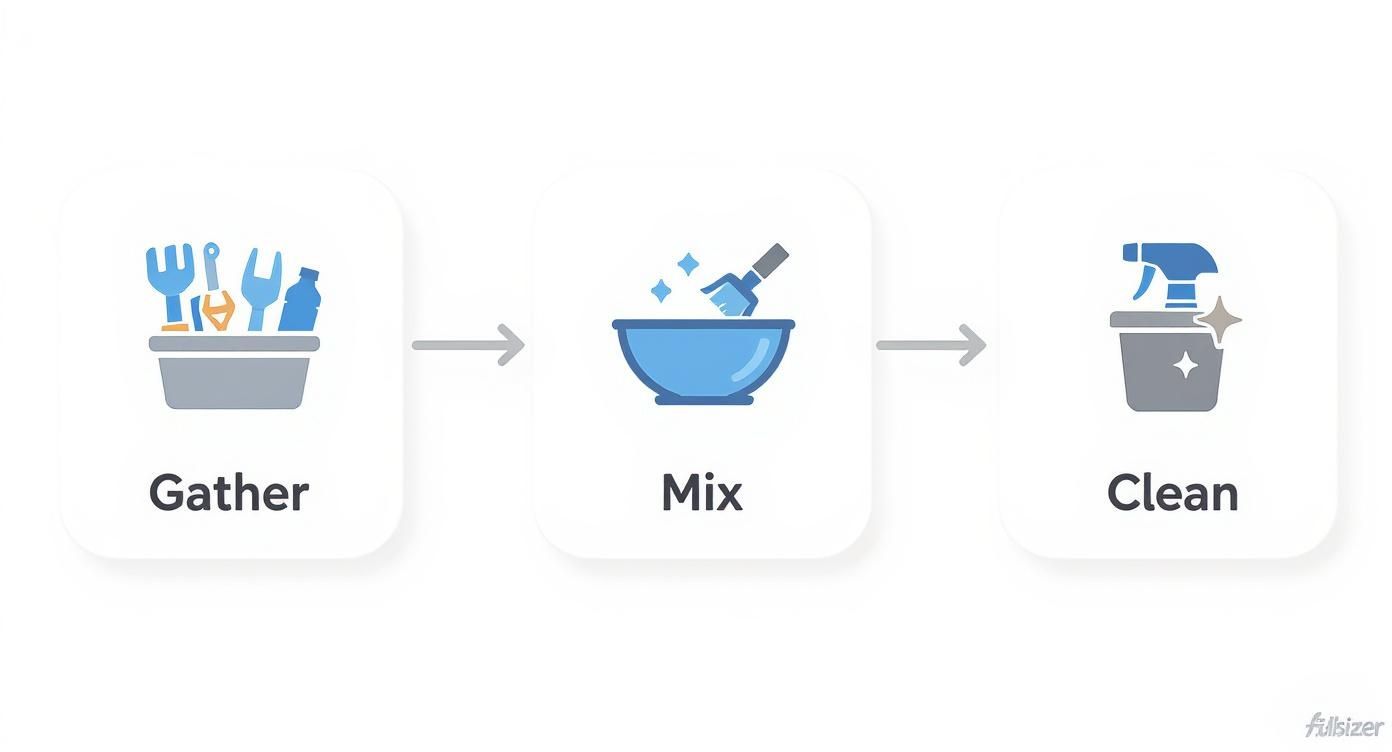
This simple diagram breaks down the process: gather your tools, mix your solution, and get cleaning.
Seeing the workflow like this shows just how easy it is. With just a few basics, you can get a professional-level sparkle right in your own kitchen.
Creating the Perfect Cleaning Solution
First things first, let’s make the cleaning bath. You don't need harsh chemicals or fancy formulas. Just grab a small bowl and fill it with warm—never hot—water, then add a few drops of a mild washing-up liquid. The key is to use a simple soap, free from moisturisers or harsh detergents, as these can leave a residue behind.
Swirl the water gently to mix. The goal is a light, soapy solution that can break down oils and dirt without being abrasive. This simple combination is perfectly safe for diamonds and precious metals like gold and platinum.
The Soaking Process
With your solution ready, gently place your diamond jewellery into the bowl. Now for the easy part: patience. Let the piece soak for around 20 to 40 minutes. This is the crucial step where the warm, soapy water works its way into all the tiny crevices of the setting.
The soak loosens the stubborn build-up of dirt, oils, and cosmetics lodged around the prongs and underneath the diamond. It does most of the heavy lifting for you, making the next step far more effective.
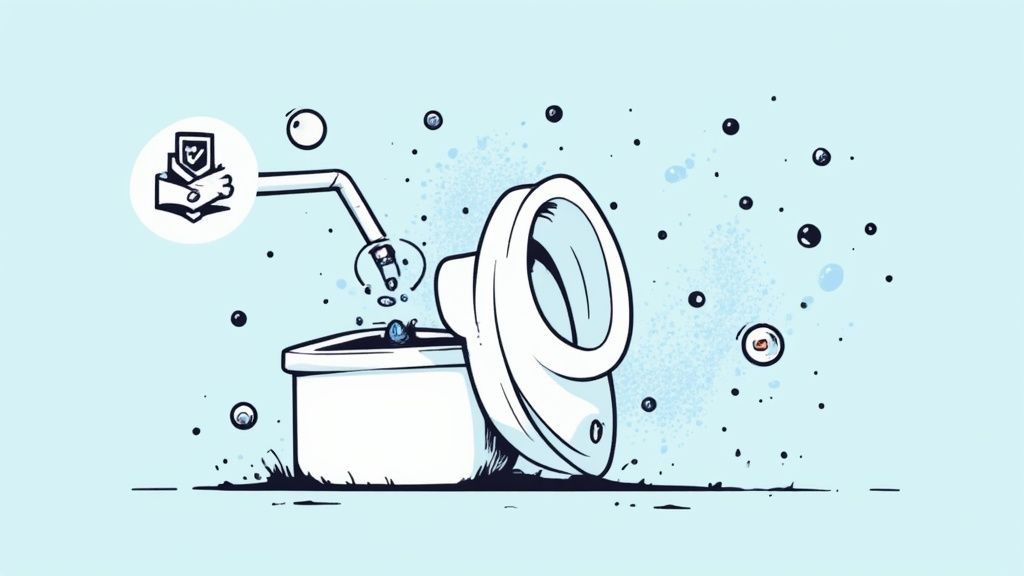
One of the most common and heartbreaking mistakes we hear about is a ring disappearing down the drain. Before you even start, always secure the sink plug. A simple stopper or even a cloth placed over the drain hole can prevent a very costly accident.
Mastering the Gentle Brushing Technique
After a good soak, it’s time to brush away the loosened grime. Take your soft-bristled baby toothbrush and carefully clean the entire piece. You'll want to pay special attention to the areas where dirt loves to hide.
Underneath the Stone: This is the main culprit for a dull-looking diamond. Grime here blocks light from entering and reflecting back out.
Around the Prongs: Gently scrub the base of each claw holding the stone in place.
Intricate Details: For pavé or halo settings, use light, circular motions to clean between all the tiny stones.
Remember, the brushing should be delicate. You’re not scrubbing a pan; you’re just dislodging softened residue. Too much pressure could potentially weaken a prong over time, so a light touch is all that’s needed.
Rinsing and Drying for a Flawless Finish
The final stage is just as important as the cleaning. Rinse your jewellery thoroughly under a gentle stream of warm running water. It is absolutely vital to remove every last trace of soap, as any film left behind will dull the sparkle once it’s dry.
To dry, gently pat the piece with your lint-free microfibre cloth. Please avoid using paper towels or tissues. Their fibres can easily snag on prongs and can even leave micro-scratches on the metal.
For a final professional touch, you can use a hairdryer on its coolest, lowest setting to get rid of any last water spots. The result? A brilliant, streak-free shine.
Using an Ultrasonic Cleaner for a Deeper Clean
For those times when a gentle soak just won't cut it, an ultrasonic diamond jewellery cleaner delivers a professional-level sparkle right at home. It’s a game-changer for getting into the tiny, intricate corners of a setting that a soft brush could never hope to reach.
These clever machines use high-frequency sound waves to create millions of microscopic bubbles in water. This process, known as cavitation, acts like a powerful but gentle scrubbing brush, dislodging stubborn grime, oils, and dirt from every crevice without harsh contact. The result is a brilliance that’s almost impossible to achieve by hand.
Is an Ultrasonic Cleaner Safe for Your Jewellery?
While they're incredibly effective, ultrasonic cleaners aren't a one-size-fits-all solution. The intense vibrations can be too much for some pieces, so it's absolutely vital to know what’s safe to put inside and what should stay far away.
What You Can Safely Clean:
Solid Gold or Platinum Diamond Rings: Simple, sturdy pieces like a solitaire engagement ring or a solid wedding band are perfect for this.
Hard Gemstones: Diamonds, sapphires, and rubies are tough enough to handle the vibrations without any issues.
What to Avoid Cleaning:
Jewellery with Loose Stones: The vibrations will almost certainly shake a loose stone right out of its setting.
Porous or Soft Gemstones: Keep opals, emeralds, turquoise, and pearls away. The heat and vibrations can cause serious damage.
Treated or Fracture-Filled Diamonds: If a diamond has had its clarity enhanced, the ultrasonic process can compromise or even reverse the treatment.
Before every single use, give your piece a quick "rattle test." Hold it close to your ear and tap it gently. Hear anything? That tiny rattle means a stone is loose, and it's time to see a professional instead.
Getting the Best Results
Using an ultrasonic cleaner is straightforward, but a few key steps will ensure you get that brilliant shine without risking your jewellery. Always start with a specialised cleaning solution formulated for the machine, or simply use a few drops of mild washing-up liquid in warm water. Never use harsh chemicals.
Set the timer for just three to five minutes—that’s more than enough for routine cleaning. Running it for longer doesn't make your jewellery any cleaner; it just puts unnecessary stress on the settings.
Once the cycle is done, carefully take your jewellery out, give it a final rinse under clean running water to wash off any loosened debris, and pat it dry with a soft, lint-free cloth. Always finish with a quick inspection to make sure every stone is still secure and sparkling.
For more in-depth advice, you can find our articles covering all aspects of ultrasonic cleaning.
Your Post-Cleaning Inspection Routine
Once your diamond is sparkling again, the job isn’t quite finished. A thorough clean gives you the perfect chance to give your jewellery a quick health check. Think of it as part of responsible ownership—a way to spot small issues before they become heartbreaking problems, like a lost stone.
This quick once-over only takes a minute but could save you a world of stress and expense. With all the grime gone, you have the clearest possible view of its condition. It's the ideal time to check for wear and tear.
Checking for Loose Stones and Prongs
The most critical part of your inspection is the security of the settings. Daily wear can cause prongs—the tiny metal claws holding your diamond in place—to bend, wear down, or loosen over time. A weakened prong is the number one reason stones go missing.
Here's a simple routine to follow:
The Touch Test: Gently run your fingertip over the top of the diamond. Do you feel any snagging or roughness from the prongs? That could be a sign that one has lifted or been damaged.
The Rattle Test: This is a classic jeweller's trick. Hold the piece close to your ear and tap it lightly with a fingernail. A secure stone will be dead silent. If you hear a faint rattling or buzzing sound, it’s a dead giveaway that the stone is loose in its setting.
If you detect any movement or snagging, stop wearing the piece immediately. Continuing to wear jewellery with a loose stone dramatically increases the risk of it falling out. It's time to bring it in for a professional prong check and secure tightening.
Inspecting the Band and Setting
Beyond the main stone, take a moment to look at the whole piece. Pay close attention to the band, especially at the base, which gets the most contact and wear. Look for any areas where the metal appears unusually thin, has deep scratches, or seems bent out of shape.
For rings with intricate details or pavé settings, a magnifying glass is your best friend. Check that all the tiny stones are still there and that the delicate metalwork holding them is intact. Any sign of cracking or significant wear means a visit to the workshop is in order.
Proper Storage to Maintain the Sparkle
Finally, how you store your jewellery makes a huge difference in keeping that freshly cleaned sparkle. Tossing pieces into a single drawer or pouch is a recipe for disaster. Diamonds are incredibly hard and can easily scratch other gemstones and even the precious metals they’re set in.
Protect your collection by storing each piece individually. A soft-lined jewellery box with separate compartments or individual fabric pouches is perfect. This simple habit prevents damage and keeps everything organised and ready to wear, ensuring your diamonds stay as brilliant as the day you got them.
When to Seek Professional Jewellery Services
Regular at-home cleaning is fantastic for keeping your jewellery sparkling day-to-day. But there are times when a gentle soak and a soft brush just won’t cut it. Knowing when to hand your pieces over to a professional is a crucial part of responsible ownership—it protects your cherished items from damage or, worse, irreversible loss.
Think of it this way: your home cleaning clears away surface-level grime and dust, but a professional service is like a full MOT. It addresses the deeper structural issues and restores that original, showroom-floor brilliance.
So, when is it time to see an expert? If you spot persistent cloudiness that your home methods can't shift, notice visible scratches on the metal, or—most importantly—feel a loose stone, stop wearing the piece immediately. Continuing to wear a ring with a wobbly prong is a risk you don't want to take.
The Power of Professional Tools
At our workshop, we have specialised equipment that provides a level of clean you simply can't replicate at home. These tools are designed to be both powerful and incredibly precise, ensuring a safe and thorough restoration every time.
High-Powered Steamers: We use pressurised steam to blast away stubborn, deep-set grime from even the most intricate settings, all without chemicals. The result is a sanitised, brilliantly sparkling finish.
Industrial Ultrasonic Cleaners: While home models are useful, our professional-grade ultrasonic machines are in another league. They create far more powerful vibrations to safely dislodge years of build-up from every hidden nook and cranny.
These tools, combined with a jeweller's trained eye, mean your jewellery isn't just cleaned. It’s also thoroughly inspected for any underlying issues that might have been hidden by dirt.
The growing interest in maintaining luxury goods has had a noticeable impact on the market. In the United Kingdom, consumer awareness has driven steady growth for diamond jewellery cleaners and professional maintenance services. This trend is part of a global market for jewellery care products forecasted to reach USD 638 million, with UK standards ensuring products are both safe and effective. You can discover more insights about the jewellery cleaners market and its growth.
Beyond Cleaning: Comprehensive Jewellery Care
A professional service goes far beyond a simple polish. It's an opportunity for essential maintenance that preserves the integrity and value of your jewellery for a lifetime.
At the bench, our jewellers perform vital tasks like prong tightening and re-tipping, which secures your diamonds and prevents devastating loss. We can also carry out expert polishing to remove scratches from the metal and even re-apply rhodium plating to white gold, restoring its bright, crisp white colour.
These services are fundamental to keeping your pieces in wearable, heirloom condition. If you want to understand the full scope of what's involved, you can learn more about our professional jewellery cleaning services and how they protect your investments.
At Opulence Jewellery Services, our Hatton Garden workshop is equipped with the latest tools and staffed by expert jewellers ready to restore the beauty and security of your most treasured items. From a deep clean to complex repairs, we provide the meticulous care your jewellery deserves.
Discover the best way to clean gold jewellery with our expert UK guide. Learn safe, at-home methods for rings, necklaces, and earrings to restore their shine.
Learn the professional secrets to polishing a ring at home. This guide covers safe methods for gold, silver, and platinum to restore your jewellery's sparkle.
Shop Fine Jewellery Online
Engagement rings, wedding bands, earrings, necklaces & birthday gifts — beautifully crafted and delivered to your door.