Clean Diamond Ring: How to clean diamond ring and Restore Sparkle Safely at Home
17 December 2025 17 min read Hatton Garden, London
Learn safe at-home steps to clean diamond ring, protect the setting, and avoid common mistakes. Click to keep your clean diamond ring sparkling.
The quickest way to clean a diamond ring at home is surprisingly simple: a gentle soak in warm water with a few drops of washing-up liquid. This classic method is safe, effective, and perfect for dissolving the everyday buildup of oils and grime that dulls your diamond's shine.
Why Your Diamond Ring Has Lost Its Sparkle
Have you ever looked down at your ring and thought it just doesn't catch the light like it used to? That brilliant, fiery sparkle seems a bit muted, maybe even cloudy. It's not your imagination, and the good news is, it's almost never a permanent problem.
The culprit is simply daily life. The lotions we use, the natural oils from our skin, and even microscopic particles from the air create a thin film over the diamond's surface. This layer blocks light from entering and refracting properly—the very process that makes a diamond sparkle. When that's hindered, the stone looks dull.
Common Culprits Behind a Dull Diamond
Think about what your hands touch every day. The residue from these simple activities builds up, especially in the tiny gaps of the setting and right underneath the stone where it’s hardest to reach.
Skincare Products: Hand creams, lotions, and sun cream are designed to stick to your skin, and they do the same to your ring, leaving a stubborn, oily film.
Soaps and Shampoos: Many products we use to get clean contain fats and conditioners that leave behind a soapy residue, contributing to that cloudy look.
Natural Skin Oils: Your skin produces oils that easily transfer to your jewellery, acting like a magnet for dust and dirt throughout the day.
Household Tasks: Everything from preparing food to light cleaning can add tiny particles of grease and grime that cling to the metal and stone.
The best part? This buildup is entirely reversible. With the right at-home techniques, you can safely bring back that showroom shine you first fell in love with.
Getting that incredible sparkle back is often easier than you think. While a simple soak is perfect for routine maintenance, it's also important to know when a deeper, professional clean is needed. This guide will walk you through the safest DIY methods and help you spot the signs that it’s time to let an expert restore its flawless finish.
The Gentle Soak Method for a Brilliant Shine
Ready to bring that incredible fire back to your diamond? The safest and most effective way to clean a diamond ring at home is often the simplest one. Forget harsh chemicals—the real secret is a gentle soak that dissolves daily grime without putting your cherished piece at risk.
This isn't some complicated scientific process. It's a simple, effective routine, and you probably have everything you need in your kitchen right now. This method works wonders because it gets to the heart of why a diamond looks dull: the build-up of oils and residue that literally stops light from getting into the stone.
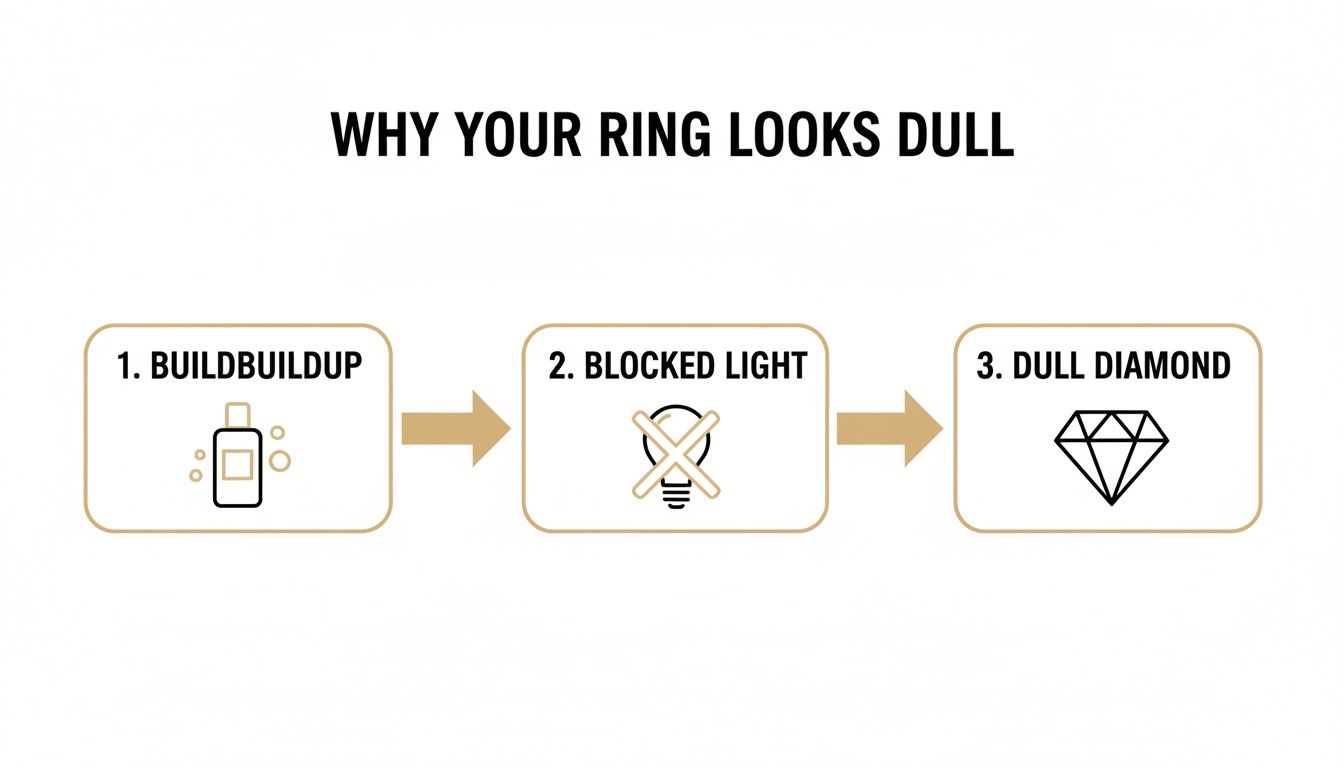
This diagram shows exactly how everyday products create a film that blocks light and kills your diamond's sparkle.
As you can see, a clean surface is absolutely essential for light to pass through and create that signature brilliance we all love.
Preparing Your Cleaning Solution
The perfect cleaning solution is surprisingly basic. All it takes is a small bowl, warm water, and just a few drops of a mild washing-up liquid. The key here is to use a soap that’s free from harsh detergents, moisturisers, or any abrasive additives.
Warm Water: Think comfortable bath temperature—warm to the touch is perfect. Steer clear of hot or boiling water, as extreme temperature changes can stress the metal and, in rare cases, even damage the stone if it has certain types of inclusions.
Mild Soap: A simple, grease-cutting washing-up liquid is your best friend. Its only job is to break down the oils from skin and lotions that have built up on the ring.
A crucial tip when working near a sink: always plug the drain before you start. It’s a simple step that has saved countless rings from a disastrous trip down the plughole.
The Soaking and Gentle Scrubbing Process
Once your solution is mixed, pop your ring in the bowl and just let it soak for about 20 to 30 minutes. This gives the soapy water enough time to work its way into all the tiny crevices and start loosening the dirt, especially behind the main stone where grime loves to hide.
After the soak, it's time for a very gentle scrub. The goal isn’t to scour the ring, but to delicately dislodge any stubborn particles. For this, you need an ultra-soft brush. A baby toothbrush is ideal because its bristles are soft enough to clean thoroughly without scratching the precious metal of the band.
Pay close attention to the hard-to-reach areas:
Underneath the diamond's setting (the pavilion).
Around the prongs or claws holding the stone in place.
Within any intricate details or pavé settings on the band.
Think about it—if you've spent the day baking, flour and oils can get trapped in these exact spots. A soft brush will gently sweep them away, which a simple soak alone might not manage.
When you're finished, rinse the ring thoroughly under a gentle stream of warm running water. Make sure all the soap residue is gone, as any leftover soap will just create a new film. If you're curious about more advanced options, feel free to explore our detailed guide on different types of diamond jewellery cleaner and their specific uses.
Drying for a Flawless Finish
This final step is just as important for getting a streak-free shine. Don't use paper towels or tissues, as their fibres can leave lint behind or, worse, snag on the prongs.
Instead, gently pat the ring dry with a soft, lint-free cloth. A microfibre cloth or a proper jeweller's cloth works best. Letting it air dry completely on a soft towel before you put it back on ensures no moisture is left trapped in the setting. This simple method, done regularly, will keep your diamond looking as brilliant as the day you first saw it.
Household Products That Can Ruin Your Ring
Knowing how to clean a diamond ring is one thing, but knowing what not to do is just as vital for protecting your investment. Your home is full of products that seem innocent enough but can inflict serious, sometimes irreversible, damage on precious metals and even the setting itself.
It’s a common mistake. People reach for a household cleaner, thinking if it works on the kitchen counter, it must be fine for jewellery. This assumption can be incredibly costly. Harsh chemicals can be destructive, dulling the metal's lustre, discolouring alloys, and slowly compromising your entire ring's integrity.
The Abrasives Hiding in Your Bathroom
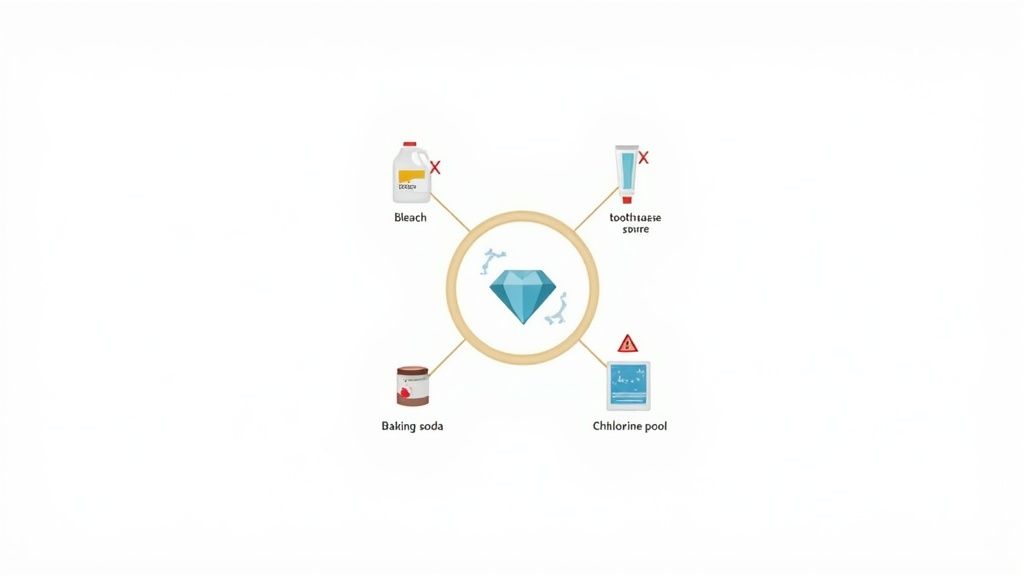
It’s a popular myth that toothpaste is a good, cheap jewellery cleaner. It’s not. Toothpaste is designed to be abrasive enough to scrub your teeth, and it does the same thing to soft precious metals like gold and platinum. It’s essentially a fine sandpaper, creating thousands of tiny scratches that destroy the band’s beautiful mirror finish over time.
Baking soda is another one often touted as a "natural" cleaning hack. But again, it's far too abrasive. It might look like it's working at first, but you're actually scouring away the smooth, polished surface of your ring, which is expensive and difficult to restore professionally.
Key Takeaway: Avoid anything abrasive. If a product feels gritty or is made for scrubbing, it will scratch the metal band and prongs of your ring, leaving a dull, hazy appearance.
Corrosive Chemicals to Keep Far Away
Chlorine bleach is probably the worst offender. It can trigger a chemical reaction with the alloys mixed into gold, leading to discolouration and even making the metal brittle over time. This makes taking your ring off before you clean with bleach or hop in a chlorinated pool absolutely non-negotiable.
Other household cleaners, especially those with ammonia or acetone (like you’d find in nail polish remover), can be just as damaging. These substances can break down the alloys in your gold band, weakening the structure and making it more prone to damage.
This is especially true for white gold rings. That bright, silvery shine comes from a very thin layer of rhodium plating, which these harsh chemicals will strip right off, revealing the slightly yellow-toned gold underneath. You can learn more about this crucial protective layer in our guide to rhodium in jewellery.
Here’s a quick list of everyday items that should never come near your diamond ring:
Bleach and Chlorine: Causes severe corrosion and can break down the structure of metal alloys.
Toothpaste and Baking Soda: Scratches and permanently dulls the metal's high-polish finish.
Acetone and Ammonia: Can strip away rhodium plating and weaken the metal itself.
Hairspray and Perfume: Leaves behind a sticky film that attracts even more dirt and is a nightmare to remove.
Ultimately, sticking to a gentle solution of mild washing-up liquid and warm water is the safest and most effective way to clean your diamond ring at home, ensuring it stays sparkling and secure for years to come.
How Often Should You Really Clean Your Diamond Ring?
There’s no hard and fast rule for how often to clean your diamond ring—it comes down to your lifestyle. The real key to keeping that fire and sparkle alive is understanding your own daily habits.
Your day-to-day life is the biggest factor. If you’re a keen cook, a passionate gardener, or someone who uses hand creams and lotions, your ring is constantly exposed to buildup. For you, a quick weekly soak is a brilliant habit to get into. This light, regular maintenance stops oils and grime from settling in and dulling the stone’s surface before it becomes a stubborn problem.
Finding Your Ideal Cleaning Rhythm
For those with a less hands-on routine, maybe working in an office, a more thorough clean once a month will likely do the trick. The goal is to know the difference between a quick refresh and a proper deep clean.
Weekly Upkeep: Perfect for active lifestyles. This is just a simple 15-minute soak in warm, soapy water to dissolve any fresh residue.
Monthly Deep Clean: Suited for most people. This is a more intentional 30-minute soak, followed by a gentle scrub with a soft brush to get right into the setting and under the stone.
Think of it like this: the weekly clean is a quick wipe-down of your kitchen counters. The monthly clean is the proper scrub. Both are essential to keep things looking pristine.
This kind of regular care is about more than just sparkle; it’s part of a bigger picture. Today, people are more invested than ever in the story and quality behind their jewellery. Recent UK market forecasts, for instance, show a huge rise in lab-grown diamond sales, with buyers focusing on craftsmanship and certified sustainable metals.
With the average engagement ring spend now around £5,750, people are making a real investment. That makes long-term care even more important. You can discover more insights about UK diamond market trends to see how consumer choices are shifting.
The Annual Professional Check-Up
Beyond what you can do at home, a yearly professional check-up is non-negotiable for long-term maintenance. Treat it like a service for your car—it’s not just about cleaning, it’s about preventative care.
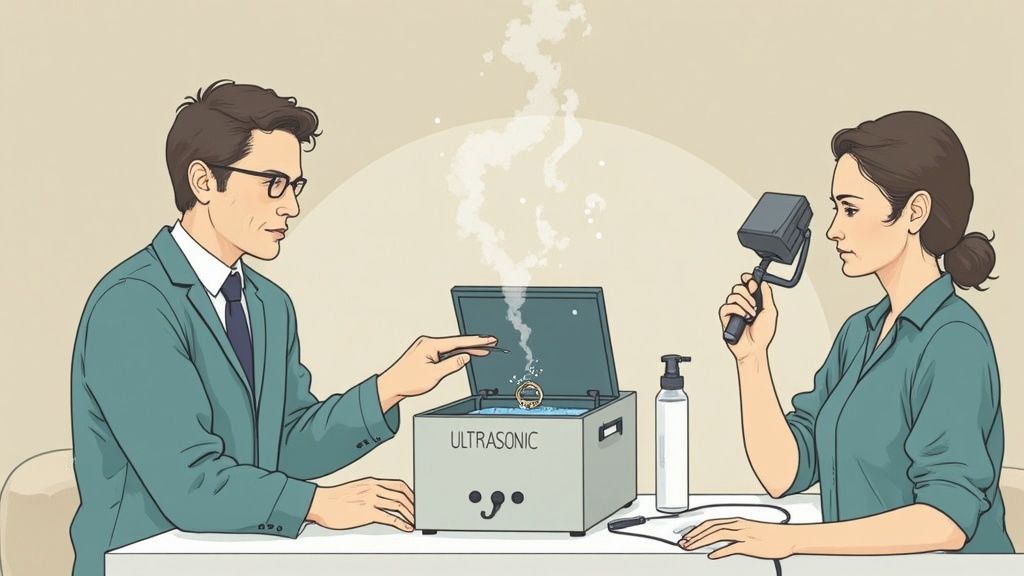
A professional jeweller can perform an ultrasonic clean that safely dislodges trapped dirt in places you simply can't reach. More importantly, they’ll inspect the prongs and setting for any signs of wear or damage, making sure your precious diamond is still secure. This annual visit is the ultimate safeguard for both the brilliant sparkle and the structural integrity of your ring.
When Your Ring Needs a Professional Jeweller
While a good at-home clean works wonders for day-to-day sparkle, there are times when a gentle soak and scrub just won’t do the trick. Knowing the signs that your diamond ring needs a professional’s touch is key—not just for bringing back the fire, but for protecting its long-term health and security. Think of it as an essential health check for one of your most treasured pieces.
Sometimes, the issue is purely about the shine, but it’s beyond the reach of a home kit. Intricate settings, like pavé or halo designs, have countless tiny crevices where grime, hand lotion, and oils can become deeply compacted over time.
If your ring still looks stubbornly dull or cloudy even after a thorough clean, that’s a sure sign that buildup is trapped in places your soft brush simply can’t get to.
Warning Signs You Should Never Ignore
Beyond a persistent lack of shine, there are critical physical signs that demand an immediate expert assessment. These often point to structural problems that could put your diamond at risk. Ignoring them can turn a minor, affordable repair into a major, heartbreaking loss.
A Loose Stone: This is the most urgent red flag. If you hear a faint rattle when you gently tap the ring near your ear, or if you can feel the diamond move even slightly, stop wearing it immediately.
Bent or Damaged Prongs: Look closely at the tiny metal claws holding your main stone. If one looks shorter, bent, or snags on your clothes, its grip is compromised and needs immediate attention.
Visible Wear and Tear: Years of daily life can thin the metal on the band and setting. If the bottom of your ring looks noticeably worn or has lost its shape, it’s time for a professional to assess its integrity.
A professional jeweller doesn't just clean your ring; they meticulously inspect it under magnification. This allows them to spot subtle signs of wear that are often invisible to the naked eye, catching potential problems before they escalate.
The Value of an Expert Eye
Bringing your ring to a professional is an investment in its future. In the UK's thriving jewellery market, valued at approximately £4.4 billion, the emphasis on quality and longevity has never been greater. Consumers are increasingly aware that maintaining their pieces is just as important as the initial purchase, aligning with a broader trend towards lasting craftsmanship. You can read more about the UK jewellery market's significant growth and see how this focus on quality is shaping buying habits.
This is precisely why a professional service is so vital. It’s not just about using powerful ultrasonic cleaners and steam jets to achieve that flawless, 'like-new' sparkle. It’s about the jeweller’s expertise in diagnosing the health of your ring’s entire structure—from the security of the prongs to the condition of the band itself.
If you're ever in doubt, it's always best to get an expert opinion. For those looking for an experienced eye, understanding your options for a professional jewellery cleaning service near you can provide immense peace of mind. A skilled jeweller can quickly identify whether your ring just needs a deep clean or if a more crucial repair, like re-tipping a prong, is needed to keep your diamond secure for years to come.
What to Expect From a Professional Cleaning Service
Taking your ring to a professional is far more than just a deep clean—it’s a full restoration and health check. While your at-home methods are perfect for keeping surface grime at bay, a jeweller uses specialised equipment and techniques to bring your ring back to its original, showroom-worthy condition.
Think of it as the ultimate way to preserve your ring’s beauty and, more importantly, ensure its structural integrity for years to come. An expert goes far beyond what a simple soak can achieve, employing powerful tools designed to tackle the most stubborn, compacted grime without risking the delicate setting or the precious metal itself.
Advanced Cleaning Techniques
The first tool in our arsenal is usually an ultrasonic cleaner. This machine uses high-frequency sound waves to create microscopic bubbles in a cleaning solution, a process called cavitation. These tiny bubbles gently but effectively dislodge dirt, oils, and lotion from every last crevice—places a brush could never hope to reach.
Next up is often a high-pressure steam blaster. This step is what really brings back that unmatched, fiery sparkle. The steamer shoots a targeted jet of hot steam that safely blasts away any lingering oily films, leaving the diamond’s facets completely clear to reflect light with maximum brilliance.
A professional service isn't just about making your ring look good; it's a vital inspection. The jeweller will meticulously examine the prongs, the setting, and the band under magnification to spot any signs of wear, looseness, or damage before it becomes a serious problem.
The Inspection Process
This inspection is arguably the most valuable part of the service. A trained eye can spot a slightly bent prong or a worn-down setting that might feel perfectly secure to you but could be moments away from failing. Catching these issues early is the difference between a simple, affordable repair and the heartbreak of a lost diamond.
This level of detailed care is what today’s savvy UK buyers expect. We're seeing a real shift in the market, with more people investing in craftsmanship and long-term value. For instance, diamond-set bands have soared from 22% to 34% of sales for one brand recently, a sign that intricate designs are in demand. Those designs absolutely require diligent, professional upkeep to stay secure and sparkling. You can explore the latest UK engagement ring trends to see how styles are evolving.
Here at Opulence Jewellery Services in Hatton Garden, we combine these advanced cleaning techniques with a thorough, goldsmith-led inspection, often while you wait. Our on-site workshop allows us to offer same-day service, so you can have your ring restored to its brilliant best and checked for security without delay. It’s the best way to ensure it can be cherished and safely passed down for generations.
Your Top Questions, Answered
Over the years, we've heard just about every question there is when it comes to keeping a diamond ring looking its best. Getting the right advice makes all the difference, giving you the confidence to care for your most treasured piece of jewellery. Here are a few of the queries that come up time and time again.
Can I Wear My Ring While Using Hand Sanitiser?
While a single, accidental spritz won't do much harm, making a habit of it is best avoided. The high alcohol content in most hand sanitisers can, over time, dull the finish of precious metals—especially the delicate rhodium plating on white gold. It also leaves behind a stubborn film that smothers your diamond’s fire.
The best practice? Simply slip your ring off, apply the sanitiser, and wait until your hands are completely dry before putting it back on. This small change goes a long way in preserving that showroom lustre.
Is It Safe to Use a Home Ultrasonic Cleaner?
Those home ultrasonic cleaners look tempting, but they come with a serious risk. They work by using intense vibrations to shake dirt loose, which sounds great on paper. The problem is, those same powerful vibrations can easily jiggle a stone loose in its setting, especially if the prongs have seen a bit of daily wear and tear.
This is particularly risky for rings with pavé or channel-set diamonds, where lots of small stones are held in delicate settings. We always advise leaving ultrasonic cleaning to the professionals. A trained jeweller will inspect every prong and setting for security both before and after the process.
What's the Best Way to Dry My Ring After Cleaning?
This final step is your secret to a flawless, streak-free shine. After a thorough rinse under clean, warm water, gently pat your ring dry with a soft, lint-free cloth. A microfibre cloth—the kind you’d use for glasses—or a proper jewellery polishing cloth is perfect for the job.
Whatever you do, stay away from paper towels or tissues. Their wood pulp fibres are surprisingly abrasive and can leave micro-scratches on the metal. Even worse, those fibres can shed and snag on prongs, which can subtly loosen their grip over time. Letting it gently air dry on a soft towel is another great option that ensures no moisture gets trapped in the setting.
For a truly perfect finish and the peace of mind that comes with an expert inspection, nothing beats a professional touch. At Opulence Jewellery Services, our Hatton Garden workshop offers same-day cleaning and repairs, restoring your ring's sparkle and security while you wait. Book Your Professional Cleaning Today
Restore your ring's brilliance with our expert guide on cleaning diamond rings. Learn safe, effective home methods and know when to see a professional.
Learn how to use a diamond ring cleaner for a brilliant, safe clean at home. Our guide covers DIY soaks, commercial tools, and when to see a professional.
Shop Fine Jewellery Online
Engagement rings, wedding bands, earrings, necklaces & birthday gifts — beautifully crafted and delivered to your door.