Sparkle Safely A Practical Guide to Cleaning Diamond Rings
24 December 2025 14 min read Hatton Garden, London
Restore your ring's brilliance with our expert guide on cleaning diamond rings. Learn safe, effective home methods and know when to see a professional.
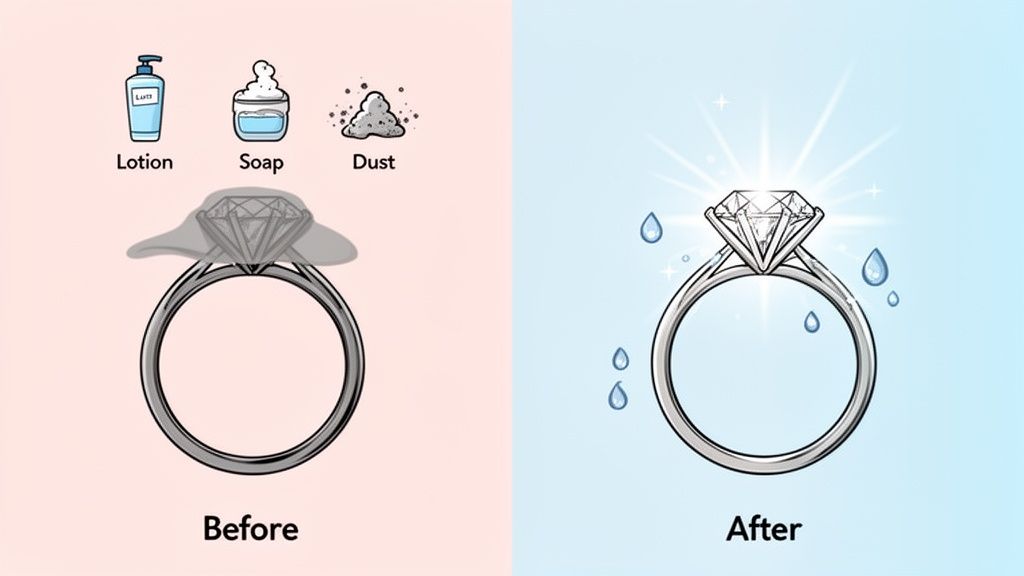
That incredible sparkle from your diamond ring isn't gone for good—it’s just hiding. Everyday things like hand lotions, soaps, and even your skin's natural oils build up a fine film over the stone. This layer dulls your diamond's brilliance and fire by blocking light.
Why Your Diamond Ring Loses Its Sparkle
It’s easy to think a diamond has permanently lost its lustre, but the truth is usually much simpler. A diamond’s magic relies on light entering the stone, bouncing around inside, and returning to your eye as a brilliant flash. When a greasy film coats the surface, it messes with how light behaves, scattering it instead of letting it in.
Think of it like a perfectly clean window versus one smudged with fingerprints. The glass itself hasn’t changed, but you can’t see through it as clearly. It’s the exact same principle when it comes to cleaning diamond rings.
The Science of Grime Buildup
The main culprits behind a dull diamond are nearly always organic and oil-based, which is why a quick rinse under the tap often does very little. The film that accumulates on your ring is a cocktail of things you touch every day:
Cosmetics and Lotions: Hand creams, makeup, and even hairspray are all designed to stick to surfaces, and that includes your ring.
Household Products: Soaps and washing-up liquids are notorious for leaving behind a residue that builds up over time.
Natural Oils: Your skin naturally produces oils that transfer to your jewellery with every single touch.
Environmental Dust: Tiny particles from the air get caught in the grime, settling into the setting and coating the diamond's facets.
This buildup is especially bad for the underside of the diamond—the pointed part known as the pavilion. Once grime gets trapped there, it severely chokes the stone's ability to reflect light, which is where most of the sparkle comes from.
Key Takeaway: Regular, gentle cleaning is far more effective than infrequent, harsh treatments. Consistency is the secret to preventing the stubborn buildup that makes a diamond appear lifeless. A simple routine dissolves this film before it has a chance to harden and become a real problem.
Understanding this is the first step to effective at-home care. Once you know what’s causing the dullness, you can choose the right cleaning methods to safely bring back that 'just-bought' fire without risking any damage to the setting or the metal.
Assembling Your At-Home Cleaning Toolkit
You don’t need a professional jeweller’s workshop to bring back your ring’s sparkle. In fact, some of the most effective tools for a quick, safe clean are probably already under your sink.
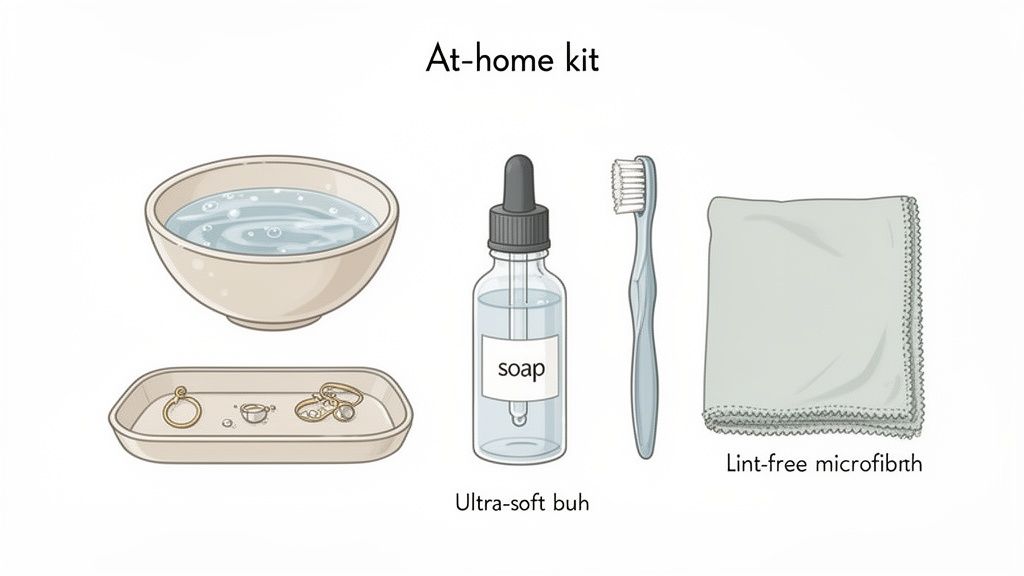
The secret weapon? A simple, mild washing-up liquid. Forget harsh chemicals; a good washing-up liquid is designed to cut through grease and oil, which is exactly what’s making your diamond look dull. Just a few drops will do the trick, lifting away daily grime without harming precious metals.
Selecting the Right Tools
Next up is your brush, and this is where you need to be careful. You need something with ultra-soft bristles to gently get into all the tiny nooks of your ring's setting without causing any damage.
We always recommend a new baby's toothbrush. Its bristles are incredibly gentle, so you won’t risk leaving micro-scratches on softer metals like gold or platinum. It's the perfect tool for the job.
Finally, for drying and polishing, a lint-free microfibre cloth is a must. A regular tea towel or paper towel will just leave tiny fibres caught in the prongs, ruining all your hard work. A clean microfibre cloth, on the other hand, guarantees a perfect, streak-free shine.
What to Gather for Your Kit
A small bowl: Just needs to be deep enough to completely submerge your ring.
Mild washing-up liquid: Check the label—it must be free of ammonia, phosphates, and any harsh additives.
A baby's toothbrush: Its exceptionally soft bristles are key.
A lint-free microfibre cloth: Essential for that final, polished finish.
Having these few items ready to go makes regular cleaning completely effortless. Our full guide on how to clean rings at home walks you through the exact steps for putting this kit to use.
Learning to handle delicate items with the right gentle tools is a valuable skill. It's a bit like knowing how to tackle tricky jobs such as removing stubborn residues from surfaces—the goal is always to clean effectively without causing any unintended damage. This simple toolkit gives you everything you need to safely restore your ring's fire whenever it starts to look a little lacklustre.
The Jeweller-Approved Soak and Brush Method
When it comes to cleaning diamond rings at home, there's one technique we've relied on in Hatton Garden for generations. It’s the simple soak and brush, and it’s trusted for a reason.
This classic approach uses a couple of household items to gently lift away the oils and everyday grime that dull your diamond's sparkle, all without putting the ring's delicate setting at risk. It doesn't rely on harsh chemicals, which can damage softer metals or intricate settings over time. Instead, it lets a gentle solution do the hard work.
Preparing the Perfect Cleaning Solution
First thing's first: create your cleaning bath.
Grab a small bowl—a teacup or ramekin is perfect—and fill it with warm water. You don’t want it boiling, just comfortably warm to the touch, like bathwater.
Next, add a few drops of a mild washing-up liquid. Give it a gentle swirl to create some light suds. It’s vital to use a simple, ammonia-free formula, as harsh additives can be unkind to certain metals. This soapy solution is brilliant at breaking down the greasy film that builds up from hand lotions, soaps, and natural skin oils.
The Gentle Soak
Now for the easy part. Place your diamond ring into the bowl, making sure it’s fully submerged.
Let it soak for around 20 to 30 minutes. This is where the magic happens. The warm, soapy water works its way into every tiny crevice, getting underneath the diamond and around the prongs to dissolve the grime that a quick rinse would miss. Don't be tempted to rush this; a little patience here makes all the difference.
Mastering the Brushing Technique
After the soak, it’s time to gently brush away all that loosened debris.
Take your ultra-soft brush—a new baby toothbrush is ideal—and carefully work around the ring. Pay special attention to the spots where dirt loves to hide.
Under the Diamond: Gently scrub the pavilion (the underside cone) of the diamond. This is where build-up has the biggest impact on its sparkle.
Around the Setting: Use soft, circular motions to clean around the claws or prongs holding the stone.
The Band: Don't forget to give the inside and outside of the band a gentle once-over.
Expert Tip: The goal isn't aggressive scrubbing. You're simply dislodging the grime that the soak has already softened. Let the soft bristles do the work without applying heavy pressure, which could potentially weaken a delicate prong over time. For more in-depth advice, our comprehensive guide to safe diamond jewellery cleaning offers further professional insights.
Rinsing and Drying for a Flawless Finish
Once you've finished brushing, your ring needs a thorough rinse. Hold it under a gentle stream of warm running water. A smart move is to place a small sieve or colander over the drain first—just in case.
Rinse until you’re certain all the soap residue is gone. Leftover soap will just create a new film and dull the shine all over again.
Finally, place the ring on a lint-free microfibre cloth and gently pat it dry. Avoid paper towels or tissues, as they can leave behind tiny fibres that get tangled in the setting. For that final touch of brilliance, a light buff with the dry part of the cloth will have your diamond looking spectacular.
Custom Cleaning for Your Ring's Metal and Setting
There’s no one-size-fits-all approach to cleaning a diamond ring. What’s perfectly safe for a chunky platinum band could be far too harsh for a delicate antique piece. To preserve your ring’s beauty and structural integrity, you need to understand its unique character—starting with its metal and setting.
Not all precious metals are created equal. Softer alloys like yellow and rose gold, for example, need a much gentler touch. While they’re perfectly durable for everyday wear, they are more susceptible to tiny micro-scratches from overly vigorous brushing. For these, the key is to let a gentle soak do most of the work, using only the softest bristles to dislodge grime without scuffing that beautiful, lustrous surface.
Caring for Different Precious Metals
White gold presents its own unique challenge. Most white gold rings are plated with rhodium—a brilliant, silvery-white metal from the platinum family that gives the ring its dazzling, cool-toned finish and an extra layer of scratch resistance.
However, this rhodium layer isn't permanent. It can wear away over time, and aggressive cleaning will speed up that process, exposing the slightly warmer-toned white gold beneath. This is why a gentle soak and soft-brush technique is always the safest bet. You can learn more about the properties and importance of rhodium in jewellery in our detailed guide.
This visual guide breaks down the simple, jeweller-approved method into three key stages.
By following the simple soak, brush, and dry steps, you can safely maintain your ring's sparkle without resorting to harsh methods that might do more harm than good.
Special Care for Intricate Settings
The complexity of your ring’s design also dictates how you should clean it. Modern styles like pavé, micro-pavé, and halo settings feature dozens of tiny diamonds held in place by minuscule prongs. They look stunning, but all those little nooks and crannies create countless hiding spots for dirt and require very careful handling.
Crucial Pre-Cleaning Check: Before you even think about submerging a ring with multiple small stones, give it a quick listen. Hold it close to your ear and tap it gently. Hear a faint rattle? That’s a sign one of your stones might be loose. Cleaning a ring with a loose stone is a surefire way to lose it down the drain, so bring it to a professional jeweller for tightening first.
For these detailed settings, aggressive scrubbing is the enemy. It's incredibly easy to snag one of those tiny prongs, potentially loosening a stone. A longer, gentler soak is far more effective here. This allows the soapy solution to penetrate deep into the setting to dissolve the grime, which can then be rinsed away or lightly coaxed out with the very softest of brushes.
To make things simpler, here’s a quick rundown of the main precautions for different ring types.
Cleaning Guidelines for Different Rings
Material/Setting
Key Precaution
Recommended Cleaning Action
Yellow & Rose Gold
Prone to micro-scratches from abrasion.
Use an ultra-soft brush with very light pressure.
White Gold
Abrasive cleaning can wear down rhodium plating.
Avoid harsh scrubbing; prioritise soaking.
Platinum
Extremely durable but can dull with residue.
Can handle regular cleaning; focus on removing film.
Pavé & Halo Settings
Tiny prongs can be snagged or stones dislodged.
Always check for loose stones before starting.
Ultimately, knowing your ring’s specific needs is the first step to keeping it looking its absolute best for years to come.
When to Trust a Professional Jeweller
Your at-home cleaning routine is brilliant for keeping everyday grime and lotions at bay, but it has its limits. Think of it as daily maintenance; it keeps things looking fresh, but every so often, your ring needs a deep clean and a structural MOT that only a professional goldsmith can provide.
Knowing when to step back and let an expert take over is the key to protecting your ring for the long haul.
Sometimes, dirt and oils get so compacted deep within a setting that a soft brush simply can’t get in there. This is where professional equipment makes all the difference. Jewellers use ultrasonic cleaners that create microscopic vibrations in a cleaning solution, safely shaking loose years of stubborn buildup from the most impossible-to-reach spots.
This is often followed by a high-pressure steam clean, which blasts away any remaining residue. The result? A sparkle you thought was long gone.
Beyond the Sparkle: Structural Integrity
More important than a deep clean is a proper professional inspection. A trained jeweller doesn’t just look for dirt; they assess the very structure of your ring. This is crucial maintenance that prevents something catastrophic, like losing your diamond.
Key professional services include:
Prong and Claw Inspection: Over time, the small metal claws holding your diamond can get knocked about or wear down. A jeweller will meticulously check each one, tightening any that are loose to make sure your stone is secure.
Re-tipping Worn Prongs: If a prong is significantly worn, it needs to be rebuilt. A goldsmith can add a tiny amount of matching precious metal to the tip, restoring its original strength to safely cradle your diamond.
Professional Polishing: At-home cleaning can't remove the thousands of micro-scratches that build up on the band from daily wear. A professional polish smooths these away, restoring the metal’s original mirror-like finish.
Rhodium Plating: For white gold rings, that brilliant white lustre comes from a thin layer of rhodium. This wears away over time, but a jeweller can re-plate it, making your ring look brand new again.
Knowing When to Book an Appointment
There's a growing awareness among ring owners that this kind of professional care is essential. By 2024, around 42% of mid-size and large UK jewellery retailers had invested in professional cleaning equipment for in-store services, a big jump driven by customer demand. You can find more insights into this trend by exploring the latest jewellery cleaning market reports.
Expert Advice: We recommend a professional check-up at least once a year. If you hear a tiny rattle when you tap the ring near your ear, or if a prong starts snagging on your clothes, don’t wait—bring it to a workshop straight away.
When you bring your ring to a professional, it’s also a good time to discuss things like diamond ring insurance to protect your investment. A visit to a trusted jeweller is about more than just a clean; it’s about comprehensive care that keeps your treasured piece beautiful and, most importantly, secure.
Got Questions About Cleaning Your Diamond Ring?
To help you care for your ring with total confidence, here are the answers to the questions we hear most often at the workshop. Think of it as a bit of extra guidance to keep that diamond of yours sparkling.
How Often Should I Be Cleaning My Diamond Ring?
For a ring you wear every day, giving it a light clean once a week is a brilliant habit to get into. It stops the gradual build-up of oils, hand cream, and daily grime that creates that stubborn, sparkle-dulling film.
For a deeper, more thorough clean with a soak and a gentle brush, aim for every few weeks. That said, the ideal frequency really comes down to your lifestyle. If you're particularly active, work with your hands, or love your hand lotions, you'll probably find a quick weekly clean makes all the difference.
What Household Cleaners Should I Absolutely Avoid?
This is a big one. Please steer clear of any harsh, abrasive, or heavy-duty cleaning products. They might seem like a quick fix for a cloudy diamond, but they can cause irreversible damage to the metal and even scratch the stone over time.
Bleach and Chlorine: These are far too aggressive. They can discolour or even pit the metal alloy of your ring, especially gold.
Acetone: Often found in nail polish remover, acetone is a strong solvent that can break down the finish on some metals and damage certain gemstones.
Abrasive Powders: Products like baking soda or powdered cleansers are too gritty. They’ll leave a network of tiny scratches on the band, dulling its shine.
Toothpaste: This is a common myth that makes jewellers cringe. Toothpaste is an abrasive designed to scrub enamel; it will absolutely dull the surface of your ring's metal.
The bottom line? Stick to a simple, mild washing-up liquid. Its grease-cutting formula is all you need to dissolve that film on your diamond without harming the setting.
Can Cleaning Loosen the Diamond in My Ring?
When done correctly, cleaning will not loosen your diamond. Using an ultra-soft brush with gentle, careful motions is perfectly safe for a secure setting. The real danger comes from cleaning a ring that already has a loose stone.
If a prong is slightly lifted, vigorous brushing or the intense vibrations from an ultrasonic cleaner can easily cause a compromised stone to fall out.
This is exactly why we always recommend the 'rattle test'. Before you start, hold the ring close to your ear and tap it gently. If you hear or feel any tiny clicking or movement, stop right there. That's a clear sign it's time for a professional check-up.
For a comprehensive inspection and a professional-grade clean that restores your ring's ultimate sparkle, why not bring it to our Hatton Garden workshop? The team at Opulence Jewellery Services can check for loose stones, tighten prongs, and give your piece an expert clean and polish while you wait. Visit us for a professional jewellery service today.
Learn the best methods for cleaning wedding rings at home. Our guide covers safe techniques for gold, platinum, and diamonds to restore their natural sparkle.
Shop Fine Jewellery Online
Engagement rings, wedding bands, earrings, necklaces & birthday gifts — beautifully crafted and delivered to your door.