Diamond Jewelry Cleaning: Safe Home Tips for Sparkling Results
06 December 2025 18 min read Hatton Garden, London
Discover diamond jewelry cleaning secrets for safe at-home tips, proven methods, and when to seek expert help for lasting sparkle.
That brilliant fire your diamond once had doesn't just disappear—it gets hidden. The truth is, daily life leaves a stubborn, light-dulling film on your jewellery. Proper diamond jewellery cleaning isn't a chore; it's essential for protecting the beauty and value of your most treasured pieces.
Why Your Diamonds Have Lost Their Sparkle
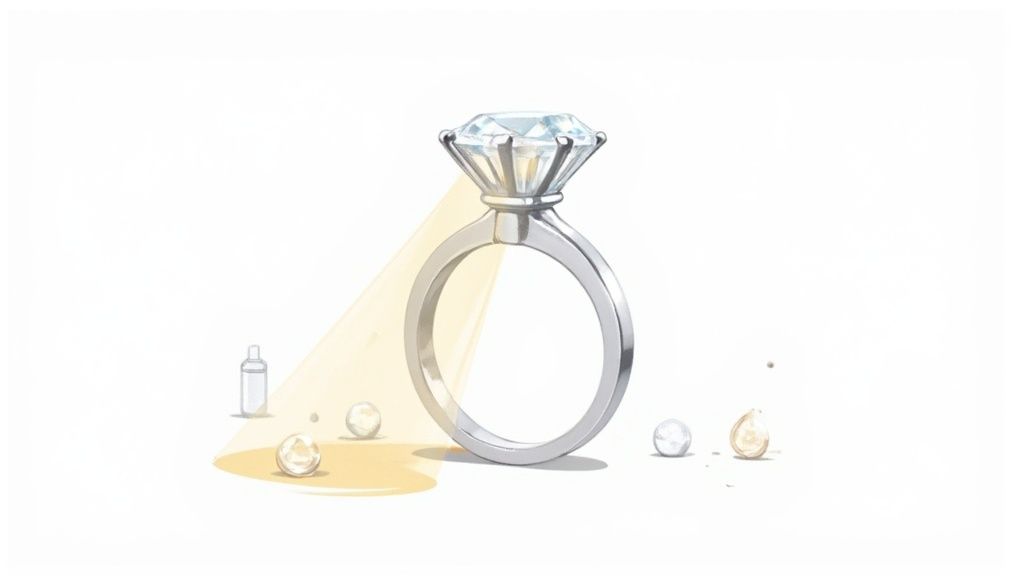
It’s a story we hear all the time. You look down at your engagement ring one day and realise the dazzling sparkle has faded to a disappointing dullness. It happens so gradually you barely notice.
The main culprit? A build-up of residue from everyday products. Just think about your daily routine—hand lotions, hairspray, makeup, and even the natural oils from your skin all find their way onto your jewellery.
This gunk creates an opaque layer right over the diamond's surface. It's particularly bad on the underside (the pavilion), which is precisely where light needs to enter and reflect. When that path is blocked, the stone's ability to create fire and brilliance is seriously compromised.
The Hidden Impact on Metal Settings
This buildup doesn't just dull the diamond; it also affects the precious metal holding it. Over time, that grimy film can trap moisture and tiny abrasive particles right up against the metal, leading to microscopic scratches or even tarnishing certain alloys faster than they should.
More importantly, all that accumulated dirt can hide real problems. A thick layer of grime might conceal a loose prong or a tiny crack in the setting, stopping you from spotting a disaster before a stone goes missing. Think of regular cleaning as preventative maintenance, not just a cosmetic touch-up.
For many pieces, especially wedding bands, the sentimental value is off the charts. Keeping them clean is a way of honouring that. If you need specific advice for these cherished items, have a look at our guide on cleaning wedding rings for targeted tips.
Reclaiming That Showroom Shine
Understanding what’s causing the dullness is the first step to fixing it. The good news is that it’s not a permanent loss of quality—it's just a surface-level problem you can absolutely solve at home. The goal is simply to remove that film without harming the delicate metalwork or the stone itself.
A proper clean is more than a quick rinse under the tap. It takes the right materials and a gentle technique to dissolve and lift away residue from every little crevice. In this guide, we'll walk you through the trusted methods we use right here in Hatton Garden, so you can bring back that breathtaking sparkle yourself. You’ll learn how to care for everything from a simple pendant to a complex family heirloom, ensuring they stay as radiant as your memories of them.
Getting Your Cleaning Kit Together
Forget the old tales about toothpaste or harsh bathroom cleaners. To get that proper, professional sparkle back into your diamond jewellery, you need the right tools for the job. The best part? You probably have everything you need at home already.
A brilliant clean is all about dissolving the daily build-up of oils and grime without harming the piece. You don't need complex chemicals; in fact, the simplest solutions are what we jewellers trust most to protect both the diamond and its precious metal setting.
The Essentials for a Safe Clean
Your go-to cleaning agent is a simple, phosphate-free washing-up liquid. Its gentle surfactants are brilliant at breaking down the greasy film left by skin oils and hand lotions, which is what really dulls a diamond's fire. It’s tough on grime but gentle enough that it won't damage gold, platinum, or delicate settings. A few drops in a bowl of warm water is all it takes.
Next, you'll need something to get into those tricky, hard-to-reach spots around the prongs and underneath the stone. The perfect tool is a new, soft-bristled baby toothbrush. Its bristles are so gentle they won’t leave the microscopic scratches on the metal that a standard adult toothbrush can cause over time. This lets you gently scrub away any loosened dirt without applying risky pressure.
For drying and the final polish, grab a lint-free microfibre or jewellery cloth. Everyday towels or paper towels can leave behind tiny fibres that get snagged in prongs and spoil the finish. A clean microfibre cloth will soak up every bit of moisture and give the metal a final, streak-free buff.
What You Must Never Use
Knowing what not to use is just as important as knowing what works. So many common household products can cause irreversible damage to your most treasured pieces. Think of this as your "do not use" list for jewellery care.
Keep these items far, far away from your jewellery box:
Abrasive Cleaners: Things like toothpaste, bicarbonate of soda, or any kind of powdered cleanser will scratch soft metals like gold and platinum. Over time, this permanently dulls their beautiful finish.
Harsh Chemicals: Cleaners containing chlorine bleach or ammonia are incredibly destructive. Bleach can discolour gold alloys and, with repeated exposure, can even weaken solder points and prongs, putting your stones at risk of falling out.
Acetone-Based Products: Nail varnish remover and other solvents can ruin certain treated gemstones and degrade the alloys used in some precious metals.
A professional jeweller's first rule is always "do no harm." The goal is to lift away dirt, not strip away the metal's finish. Sticking to simple soap and water is the safest and most effective strategy for at-home cleaning.
This move away from risky DIY methods is something we've seen across the board. In the UK, people have become much more aware of the potential damage from harsh chemicals, preferring safer, specialised solutions over old home remedies. You can explore the full research on these evolving jewellery care trends to learn more.
The Jeweller's Method for a Safe At-Home Clean
We see countless pieces of jewellery every week, and the ones that stay brilliant between professional services all have one thing in common: their owners know how to clean them properly at home. This is the time-tested routine we use ourselves for daily-wear pieces—a simple, effective way to gently loosen grime without putting any stress on your jewellery.
It all starts with a gentle warm water soak. This is the cornerstone of safe and effective cleaning, breaking down that stubborn film from lotions, soaps, and natural oils without resorting to harsh chemicals or risky scrubbing. It’s the best way to protect both the diamond and its precious metal setting.
The Perfect Soak for Maximum Sparkle
First things first: find a small bowl or a mug. Whatever you do, do not clean your jewellery directly over an open sink drain. It’s a classic mistake, and we’ve heard too many heartbreaking stories of treasured rings disappearing down the plughole.
Always plug the sink. Better yet, place your bowl inside a larger container for an extra layer of security.
Fill your bowl with warm water—not boiling. Extreme heat can cause thermal shock to some gemstones and might even expand the metal setting slightly. You're looking for a comfortably warm temperature, like a pleasant bath.
Add just a few drops of a gentle, phosphate-free washing-up liquid and give it a little swirl. Now, place your diamond ring, earrings, or pendant into the solution and let it soak for 15 to 30 minutes. That's all the time it needs for the soapy water to work its way into every tiny crevice and start dissolving the buildup.
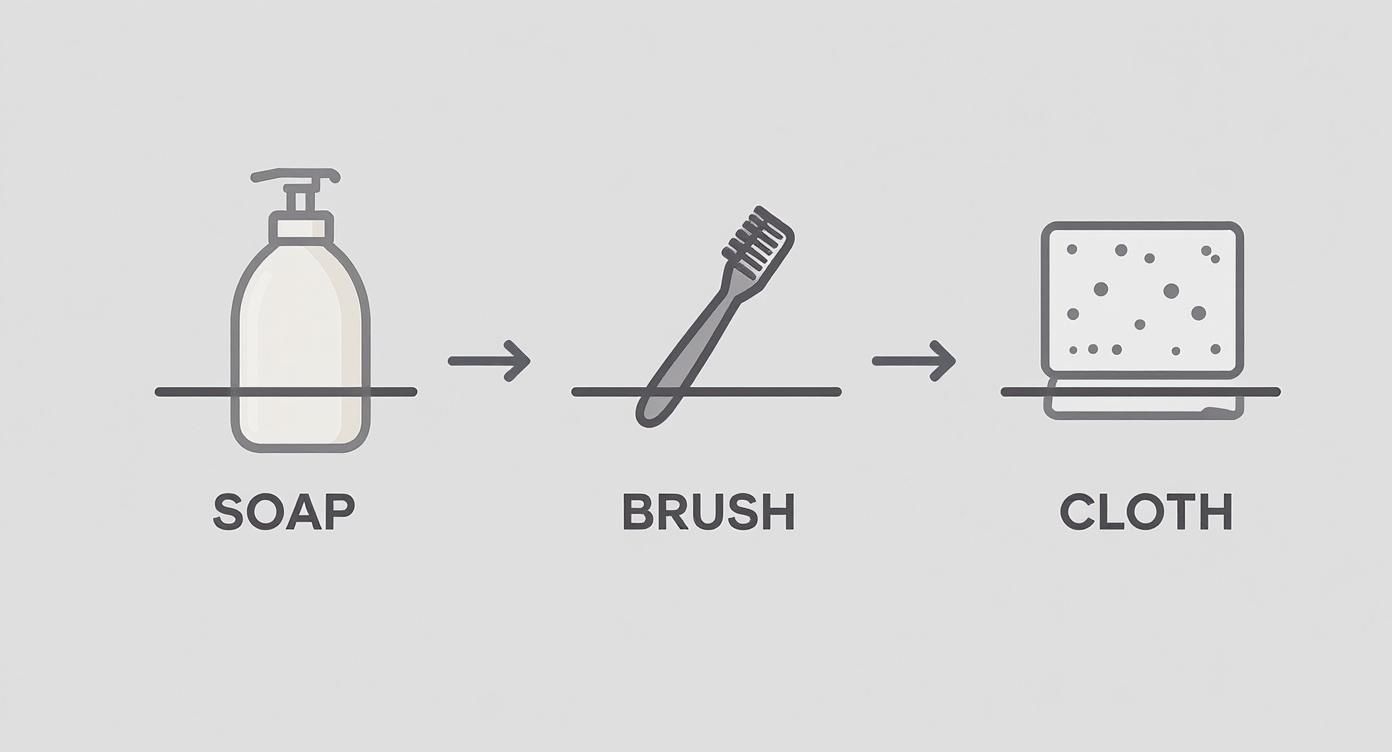
As this simple guide shows, all you really need is gentle soap, a soft brush, and a good cloth to achieve a professional-level clean at home.
Gentle Scrubbing for Hidden Grime
After the soak has done its job, it's time for some light, detailed work. The goal here is delicate persuasion, not a deep scrub.
Take your jewellery out of the water and hold it securely. Using your soft-bristled baby toothbrush, gently brush all the surfaces of the piece. You'll want to pay special attention to the areas where dirt and grime love to hide:
Underneath the diamond: This is the pavilion, the pointed part of the stone. A clean pavilion is what allows light to bounce back out, creating that incredible sparkle.
Around the prongs: Gunk loves to collect right at the base of the claws holding your diamond in place.
Within the setting: If your ring has intricate metalwork or a detailed gallery, use the bristles to get into every little nook and cranny.
Use small, circular motions with very light pressure. Think of it as dusting a delicate antique, not scrubbing a dirty pot. The soapy water has already done the heavy lifting; the brush is just there to sweep away what’s been loosened.
A key takeaway from our Hatton Garden workshop is that patience always trumps pressure. Rushing or using a stiff brush is how precious metals get scratched and delicate prongs get bent. A gentle approach is always the professional's choice.
Rinsing and Drying The Professional Way
Once you’re satisfied that you've brushed away the residue, it's time for a final, thorough rinse. Place your jewellery back into a strainer or a clean bowl and rinse it under a gentle stream of warm, running water. The goal is to wash away every last trace of soap, as any leftover film will just dull the shine you've worked so hard to restore.
The final step is just as critical: drying. Water spots can leave mineral deposits that mar the finish of both the metal and the diamond. To avoid this, immediately pat the piece dry with a soft, lint-free cloth. A microfibre cloth designed for glasses or jewellery is perfect for this.
Steer clear of paper towels or tissues. They can shred and leave tiny, frustrating fibres caught in the prongs. Gently buff the metal with the cloth to bring out its lustre, and your piece should look noticeably brighter, with its fire and brilliance beautifully restored.
Using an Ultrasonic Cleaner Like a Pro
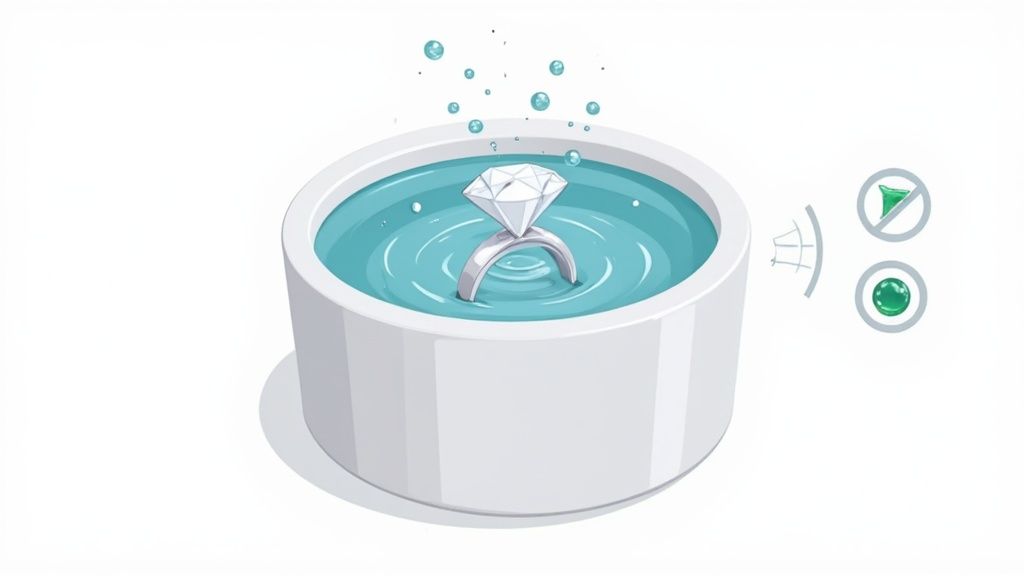
For a truly deep clean that rivals what we do in the workshop, an ultrasonic cleaner is a fantastic investment. These machines take diamond jewellery cleaning to another level, shaking loose stubborn grime that even the most meticulous scrubbing can't reach.
The technology behind it is clever but simple. The unit sends high-frequency sound waves through a cleaning solution, creating millions of microscopic bubbles. This process, called cavitation, generates a gentle but powerful scrubbing action that gets into the tiniest, most awkward spaces in your jewellery.
It's particularly brilliant for complex designs—think pavé settings or detailed filigree work where hand creams and daily dirt love to hide. In fact, more and more people are turning to these devices for professional-grade results at home. You can read more about the rise of these at-home jewellery care solutions and their growing popularity in the UK.
Choosing the Right Machine and Solution
You don't need a massive industrial unit for home use. Look for a compact model with a stainless steel tank and a simple timer. A capacity of around 600ml is more than enough for a personal collection.
What you put inside is just as important as the machine itself. While a few drops of washing-up liquid in warm water will do the job, a specialised ultrasonic jewellery cleaning concentrate often works better. These formulas are designed specifically to break down cosmetic residue and body oils without being harsh on precious metals.
Always follow the manufacturer's instructions on dilution. Too much concentrate can leave a film on your jewellery, while too little just won't have the cleaning power you're after.
A Safe and Effective Cleaning Process
Using the cleaner is straightforward, but doing it correctly keeps your jewellery safe and looking its best. A typical cycle only takes a few minutes to bring back that incredible sparkle.
Here's the process we recommend for a safe, effective clean:
Prep the Solution: Fill the tank with warm water up to the 'MAX' line, then mix in the recommended amount of cleaning fluid.
Place Your Jewellery: Pop your pieces into the plastic basket provided. Never let jewellery sit directly on the metal floor of the tank—the vibrations can cause scratching.
Set the Timer: For most diamond pieces, a three to five-minute cycle is perfect. If something is exceptionally grimy, you can run it through a second time, but avoid leaving it in for excessively long sessions.
Rinse and Dry: Once the cycle finishes, lift the basket out carefully. Give your jewellery a good rinse under warm running water to wash away all the dislodged dirt and any remaining solution. Finally, dry it completely with a soft, lint-free cloth.
Pro Tip: For a piece that's particularly caked in dirt, give it a very gentle scrub with a baby toothbrush after the ultrasonic cycle and before the final rinse. This helps shift any last stubborn particles the machine has loosened.
What Not to Put in an Ultrasonic Cleaner
While these machines are brilliant for hard gemstones like diamonds, they aren't suitable for everything. The intense vibrations can damage certain stones, settings, and treatments. It's crucial to know what to keep out.
Never place these items inside an ultrasonic cleaner:
Porous Gemstones: Opals, pearls, emeralds, turquoise, and coral can be cracked or discoloured by the heat and vibrations.
Treated Stones: Many gems are treated with oils or resins to improve their appearance. An ultrasonic clean can strip these treatments right off.
Pieces with Loose Stones: If you suspect a stone is loose or a prong is damaged, the vibrations will almost certainly make it worse, and you risk the stone falling out entirely.
Antique or Fragile Jewellery: Older pieces with delicate settings or enamel work are best left to a professional.
When used correctly on the right pieces, an ultrasonic cleaner is an indispensable tool. To see how it fits into a complete care routine, take a look at our guide to choosing the best diamond ring cleaner for your specific needs.
When Your Jewellery Needs an Expert's Touch
While your home cleaning routine is brilliant for day-to-day sparkle, it has its limits. Think of it as maintenance. A professional service, on the other hand, is about preservation.
A jeweller has the tools and expertise to not only clean but also inspect the very structure of your jewellery. We can spot the tiny issues that, if left alone, could turn into a heartbreaking loss.
Signs It's Time for a Professional Clean
Sometimes, no matter how much you soak and scrub, a diamond just stays stubbornly cloudy. This usually means a compacted layer of grime has built up right underneath the stone where a brush simply can’t reach. If your diamond’s fire just won’t come back, it’s a clear sign it needs a much deeper, more powerful clean.
An even bigger red flag is the condition of the metal itself. If you spot deep scratches on the band, or the prongs holding your diamond look thin, worn, or bent, stop what you're doing. A weakened prong is the number one reason stones go missing.
Look out for these other tell-tale signs:
A Rattling Stone: Hold the piece close to your ear and give it a gentle tap. If you hear a faint rattle or ticking sound, the stone is loose in its setting and needs securing immediately.
Persistent Discolouration: If the metal looks tarnished or dark in a way that a quick polish can’t fix, it might point to a deeper issue with the alloy.
Visible Damage: Don't ignore cracks, chips, or big dents. They aren’t just cosmetic flaws; they can seriously compromise the strength of the whole piece.
The Difference Between a Deep Clean and a Full Service
When you bring your jewellery to us, you’re getting more than just a clean. It’s helpful to know the two main levels of care we offer.
A professional deep clean uses equipment far more powerful than anything you’d have at home. We use commercial-grade ultrasonic baths to shake loose years of trapped debris, followed by high-pressure steam jets that blast away any final residue. The result is a piece that's impeccably clean and sanitised.
A full service and inspection goes much, much further. This is a complete health check for your jewellery. A trained goldsmith will meticulously examine every single part under magnification.
This includes:
Checking every prong for wear and tear, ensuring each one is tight against the stone.
Inspecting the structural integrity of the entire setting.
Looking for any hairline fractures in the metal that could become a break.
Polishing out scratches and, if needed, applying a fresh coat of rhodium plating.
Honestly, this thorough inspection is the most valuable part of any professional service. It's the expert’s eye that gives you real peace of mind, knowing your jewellery isn't just beautiful, but completely safe to wear.
As people become more aware of how to protect their investments, the demand for specialised jewellery care in the UK has grown. This trend is backed by standards from the British Standards Institution (BSI), which ensures cleaning tools and products meet strict quality benchmarks.
If you think your jewellery needs this level of attention, it’s always best to act fast. To find a trusted expert in London, our guide on locating a jewellery cleaning service near me can point you in the right direction.
Your Diamond Cleaning Questions Answered
We get asked a lot of the same questions by clients who want to take the best possible care of their jewellery. Getting clear, honest answers helps you build the confidence for proper at-home cleaning. Here, we tackle the most common queries and bust a few myths we hear all too often in the workshop.
How Often Should I Clean My Diamond Engagement Ring?
For a ring you wear daily, a light wash once a week is a brilliant habit. This quick clean—just warm water and a drop of washing-up liquid—is enough to lift the daily build-up from lotions, soaps, and natural skin oils. It only takes a few minutes but makes a world of difference in keeping that sparkle alive.
Beyond that weekly touch-up, aim for a more thorough deep clean at home every couple of months. A professional inspection and clean should be on your calendar every six to twelve months. This isn't just about brilliance; it’s your chance to spot potential issues, like a snagged prong, before they turn into a real problem.
Can I Really Not Use Toothpaste to Clean My Diamond?
Absolutely not. This is one of the most damaging myths out there, and frankly, one we wish would disappear for good. Toothpaste is an abrasive, designed specifically to polish hard tooth enamel.
Gold and even platinum are much softer metals. When you scrub your ring with toothpaste, you're essentially rubbing a fine abrasive all over the band and setting. This creates a network of tiny scratches that permanently dulls its beautiful, high-polish finish.
Stick to non-abrasive methods. Gentle washing-up liquid and a soft baby toothbrush have all the cleaning power you need, without inflicting any damage on the precious metal.
Is It Safe to Clean My Antique Diamond Ring at Home?
You need to be extremely cautious with any antique piece. While the diamond itself is tough as nails, the settings on older jewellery are often far more delicate than modern designs.
Antique rings frequently feature intricate details that can be easily damaged by vigorous scrubbing or the powerful vibrations of an ultrasonic cleaner. These elements are the soul of the piece.
Filigree: Delicate, thread-like metalwork that can bend or break under pressure.
Milgrain Edges: Tiny, beaded borders common in vintage pieces that can be worn down by abrasive cleaning.
Old Prong Styles: Prongs on older rings can be thinner or more worn, making them much more fragile.
For any piece with significant age or huge sentimental value, the smartest choice is always to consult a jeweller. An expert specialising in antique pieces can assess its condition and use gentle, appropriate techniques to clean it without risk. It’s simply not worth the potential for heartbreaking damage.
What Is the Best Way to Store My Diamond Jewellery?
Proper storage is the final, crucial step, and it's all about preventing scratches. Once your pieces are completely clean and dry, the golden rule is to store each item separately.
A jewellery box with individual, fabric-lined compartments is ideal, as it stops pieces from knocking against each other. If you don’t have one, storing each item in its own soft pouch works just as well. This is non-negotiable for diamond jewellery.
Diamonds are the hardest natural substance on earth, a 10 on the Mohs scale of hardness. This means a diamond can easily scratch any other gemstone—sapphires, emeralds, and rubies included—as well as any precious metal. Tossing them all together in one dish is a recipe for scuffs and permanent damage.
At Opulence Jewellery Services, we believe expert care should be accessible and straightforward. Whether you need a professional deep clean, a secure stone setting, or a full inspection for your most treasured pieces, our Hatton Garden workshop is here to help. Restore the sparkle and secure the future of your jewellery today. Book your same-day service with us.
Discover the art of silver plating jewelry. This guide covers the process, plating thickness, pros and cons, and essential care tips for lasting beauty.
Learn how to use a diamond ring cleaner for a brilliant, safe clean at home. Our guide covers DIY soaks, commercial tools, and when to see a professional.
Learn how to polish gold jewelry at home. Our guide shares expert tips, the right tools, and simple techniques to restore your jewelry's brilliant shine.
Shop Fine Jewellery Online
Engagement rings, wedding bands, earrings, necklaces & birthday gifts — beautifully crafted and delivered to your door.