Ever wondered how some jewellery gets that brilliant, solid-silver look without the hefty price tag? The secret is often silver plating, a clever technique that gives affordable base metals like copper or brass a beautiful, shimmering silver "skin".
Understanding Silver Plating in Jewellery
At its core, silver plating is an electrochemical process. A piece of jewellery made from a less expensive metal is carefully coated with a microscopic layer of pure silver. The result? A finish that’s visually identical to its more costly sterling silver counterparts. Think of it as giving a sturdy copper bangle a dazzling new identity.
This technique isn’t new; it has a rich history that transformed the jewellery world. Electroplating really took off in the 19th century, with industrial hubs like Birmingham and Sheffield leading the way. For the first time, it made silver-style accessories accessible to a much wider audience. You can dive deeper into the history of the silverware market on ResearchAndMarkets.com.
The Purpose Behind the Plate
So, why choose a plated piece over solid silver? It boils down to a few practical and aesthetic benefits for both designers and wearers.
- Affordability: This is the big one. Using a strong base metal for the main structure means only a tiny amount of precious silver is needed, bringing the final cost way down.
- Versatility: Plating gives designers huge creative freedom. They can craft large, bold, or intricate pieces without the weight or expense of solid silver, and then apply that perfect, lustrous finish.
- Appearance: A quality silver plate delivers a bright, radiant finish that captures the classic appeal of silver. It’s perfect for fashion-forward jewellery and trend-led collections.
At its heart, silver plating democratised style. It separated the appearance of luxury from the high cost of the material itself, allowing people from all walks of life to enjoy the timeless elegance of silver.
Ultimately, silver plating bridges the gap between costume and fine jewellery, offering the sophisticated look of silver without the significant investment. It’s a cornerstone of the fashion jewellery world, enabling a constant flow of fresh, beautiful designs. Understanding the basics sets the stage for appreciating its durability, how to care for it, and its true value.
The Art and Science of the Plating Process
Turning a piece of jewellery from a simple base metal into a gleaming silver-plated treasure is a fascinating mix of careful craftsmanship and precise science. The whole thing hangs on a process called electroplating, which uses an electric current to fuse a thin layer of real silver onto a conductive surface. It might sound complex, but it breaks down into a few logical steps.
Think of it like an artist preparing a canvas. You'd never start painting on a dusty, unprepared surface, and the same goes for plating. The first—and most critical—stage is preparing the jewellery itself. This is where an expert's eye for detail really makes a difference. The piece must be professionally cleaned and polished to a flawless finish, getting rid of any trace of dirt, oil, or tiny imperfections.
This deep cleaning creates a perfectly smooth, receptive surface. A pristine foundation is non-negotiable; any blemish left on the base metal will only be magnified once the silver is applied. Skipping this step is like building a house on shaky ground—the final result just won’t last.
The Electrolytic Bath
Once the piece is perfectly prepped, it’s time for the main event: the electrolytic bath. This is a special chemical solution loaded with positively charged silver ions—microscopic particles of silver floating in the liquid. The jewellery, which acts as the negative terminal (the cathode), is carefully submerged.
An anode, usually a bar of pure silver, is also placed in the bath to act as the positive terminal. When we pass a low-voltage electric current through the solution, a bit of chemistry magic happens. The negatively charged jewellery attracts the positively charged silver ions, pulling them out of the solution and onto its surface.
The electric current is the invisible hand that guides the silver ions, encouraging them to form a strong, even bond with the base metal. This controlled deposition is what creates the beautiful, shimmering layer that defines high-quality silver-plated jewellery.
This infographic shows the simple flow from a base metal to a beautifully finished piece.
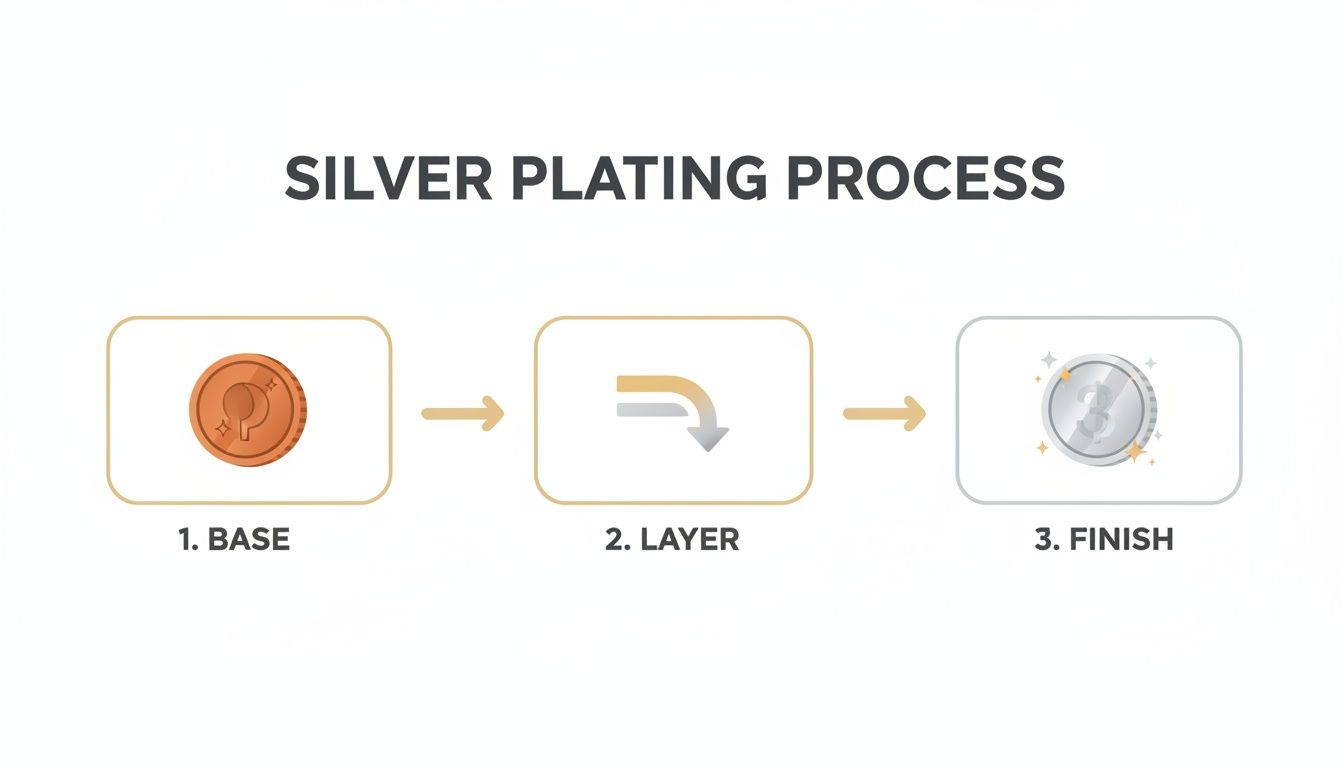
The image breaks down how an ordinary base material is methodically transformed through the layering process into a lustrous, finished item.
Precision and Control Are Key
Getting a durable, top-quality finish isn't as simple as just dipping a ring in a solution and hoping for the best. The whole process needs a steady hand and a deep understanding of all the variables at play. Several factors have to be managed precisely to get the perfect outcome:
- Current Density: This is the amount of electricity relative to the size of the piece. Too much current can create a rough, grainy finish, while too little can lead to an uneven or patchy coating.
- Bath Temperature: The temperature of the solution affects how fast the silver deposits and what the final layer looks like. Consistency is absolutely crucial.
- Time: How long the item stays in the bath directly controls the thickness of the silver plate. An expert calculates this timing down to the minute to meet specific durability needs.
- Solution Purity: Any contaminants in the bath will sabotage the quality of the plating, causing blemishes or preventing the silver from sticking properly. A professional workshop keeps its solutions pristine for every single job.
This is where you really see the difference between a DIY attempt and a professional service. The real skill is in balancing all these elements perfectly to create a finish that isn’t just beautiful but is also built to last. For a closer look at various finishing techniques, you can explore more articles about different types of jewellery plating. Ultimately, an expert's control over the process is what guarantees a flawless, resilient layer of silver that truly elevates the jewellery.
How Plating Thickness Determines Durability
Not all silver-plated jewellery is created equal, and the secret to its lifespan is all in the thickness. This microscopic layer of silver is measured in microns—that’s one-thousandth of a millimetre—and it’s what stands between your beautiful jewellery and the base metal underneath.
Think of it like painting a garden fence. One thin coat might look okay for a week or two, but it won’t be long before the wood starts showing through. A few thicker, more deliberate coats, however, create a robust barrier that stands up to the weather. Silver plating works on exactly the same principle. A thicker plate acts as a stronger shield, giving the piece more material to withstand daily scuffs, bumps, and friction before it wears away.
Understanding The Tiers of Plating
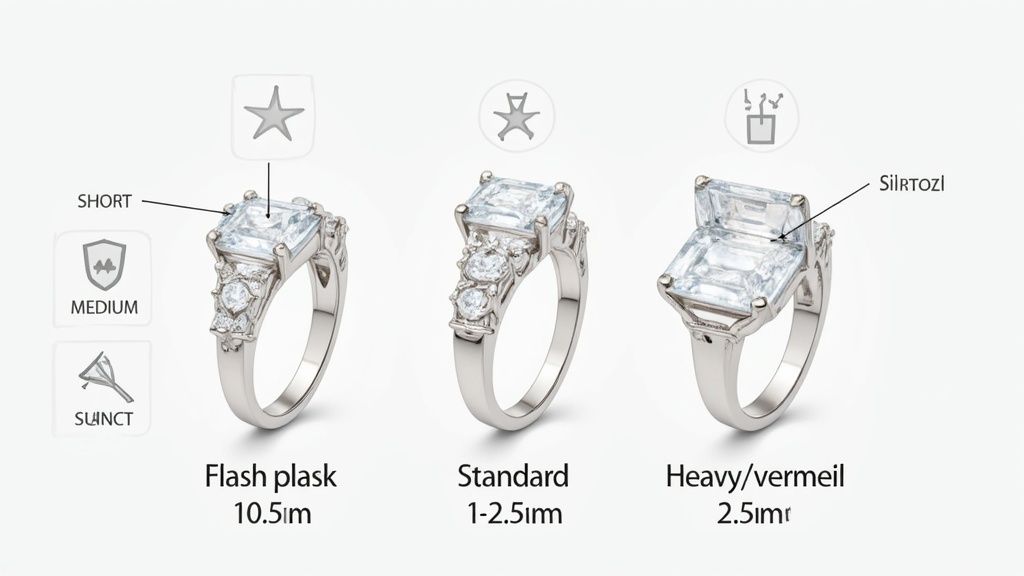
In the workshop, we classify silver plating into different tiers based on micron thickness. Each level is suited for a specific job, from purely decorative pieces right through to high-contact items you’ll wear every day. Knowing the difference helps you make a much smarter choice when buying or replating jewellery.
You’ll generally come across three main tiers:
- Flash Plating: The thinnest possible layer, often less than 0.5 microns. It’s there to give a bright silver colour but offers almost no real durability. This is reserved for costume jewellery or display items that won’t be handled much.
- Standard Plating: A much more respectable 1.0 to 2.5 microns. This is the workhorse of good-quality fashion jewellery, striking a decent balance between cost and longevity for pieces like earrings and necklaces that don’t see a lot of friction.
- Heavy Silver Plate & Vermeil: Anything over 2.5 microns is considered a heavy plate. This thick, durable coating is what you want for rings, bracelets, and watch cases—items that are constantly rubbing against skin, clothes, and surfaces. Vermeil is just a special type of heavy plating where the base metal is sterling silver.
The golden rule is simple: friction is the enemy. The more a piece of jewellery is touched, knocked, or rubbed, the thicker its protective silver layer needs to be.
Comparing Plating Thickness and Use Cases
It’s vital to match the plating thickness to the job at hand. A flash-plated ring worn daily would wear through in no time, while a heavy plate on a pair of earrings you only wear occasionally might be overkill. This same logic applies to other coatings, too—you can see how it plays out in our guide on how long rhodium plating lasts.
To help you visualise how the different plating types stack up, we've put together a quick comparison.
Silver Plating Thickness Comparison
Here’s a breakdown of the common plating thicknesses, where you’ll typically find them, and what you can expect in terms of durability.
| Plating Type |
Thickness (Microns) |
Common Use Cases |
Durability and Lifespan |
| Flash Plating |
< 0.5 microns |
Costume jewellery, display items, some pendants |
Low (a few months at best) |
| Standard Plate |
1.0 – 2.5 microns |
Everyday earrings, necklaces, brooches |
Medium (often a year or more with care) |
| Heavy Plate |
> 2.5 microns |
Rings, bracelets, watch cases, daily-wear items |
High (can last several years) |
| Vermeil |
> 2.5 microns |
High-quality rings and bracelets (over silver) |
Very High (a long-lasting, premium finish) |
When you’re looking to buy or re-plate a piece, never be afraid to ask the jeweller about the micron thickness. Any reputable professional will be completely open about the quality they’re providing, ensuring the durability of your jewellery matches its beauty.
The Pros and Cons of Silver Plated Jewellery
Silver plated jewellery is a brilliant way to get that beautiful, shimmering look without the hefty price tag. But like any material, it has its trade-offs. Knowing the good and the bad is key to building a collection you love and, just as importantly, knowing how to care for it.
Let's look at both sides of the coin.
The biggest win is, without a doubt, affordability. Silver plating gives you the classic, bright lustre of silver without the cost of a solid or sterling piece. This makes it fantastic for trying out new trends or grabbing a bold statement piece that would be eye-wateringly expensive in solid metal.
This cost-effectiveness also unlocks a world of creativity. Because the core is a less expensive metal like brass or copper, designers can go big and create intricate styles without worrying about the weight or material cost. This is exactly why silver plated jewellery is a go-to in the fashion world.
The Clear Advantages of Plating
Beyond the price, silver-plated items have some real practical benefits, making them a popular choice for both everyday wear and special occasions.
Here are the main upsides:
- The Look: High-quality plating gives a finish that’s visually identical to sterling silver. You get that sought-after cool, white metallic shine.
- Hypoallergenic Surface: That outer layer of pure silver is hypoallergenic, making it a safe bet for many people with sensitive skin—as long as the plating stays intact.
- Lightweight Comfort: Using base metals like copper or aluminium for the core means even large, dramatic pieces are often lighter and more comfortable to wear than their solid silver cousins.
Considering the Drawbacks
Of course, that affordability comes with a compromise, and it’s usually durability. That thin layer of silver, measured in microns, isn’t forever. Over time, it can wear away, especially on high-contact spots like rings and bracelets that are always rubbing against things.
This gradual wear can eventually expose the base metal underneath. If the core is something like nickel, it could cause skin irritation or an allergic reaction for some people. Tarnishing is another thing to watch; while the silver layer can tarnish just like sterling silver, once it wears thin, the exposed base metal might corrode or discolour in a way that’s much harder to clean up.
It's best to think of silver plated jewellery as a stylish, short-to-medium-term accessory, not a family heirloom. Its value is in its immediate beauty and accessibility, not its permanence.
Market Influences on Plating Demand
The demand for silver-plated pieces also gets a nudge from what's happening in the precious metals market. When silver prices spike, the appeal of plated items naturally grows. For instance, global silver fabrication for jewellery was 208.7 million ounces in 2024, a figure that shows just how much market shifts can impact UK supply chains.
When the price of bullion silver rises, the profit margins on sterling silver pieces get squeezed. This pushes manufacturers and customers towards more affordable plated options that use only a tiny fraction of the precious metal. You can read the full research on the silver jewellery market dynamics on TechSci Research.
Ultimately, choosing silver plated jewellery is a balancing act. It’s an incredible way to own a wide array of beautiful designs at a great price. It needs more mindful care and won't last forever like solid silver, but its benefits make it a perfect choice if you love to refresh your accessory collection often.
Essential Care for Your Plated Jewellery
Looking after your silver-plated jewellery properly is the secret to making that brilliant shine last. Because the silver layer is so thin, it needs a bit more care than a solid sterling silver piece. A few simple habits are all it takes to protect your accessories from premature wear and tear.
Think of the silver plate as a delicate coating. Your main job is to protect it from its biggest enemies: friction, moisture, and chemicals. These things will gradually wear down the silver and expose the base metal underneath, so a proactive approach is key.
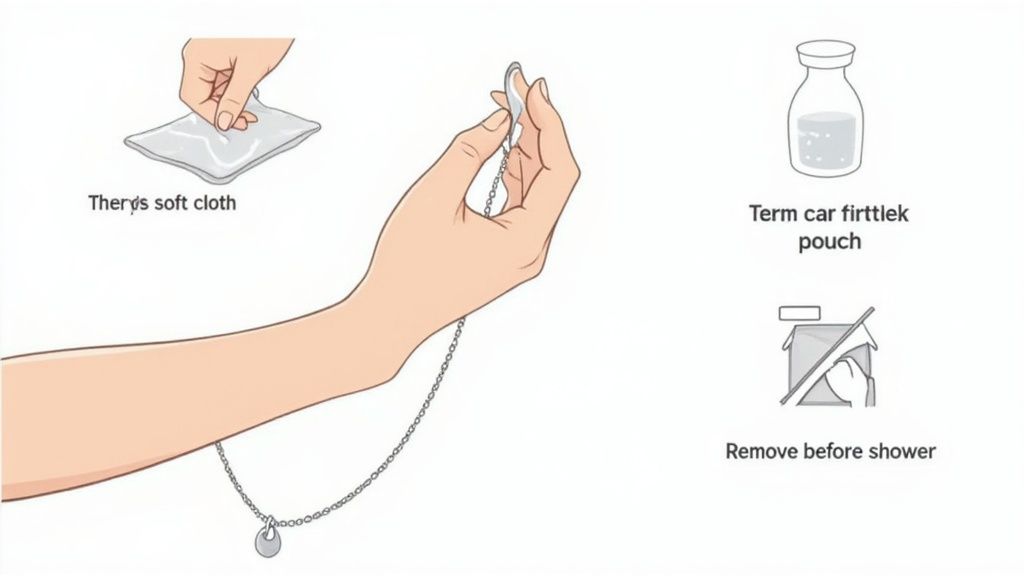
Daily Dos and Don'ts
The most effective way to protect your plated pieces is to build good habits into your daily routine. It’s not about huge effort, just consistency.
Here are the essentials:
- Remove Before Water Exposure: Always take off plated jewellery before you shower, swim, or even wash your hands. Chlorine and saltwater are especially harsh and will speed up the breakdown of the silver.
- Apply Cosmetics First: Perfumes, lotions, hairsprays, and sweat all contain chemicals that can react with the plating. The golden rule? Jewellery should be the last thing you put on.
- Take It Off During Strenuous Activity: Before you exercise or do any manual work, remove your jewellery. This avoids contact with sweat and reduces the risk of scratches that can wear away the finish.
Following these simple rules will dramatically reduce exposure to the most common culprits of damage and keep your pieces looking their best for much longer.
Smart Cleaning and Storage Solutions
How you clean and store your jewellery is just as critical as when you wear it. Cleaning too aggressively can strip the plating right off, while poor storage leads to scratches and tarnish.
The golden rule for cleaning plated jewellery is to be gentle. Never use harsh chemical cleaners, abrasive cloths, or ultrasonic cleaners—they're designed for solid metals and will ruin a delicate plated surface.
Instead, a soft, lint-free microfibre cloth is your best friend. Give your pieces a gentle wipe after each wear to remove skin oils and residue. If you need a slightly deeper clean, a bowl of lukewarm water with a couple of drops of mild, phosphate-free soap is all you need. Dip a soft cloth in the soapy water, wipe the jewellery gently, rinse with clean water, and—this is crucial—dry it immediately and thoroughly with another soft cloth.
Proper storage is your final line of defence.
- Store Items Separately: Keep each piece in its own soft pouch or in a lined jewellery box with separate compartments. This stops items from rubbing together and scratching each other.
- Keep It Airtight: To slow down the natural tarnishing process, store your jewellery in a small zip-lock bag or an airtight container to minimise exposure to air and humidity.
- Add Anti-Tarnish Strips: For extra protection, pop an anti-tarnish strip into your storage container. It will absorb the airborne sulphides that cause discolouration.
By mastering these simple techniques, you'll keep your pieces looking radiant. For more detailed advice, you can learn more about how to prevent silver from tarnishing in our dedicated guide.
Finding the Right Silver Plating Service
When a treasured piece starts looking tired, or a new design needs that perfect silver finish, choosing the right professional is everything. Not all workshops deliver the same level of skill or quality, so knowing what to look for protects your jewellery and guarantees a beautiful, lasting result.
This isn't a decision to be rushed. You're entrusting someone with an item that might hold huge sentimental value. Look for key markers: proven experience, clear pricing, and high-quality materials. A reputable plater will always be upfront about their process and the thickness of the plating they provide.
How to Judge Expertise and Reputation
Before you hand over any jewellery, do a little homework. A business that’s been around for years is often a good sign, but it pays to dig a bit deeper.
Start by looking for real proof of their work:
- Customer Reviews: Check for genuine feedback on independent sites. Consistent positive comments that mention specific jobs, like re-plating or repairs, are a great sign.
- Portfolio of Work: A good jeweller is proud of their craftsmanship. Ask to see examples of previous silver plating jobs—either online or in their workshop—to get a feel for the quality of their finish.
This simple check helps you gauge not just technical skill but their commitment to making customers happy.
The On-Site Workshop Advantage
One of the biggest things to consider is whether the service has its own workshop. Many high-street jewellers just act as a middleman, sending your pieces away to a third-party specialist. This can cause delays, miscommunication, and a higher risk of things getting lost in transit.
Choosing a service like Opulence Jewellery Services, with our own Hatton Garden workshop, makes a world of difference.
An in-house workshop isn't just about convenience; it's a mark of true craftsmanship and accountability. It means the experts handling your jewellery are right there, ensuring better quality control and a more personal service from start to finish.
With an on-site facility, you get a much faster turnaround—sometimes even a same-day, while-you-wait service. You can speak directly to the jeweller working on your piece, making sure your exact needs are understood. For a flawless finish on your silver plating jewelry, that direct oversight is crucial.
The demand for affordable, silver-look accessories is growing fast, and with it, the need for reliable experts to maintain them. The UK costume jewellery market was valued at US$1.13 billion in 2024 and is set to grow even more. This trend shows just how important professional plating is for keeping these popular pieces looking their best. You can find more insights about this expanding market on Business Wire. By choosing a trusted professional with a dedicated workshop, you ensure your jewellery gets the expert care it deserves.
Common Questions About Silver Plating
Even when you know the basics, a few practical questions always pop up. Whether you're thinking of buying a plated piece or reviving an old favourite, getting clear answers is key to making a good decision. Here are the most common queries we handle in our workshop every day.
We'll get straight into durability, whether a piece can be restored, and what it all means for sensitive skin. These are the details that matter, giving you a complete picture of what to expect from your silver-plated jewellery.
How Long Does Silver Plating Last on Jewellery?
The lifespan of silver plating comes down to two things: how thick the plate is and how you treat the piece. They're completely linked. A thicker plate can obviously take more knocks, but even the heaviest coating will wear down if it’s not looked after.
A super-thin 'flash plate' (under 0.5 microns) on a high-contact item like a ring might only look good for a few months of regular wear. In contrast, a standard plate of 1-2.5 microns on a necklace or a pair of earrings can easily last for a year or more. For items that see constant friction, a heavy plate of over 2.5 microns is essential and can last for many years.
Ultimately, its longevity is a partnership between the original quality and your daily habits. Protecting your jewellery from constant friction, moisture, and chemicals is the single best thing you can do to make it last.
Can You Re-Plate Silver Plated Jewellery?
Yes, absolutely. Re-plating is a fantastic and cost-effective way to bring a worn piece of jewellery back to life. Instead of giving up on a beloved but faded item, a professional can restore its original shine, making it look brand new again. It’s one of the most common jobs we do.
The process is meticulous. First, an expert will chemically strip any tired, old plating to get back to the clean base metal. The item is then polished to a flawless, smooth surface. Only then is it ready for a fresh, new layer of silver, ensuring a strong bond and a beautiful finish.
Is Silver Plating Safe for Sensitive Skin?
This is a really common and important concern. The pure silver layer itself is hypoallergenic and generally safe for everyone. The problem only starts when that protective silver layer wears away, exposing the base metal underneath to your skin.
If you have an allergic reaction—like redness or irritation—it's almost always caused by contact with this base metal, not the silver.
- Common Base Metals: Many pieces use copper or brass, which are usually fine. However, nickel is also frequently used and is a very common allergen.
- Preventing Reactions: If you have sensitive skin, it’s crucial to choose pieces with a thick, heavy layer of plating. You should also ask the jeweller to confirm the base metal is nickel-free and hypoallergenic.
By choosing quality plating over a safe base metal, you can confidently enjoy the beauty of silver plating jewelry without a second thought.
At Opulence Jewellery Services, our Hatton Garden workshop offers expert, same-day silver plating and re-plating services to restore the brilliance of your most cherished pieces. https://www.opulencejewelleryservices.co.uk