Jewelry Cleaners Best: jewelry cleaners best Guide to Sparkling Gems
10 January 2026 21 min read Hatton Garden, London
Discover jewelry cleaners best for gold, silver, and diamonds. Compare at-home methods with professional care to keep your collection sparkling.
Finding the best jewellery cleaner isn't about a single magic bullet; it's about matching the right method to the specific piece you're holding. Ultrasonic cleaners are fantastic for a deep, professional-level clean on durable items like diamond rings, while a good old-fashioned polishing cloth is often all you need for a quick shine. But honestly, the safest, most universal approach for at-home care? It's often just mild soap and water.
Keeping Your Jewellery Sparkling for a Lifetime
Every piece of jewellery tells a story, whether it's the engagement ring you never take off or a treasured family heirloom. But daily life—lotions, oils, dust—can dull that sparkle, leaving your precious items looking tired and grimy. It’s tempting to grab the strongest cleaner you can find, but that's a mistake. The very method that makes a diamond dazzle could permanently damage a delicate pearl or a porous opal.
This guide is designed to give you a clear framework for choosing between a quick at-home clean and calling in the professionals. We'll go beyond basic tips, comparing the most common methods so you understand how they really work and what the risks are.
Understanding Your Cleaning Options
The right cleaning method depends entirely on the materials. A solid gold and diamond ring can handle a much more aggressive clean than, say, a silver-plated necklace or a ring set with turquoise. Here’s a quick rundown of what we’ll be looking at:
Ultrasonic Cleaners: These powerful little machines use high-frequency sound waves for a truly deep clean.
Chemical Dips & Solutions: Specially made formulas designed to dissolve tarnish or lift away grime.
Polishing Cloths: Simple, chemically treated cloths perfect for removing light tarnish and bringing back lustre.
DIY Methods: Safe, gentle options using everyday household items like mild dish soap.
The goal here is to give you the confidence to make the right call for your collection. And once you've mastered how to keep your cherished items in pristine condition, you might feel inspired to explore different jewelry pieces to add to your collection.
Method
Best For
Potential Risks
When to Use It
Ultrasonic Cleaner
Hard gems (diamonds, sapphires) & solid metals (gold, platinum)
Can damage soft or treated stones (pearls, opals, emeralds) and may loosen settings over time.
For a deep clean on durable, non-porous pieces with lots of nooks and crannies where dirt hides.
Chemical Dips
Removing heavy, stubborn tarnish from solid silver.
Will strip plating from plated metals and can harm porous stones and organic gems like pearls or amber.
When a polishing cloth just isn't cutting it for heavily tarnished silver. Use with caution.
Polishing Cloths
Lightly tarnished metals and everyday maintenance for shine.
Won't remove heavy grime; can snag on delicate prongs or intricate settings if you're not careful.
Perfect for quick touch-ups before a night out and for keeping metal looking its best.
DIY Soap & Water
Most jewellery, including delicate items and plated pieces.
Isn't strong enough for heavy tarnish or deeply embedded dirt in complex settings.
This should be your go-to for regular, safe cleaning on almost any piece.
Comparing At-Home Jewellery Cleaning Methods
Deciding on the best at-home jewellery cleaner isn’t about finding one magic bullet. It’s about knowing which tool to use for the right job. What brings a diamond ring back to life could be a disaster for your grandmother’s pearls. This is about real-world scenarios, helping you choose wisely for every piece in your collection.
Instead of just listing pros and cons, let's look at when each popular method actually works. From the powerhouse clean of an ultrasonic machine to the gentle touch of soap and water, understanding the how and when is everything.
Ultrasonic Cleaners: The Power and the Peril
Ultrasonic cleaners are the heavyweights of home care. They use high-frequency sound waves to create microscopic bubbles in a cleaning solution—a process called cavitation. These bubbles implode, blasting away dirt, lotion, and grime from the most complex settings in a way that no brush ever could.
It’s the perfect solution for a tough platinum engagement ring set with a diamond or sapphire. It gets into every tiny crevice and restores that original fire. But that power comes with very real risks.
The intense vibrations can be catastrophic for certain materials. You should never put these pieces in an ultrasonic cleaner:
Organic Gems: Pearls, coral, and amber can be shattered or dulled.
Porous Stones: Opals, turquoise, and many emeralds (which are often fracture-filled) can crack or have their treatments ruined.
Loose Settings: If a stone is even slightly loose, the vibrations will almost certainly shake it free.
The rise of these devices shows a clear trend towards professional-grade care at home. As demand for high-value fine jewellery grows in the UK and Europe, so does the market for advanced cleaners. Valued at USD 393.4 million in 2025, the global ultrasonic jewellery cleaning machine market is set to hit USD 634.8 million by 2035, and you can read the full research about these market trends and their drivers.
Chemical Dips and Polishing Cloths: Targeted Tools
Chemical dips are formulated for one main enemy: tarnish on sterling silver. When a simple polishing cloth just won’t cut it, a quick dip dissolves the silver sulphide on a chemical level, bringing back that bright, white shine in seconds.
But these are specialised solutions and can be incredibly destructive if misused. They are far too harsh for plated jewellery, often stripping the thin layer of precious metal right off. They will also cause irreversible damage to soft or organic gems like pearls, opals, and turquoise, leaving them permanently dull.
Think of it this way: a chemical dip is a pressure washer, while a polishing cloth is a duster. The polishing cloth is your go-to for daily upkeep. It’s treated with micro-abrasives and anti-tarnish agents, making it perfect for lifting fingerprints, light smudges, and the first hints of tarnish from gold and silver. It restores shine beautifully but can’t touch deep-seated grime or heavy discolouration.
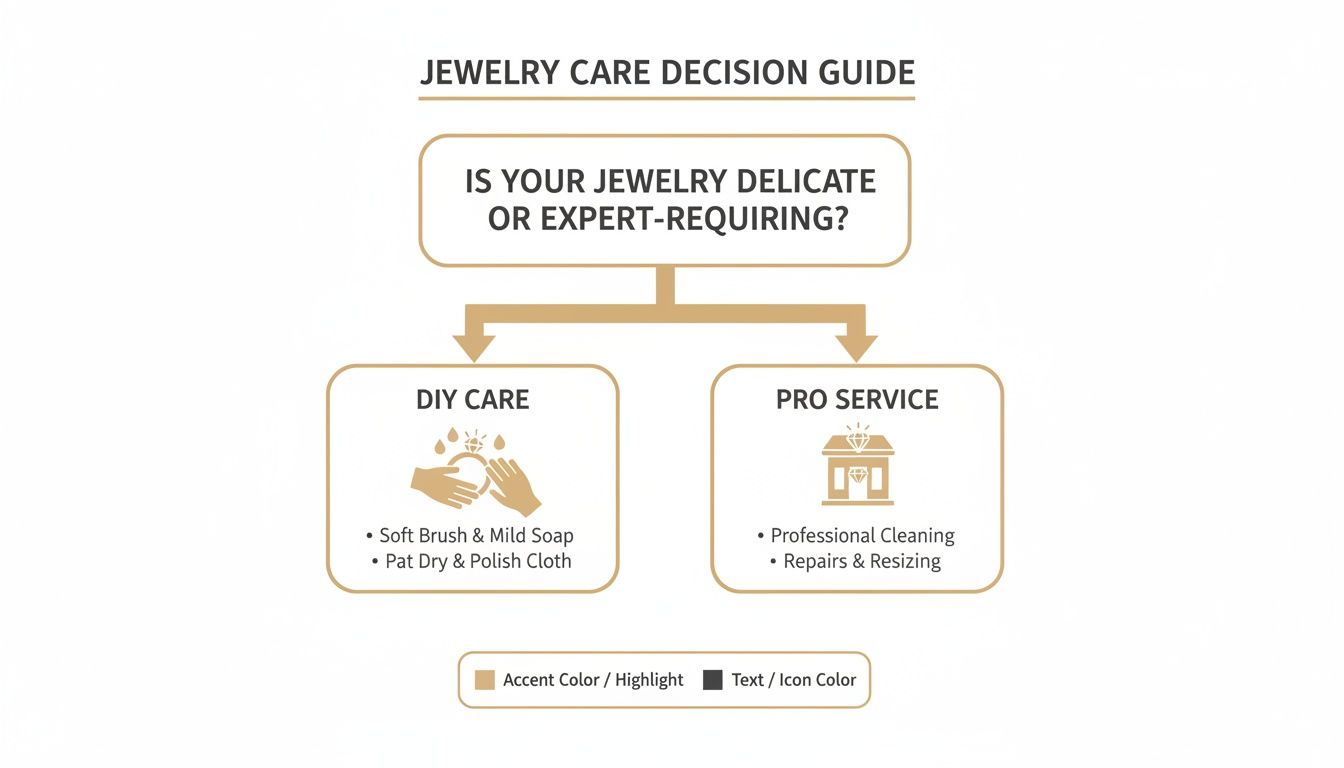
This decision tree infographic simplifies when to stick with at-home care and when it's time to call in the professionals. As the chart shows, while DIY methods are great for routine maintenance, professional services are essential for anything valuable, delicate, or damaged.
Key Takeaway: Always match the aggressiveness of the cleaning method to the delicacy of the jewellery. A powerful solution used on the wrong piece will do more harm than good.
The Gentle DIY Solution: Soap and Water
Finally, there’s the safest method of all: warm water and a few drops of mild, phosphate-free dish soap. This is your first line of defence for almost any piece of jewellery you own, from a simple gold chain to costume jewellery.
It gently lifts away the oils, lotions, and daily dirt that dull your pieces. It won't remove heavy tarnish or restore the sparkle to a truly neglected item, but it’s the maintenance step that stops that build-up in the first place. For most daily-wear pieces, a weekly soak and a gentle scrub with a soft-bristled brush is all you need to keep them looking lovely between professional cleanings.
To help you decide at a glance, here’s a quick comparison of the most common at-home methods.
Choosing the Right At-Home Jewellery Cleaner
This quick reference guide compares popular at-home jewellery cleaners, their ideal uses, and critical precautions.
Cleaner Type
How It Works
Best For
Use With Caution On
When to Choose This
Ultrasonic Cleaner
High-frequency sound waves create micro-bubbles that dislodge dirt.
Hard stones (diamonds, sapphires) in durable metal settings (gold, platinum).
Anything with loose stones, porous gems (opals, turquoise), or organic gems (pearls).
For a deep, professional-level clean on sturdy, non-porous jewellery.
Chemical Dip
A chemical solution dissolves tarnish (silver sulphide) from metal surfaces.
Heavily tarnished sterling silver with no stones.
Plated jewellery, soft stones (pearls, opals, coral), anything with an antiqued finish.
When a polishing cloth isn't strong enough to remove stubborn silver tarnish.
Polishing Cloth
Micro-abrasives and anti-tarnish agents embedded in the fabric lift dirt and light tarnish.
Daily maintenance on gold, silver, and platinum to remove fingerprints and light dullness.
Delicate chains or intricate settings where threads could snag.
For a quick, gentle shine-up and to slow down the formation of tarnish.
Soap & Water
Mild detergent and warm water dissolve oils, lotions, and everyday grime.
Almost all jewellery, including delicate pieces and costume jewellery.
Not a cleaner, but avoid soaking porous materials like wood or leather.
As your go-to weekly cleaning method for routine maintenance and safe upkeep.
Remember, these at-home methods are for maintenance. For a true restoration, especially on valuable or sentimental items, nothing beats a professional clean and polish.
A Material-Specific Guide to Cleaning Your Collection
Generic advice is the enemy of fine jewellery. A one-size-fits-all cleaning method is a recipe for disaster—what makes a diamond sparkle could permanently damage a delicate pearl or opal. The secret to proper care is knowing what each piece is made of.
This guide moves past vague tips to give you clear, safe instructions for every item in your collection. You'll learn how to care for everything from a tough gold chain to a fragile heirloom ring, without putting its integrity at risk.
Caring for Precious Metals
Every metal reacts differently to cleaning agents. Using the wrong product can cause anything from minor scratches and discolouration to stripping a plated finish right off.
Yellow, Rose, and White Gold Gold is a tough metal, but its alloys can be sensitive to harsh chemicals. The goal is gentle cleaning that lifts away oils and dirt without creating micro-scratches that dull the surface over time.
For most gold pieces, a simple soak in warm water with a couple of drops of mild, phosphate-free dish soap is all you need. Grab a very soft-bristled baby toothbrush to gently get into detailed areas and around settings. For a deeper dive, check out our comprehensive guide on the best way to clean gold jewellery at home: https://opulencejewelleryservices.co.uk/articles/best-way-to-clean-gold-jewellery.
White gold, in particular, needs a bit more attention. Most white gold jewellery is plated with rhodium (a bright metal from the platinum family) to achieve its brilliant white lustre. Abrasive cleaners or aggressive polishing can wear this plating down, exposing the slightly yellowish gold underneath. Always stick to non-abrasive cloths and gentle soap solutions.
Sterling and Plated Silver Silver’s main adversary is tarnish—that dark layer of silver sulphide that forms from a chemical reaction with sulphur in the air. The trick is removing the tarnish without scratching the metal.
For light tarnish: A quality silver polishing cloth is your best friend. It’s treated with a mild cleaning agent that lifts away tarnish while adding shine.
For heavy tarnish: A professional silver dip can work wonders, but use it with extreme caution. These chemical baths are far too harsh for pieces with gemstones (especially porous ones) and must never be used on silver-plated items, as they can strip the plating completely.
Cleaning Diamonds and Hard Gemstones
A gemstone's hardness is the single most important factor when choosing a cleaning method. Diamonds, sapphires, and rubies are famously durable, which means they can handle a more thorough clean.
Diamonds sit at a 10 on the Mohs scale of hardness, making them exceptionally resilient. They are also magnets for oil and grease, so they need regular cleaning to maintain their signature fire. An ultrasonic cleaner is often one of the best jewellery cleaners for a diamond ring, as the vibrations can safely dislodge stubborn grime from deep within the setting.
Likewise, sapphires and rubies (both a 9 on the Mohs scale) can generally withstand ultrasonic cleaning and a gentle scrub. The critical thing to know is whether your stone has been treated. Some rubies, for example, are fracture-filled with glass, and an ultrasonic cleaner's vibrations could shatter these fillings. If you're ever in doubt, the simple soap-and-water method is always the safest bet.
Crucial Insight: Hardness does not mean invincibility. A hard gem can still chip or crack from a sharp blow. Durability refers to its resistance to scratching, which is why these stones can handle more robust cleaning techniques.
The Delicate Touch for Soft and Porous Stones
While a diamond benefits from a deep clean, taking the same approach with softer gemstones can be catastrophic. Organic gems and porous stones require a completely different, much gentler level of care.
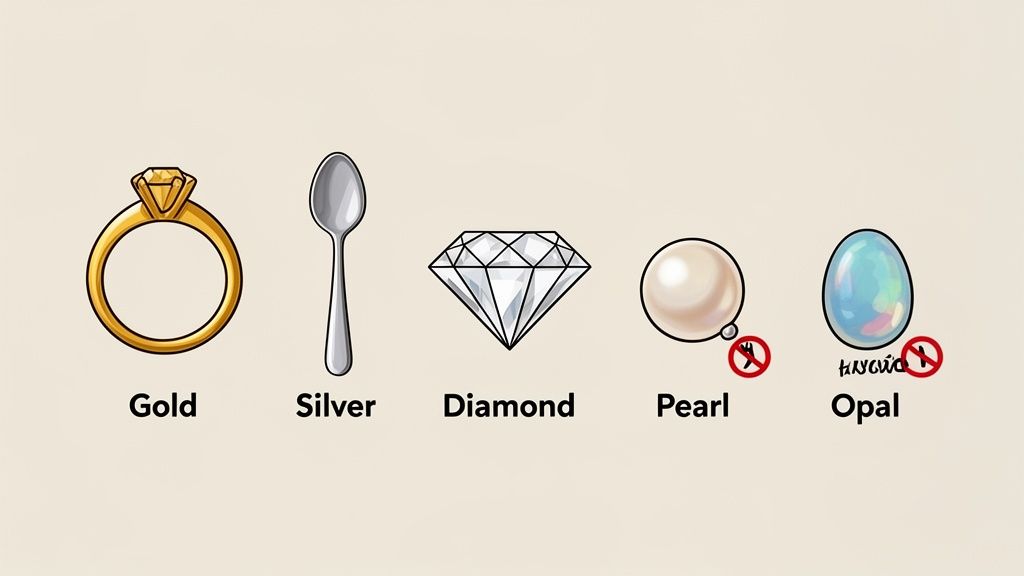
Pearls, Opals, and Emeralds These gems demand the softest touch. Harsh chemicals, intense heat, and ultrasonic vibrations can cause them to crack, craze, or lose their lustre forever.
Pearls: As an organic gem, a pearl’s nacre (its surface) is incredibly soft and easily damaged by acids. Never submerge pearls in water or cleaning solutions. A simple wipe with a soft, damp cloth after each wear is enough to remove body oils.
Opals: Opals have a high water content. Exposing them to heat or sudden temperature changes can make them dry out and crack—a process called "crazing." Just clean them with a damp cloth and keep them away from all chemicals.
Emeralds: Most emeralds have natural internal fractures that are filled with oils or resins to enhance their clarity. Ultrasonic cleaners and harsh solvents can strip these fillings out, making the fractures more visible and potentially weakening the stone.
For these types of pieces, it's vital to use neutral pH cleaners for delicate surfaces to prevent damage. Always default to the gentlest method possible, because damage to these stones is usually irreversible. For high-value or sentimental items with delicate gems, professional cleaning is always the safest option.
Safe and Effective DIY Jewellery Cleaning Steps
While there are plenty of commercial products out there, sometimes the simplest solution really is the best. For day-to-day upkeep on most of your pieces, a gentle wash with mild soap and water is the gold standard—it’s the one method jewellers trust to lift away daily grime without putting your treasures at risk.
This tried-and-true approach is universally safe for solid gold, platinum, diamonds, sapphires, and most other durable jewellery. It works by gently dissolving the everyday build-up of oils, lotions, and dust that dulls the surface, bringing back a beautiful lustre. More importantly, it helps you sidestep the well-intentioned but often damaging advice you find online.
The Correct Soap and Water Method
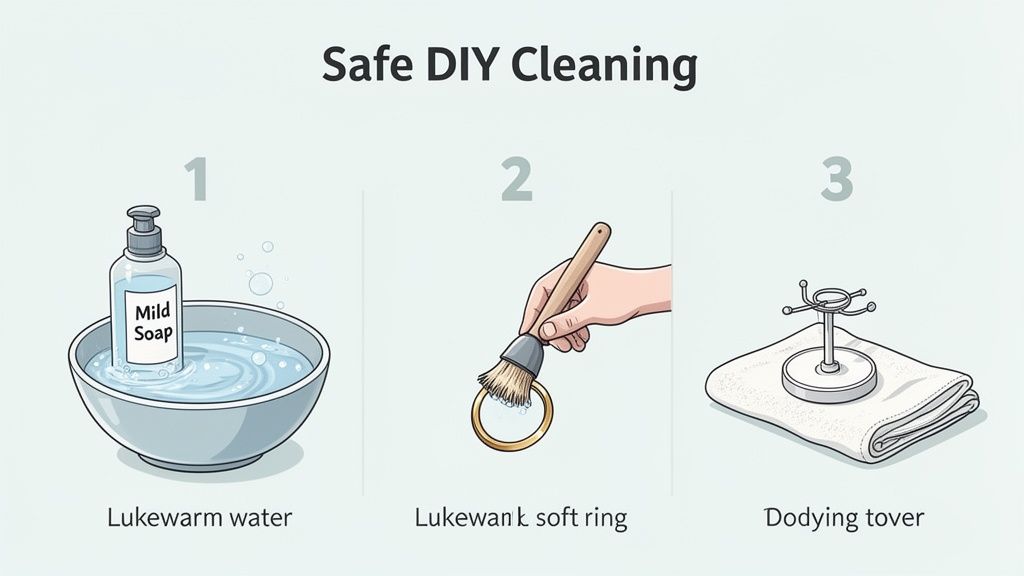
Following a few simple steps will get your jewellery clean without scratching or harming it. This process is perfect for a weekly refresh, especially for items you wear all the time, like engagement rings.
Prepare Your Solution: Grab a small bowl and fill it with warm water—never hot. Add just a few drops of a mild, phosphate-free washing-up liquid. Steer clear of any soaps that contain moisturisers, harsh degreasers, or aggressive chemicals.
Soak Your Jewellery: Pop your pieces into the solution and leave them to soak for about 15-20 minutes. This gives the soap enough time to get to work breaking down the layers of oils and dirt.
Gentle Brushing: Take a very soft-bristled brush (a baby toothbrush is ideal) and gently scrub the item. Pay close attention to the tricky spots around stone settings and in tiny crevices where grime loves to hide.
Rinse Thoroughly: Rinse the jewellery under a gentle stream of warm running water. Always remember to plug the sink drain first—you don't want any heart-stopping moments.
Dry Completely: Pat the piece dry with a soft, lint-free cloth. A microfibre cloth is perfect for this job, as it won’t leave any stray fibres behind or snag on prongs.
For more detailed guidance, you can learn more about how to clean rings at home in our dedicated article.
Debunking Dangerous Cleaning Hacks
The internet is swimming with so-called "hacks" for cleaning jewellery that can cause permanent, irreversible damage. These methods often rely on acidic or abrasive household items that are far too aggressive for precious metals and delicate gemstones.
Critical Warning: Many common household products act like fine-grit sandpaper on your jewellery. The damage is often microscopic at first, but it accumulates over time, eventually leaving a permanently dull or scratched surface.
You should avoid these popular but harmful substances at all costs:
Toothpaste: It contains abrasive particles designed to scrub tough tooth enamel. On softer metals like gold, these particles will create thousands of tiny scratches, completely dulling the finish.
Baking Soda: While it has a reputation for removing silver tarnish, baking soda is still an abrasive. Using it as a paste can easily scratch gold, platinum, and softer gemstones.
Vinegar or Lemon Juice: These are acids. They can etch the surface of porous stones like turquoise, coral, and pearls, and may even damage the metal alloys in your gold jewellery over time.
While these aggressive methods might seem to produce a quick shine, they often do so by literally stripping away a microscopic layer of the metal itself. For safe, long-term care that preserves the integrity of your jewellery, always stick to the gentle soap and water method or use a professionally formulated cleaner designed specifically for your piece.
When to Call in a Professional Jeweller
At-home cleaning is great for weekly maintenance, but it can’t solve everything. Knowing when to hand your pieces over to an expert is key to preventing damage, or worse, losing a treasured item altogether. Some issues just can't be fixed with a soft brush and soapy water; they need the specialised tools and eye of a trained goldsmith.
Spotting these warning signs early can save you from a costly repair or the heartache of a lost stone. Think of it as more than just a deep clean—it's a full health check for your jewellery, tackling problems DIY methods simply can't reach.
Stubborn Grime in Complex Settings
Ever looked at a detailed ring and realised it’s lost its fire, no matter how much you scrub? That’s usually down to deeply embedded grime—a mix of lotions, oils, skin, and dust that gets compacted into all the wrong places.
Settings like pavé, channel, or intricate filigree have dozens of tiny crevices that are impossible to clean properly at home. A professional jeweller uses high-frequency ultrasonic baths and high-pressure steam to safely blast away this build-up without harming the metal, revealing the brilliance you thought was gone for good.
A professional clean isn't just cosmetic. It gets rid of corrosive build-up that can slowly eat away at metal and prongs, preserving the structural integrity of your piece.
Loose Stones or Damaged Prongs
This is the big one. If you can hear a tiny rattle when you tap a ring near your ear, or feel a stone shifting in its setting, stop wearing it immediately.
This isn't a cleaning issue; it's a security risk. Trying to tighten a prong yourself is a recipe for a chipped gemstone or a broken claw. A jeweller has the right tools and years of skill to:
Inspect the setting under magnification to see exactly what's wrong.
Securely tighten prongs without putting dangerous pressure on the stone.
Re-tip worn claws by adding a tiny bead of precious metal to rebuild them, making sure your stone is safe for years to come.
Ignoring a loose stone is a gamble you don't want to take. A quick visit to a workshop can prevent a devastating loss.
Scratches and Lost Lustre
Daily wear inevitably leaves fine scratches on metals like gold and platinum, creating a dull, hazy finish that cleaning won't fix. Cleaning removes dirt, but it can't restore a scratched surface.
Professional polishing is the only answer. Jewellers use specialised mops and polishing compounds to carefully buff away a microscopic layer of metal, smoothing the surface back to its original mirror-like shine. This is especially vital for white gold, which needs a fresh coat of rhodium plating to bring back its bright, silvery-white finish—a process that can only be done by a professional.
The need for these specialist services is growing. As jewellery ownership rises across the UK, so does the demand for expert care, especially in hubs like London's Hatton Garden. Projections show that UK jewellery manufacturing revenue will hit around £1.0 billion in 2025, a clear sign of a market filled with fine jewellery that needs ongoing professional maintenance to keep its value and beauty. You can discover more insights about UK jewellery industry growth at IBISWorld.
The Professional Advantage of Expert Cleaning and Inspection
While home cleaning is great for day-to-day sparkle, it simply can’t match the thorough, preventative care a professional jeweller provides. A visit to our workshop is much more than a deep clean; it’s a full health check for your most treasured pieces, safeguarding their future. We use specialist equipment and an expert eye to spot issues that DIY methods just can't address.
Our professional-grade tools are a world away from home-use models. High-frequency ultrasonic cleaners create microscopic bubbles that safely dislodge stubborn grime from the most intricate settings—places a soft brush will never reach. We often follow this with a high-pressure steamer, which blasts away any lingering residue with pure water vapour to restore a brilliant, chemical-free shine.
Beyond Cleaning: The Expert Inspection
The real value of a professional service isn't just the shine—it's the inspection that goes with it. While your piece is in our hands, a skilled goldsmith performs a meticulous examination under magnification. This is where we catch subtle but critical problems before they turn into costly disasters.
An expert checks for:
Worn or Damaged Claws: The tiny metal prongs holding your gemstone can wear down over time, creating a serious risk of losing a stone.
Thinning Bands: The shank of a ring can become thin from years of daily wear, making it fragile and likely to bend or break.
Weak Clasps and Links: On necklaces and bracelets, worn-out catches and tired links are usually the first points of failure.
These are issues almost impossible for the untrained eye to spot. A professional can identify a slightly lifted prong or a hairline fracture in a chain link and recommend a minor repair, like re-tipping a claw, before it fails completely.
This preventative approach is the heart of professional jewellery care. It’s not just about restoring beauty, but about protecting your investment and the sentiment behind it.
Ultimately, a professional clean is an essential part of responsible ownership. It provides a level of deep cleaning and structural assessment that ensures your pieces remain as secure as they are stunning. For precious items like engagement rings or family heirlooms, this bi-annual or annual check-up is the single best way to ensure they last a lifetime.
Your Jewellery Cleaning Questions, Answered
Caring for fine jewellery can feel a bit daunting, but with the right advice, it's straightforward. Here are clear, expert answers to the questions we hear most often in our Hatton Garden workshop.
How Often Should I Clean My Jewellery?
It all comes down to how often you wear it. For pieces you wear daily, like an engagement ring, a quick clean at home once a week is a great habit. This lifts away the daily build-up of lotions, soaps, and oils that dull its sparkle. We then recommend a professional clean and inspection every 6 to 12 months to keep it in top condition.
For items you wear less often, a gentle clean after every few wears is usually enough. An annual professional check-up is still wise, just to make sure all the settings and clasps are secure.
Are Ultrasonic Cleaners Safe for All Jewellery?
Definitely not. While they work wonders on hard, durable pieces like a diamond ring in a simple platinum or gold setting, those powerful vibrations can be destructive to more delicate materials.
A Crucial Word of Warning: Never put organic gems like pearls or coral, porous stones like opals and turquoise, or any jewellery with loose or fragile settings into an ultrasonic cleaner. The high-frequency vibrations can cause fractures, dislodge stones, or cause irreversible damage in seconds.
What’s the Best Way to Clean Tarnished Silver?
For light tarnish, your safest bet is a good-quality silver polishing cloth. These are treated with a gentle cleaning agent that lifts the tarnish layer without scratching the metal underneath. It's simple and effective.
If you're dealing with heavy tarnish or a complex piece with lots of intricate details, a professional polishing service is the way to go. DIY chemical dips can be harsh, potentially stripping away beautiful patinas on antique pieces or damaging set stones.
Can a Jeweller Remove Scratches from My Ring?
Yes, absolutely. This is a core part of professional jewellery maintenance. While a clean removes grime, only professional polishing can buff away the fine surface scratches that gold and platinum inevitably pick up from daily wear. A jeweller uses specialised mops and compounds to carefully smooth the surface, bringing back that original, flawless high-shine finish.
For a truly restorative clean that makes your jewellery look brand new, trust the professionals. Opulence Jewellery Services provides same-day cleaning and expert repairs right here in our Hatton Garden workshop, where your treasured pieces are always handled with specialist care.
Restore your ring's brilliance with our expert guide on cleaning diamond rings. Learn safe, effective home methods and know when to see a professional.