22 November 2025 20 min read Hatton Garden, London
Thinking about resizing a wedding ring? Our guide covers UK costs, jewellers, and the process for gold, platinum, and rings with stones. Get a perfect fit.
That little tug you feel pulling your wedding ring over your knuckle, or the way it spins endlessly on a cold day – these are feelings almost everyone can relate to. Resizing a wedding ring is a very common and surprisingly straightforward process for most designs. But whether you've noticed your body changing over the years or you've inherited a precious heirloom, knowing when to resize is the critical first step.
Identifying the Right Time for a Ring Adjustment
Deciding to alter your wedding ring isn't something you should do on a whim. Your finger size can fluctuate daily, sometimes even hourly, thanks to temperature, what you've eaten, and even your activity levels.
A ring that feels uncomfortably tight after a long flight might feel perfectly fine the next morning. The key is to distinguish between a temporary inconvenience and a persistent fit issue.
Signs Your Ring Is Too Small
A ring that's too tight is more than just annoying; it can genuinely restrict circulation. If you're consistently noticing any of these signs, it's a clear signal that you need to size up:
You can't get it off: It takes a serious effort with soap, lotion, or a lot of wiggling to get the ring over your knuckle.
The "muffin top" effect: You can see your skin bulging around the ring, and it leaves a deep indentation when you finally take it off.
Discomfort or numbness: There’s a constant feeling of pressure, or your finger feels tingly or looks reddish or purple.
When Your Ring Is Too Large
A loose ring is a constant source of anxiety. The risk of it slipping off unnoticed is a heartbreaking thought for such a sentimental piece. Keep an eye out for these tell-tale signals that your ring needs to be made smaller:
It won't stop spinning: The main stone or design detail is always sliding to the side or bottom of your finger.
It slips off too easily: The ring comes off with almost no resistance, especially when your hands are cold or wet.
It clears your knuckle without effort: The ring can easily slide completely over your knuckle with just a simple hand gesture.
This is a surprisingly common problem. In fact, a 2023 survey found that about 30% of couples needed their wedding rings resized within the first year of marriage, often due to natural weight changes. That same study noted that 60% of resizing happens within the first five years, which just goes to show that our bodies and lifestyles are always evolving. You can read more about these findings and the frequency of ring resizing.
Deciding whether the fit is 'off' enough to warrant a resize can be tricky. This quick table should help you make a confident decision.
Quick Fit Assessment: Should You Resize Your Ring?
Symptom
What It Means
Recommended Action
Ring spins on cold days but fits well otherwise.
This is normal fluctuation due to temperature.
Monitor for now. If it becomes a constant issue, consider sizing beads as a less permanent solution.
Hard to remove over knuckle but comfortable at base.
Your knuckle is larger than the base of your finger.
This can be a good fit, as it prevents the ring from falling off. Only resize if it's causing pain or requires force to remove.
Leaves a deep mark and skin bulges over the top.
The ring is definitely too tight and may restrict blood flow.
Size up. This is a clear indicator that a resize is needed for comfort and safety.
Slips off when hands are wet or soapy.
It's dangerously loose. The risk of losing it is very high.
Size down. A proper fit should require a slight twist to get over the knuckle.
Feels snug after salty meal or exercise, loose in the morning.
Daily body fluid changes are affecting the fit.
Wear it consistently for 1-2 weeks before deciding. If the tightness is persistent, a resize is probably needed.
Ultimately, a well-fitting ring shouldn't be a source of constant worry or discomfort.
Expert Tip: Before you commit to a resize, try wearing your ring for a solid two weeks. Pay close attention to how it feels in the morning, after you've been to the gym, and in both warm and cool weather. This simple observation period helps you know for sure if you're dealing with temporary swelling or a genuine sizing issue.
If the fit is always on your mind, it's time to seek professional advice. A perfect fit means security and comfort, allowing you to wear your symbol of commitment without a second thought.
How Jewellers Make Rings Bigger or Smaller
Ever wondered what actually happens to your wedding ring behind the workshop door? It’s a precise craft, whether your ring has become too snug or started to slip. Expert jewellers have specific techniques to achieve that perfect fit without compromising the ring’s strength or beauty.
Knowing how the work is done can give you real confidence when you hand over something so precious. The method a jeweller chooses depends entirely on whether the ring needs to go up or down in size, as each requires a different approach.
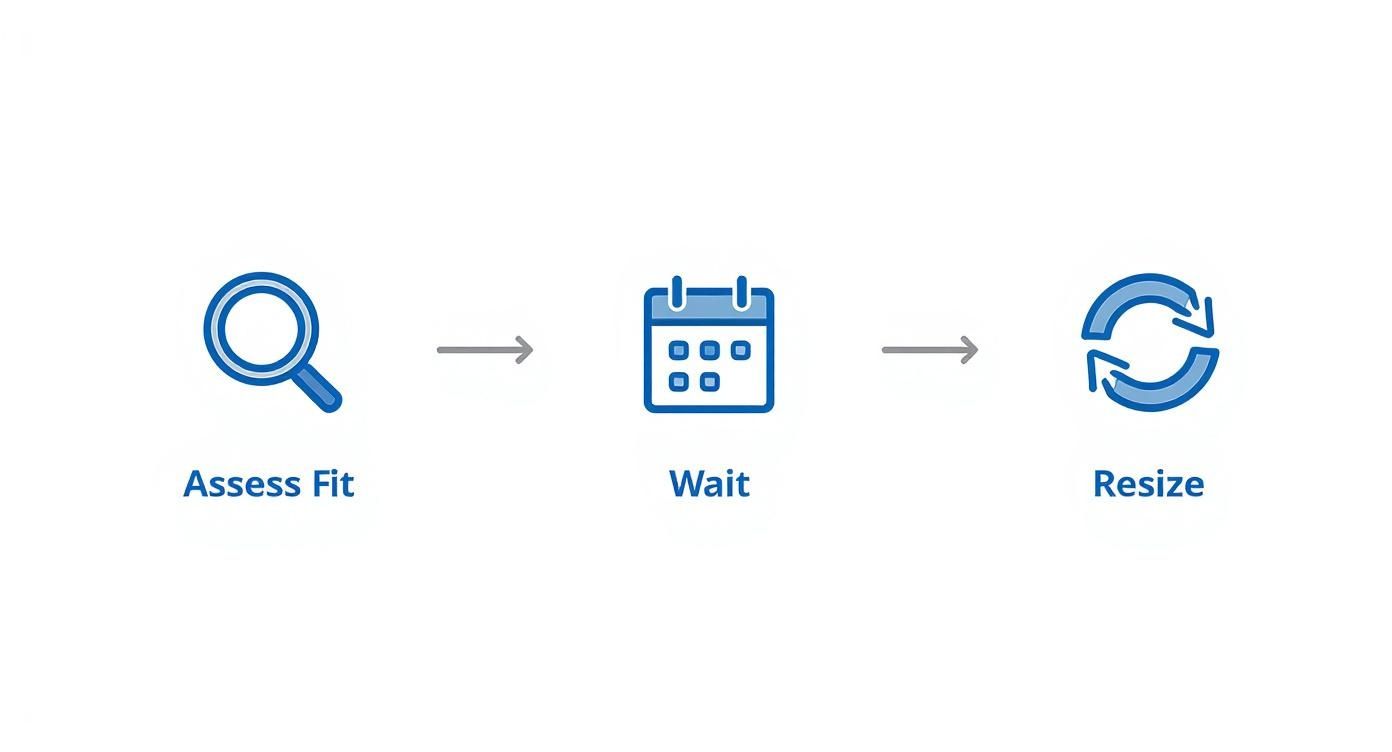
This is the basic thought process we follow before touching any ring, from the initial fit check to the final decision.
As you can see, it all starts with a careful assessment, followed by a waiting period to be sure the sizing issue isn't just temporary. Only then do we commit to a resize.
Making a Ring Smaller
Making a ring smaller is usually the more straightforward job. Think of it like tailoring a suit; we’re simply removing a small amount of excess material to get the fit just right. A jeweller will precisely cut a tiny piece from the shank—that’s the bottom part of the band that rests against your palm.
Once the section is out, the two fresh ends of the ring are brought together. We then meticulously solder them, using a matching metal alloy to create a join that’s every bit as strong as the original band. The final, critical steps involve filing, sanding, and polishing the area until it’s completely invisible.
A Flawless Finish
A professionally resized ring should show no signs of the work. When you run your finger over the join, it should feel perfectly smooth—no seam, no bump, and no discolouration.
Making a Ring Larger
Making a ring larger demands a bit more artistry and can be handled in two main ways. The right choice depends on how much bigger it needs to be and the style of your ring.
1. Stretching the Band
For plain bands made of gold or platinum that only need a slight increase—we’re talking no more than half a size—stretching is often the best option. The jeweller uses a specialised tool called a ring stretcher, which carefully and evenly expands the metal.
Best for: Plain wedding bands without any stones or detailed patterns.
Limitation: This method does thin the band slightly, so it’s not suitable for big size changes or for rings that are already quite delicate.
2. Adding Metal
If your ring needs to be made more than half a size larger, or if it has stone settings, the process is basically the reverse of sizing down. We cut the shank and insert a brand-new, perfectly matched piece of metal into the gap.
This new piece is then expertly soldered into place on both sides. This is the preferred method because it maintains the ring's original thickness and strength. The final polishing is critical to ensure the added section blends in seamlessly, preserving the ring's flawless appearance.
A skilled jeweller’s work is so precise that even under close inspection, you shouldn’t be able to tell where the new metal was added. This is the attention to detail that separates a standard repair from true craftsmanship, and it’s why choosing an experienced workshop is so important for protecting your ring.
How Metal and Stones Affect Resizing
When it comes to resizing a ring, not all are created equal. The materials—the metal of the band and any gemstones—are the biggest factors determining what's possible, how complex the job will be, and ultimately, how much it will cost.
Think of the metal as the foundation for any work. Precious metals like gold and platinum are popular for good reason: they're malleable and forgiving in the hands of a skilled jeweller.
Working with Precious Metals
Gold is probably the most common choice for wedding bands, and resizing it is usually straightforward. Whether it’s 9ct or 18ct, a jeweller can cleanly cut the band, add or remove a piece, and create a seamless join. Gold’s softness makes it cooperative, but it also demands precision to keep the ring perfectly circular.
Platinum, however, is a different beast entirely. It’s incredibly dense and durable, with a much higher melting point than gold. This means resizing a platinum ring requires more heat, more time, and specialised tools. The work is far more labour-intensive, which is why you’ll often find that resizing a platinum ring costs more than a similar gold one. Our guide on the difference between white gold and platinum dives deeper into these properties.
Even the carat of gold matters. During World War II, for instance, British restrictions led to ‘utility’ wedding rings made from 9-carat gold. They were designed for durability over intricate customisation. This little bit of history shows how metal choice has always influenced the practicality of resizing—a reality that holds true today.
When Resizing Is Not an Option
Some modern metals are chosen for their extreme toughness, but this very quality makes them nearly impossible to resize with traditional methods. If your wedding band is made from one of these, you’ll need to look at other solutions.
Tungsten: This metal is incredibly hard but also brittle. Trying to cut or bend a tungsten ring will most likely cause it to shatter.
Titanium: While not as brittle as tungsten, titanium is exceptionally strong and difficult for most jewellers to cut. Resizing it is a specialist job that requires specific equipment.
Stainless Steel: Much like titanium, the hardness of stainless steel makes resizing a very challenging and often impractical task.
Key Takeaway: If your ring is made from an alternative metal like tungsten or titanium, traditional resizing is almost always off the table. The best course of action is typically to order a new ring in the correct size.
How Gemstones Complicate the Process
Adding gemstones to the mix introduces a whole new layer of complexity. Heat is a jeweller’s primary tool for soldering metal, but it’s the enemy of many precious stones. Delicate gems like emeralds, opals, and pearls can be easily damaged by the high temperatures needed to work on the band.
To get around this, a jeweller often has to carefully un-set any stones near the area being worked on. This protects them from both the heat and the physical pressure of bending the band. After the metalwork is done, each stone must be meticulously re-set and secured.
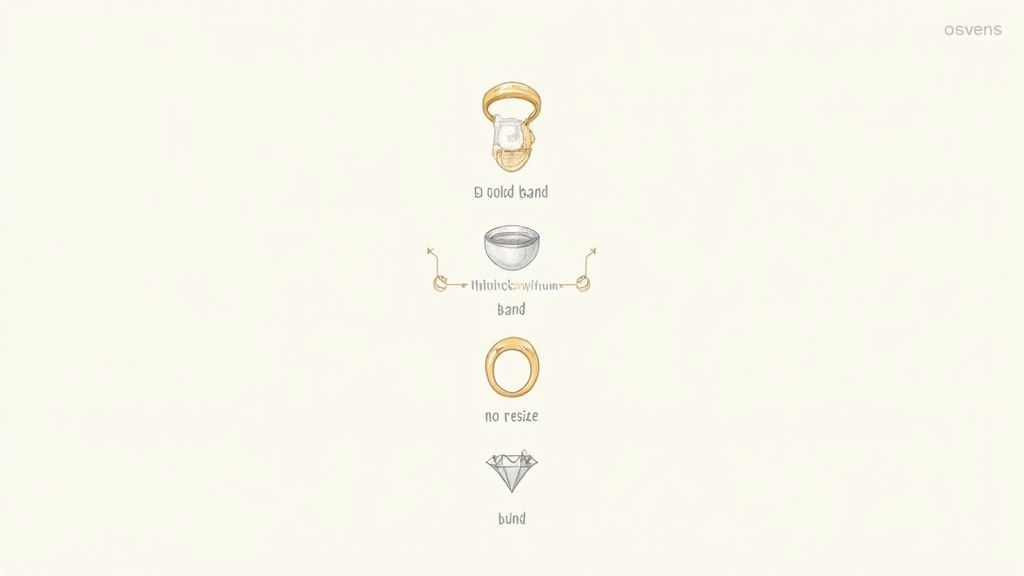
This is where the ring's design really comes into play. A classic solitaire engagement ring is relatively simple; the jeweller can work on the plain shank at the bottom without disturbing the main diamond. Other designs, however, present a real challenge.
Ring Styles and Their Resizing Difficulty
Ring Style
Resizing Difficulty
Why It's a Challenge
Solitaire
Easy
Work is done on the plain band, far from the single stone setting.
Pave or Channel-Set
Moderate to Difficult
Stones set along the band must be checked for security. Removing and re-setting may be required, increasing labour.
Full Eternity Band
Nearly Impossible
With stones covering the entire circumference, there is no plain metal to safely cut and solder without compromising the settings.
A full eternity band is the ultimate test. Because there's no bare metal to work on, attempting a resize risks damaging multiple stone settings and disrupting the continuous pattern. For these rings, a complete remake is often the only viable solution. Understanding these limitations from the start will save you time and lead to a much more productive chat with your jeweller.
What to Expect for Costs and Timelines in the UK
When it's time to resize your wedding ring, two questions always come up: "How much will it cost?" and "How long will I be without it?" The honest answer depends entirely on your ring—its metal, how complex the design is, and how much we need to adjust it by.
Understanding these details gives you a realistic idea of what to expect when you walk into a jeweller. A simple, plain gold band is one thing; a platinum ring with a full channel of diamonds is a completely different job.
A Breakdown of UK Resizing Costs
The price for resizing a wedding ring in the UK varies quite a bit. The biggest factors are the metal type and the time a goldsmith needs to spend on it. Platinum, for example, has a much higher melting point than gold, so it demands more specialised equipment and skill to work with, which you'll see reflected in the price.
It's also worth knowing that making a ring larger is usually more expensive than making it smaller. Sizing down means we simply remove a tiny piece of metal. Sizing up, on the other hand, requires us to add a new, perfectly matched piece of precious metal, which adds to the material cost.
To give you a clearer picture, here’s a breakdown of what you might expect to pay based on industry data from 2023.
Estimated UK Ring Resizing Costs by Metal Type
Metal Type
Making Smaller (Estimate)
Making Larger (Estimate)
Key Considerations
9ct Gold
£40 - £70
£50 - £90
A common and straightforward metal to work with.
18ct Gold
£40 - £110
£60 - £130
Higher gold content can influence the cost of adding metal.
Platinum
£60 - £190
£80 - £200+
Requires higher temperatures and specialised tools, increasing labour costs.
Silver
£20 - £60
£30 - £80
The most affordable option, but still requires skilled soldering.
Remember, these are ballpark figures. Prices in London can often be 10-20% higher, and if you need a more detailed breakdown, you can find more insights on resizing costs right here.
Keep in Mind: If your ring has features like intricate engravings that need re-doing or delicate stone settings that demand extra care, this can increase the final cost. Always ask for a detailed quote before giving the go-ahead.
Typical Timelines for Ring Resizing
The turnaround time for resizing a wedding ring is just as variable as the cost. A simple job on a plain band can be done very quickly. A more complex piece will need more time and care to get that flawless, invisible finish.
Here’s a general guide to what you can expect:
Simple Resizing (Plain Gold Bands): For straightforward jobs, many jewellers with an on-site workshop can offer a same-day or 24-48 hour service. This is perfect for rings without stones that only need a minor tweak.
Standard Resizing (With Stones or Platinum): If your ring is made of platinum or has gems that need to be checked and secured, a realistic timeline is usually 3 to 10 working days. This gives the goldsmith enough time to resize the band and ensure every stone is perfectly secure.
Complex Resizing (Eternity Rings, Intricate Designs): For really tricky pieces like full eternity bands or rings with detailed patterns, the process can take 2 to 4 weeks, sometimes longer. These jobs require painstaking work to protect the design and every single stone setting.
Express and Same-Day Services
What if you need your ring back in a hurry for an anniversary or special event? Many specialist workshops, particularly in areas like London’s Hatton Garden, offer express or "while-you-wait" services for simpler jobs.
At Opulence Jewellery Services, our on-site workshop means we can handle many resizing jobs on the same day. These express options are ideal for less complicated rings but may come at a premium. It's always best to call ahead, confirm if your ring is suitable for a same-day service, and book an appointment so we can set aside the time your piece deserves.
Finding a Jeweller You Can Trust
Handing over your wedding ring, a piece so full of memories, is a big deal. Finding the right hands to care for it is just as important as the resizing process itself. Not all jewellers offer the same level of craftsmanship, so knowing what to look for is key to getting your ring back in perfect condition.
The first step? Look for a specialist with a proven track record. This usually means looking beyond a generic high-street shop and finding a proper workshop with experienced goldsmiths at the bench.
Key Questions for Your Jeweller
Before you commit, a good jeweller should be happy to answer a few critical questions. Don't be shy about asking directly—their answers will tell you everything you need to know about their expertise. A true professional will welcome your diligence.
Is the work done on-site? Many retailers send jewellery away to a central workshop. A jeweller with an on-site facility, like ours at Opulence, offers much better security, faster turnaround times, and lets you speak directly with the person actually working on your ring.
What is your experience with this specific metal or setting? Resizing platinum is a completely different skill from resizing gold. If you have a complex pavé or channel set ring, ask to see examples of similar work they've handled before.
What is included in the price? A proper resizing job should always include a final polish and a thorough check of all stone settings to ensure they’re secure after the work is done.
Do you offer a guarantee on your work? Any reputable jeweller will stand by their craftsmanship and guarantee the resizing work against defects.
Vetting a Workshop and Building Confidence
Beyond asking the right questions, a little online research goes a long way. Check for recent, genuine customer reviews on independent platforms. Look for feedback that specifically mentions resizing or repair work, as this speaks directly to the quality of their technical skill.
A detailed consultation is non-negotiable. The jeweller should take the time to measure your finger correctly, inspect your ring thoroughly under magnification, and explain exactly what the resizing process will involve before you agree to anything.
Visiting a renowned jewellery district like London's Hatton Garden is a brilliant move. Areas like this have a high concentration of expert artisans and specialist workshops. This healthy competition fosters an incredibly high standard of work, giving you access to some of the best craftspeople in the country. To help you narrow down your search, we've put together a guide on where to have a ring resized in London, which offers more specific local advice.
Ultimately, your confidence is what matters most. Choose a jeweller who communicates clearly, respects the sentimental value of your ring, and demonstrates undeniable expertise.
Inspecting and Caring for Your Resized Ring
That moment you get your resized wedding ring back is always exciting. But before you slip it back on for good, it's worth taking a minute for a quick inspection. This is the final step to make sure the work is top-notch and gives you total peace of mind.
First, do a simple touch test. Run your fingertip over the area where the work was done, which is almost always at the bottom of the shank. A professional job should be completely seamless. You shouldn't be able to feel any bumps, rough edges, or little dips where the new metal was joined. It needs to feel just as smooth as the rest of the band.
Next, hold the ring up to a good light and look closely at that same spot. Is there any discolouration or a faint line? The colour and finish should be perfectly consistent all the way around.
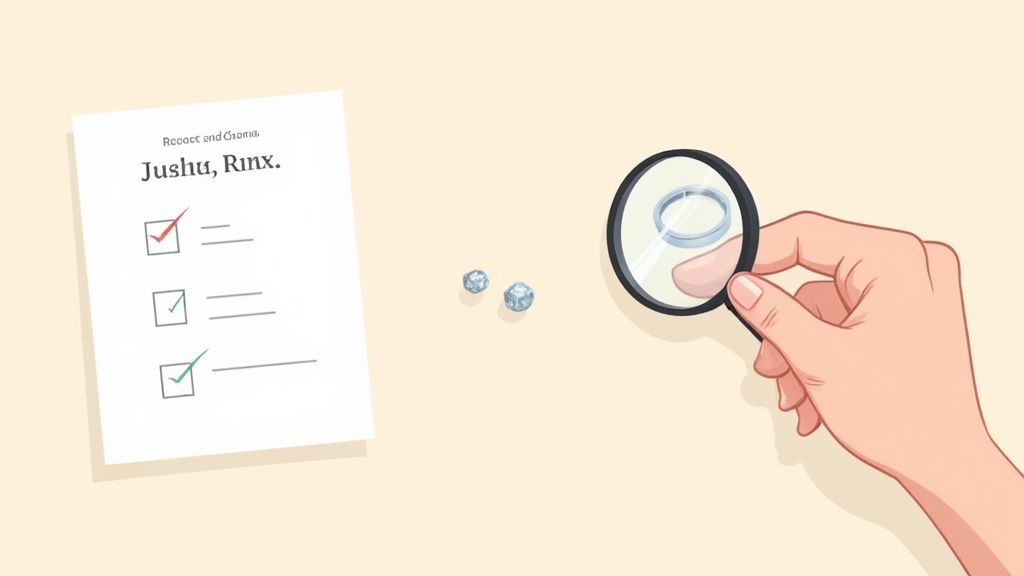
Your Post-Resizing Inspection Checklist
Once you’ve done the initial feel and look, a few more detailed checks will confirm the quality. Any good jeweller will have done this already, but it’s smart to double-check for yourself.
Check the Shape: Look at the ring from the side. Is it still perfectly round? A rushed or poor job can sometimes leave the ring looking a bit oval or distorted.
Inspect the Stones: If your ring has diamonds or other gems, check each one is tight in its setting. The resizing process involves heat and pressure, which can sometimes loosen prongs. Gently tap each stone to make sure there's no wiggle.
Confirm the Fit: This is the most important check, of course! The ring should slide over your knuckle with a little bit of a push, then sit comfortably at the base of your finger. It shouldn’t be spinning around or feel tight.
A common worry we hear is whether resizing makes a wedding ring weaker. When it's done by a skilled professional, the answer is a firm no. A properly soldered join is just as strong as the original metal, so the ring's integrity isn't compromised at all.
Long-Term Care for Your Ring
With the inspection done, a little bit of ongoing care will keep your ring looking its best. If you wear it daily, be mindful of activities that put stress on the band, like lifting heavy weights or gripping tools tightly, as this can gradually bend the metal out of shape.
It's also a good idea to take your ring off before using harsh chemicals or going for a swim. For a simple clean at home, just use a soft-bristled brush with warm water and a single drop of mild washing-up liquid. This gentle routine is all you need to maintain its sparkle without harming the metal or any delicate settings.
Still Have Questions About Ring Resizing?
Even with the process laid out, you probably still have a few things on your mind. We get it. Here are the most common questions we hear in our Hatton Garden workshop, with straight-talking answers to help you decide what’s right for your ring.
Can a Ring Be Resized More Than Once?
Yes, most of the time, a ring made from gold, platinum, or another precious metal can be resized multiple times. The important thing to remember is that every time the metal is cut, heated, and reshaped, it goes through a bit of stress.
Doing this repeatedly, especially if you're making big jumps in size each time, can eventually start to weaken the band. It's always a good idea to let your jeweller know the ring's history so they can properly assess its integrity before starting any new work. The risk is a little higher for rings with very fine details or delicate stone settings.
What if My Ring Can't Be Resized?
Don't worry, you’ve still got options. If your ring is made of something like tungsten or is a full eternity band, traditional resizing is off the table. But that doesn’t mean you have to stop wearing it.
A jeweller can often add small sizing beads or a spring insert to the inside of the band. These are clever little additions that create a snugger fit without actually altering the ring itself. For a ring that’s just a touch too large, a simple clip-on ring guard can also be a good temporary fix.
If the ring is far too small, the best long-term solution might be to have it professionally remade. We can use the original metal and stones to create an identical piece in the correct size, perfectly preserving all its sentimental value.
A professional remake is a true testament to craftsmanship. It honours the original design while creating a new, perfectly fitting ring that you can wear and enjoy for decades to come.
Will Resizing My Wedding Ring Devalue It?
When a skilled, experienced jeweller does the work, resizing will not devalue your ring. A professional job leaves a completely seamless, invisible join that doesn't compromise the ring's structure, strength, or look. The quality of the workmanship is everything.
On the other hand, a poor job—one with a visible seam, mismatched metal colour, or a warped shape—can absolutely lower its value. This is exactly why it pays to go to a reputable expert. You're protecting both the sentimental and the financial worth of your ring, which is especially important for antique, designer, or heirloom pieces.
At Opulence Jewellery Services, our Hatton Garden workshop has the expertise to handle your resizing with the care it deserves. Whether it’s a simple adjustment or a more complex job, we make sure every piece is returned to you looking absolutely flawless.
Discover how to design a custom wedding ring in London. Our guide walks you through finding inspiration, choosing materials, and the bespoke creation process.