Engagement Ring Sapphire and Diamond: A Complete Guide to Choosing
22 December 2025 19 min read Hatton Garden, London
Discover the best engagement ring sapphire and diamond options, settings, and care tips in this concise guide.
A sapphire and diamond engagement ring isn't just a piece of jewellery; it’s a timeless statement. It pairs the deep, soulful colour of a sapphire with the unmistakable fire of a diamond, creating a combination that speaks of loyalty, wisdom, and a love that lasts. It’s an elegant and deeply personal choice.
The Enduring Allure of Sapphire and Diamond Rings
Choosing an engagement ring is one of those big life decisions, a real, tangible symbol of a couple’s story. While diamonds have long held the top spot, bringing a sapphire into the mix adds a whole new layer of history, meaning, and beautiful contrast. This isn't just a fleeting trend; it’s a classic pairing that has been turning heads for centuries, from royal collections to modern couples looking for something that feels uniquely theirs.
What really gives this combination its power is the symbolism behind each stone. Sapphires, with their rich, celestial blues, have always been linked to wisdom, loyalty, and nobility. They stand for faithfulness and sincerity—the very foundation of a solid partnership. Diamonds, of course, are the ultimate symbol of unbreakable strength and eternal love. Their brilliance and hardness reflect a bond that’s both pure and built to last.
When you bring these two gems together, you’re not just mixing colour and sparkle. You’re weaving a story: the loyal devotion of the sapphire, fortified by the unbreakable love of the diamond. It makes for a piece that's as meaningful as it is beautiful.
A Modern Take on a Timeless Tradition
Today’s couples are looking for more than just a beautiful ring; they want something that reflects their values, from personalisation to ethical sourcing. This shift has put sapphire and diamond rings right back in the spotlight, as they offer that perfect blend of classic style and individual character. The move towards more conscious buying has also played a huge part.
This is especially true here in the UK, where we’ve seen a massive surge in demand for lab-grown diamonds. It's a change driven largely by younger buyers who value sustainability just as much as they do value for money. In fact, over 70% of millennials now opt for lab-grown diamonds in their engagement rings, with sustainability being a key decider for couples under 35. You can dig into more of these jewellery industry statistics to see how our buying habits are changing.
This modern mindset means you can create a stunning sapphire and diamond ring that aligns perfectly with your values, without ever compromising on quality or beauty. This guide is here to walk you through every step of making that happen.
How to Judge a Sapphire's Quality
When you're choosing a sapphire and diamond engagement ring, the sapphire is the star of the show. While diamonds are graded against a universal standard, judging a sapphire's quality is more of an art. It’s about much more than just that famous blue hue; it's a delicate balance of factors that gives each stone its own personality.
Think of it like appreciating a fine painting. Two canvases might be the same size (carat), but it’s the richness of the colours, the clarity of the image, and the artist's skill in shaping it that creates a masterpiece. It's exactly the same with sapphires—these elements work together to define its beauty and value.
The Four Cs for Sapphires
Just like diamonds, sapphires are evaluated using the “Four Cs”—Colour, Clarity, Cut, and Carat. For a sapphire, however, the hierarchy is different. Colour is king, without a doubt. It dictates the stone’s character and a huge chunk of its worth.
Colour is the first thing you'll notice. A top-tier sapphire has a deep, velvety, and even colour that’s vibrant but not so dark it looks black in low light.
Clarity refers to the natural inclusions inside the stone. Unlike diamonds, some inclusions are expected—they're often proof of the sapphire's natural origin.
Cut is all about how the gem is shaped to maximise its brilliance and colour. A great cut brings a sapphire to life, making it sparkle.
Carat is simply the sapphire's weight. While bigger is rarer, a smaller stone with exceptional colour is far more valuable than a larger one with a pale, washed-out hue.
Decoding Sapphire Colour and Clarity
Colour isn’t just "blue." Gem experts look at three things: hue (the primary colour), tone (how light or dark it is), and saturation (the intensity or richness). The most prized sapphires have a strong, vivid saturation without being too dark. Think of a watercolour painting: high saturation is like a brushstroke packed with rich pigment, while low saturation looks faded.
When it comes to clarity, the goal is to find an "eye-clean" stone, meaning you can't see any distracting flaws with the naked eye. In fact, some tiny, silk-like inclusions can actually be a good thing, giving the stone a soft, velvety look that really enhances its colour. It's a beautiful sign of a natural, untreated gem.
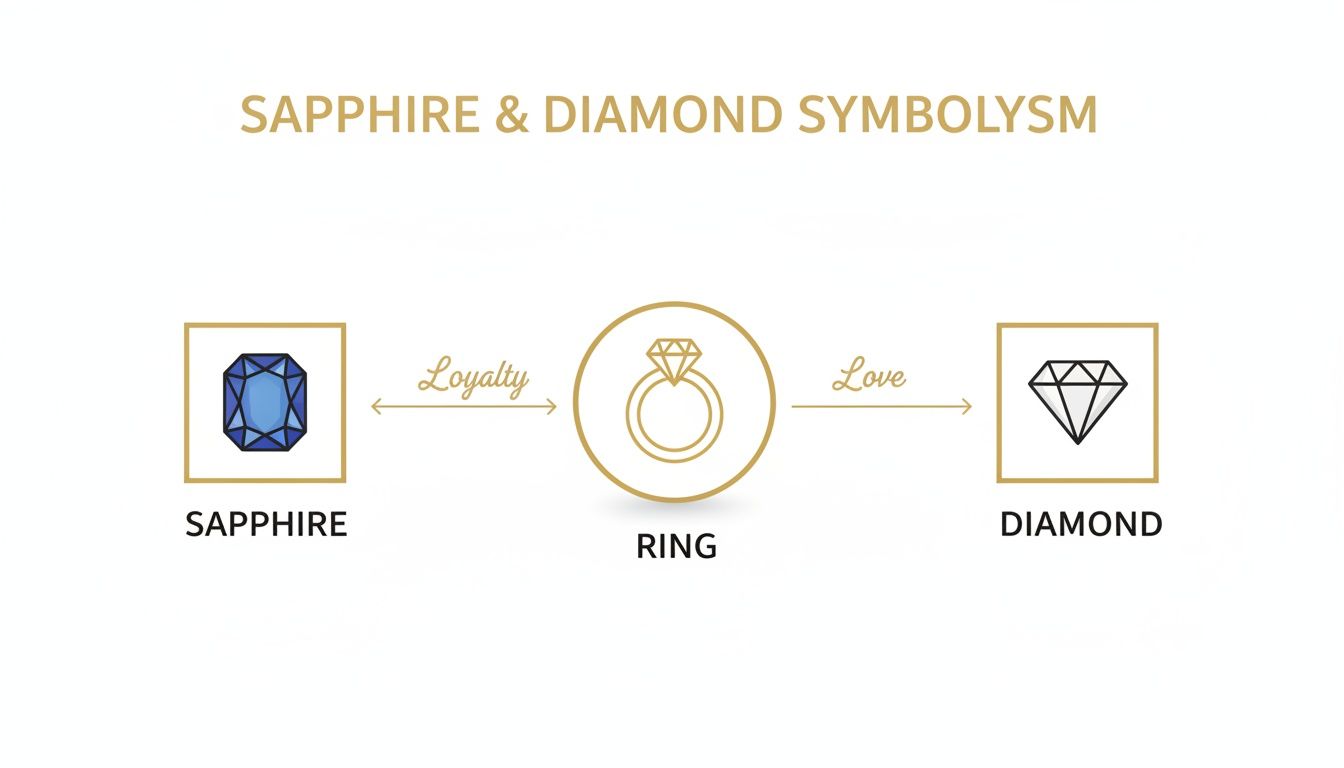
This diagram shows how the sapphire (loyalty) and diamond (love) come together to create a powerful symbol in an engagement ring.
Each stone plays a distinct yet complementary role, with the sapphire representing faithfulness and the diamond signifying enduring love.
Natural vs Lab-Created Sapphires
A big decision you'll face is the stone's origin: mined from the earth or grown in a lab. Chemically and physically, they're the same material. But they differ in origin, rarity, price, and the story they tell.
Lab-created sapphires are grown in controlled conditions that mimic nature's process. This means you can get stones that are often flawless and more affordable than a natural one of the same size and quality. They’re a fantastic choice if you’re prioritising a bigger, cleaner-looking stone on a specific budget.
Natural sapphires, on the other hand, carry the romance of being formed over millions of years. Their unique inclusions tell the story of their journey, making every single stone one-of-a-kind. They are rarer, hold their value exceptionally well, and are often seen as a true heirloom investment.
Here's a quick comparison to help you weigh your options:
Natural vs Lab-Created Sapphires A Quick Comparison
Feature
Natural Sapphire
Lab-Created Sapphire
Origin
Mined from the earth; formed over millions of years.
Grown in a controlled laboratory environment.
Clarity
Typically has natural inclusions ("fingerprints of nature").
Usually flawless or has very minimal inclusions.
Rarity
High-quality stones are rare, especially in larger sizes.
Widely available in various sizes and qualities.
Value
Higher price point; considered a long-term investment.
More affordable, offering excellent value for size.
Ethical
Sourcing can vary; look for ethically sourced certification.
Considered a conflict-free and sustainable option.
Ultimately, choosing between natural and lab-created is a personal one. A natural sapphire offers rarity and a connection to the earth, while a lab-created stone provides perfection and accessibility. Neither is "better"—it’s simply about what matters most to you.
Selecting Diamonds to Enhance Your Sapphire
Choosing the accent diamonds for your ring is like casting the supporting actors in a film. Your sapphire is the undisputed star of the show, but the right diamonds will elevate its performance, making the entire piece absolutely breathtaking. It’s an art of harmony, not just about adding extra sparkle.
Think of it this way: a deep, velvety blue sapphire is powerful on its own. Flank it with brilliant, icy-white diamonds, however, and its colour becomes even more intense. This contrast is the secret to a visually stunning ring. The diamonds act as a frame, drawing your eye inward and making the sapphire’s hue pop with richness and life. This isn't a competition between gems; it's a beautiful collaboration.
The trick is to balance colour, clarity, and shape so the diamonds complement your chosen sapphire perfectly, rather than overpowering it.
Achieving Perfect Colour and Clarity Harmony
When you're pairing diamonds with a high-quality blue sapphire, colour is your most important consideration. To get that crisp, brilliant contrast, you should be looking for diamonds in the colourless (D-F) range. These stones have virtually no yellow or brown tints, giving you a pure, bright white light that makes the sapphire's blue sing.
Diamonds in the near-colourless (G-H) range can also work well, especially next to a very dark sapphire, but the D-F grades deliver that truly luxurious, high-contrast effect. Simply put, the whiter the diamond, the more dramatic the look.
Clarity is also important, but you have a bit more flexibility here. For smaller side stones, diamonds that are 'eye-clean' are more than enough. This usually means a clarity grade of SI1 (Slightly Included 1) or better. Since these diamonds are accents, any microscopic inclusions won't be visible to the naked eye and won’t detract from the ring's overall beauty.
Your goal is a harmonious visual effect. The diamonds should appear as a seamless river of light framing the sapphire, not a collection of individual stones. Consistent colour and clarity are key to achieving this unified look.
The shape of your side diamonds plays a massive role in defining the ring's personality. Different cuts can steer the design towards a vintage, modern, or classic feel, and each one interacts with the centre sapphire in its own unique way.
Here are a few popular choices and the styles they create:
Round Brilliant Diamonds: The timeless, classic choice. Their unmatched sparkle creates a brilliant frame for any sapphire shape, adding fire and life to the ring. They are incredibly versatile, perfect for halos, three-stone designs, or delicate pavé bands.
Baguette Diamonds: With their long, rectangular shape and step-cut facets, baguettes offer a sleek, geometric elegance. They create a clean, architectural contrast that feels very Art Deco or modern.
Pear-Shaped Diamonds: When set on either side of a centre stone, pear shapes (or teardrops) create a graceful, feminine look. They draw the eye outwards, making the ring appear longer and more elegant on the finger.
Trillion-Cut Diamonds: These triangular diamonds provide a bold, contemporary edge. Their sharp angles create a striking visual frame, perfect for someone who wants a unique and modern three-stone ring.
Ultimately, the right diamonds are the ones that complete your vision for the ring. By carefully considering their colour, clarity, and shape, you ensure they work in perfect harmony with your sapphire, creating a truly unforgettable piece of art that tells your personal story.
Finding the Perfect Style and Setting
If the gemstones are the stars of your ring, then the setting is the stage where they shine. A great design does more than just hold the stones securely in place; it tells a story, sets a mood, and transforms your engagement ring sapphire and diamond into something that feels completely you.
The style you choose, from a timeless classic to something more intricate and modern, is the ultimate expression of your personality. The setting and the precious metal work together to create the ring’s overall character. A cool-toned platinum band gives a classic, elegant feel, while warm yellow gold can create a beautiful vintage contrast against a deep blue sapphire. It's this interplay that brings the final vision to life.
Understanding how these different elements interact is the key to finding a design you'll love for a lifetime.
Popular Styles For Sapphire And Diamond Rings
While the design possibilities are nearly endless, a few iconic styles have stayed popular for good reason—they showcase the sapphire and diamond combination beautifully. Each one offers a different feel, helping you find a design that captures your story perfectly.
Halo Setting: This design frames the central sapphire with a glittering circle of smaller pavé diamonds. The effect is breathtaking. The halo makes the sapphire appear larger and more brilliant, creating a spectacular show of light and colour. It's a glamorous and impactful choice for someone who loves maximum sparkle.
Three-Stone Setting (Trilogy): Deeply symbolic, the three-stone ring features a central sapphire flanked by two diamonds. The trio is often said to represent a couple's journey—their past, present, and future. It’s a classic, elegant style that offers a gorgeous balance between colour and pure brilliance.
Solitaire with Diamond Shoulders: For a look of understated elegance, a solitaire setting puts the focus squarely on the sapphire. Adding a pavé or channel-set band of diamonds along the "shoulders" of the ring adds a delicate touch of sparkle without stealing the show. Timeless and sophisticated.
Vintage-Inspired Designs: Drawing inspiration from eras like Art Deco or Victorian, these rings often feature intricate metalwork, milgrain detailing, and unique diamond arrangements. A vintage-style engagement ring sapphire and diamond is perfect for those who appreciate old-world charm and one-of-a-kind character.
Think of your ring's style as its personality. A sleek, modern trilogy ring tells a different story than an ornate, vintage-inspired halo. The right choice is the one that feels like a true reflection of the wearer.
The Influence Of Precious Metals
The metal you choose for the band does more than just provide a foundation; it dramatically influences the final look and feel of the ring. Each metal has a unique colour and set of properties that can either complement or contrast with your gemstones, completely changing the vibe.
Comparing Your Metal Options
Metal Type
Colour and Aesthetic
Best For
Platinum
A naturally bright, silvery-white metal that is incredibly durable and hypoallergenic. Its cool tone makes diamonds appear whiter and sapphires look exceptionally vibrant.
A timeless, premium look that enhances the cool tones of the gems and offers maximum durability for everyday wear.
White Gold
An alloy of yellow gold and white metals, plated with rhodium for a bright, white finish. It offers a similar look to platinum at a more accessible price point.
Achieving a sleek, modern aesthetic similar to platinum, though it requires replating every few years to maintain its lustre.
Yellow Gold
The classic, warm choice. Yellow gold creates a beautiful, high-contrast look against a blue sapphire, making its colour appear even deeper and richer.
A vintage or traditional feel that provides a warm, striking contrast with the cool blue of the sapphire.
As you consider these styles, you might find inspiration by browsing a wide variety of designs. Seeing different combinations in person or online can help you discover what you truly love. When you're ready, explore our full rings collection to see a range of beautiful options.
And if you’re looking for something truly unique, remember that many designs can be modified to suit your vision. In fact, you can learn more about how we bring ideas to life in our guide to custom engagement ring designs.
Budgeting for Your Dream Ring
Let's talk numbers, but without the stress. Forget the old-fashioned rule about spending three months' salary—that's thankfully a thing of the past. Today, setting a budget for your engagement ring sapphire and diamond is a personal decision, all about what feels comfortable for you and what you truly value in a forever piece.
The final cost of a ring is a blend of several key factors. Each element plays its part in the price, which is great because it lets you prioritise what really matters. Understanding these components is the first step to creating a budget that works for you.
What Influences the Final Cost
Four main elements shape the price tag of your dream ring. By tweaking these, you can find the perfect balance between jaw-dropping beauty and a sensible budget.
The Sapphire's Origin: A natural, earth-mined sapphire will always command a higher price than a lab-created one, simply because of its rarity.
Accent Diamond Quality: The small diamonds surrounding your sapphire make a big impact on cost. Higher-grade diamonds (D-F colour) will naturally increase the price.
Precious Metal Choice: Platinum is the most premium option due to its density and rarity, followed by gold. The price of gold also varies by its purity (e.g., 18ct vs. 9ct).
Setting Complexity: An intricate vintage-inspired design with lots of detail and tiny stones will cost more than a simple solitaire. It's all down to the extra time and craftsmanship involved.
Maximising Your Budget Wisely
Creating a showstopper of a ring doesn't have to mean emptying your bank account. A few insider tips can help you put your money where it will have the most impact.
A brilliant strategy is to focus on the sapphire's colour and cut over its raw carat weight. A slightly smaller sapphire with a deep, vibrant colour and a cut that sparkles like mad will always look more impressive than a larger, duller stone. You can also get incredible value by opting for lab-grown diamonds as side stones or in a halo; they look identical to natural diamonds but are much friendlier on the budget. For more help with these choices, our complete guide on how to choose an engagement ring is a great place to start.
Investing wisely means focusing your budget on the elements you can see and will love every day. A stunning centre stone and a beautifully made setting are always a better use of funds than paying a premium for qualities invisible to the naked eye.
Spending habits across the UK vary quite a bit. While some reports put the average spend around £2,100, others show figures closer to £5,750. In some regions like Scotland, the average can even climb over £9,000. You can see the full picture on engagement ring trends and regional spending habits. At the end of the day, the right budget is the one you’re comfortable with. It's about investing confidently in a ring you'll cherish forever.
Caring for Your Ring for a Lifetime of Brilliance
Your sapphire and diamond engagement ring is more than a piece of jewellery; it’s a daily symbol of your story, built to be worn and cherished for life. With the right care, you can make sure it stays as stunning as the day you first saw it, ready to become a future family heirloom.
Keeping it in perfect condition is really just a mix of good habits at home and an occasional visit to a professional. Like any precious item, a little attention goes a long way, protecting its sparkle and structural integrity for years to come.
Gentle At-Home Cleaning
Keeping your ring looking bright and fiery is simpler than you might think. Day-to-day life means lotions, soaps, and natural skin oils can build up, creating a film that dulls the gemstones. A quick, regular clean at home is all it takes to bring back the lustre.
The best method is also the most gentle. Just add a few drops of mild washing-up liquid to a bowl of warm water and let the ring soak for 20-30 minutes. This will loosen any grime clinging to the stones and setting. Then, take a very soft-bristled toothbrush and gently scrub around the gems and behind the setting. Rinse it all off under clean water and pat it dry with a soft, lint-free cloth.
A quick word of warning: steer clear of harsh chemicals like bleach, chlorine, or acetone. They can badly damage precious metals and even harm the gemstones. Simple, mild soap and water is all you need.
If you’d like to explore other safe methods, our expert guide on the best engagement ring cleaner options has you covered.
The Importance of Professional Maintenance
While home cleaning keeps your ring sparkling, a professional service protects its structure. Think of it like a yearly MOT for your car—we recommend an annual check-up with a skilled jeweller to ensure everything is secure for the long haul.
During a professional inspection, a jeweller will perform a few key checks:
Prong and Claw Inspection: They'll meticulously check the tiny metal claws holding your sapphire and diamonds, making sure they’re tight and secure to prevent any risk of losing a stone.
Deep Cleaning: Using ultrasonic and steam equipment, they can safely blast away stubborn dirt from those hard-to-reach places.
Polishing and Finishing: A professional polish buffs out minor surface scratches from the band, restoring that original, brilliant shine.
Here in Hatton Garden, our on-site workshop at Opulence Jewellery Services offers while-you-wait inspections and cleaning. We can tighten prongs, deep clean, and polish your ring—often while you pop out for a coffee—giving you total peace of mind and bringing its sparkle right back to life.
A Few Final Questions
As you get closer to choosing the perfect ring, a few last-minute questions often pop up. We get it. To help you make that final decision with total confidence, here are some clear, straightforward answers to the things we get asked most about sapphire and diamond rings.
Are Sapphire and Diamond Rings Durable Enough for Everyday Wear?
Absolutely. Sapphires are exceptionally tough, scoring a 9 out of 10 on the Mohs scale of hardness. That puts them right behind diamonds, which are the hardest natural material on earth with a perfect 10.
What does that mean for you? It means a sapphire is highly resistant to the kind of scratches and chips that come with daily life. When you set this robust gem alongside diamonds in a well-made ring, you get one of the most resilient combinations in fine jewellery—perfect for a piece meant to be worn and loved for a lifetime.
What Should I Look For in a High-Quality Sapphire?
Unlike diamonds with their rigid grading system, judging a sapphire is more of an art. The single most important factor, without a doubt, is its colour.
A truly top-tier sapphire should have a rich, velvety hue that’s spread evenly through the stone. You're looking for a colour that’s vibrant and saturated—not so dark it looks black in low light, but not so pale it looks washed out. Next up is clarity. While almost all natural sapphires have some tiny internal features, called inclusions, the best ones are "eye-clean," meaning you can’t see any flaws just by looking at them.
The final piece of the puzzle is the cut. A skilful cut is what truly unlocks the stone's inner fire and brilliance, making sure it catches the light beautifully from every angle. For any significant natural sapphire, always ask to see a certificate from a reputable gem lab.
Does the Metal Colour Really Matter?
Yes, it makes a huge difference to the ring's overall personality and how the gemstones look. Each metal interacts with the cool blue of a sapphire and the bright sparkle of a diamond in its own way.
Platinum and White Gold give you a cool, bright backdrop. This sleek, silvery-white finish makes diamonds appear even whiter and creates a striking contrast that really makes the blue of the sapphire pop.
Yellow Gold creates a warm, classic feel. The rich yellow provides a beautiful contrast that can make the sapphire's blue seem deeper and more intense, lending the ring a timeless, slightly vintage character.
Rose Gold offers a romantic, modern aesthetic. Its warm, pinkish hue gives a unique and soft contrast that has become incredibly popular for those wanting something a little different.
Discover how to design a custom wedding ring in London. Our guide walks you through finding inspiration, choosing materials, and the bespoke creation process.
Thinking about resizing a wedding ring? Our guide covers UK costs, jewellers, and the process for gold, platinum, and rings with stones. Get a perfect fit.
Discover the timeless elegance of diamond engagement rings with sapphire. Our guide covers stunning styles, quality, and how to choose the perfect ring.
Shop Fine Jewellery Online
Engagement rings, wedding bands, earrings, necklaces & birthday gifts — beautifully crafted and delivered to your door.