26 December 2025 15 min read Hatton Garden, London
Discover how silver plating for jewelry can restore its shine. Learn about the process, costs, and care tips from Hatton Garden experts to protect your pieces.
Silver plating is a classic jewellery technique where a fine layer of pure silver is bonded to a less precious base metal, like copper or brass. The result? You get the brilliant, luxurious look of solid silver for a fraction of the price. It's a hugely popular choice for fashion jewellery and an absolute game-changer for restoring the shine to well-loved heirlooms.
What is Silver Plating, and Why Do We Use It?
Think of silver plating as giving a piece of jewellery a beautiful, shimmering new coat. It’s a process that applies a genuine layer of silver over a different base metal, creating an item that looks and feels identical to its solid silver counterpart. The main goal is to capture that timeless silver lustre and elegance without the hefty price tag, making stunning designs much more accessible.
But this technique isn't just for making new pieces affordable. It’s also a vital tool for restoration. A skilled jeweller can use silver plating to breathe new life into a vintage family piece or a favourite bracelet that's lost its sparkle. It completely renews the surface, erasing signs of wear and bringing it back to its former glory.
The Purpose Behind Plating
The decision to plate a piece of jewellery usually comes down to a few key reasons:
Cost-Effectiveness: It delivers the desirable look and feel of silver on items crafted from more affordable metals.
Restoration and Repair: Plating is perfect for covering up scratches, wear, or discolouration on older items, making them look brand new again.
Aesthetic Uniformity: It can be used to match the different components of a jewellery set or to provide a bright, consistent finish—much like how rhodium plating is used on white gold. You can learn more about the role of rhodium in jewellery in our dedicated article.
A Tradition of Craftsmanship
Silver plating has been a cornerstone of UK jewellery making since the 18th century, transforming affordable base metals into stunning pieces that mimic the shine of solid sterling silver. Here in Hatton Garden, London's historic jewellery quarter where Opulence Jewellery Services is proud to be based, this technique really took off during the Victorian era. Mass production made plated jewellery accessible to the growing middle class—a tradition of quality and accessibility we continue to this day.
How the Silver Plating Process Works
So, how do we get that beautiful layer of silver onto your jewellery? The most common and reliable method is electroplating. Think of it as a highly controlled, scientific bath for your favourite pieces, where a gentle electric current persuades silver particles to form a perfect, even coat over the base metal.
Imagine your ring or necklace submerged in a special solution, rich with dissolved silver. When we introduce the electric current, it acts like a magnet, drawing the silver ions out of the solution and bonding them directly onto the surface of your jewellery. It’s a precise technique that guarantees a consistent and durable finish, completely transforming the piece with a brilliant new layer of silver.
The Critical Preparation Stage
For this process to work flawlessly, preparation is everything. Before any plating can begin, the jewellery must be impeccably clean. Even the slightest trace of dirt, oil, or old plating would stop the new silver layer from sticking properly, leading to a flawed finish that won't last.
This is why we take so much care with our multi-step cleaning and polishing process. It ensures the base metal's surface is absolutely pristine and ready to form a strong, seamless bond with the new silver. You could say this prep work is the most important part of the entire job—without it, the final result would lack both its shine and its staying power.
Not all silver plating is created equal, and its durability comes down to thickness, measured in microns—a tiny unit that’s one-thousandth of a millimetre.
A standard decorative flash plate might only be 0.5 to 1.0 microns thick.
For a high-quality, durable layer on items you wear often, like rings or bracelets, you really want at least 2.0 to 3.0 microns.
A thicker micron count directly translates to a longer lifespan for your jewellery's finish. For pieces that see a lot of wear, investing in a thicker plate is essential for lasting beauty.
You might also hear the term vermeil (pronounced ver-may). This isn’t just regular plating; it’s a premium standard where a thick layer of silver is applied over a solid sterling silver base, not a common metal like brass or copper. It’s a hallmark of superior craftsmanship and higher quality.
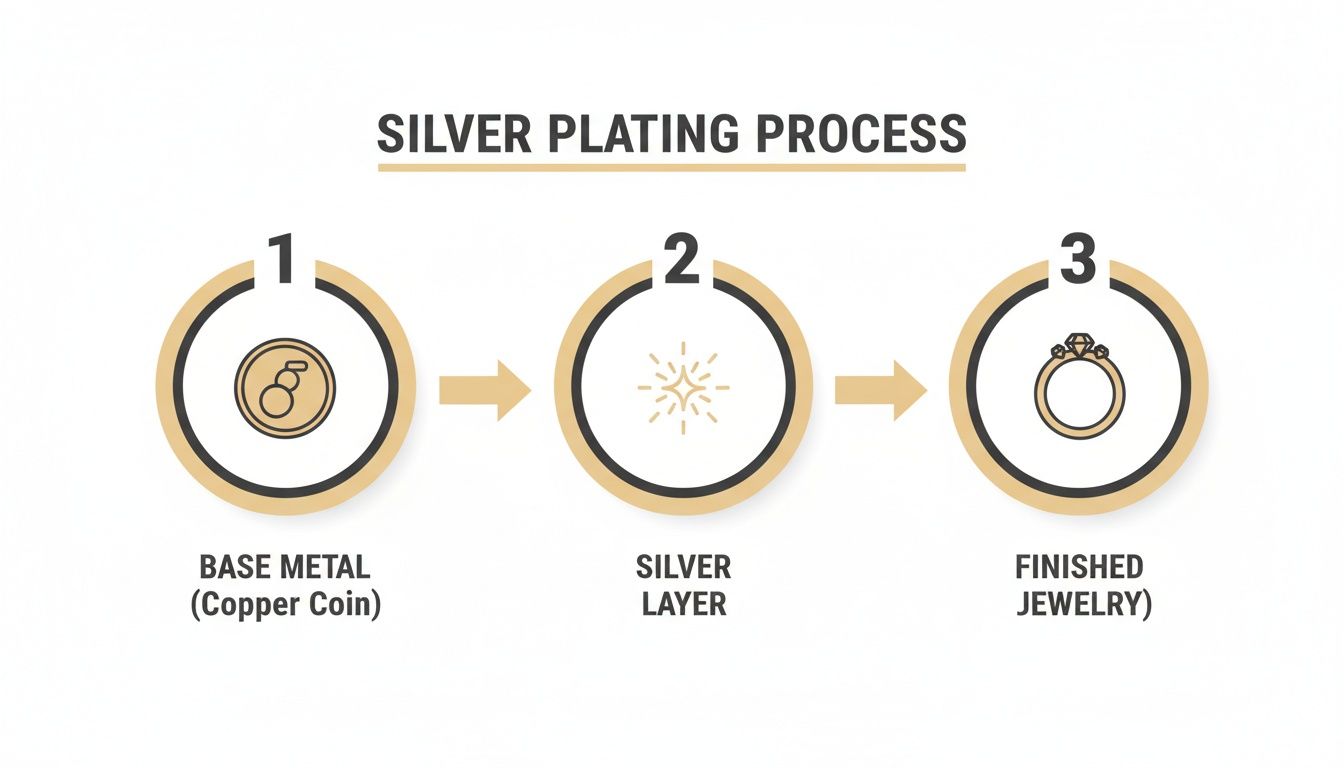
This infographic simplifies the core stages, showing how a base metal is transformed into a beautifully finished piece through plating.
As you can see, that lustrous final product is the direct result of bonding a precious silver layer to a perfectly prepared base metal.
The Pros and Cons of Silver Plated Jewellery
Is silver plating the right choice for your jewellery? To answer that, you need to weigh its brilliant advantages against its practical limitations. Getting the full picture helps you set realistic expectations and make a smart decision that fits your style and budget.
The biggest draw, without a doubt, is the price. Silver plating gives you the luxurious, bright white shine of solid silver for a fraction of the cost. This makes it a fantastic option for trendy, seasonal fashion pieces or for creating those big, bold designs that would be eye-wateringly expensive in solid sterling silver. It lets you experiment with statement styles without the hefty financial commitment.
The Bright Side: Advantages
The benefits of choosing silver-plated items go beyond just the price tag. The process itself opens up a world of possibilities for jewellery lovers.
Aesthetic Appeal: Plated jewellery perfectly captures the look of solid silver. You get that classic, cool-toned lustre that works with any outfit.
Design Freedom: Because the core metal is less expensive, designers can be more adventurous. This means you get access to a wider variety of creative and intricate styles that might not otherwise exist.
Restoration Power: It’s the perfect way to bring a beloved but worn-out vintage piece back to life. Plating can restore its original beauty, making it wearable once again.
Considerations and Drawbacks
Of course, it’s also important to be realistic about the potential downsides. The main one is durability. That beautiful silver layer is thin and, over time, can wear away with frequent use, friction, and exposure to things like perfumes or even just moisture. This means its lifespan is naturally shorter than a solid sterling silver piece.
Another key point is skin sensitivity. If the silver layer wears down, the base metal underneath—often copper, brass, or nickel—becomes exposed. For anyone with metal allergies, especially to nickel, this can cause unwanted skin irritation.
The core trade-off with silver plating is always longevity versus cost. It delivers immediate beauty and value, but it requires more mindful care to keep its finish looking great compared to solid precious metals.
Finally, just like sterling silver, plated pieces can tarnish. Storing them properly and giving them a regular, gentle clean is essential to keep them looking their best. For some expert tips, check out our complete guide on how to prevent silver from tarnishing and keep your pieces sparkling.
To help you decide, here’s a quick breakdown of the key pros and cons in one simple table.
Silver Plating at a Glance: Advantages vs. Disadvantages
Attribute
Advantages (Pros)
Disadvantages (Cons)
Cost
Highly affordable, offering a high-end look for less.
Can feel less valuable; lower resale potential.
Appearance
Delivers the same bright, reflective finish as solid silver.
The finish is not permanent and will wear away over time.
Durability
The underlying base metal is often strong and resilient.
The plated layer is thin and prone to scratching and wear.
Maintenance
Relatively easy to clean with a soft cloth.
Requires more careful handling to avoid damaging the plating.
Allergies
Hypoallergenic when the silver layer is intact.
Can cause skin irritation if the base metal (e.g., nickel) is exposed.
Longevity
Ideal for fashion or occasional-wear pieces.
Not a "forever" piece; will likely need replating eventually.
Ultimately, whether silver plating is the right move depends entirely on the piece and how you plan to wear it. For a trendy necklace you'll wear for a season, it’s a brilliant choice. For a wedding ring you'll wear every day for the next 50 years, solid metal is the way to go.
How to Make Your Silver Plating Last Longer
The lifespan of your silver-plated jewellery isn't set in stone. It comes down to how you treat it. While the thickness of the silver layer is a huge factor, your daily habits are just as important for keeping that bright, beautiful finish.
Think of the plating as a delicate topcoat that needs protecting from the bumps and scrapes of everyday life. With a few simple tweaks to your routine, you can seriously extend its life and shine. It's all about minimising friction, dodging chemicals, and storing pieces properly to prevent unnecessary wear.
These small, conscious efforts really do make a world of difference.
Your Daily Care Checklist
Protecting your plated jewellery doesn't take much effort, just a little mindfulness. By working these habits into your daily life, you're creating a barrier against the things that cause plating to fade over time.
A great rule of thumb is to make your jewellery the last thing you put on in the morning and the first thing you take off at night. This simple trick keeps it away from all sorts of potentially damaging sprays and lotions.
Here are the key things to do every day:
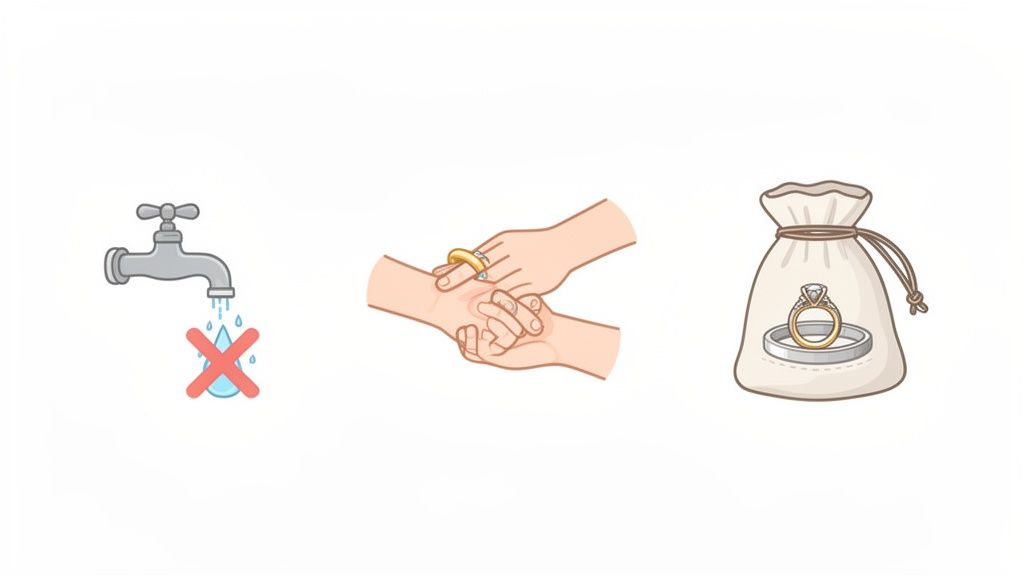
Avoid Moisture and Chemicals: Always take your jewellery off before you shower, swim, or even wash your hands. Things like perfume, hairspray, lotions, and the chlorine in pools can react with the silver, speeding up tarnish and wear.
Remove During Physical Activity: Before you exercise or do any hands-on work, take off your plated rings, bracelets, and necklaces. Sweat is acidic and can eat away at the plating, while knocks and bumps can cause scratches that expose the metal underneath.
Clean Gently After Wear: Give your jewellery a quick, gentle wipe with a soft, dry microfibre cloth after wearing it. This gets rid of skin oils and everyday grime that can dull the finish.
Remember: The golden rule is to keep plated jewellery clean and dry. Moisture and chemicals are the biggest enemies of a long-lasting silver finish.
The Importance of Proper Storage
How you store your jewellery when you're not wearing it is just as crucial as how you care for it during the day. Just tossing pieces into a drawer or a shared box is a recipe for scratches and tarnish.
For instance, storing each piece individually is a game-changer. Wrapping items in a soft material like acid-free tissue paper stops them from rubbing against each other.
Anti-tarnish pouches or small, airtight plastic bags are also brilliant because they limit exposure to the air—the main cause of oxidation. By giving each piece its own safe space, you ensure that delicate silver plating stays pristine.
What to Expect from a Professional Re-Plating Service
Handing over a treasured piece for re-plating can feel like a leap of faith, but it’s a meticulous process designed to bring it back to life. Think of it as a full spa day for your jewellery. The journey starts the moment you walk into our Hatton Garden workshop.
First, we always start with a thorough assessment. A skilled goldsmith will examine your piece to figure out the base metal, check for any hidden damage, and see how the current plating is holding up. This initial chat is crucial—it sets the stage for the entire restoration and gives you a clear idea of what to expect.
The Restoration Journey, Step by Step
Once the assessment is done, the real hands-on work begins. This is far more than just dipping your jewellery in a silver solution; it’s a craft that demands precision at every turn to get that flawless, lasting finish.
Here’s how it unfolds:
Stripping the Old Plating: Before we can apply a fresh coat, the old, tired layer has to go. We use a specialised chemical process that safely dissolves the remaining silver without touching the base metal underneath.
Surface Preparation and Repairs: This is where the true craftsmanship comes in. The jeweller will meticulously polish the surface to buff out scratches, smooth away any dents, and create a perfectly uniform foundation. A flawlessly prepared surface is the secret to a mirror-like shine.
Intensive Cleaning: Next, your piece gets a multi-stage deep clean, including an ultrasonic bath, to get rid of every last trace of polishing compound, dirt, and oil. This step is non-negotiable for making sure the new silver layer sticks perfectly.
The Electroplating Bath: Finally, it's time for the magic. The item is submerged in an electroplating solution, and a precise electrical current is passed through it. This causes silver ions to bond securely and evenly to your jewellery, creating a brilliant, durable new coat.
The real quality of a professional re-plating job lies in the prep work. Roughly 80% of the effort happens before the piece even touches the silver bath. That’s what ensures the final layer is as beautiful as it is resilient.
Costs, Turnaround, and Why It’s a Smart Choice
We believe in being upfront about costs. The price of silver re-plating usually depends on the size and complexity of the item, plus the thickness you want the new layer to be. A simple pair of earrings will naturally cost less than a large, ornate necklace.
Turnaround times can vary, but because we have an on-site workshop, we can get things done quickly. At Opulence Jewellery Services, we even offer same-day options for many jobs.
There’s a growing demand for restoration services like this. With the UK jewellery market valued at £5.76 billion in 2024 and still growing, professional plating is key to maintaining countless pieces. As people choose to invest in what they already own, restoring a beloved item is a smart, sustainable, and cost-effective choice. You can find more insights on UK jewellery market trends on grandviewresearch.com.
Signs Your Jewellery Needs Re-Plating
Like any favourite, well-worn piece, silver-plated jewellery eventually shows its age. But how do you know when it’s time for a professional touch-up? Spotting the early signs means you can get it restored before the base metal underneath takes any real damage.
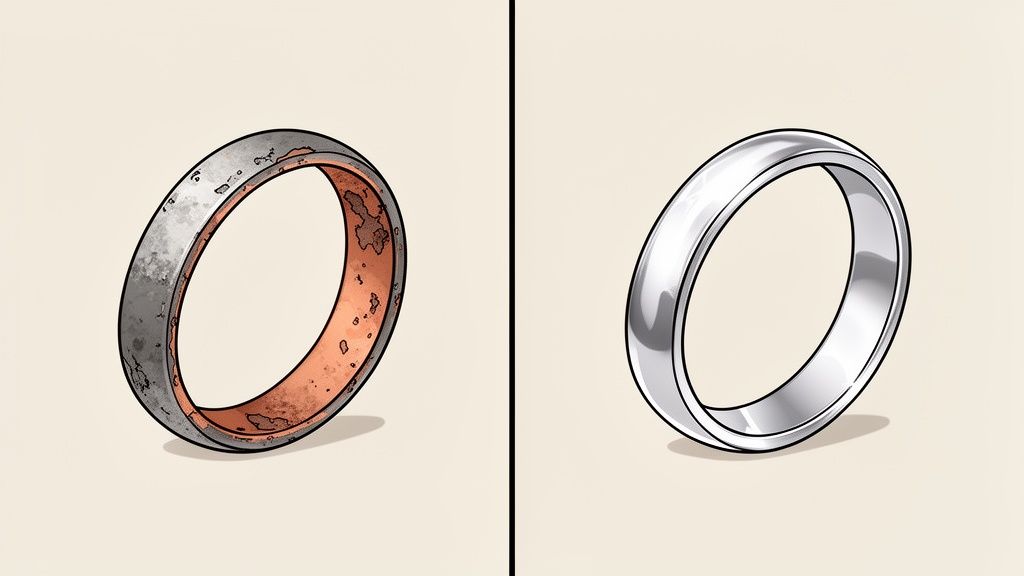
The most obvious clue is when the colour starts to change. If you notice patches where the bright silver has worn away to reveal a different metal, it’s a clear signal. This often looks like a coppery, brassy, or yellowish tint peeking through, especially on high-contact areas like the back of a ring band or where a pendant constantly rubs against your skin.
Common Warning Signs
Beyond visible wear, a few other tell-tale signs suggest your plating is on its way out. These things tend to happen gradually, so it pays to give your go-to pieces a quick check now and then.
Stubborn Discolouration: You’ve got tarnish that just won’t lift, even with a gentle polish. If a soft cloth isn’t bringing back the shine, it’s likely the silver layer itself has degraded.
Permanent Dullness: The piece looks flat and lacklustre, no matter how much you clean it. The reflective silver surface has worn thin, losing its ability to gleam.
That Green or Black Mark: This reaction, often called "green finger," is a dead giveaway. It happens when an exposed base metal (usually copper) reacts with the natural oils and acids in your skin.
Once you start seeing these issues, it means the protective silver layer has been compromised. Getting a professional silver plating for jewelry at this stage is the best move to restore its original beauty and protect the piece itself.
Trying to fix it with aggressive DIY cleaning methods will likely do more harm than good, stripping away what little silver is left. A jeweller can properly prepare the surface and apply a fresh, durable layer that makes your item look brand new again.
Your Silver Plating Questions Answered
Even after a deep dive, you probably have a few practical questions. Down in our Hatton Garden workshop, we hear them all the time. Here are the straight answers to the most common queries about silver-plated jewellery.
How Long Does Silver Plating Last?
This all comes down to how you wear it and care for it. Think of a frequently worn ring – with a quality plate of 2.0-3.0 microns, you could expect a couple of years before you see wear. But for a pair of earrings or a necklace that only comes out on special occasions? It could look pristine for much longer.
Gentle handling is your best friend here. If you avoid harsh chemicals, take pieces off before showering or hitting the gym, and store them properly, you'll add years to the finish.
Can Silver Plated Jewellery Be Repaired?
Yes, absolutely! This is one of the best things about silver-plated pieces. When your favourite item starts to look dull or you see the base metal peeking through, it's not the end of the road. A jeweller can strip back the old, worn layer and apply a fresh, new one.
A professional re-plating service isn't just about adding a new layer of silver. It’s about restoring the item’s original beauty and making it something you can wear with pride for years to come. It's a smart, sustainable way to keep the jewellery you love in rotation.
Will It Turn My Skin Green?
It's a classic concern. That green mark happens when the silver layer wears thin, exposing the base metal underneath – which is often copper. The copper then reacts with the natural salts and acids on your skin. It's completely harmless, but it's a dead giveaway.
Seeing green is simply a sign that your piece is due for a re-plate. A fresh, intact layer of silver acts as a barrier, preventing that reaction entirely. And for jewellers looking to sell their creations, it's vital to learn how to effectively photograph jewelry to show off that perfect, unblemished finish.
Ready to bring the shine back to your most cherished pieces? The expert team at Opulence Jewellery Services in Hatton Garden offers professional, same-day silver plating to make your jewellery look brand new again. Visit us in-store or explore our services online at https://www.opulencejewelleryservices.co.uk.
Discover the timeless elegance of the engagement ring emerald cut. Our guide covers choosing the perfect diamond, setting, and provides expert care tips.
Discover how to get the perfect fit for your big day. Our expert guide covers sizing wedding rings, resizing costs, and finding the right jeweller in London.
Learn the safe, expert way to diamond ring clean at home. Our guide shows you how to restore sparkle and avoid costly mistakes, straight from Hatton Garden.
Shop Fine Jewellery Online
Engagement rings, wedding bands, earrings, necklaces & birthday gifts — beautifully crafted and delivered to your door.