21 November 2025 20 min read Hatton Garden, London
Discover the world of enamel on jewellery. Our guide covers its rich history, intricate types, and expert tips for care, cleaning, and restoration.
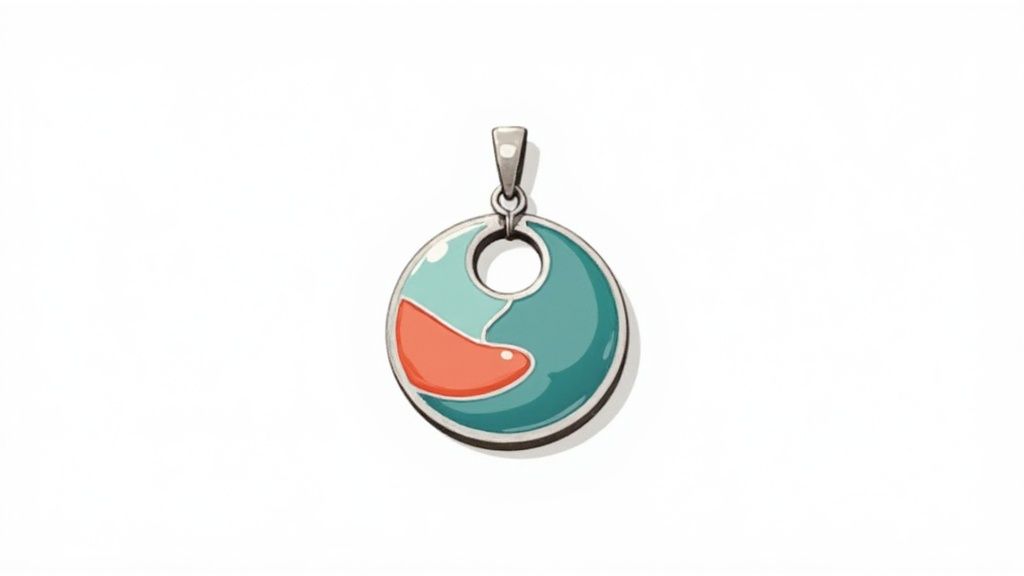
Enamel on jewellery is the captivating art of fusing powdered glass to metal at scorching-hot temperatures, creating a vibrant, durable, and colourful surface. This ancient technique transforms ordinary metal into a stunning canvas for intricate designs, making each piece a unique work of wearable art.
The Timeless Art of Enamel Jewellery
Think of the beautiful, glossy glaze on a piece of fine ceramic pottery. Enamelling works on a similar principle, but for precious metals like gold, silver, and copper. It’s a craft that demands immense skill and a steady hand. Powdered glass is meticulously applied to a metal base and then fired in a kiln at temperatures often exceeding 750°C.
This intense heat melts the glass powder, causing it to fuse permanently with the metal. The result is a smooth, luminous layer that’s as resilient as it is beautiful. Unlike paint, which just sits on the surface, enamel becomes an integral part of the jewellery itself. This is what gives enamel on jewellery its signature depth and brilliance.
A Journey Through History
The history of enamelling is a rich tapestry stretching back thousands of years. Its roots trace back to ancient civilisations like the Egyptians and Greeks, who used early forms of the art to adorn treasures destined for pharaohs and royalty. Over the centuries, the craft was perfected, reaching stunning new heights during different historical periods.
Key moments in the story of enamel include:
Byzantine Empire: Religious icons and imperial jewellery were lavished with intricate cloisonné enamel.
Art Nouveau Period: Masters like René Lalique used delicate techniques like plique-à-jour to create ethereal, nature-inspired pieces we still celebrate today.
Victorian Era: Mourning jewellery often featured stark black enamel, while decorative lockets and brooches showcased a rainbow of vibrant colours.
This enduring legacy is a testament to enamel's timeless appeal. It has always given artisans a way to express creativity that plain metal or gemstones alone simply cannot match.
Why Enamel Remains So Cherished
Today, enamel is still a popular choice for contemporary designers and lovers of vintage finds alike. Its popularity is part of a growing trend toward unique, personalised accessories. In fact, the UK jewellery market, which includes a significant enamel segment, was valued at approximately USD 5.76 billion and is projected to keep growing. You can explore more about these market trends and see how consumers are drawn to pieces that tell a story.
Enamel on jewellery offers something truly special: the perfect marriage of colour, durability, and artistry. It allows for a level of detail and vibrancy that turns a simple accessory into a cherished heirloom, passed down through generations.
Exploring the Different Enamel Techniques
The world of enamel on jewellery isn’t just one thing—it’s a family of distinct, intricate techniques. Each method is a different way of fusing glass to metal, creating its own unique look and feel. Learning to spot them is like learning the language of enamel, letting you see the story behind every piece.
These aren't just decorative styles; they're ancient arts. Each one demands immense patience, a steady hand, and a deep understanding of how glass and metal react to intense heat. From miniature stained-glass windows to carved metal landscapes, the results are truly stunning.
Let's break down four of the most famous and historically important enamelling techniques.
Cloisonné: The Art of Wires
Imagine drawing a picture not with ink, but with tiny walls of metal. That’s the heart of Cloisonné (pronounced klwa-zon-AY), one of the oldest and most recognisable techniques. The name comes from the French word cloison, meaning "partition"—and that's exactly what it is.
An artisan starts by carefully soldering fine wires, usually gold or silver, onto the metal base of the piece. These wires create small compartments, or "cells," that map out the design. Each cell is then packed with powdered enamel, colour by colour.
The piece goes into the kiln multiple times. The enamel shrinks as it fires, so more layers are added until the cells are completely full and level. Finally, the surface is ground and polished to a flawless finish, revealing a vibrant, mosaic-like image where the metal wires beautifully frame each pop of colour.
Champlevé: The Art of Carving
While Cloisonné builds walls up, Champlevé (shomp-le-VAY) carves valleys down. The name means "raised field," which perfectly describes the process. Here, the artist carves or etches troughs directly into a thick metal base, creating recessed areas for the enamel.
Powdered glass is packed into these carved-out sections, leaving the original metal surfaces raised and exposed. After firing, the molten enamel fills the depressions. The finished look is a bold, striking contrast between the glossy, colourful enamel and the polished metal "fields" surrounding it.
This method creates a strong, graphic effect and is famously durable because the enamel is safely protected within the metal. It was a favourite technique during the Romanesque period for creating resilient and ornate objects.
Before we look at the next two techniques, here’s a quick way to tell the main four apart.
A Quick Guide to Enamel Jewellery Techniques
Use this reference to quickly identify the appearance, complexity, and common characteristics of the four primary enamelling techniques.
Technique
Visual Characteristic
Key Feature
Commonly Found On
Cloisonné
Stained-glass window effect
Thin metal wires outline colours
Pendants, brooches, intricate vases
Champlevé
Bold, graphic patterns
Enamel fills carved depressions
Caskets, religious artefacts, bold rings
Plique-à-Jour
Translucent, ethereal glow
No metal backing behind the enamel
Art Nouveau pendants, delicate earrings
Basse-taille
Textured, shimmering depth
Engraved patterns under translucent enamel
Lockets, snuff boxes, fine watches
This table makes it easy to see the key differences at a glance, from the wire-work of Cloisonné to the light-filled magic of Plique-à-Jour.
Plique-à-Jour: A Window of Light
Arguably the most challenging technique is Plique-à-Jour (pleek-ah-ZHOOR), which means "letting in daylight." This method creates the stunning effect of a miniature stained-glass window. It uses a framework of metal wires, similar to Cloisonné, but with one crucial difference: there is no metal backing.
The enamel is suspended between the wires, held in place during firing by a temporary backing (like mica or copper foil) that is etched away afterwards. What you're left with is a delicate, web-like structure holding panes of luminous, transparent colour that light can shine right through.
Because it's so fragile and difficult to master, Plique-à-Jour pieces are rare treasures, often linked to the masters of the Art Nouveau movement.
Basse-Taille: Sculpting with Light
Finally, we have Basse-taille (bass-TYE), meaning "low cut." This sophisticated technique combines the skill of an engraver with an enameller to create mesmerising depth and movement. First, a low-relief pattern is engraved directly onto the metal surface.
Then, the entire engraved area is covered with a layer of translucent enamel. When fired, light travels through the enamel and reflects off the textured metal below. The different depths of the engraving catch the light differently, creating subtle shades and tones that make the design shimmer as the piece moves. It’s an elegant and complex way to add a layer of texture that almost looks holographic.
How to Identify Wear and Damage
Enamel is a beautiful but delicate material—at its heart, it’s a fine layer of glass fused onto metal. Like a treasured porcelain teacup, it can show signs of its age and history over time. Learning to spot the subtle differences between minor wear and serious damage is key, whether you're caring for your own collection or making a wise purchase.
Inspecting enamel jewellery takes a keen eye and a gentle touch. You're essentially a detective, looking for imperfections that tell a story about the piece’s past and what it might need for its future. Some issues are just signs of a well-loved life; others need immediate attention to stop them from getting worse.
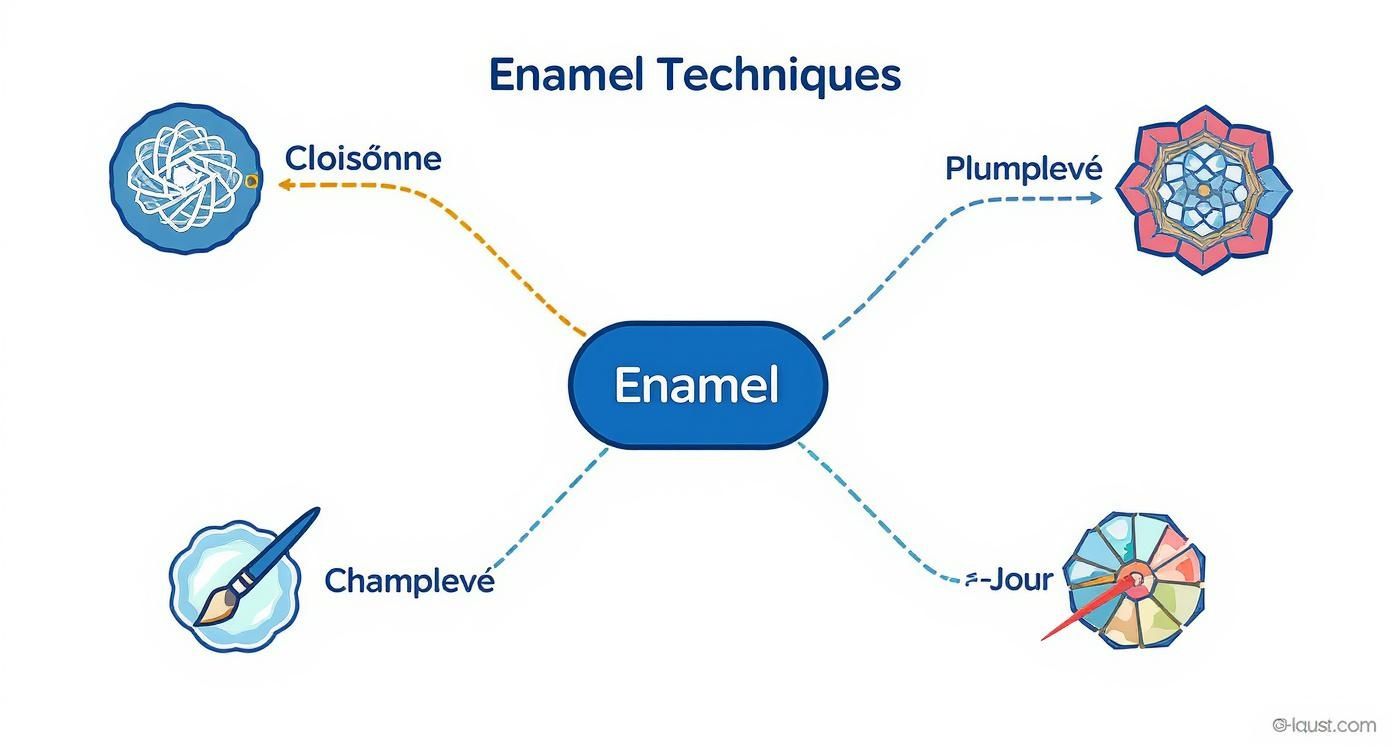
This infographic gives you a quick visual guide to the main enamel techniques, which helps you understand the structure of the piece you’re looking at.
Knowing whether a piece is Cloisonné, Champlevé, or another style helps you know where to look for potential stress points. You might check along the delicate wirework of a Cloisonné piece or at the edges of the carved-out sections in Champlevé.
Common Signs of Enamel Damage
When you're examining a piece, grab a magnifying glass and get under some bright, natural light. It’s the best way to catch even the smallest details. Keep an eye out for these red flags:
Chips: These are the most obvious kind of damage. A chip is where a piece of enamel has completely broken away, exposing the bare metal underneath. They usually happen on exposed edges or high points—like the curve of a ring—that are prone to knocks and bumps.
Crazing (Hairline Cracks): This looks like a fine web of cracks spreading across the enamel's surface. It happens when the enamel and the metal expand and contract at different rates, usually due to temperature changes. While minor crazing might be stable, it can make the enamel much more vulnerable to chipping later on.
Scratches: Deep scratches can cut right through the glossy top layer, making the enamel look dull. Minor surface scuffs are common with age, but significant scratches can really detract from the design and are almost impossible to polish out without professional help.
Discolouration or Staining: Sometimes, the colour of the enamel can look faded, yellowed, or uneven. This can be caused by exposure to chemicals, too much sunlight, or even a previous low-quality repair that has aged badly.
A small chip on the edge of an enamel locket is just like a chip on a teacup rim—it exposes the material underneath and creates a weak point. If you leave it, moisture can seep under the remaining enamel, causing it to lift and flake away over time.
Assessing the Severity of Damage
Not all damage is created equal. A tiny, stable craze line on an antique brooch might just be part of its character, but a fresh chip on a ring needs urgent attention.
If you see exposed metal, especially on a piece you wear often like a ring, it’s a structural problem. That exposed edge is vulnerable, and you can bet that more enamel will be lost. If the damage involves the metal setting itself, you may need an expert opinion on how to fix a broken ring band or setting before you even think about the enamel.
This is especially important right now. In the UK jewellery market, there's a huge appreciation for heritage craftsmanship, and well-preserved enamel pieces are highly valued. By catching damage early, you can take the right steps to preserve these beautiful, wearable works of art for years to come.
Everyday Care and Safe Cleaning Methods
Keeping your enamel on jewellery looking pristine is less about intense cleaning sessions and more about thoughtful, consistent care. Think of it like a silk shirt—beautifully resilient, but it needs a gentle touch to avoid snags and damage. Simple daily habits and knowing the right way to clean are the real secrets to keeping those colours vibrant for years.
The golden rule is one you’ve probably heard before, but it’s crucial for enamel: jewellery on last, jewellery off first. This simple step shields your pieces from the chemicals in perfumes, hairsprays, and lotions. Over time, that residue can create a dull film over the enamel’s glossy surface, sometimes even leading to discolouration.
The Gentle Cleaning Process
When your enamel pieces do need a clean, a mild approach is non-negotiable. You won’t need any harsh chemicals or fancy gadgets; a few things you already have at home are more than enough to bring back their lustre safely.
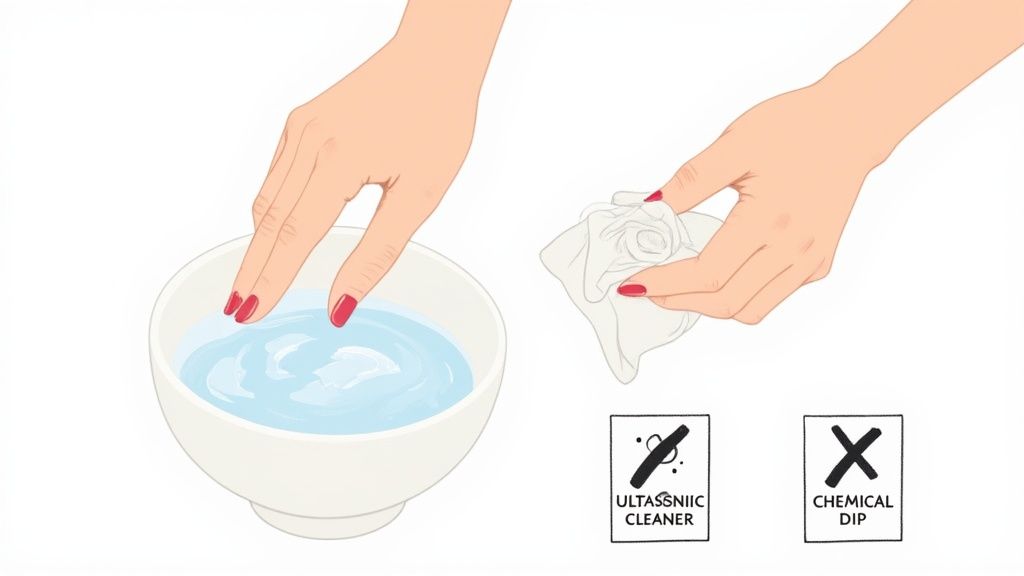
Here’s the right way to clean enamel jewellery, step-by-step:
Prep a Mild Solution: Grab a small bowl and fill it with lukewarm water. It's important it's not hot or cold, as sudden temperature changes can stress the enamel. Add just a single drop of a gentle, phosphate-free soap and give it a quick stir.
Clean with a Soft Touch: Dip a very soft, lint-free or microfibre cloth into the soapy water. Squeeze it out so it’s just damp, not dripping wet, and gently wipe the enamel and the metal around it.
Rinse Lightly: Use a second, clean cloth dampened with plain lukewarm water to gently wipe off any soap. It’s best to avoid dunking the whole piece, which can let moisture get trapped behind settings or in small gaps.
Dry Completely: Straight away, pat the piece dry with another soft, clean cloth. Make sure every part is totally dry before you put it away to prevent water spots or damage from trapped moisture.
The aim here is simply to lift away oils and dust, not to scrub. Rubbing too hard, even with a soft cloth, can create tiny micro-scratches on the enamel's surface, slowly dulling that beautiful, glossy finish over the years.
What to Avoid at All Costs
Knowing what not to do is just as important as knowing the right cleaning method. Many techniques that are perfectly safe for a diamond ring or a solid gold chain can cause irreversible damage to enamel’s delicate, glass-like surface.
Steer clear of these tools and chemicals at all times:
Ultrasonic Cleaners: The powerful vibrations they produce can easily shatter fragile enamel. If there are already tiny hairline cracks (crazing), an ultrasonic cleaner will almost certainly make them worse, causing chunks to fall out.
Chemical Dips and Abrasive Polishes: Harsh jewellery cleaning solutions, ammonia-based products, and abrasive pastes will strip the shine right off the enamel. In some cases, they can even dissolve or permanently discolour it.
Stiff Brushes: Never use a toothbrush or any brush with firm bristles. They will scratch the surface and leave it looking dull and lifeless forever. If you must use a brush, it should be an artist-grade paintbrush with the softest possible bristles, used with extreme caution.
For more general tips that apply to other jewellery, our guide on how to clean rings at home reinforces many of these same principles of gentle care.
Best Practices for Storage and Wear
Proper storage is the final piece of the puzzle. Enamel is essentially glass, so it can be scratched by harder gemstones like diamonds or even just by rubbing against other metal jewellery. To avoid this, always store your enamel pieces separately.
A fabric-lined jewellery box with individual compartments is perfect. If you don't have one, just popping each piece into its own small, soft pouch before placing it in your main box works just as well. Keeping them from knocking against each other is the best way to preserve that flawless finish. These mindful habits will protect the integrity of your cherished enamel on jewellery for a lifetime.
Understanding Professional Enamel Repair
While gentle home cleaning can keep your enamel jewellery looking its best, serious damage needs a specialist's touch. Trying to fix deep chips, spreading cracks, or missing enamel yourself can often do more harm than good. Professional restoration is the only safe way to bring a cherished piece back to life.
Knowing when to call in an expert is the first step. If you can see bare metal where the enamel has flaked off, or a network of fine cracks is getting worse, it's time to stop wearing the piece and consult a professional. These aren't just cosmetic flaws; they're structural weak points that will lead to bigger problems if ignored.
The Restoration Process Explained
Repairing enamel is a delicate art that takes technical skill and a painter's eye for colour. It’s far more than just filling a gap. The process is a careful sequence of cleaning, matching, applying, and finishing, all done by a skilled artisan.
The first job is to prepare the damaged area. The jeweller must meticulously clean out any debris and stabilise the surrounding enamel to stop more from flaking off during the repair. This step alone requires precision tools and an incredibly steady hand.
Next comes the hardest part: colour-matching. This is where true expertise is essential.
Antique Pieces: For a vintage item, the restorer has to create a custom colour blend that perfectly matches the aged patina of the original enamel. A seamless repair is the only acceptable result.
Modern Pieces: Even on newer jewellery, the exact pigment can be unique. The artisan will mix powdered glass or high-grade resins to replicate the precise shade, lustre, and transparency of the original.
This isn't like picking a paint colour off a chart. It’s a scientific and artistic process that might take several test applications or firings to get absolutely right.
From Application to Final Polish
Once the perfect colour is mixed, the new enamel is carefully applied to the damaged spot, often with tools as fine as a single paintbrush hair. If it's traditional vitreous (hot) enamel, the entire piece has to be fired in a kiln at extremely high temperatures—often over 800°C. This is a high-risk step; the heat can easily damage delicate metalwork or gemstones if not managed by an expert.
For pieces that can't handle the heat, a specialist might use a high-quality "cold enamel," which is a durable, modern epoxy resin. This method avoids the kiln but still demands immense skill to apply smoothly and cure correctly for a flawless, hard-wearing finish.
After the new enamel is set, the final stage is to carefully grind and polish the surface until it's perfectly level with the surrounding area. The goal is to make the repair completely invisible, restoring the piece’s smooth, glossy surface.
A professional repair does more than just fix a flaw. It stabilises the entire piece, preventing future damage and preserving its historical and sentimental value for generations to come. It’s an investment in the longevity of your treasured item.
At Opulence Jewellery Services, our specialists have years of hands-on experience with these intricate repairs. We understand the unique challenges of working on both antique and contemporary enamel on jewellery. Whether it’s a delicate Art Nouveau locket or a modern designer ring, we treat every piece with the care it deserves.
Our team combines traditional techniques with modern technology to deliver results that honour the original craftsmanship. If you have a damaged piece you thought was beyond saving, learn more about our specialised jewellery restoration services. Entrusting your precious items to an expert ensures their story can continue.
Common Questions About Enamel Jewellery
It’s only natural to have questions when you step into the captivating world of enamel on jewellery. This beautiful art form marries the strength of metal with the delicate beauty of glass, creating unique pieces that often become treasured heirlooms. Here, we'll answer some of the most common queries, giving you the confidence to choose, wear, and care for your enamel collection.
From worries about durability to questions about value and repair, these answers will round out your understanding. They reinforce key ideas and give you the practical knowledge you need, whether you're a new admirer or a seasoned collector.
Is Enamel Jewellery Durable Enough for Everyday Wear?
While enamel is essentially a layer of glass fused to metal—and is remarkably tough—its suitability for daily wear really depends on the type of jewellery and your lifestyle. Think of it as having different levels of hardiness.
Pendants and earrings, for instance, are naturally more protected and are excellent candidates for frequent wear. They simply don't face the same knocks and bumps as pieces on your hands or wrists.
Rings and bracelets, however, are a different story. They’re far more susceptible to impacts and scratches. For these items, it's wise to choose designs where the enamel is shielded by a protective metal bezel or is recessed into the surface, as you see with the Champlevé technique.
Even with the most durable designs, it’s best practice to always remove your enamel jewellery before doing anything strenuous. That means things like exercising, gardening, or cleaning with harsh chemicals. With mindful habits, many enamel pieces can be worn often, but they will always require more care than solid metal jewellery.
How Can You Tell Vintage Enamel from Modern Epoxy Resin?
This is a fantastic question. Distinguishing traditional vitreous (hot) enamel from modern epoxy resin, often called 'cold enamel,' can be a real challenge for the untrained eye. While both add colour, they are fundamentally different materials with distinct tells.
True vitreous enamel has a unique depth and lustre that can only come from its glass composition. It has a certain hardness and feels cool to the touch. If you tap it gently, you can sometimes hear a faint, high-pitched 'clink' sound, much like fine china. High-quality vintage pieces often display incredible detail and subtle colour gradations that are very difficult to replicate with resin.
Epoxy resin, on the other hand, often feels warmer and has a texture more like plastic. It can be slightly softer, making it more prone to showing scratches over time. While modern 'cold enamels' have improved hugely, they typically lack the rich, luminous quality of genuine fired glass. If in doubt, an expert jeweller can definitively identify the material for you.
What Affects the Value of an Enamel Jewellery Piece?
Several key factors come together to determine the value of a piece of enamel jewellery. It’s a blend of condition, artistry, and history that makes an item truly sought after.
Here are the main elements that influence its worth:
Condition is Paramount: A piece with no chips, cracks, significant scratches, or previous poor-quality repairs will always be far more valuable. The integrity of the enamel surface is the most critical factor.
Quality of Craftsmanship: The complexity and execution of the enamelling technique play a huge role. An intricate Cloisonné piece or a delicate Plique-à-Jour creation demands a higher level of skill and is therefore more valuable than simple, opaque enamel work.
The Maker or House: Signed pieces from renowned makers or design houses like Fabergé, Lalique, or Cartier command premium prices due to their historical importance and guaranteed quality.
Age and Rarity: Antique pieces from desirable periods, such as Art Nouveau or the Georgian era, are often highly valued. If a piece is a rare example of a particular style or artist, its value increases further.
Materials and Provenance: The intrinsic value of the underlying metal (e.g., high-carat gold or platinum), the quality of any accompanying gemstones, and the piece's documented history of ownership (provenance) all contribute to its overall market worth.
Can Chipped Enamel on Vintage Jewellery Be Perfectly Repaired?
Restoring chipped enamel is a highly specialised art, and achieving a completely invisible repair is one of the greatest challenges in jewellery restoration. The goal is always to stabilise the piece and bring back its beauty, but a 'perfect' fix can be elusive, especially on antique items.
For traditional vitreous enamel, the repair process involves meticulously cleaning the damaged area, applying new powdered glass, and then re-firing the entire piece in a kiln. The single greatest hurdle is matching the original colour perfectly. Pigments can change subtly with age and again during the intense heat of firing, making an exact match a matter of expert trial and error.
An alternative, particularly for pieces that can't withstand re-firing, is to use a high-quality cold enamel. This durable epoxy resin is carefully mixed to match the original colour and used to fill the chip. This avoids the risks of heat damage and can achieve an excellent cosmetic result.
While a skilled restorer can achieve a near-invisible repair that makes the piece beautiful and wearable again, a trained eye under magnification might still be able to detect the restored area. The priority is always to preserve the piece's integrity and aesthetic appeal for the future.
At Opulence Jewellery Services, our master jewellers possess the specialised skills needed to handle delicate enamel repairs with the utmost care and precision. Whether restoring a family heirloom or a contemporary piece, we combine traditional craftsmanship with modern techniques to achieve the best possible result. If you have a cherished piece of enamel jewellery that needs expert attention, we invite you to visit our Hatton Garden workshop for a professional consultation.