03 December 2025 18 min read Hatton Garden, London
Discover resizing engagement ring options in the UK, including the process, costs, timelines, and how to choose a trusted jeweller.
That engagement ring is more than just a piece of jewellery—it's a promise. But sometimes, the fit isn't quite right from the very beginning. The good news is that resizing an engagement ring is one of the most common tasks a skilled jeweller performs. It’s a straightforward process that ensures your ring is comfortable, secure, and ready for a lifetime of wear.
Your Guide to a Perfect Engagement Ring Fit
A perfectly fitting ring is about security as much as it is about comfort. If it’s too loose, you risk it slipping off unnoticed. Too tight, and it can be uncomfortable or even cut off circulation. Getting that ‘just right’ fit means your symbol of love stays exactly where it should be: safely on your finger.
This guide will walk you through everything you need to know about resizing. We’ll break down the techniques jewellers use, explain why some rings are trickier to adjust than others, and give you a clear idea of what to expect in terms of cost and time. Our goal is to take the worry out of the process, leaving you confident that with the right expert, adjusting your ring is a simple fix.
Why Resizing is a Common Necessity
First things first: needing a resize is completely normal. Our bodies change over time, and so does our ring size. There are a handful of very common reasons people find themselves visiting a jeweller for an adjustment:
The Surprise Factor: The ring was bought as a surprise, and the size was just a best guess.
Weight Fluctuations: Life happens, and changes in weight are one of the top reasons a ring starts to feel too snug or loose.
Pregnancy and Health: Hormonal shifts, especially during pregnancy, can cause fingers to swell temporarily or even lead to a permanent size change.
Seasonal Swings: It’s common for fingers to swell a little in the summer heat and shrink back down in the winter cold, making a ring feel different throughout the year.
The need for resizing is so widespread that it’s a core service in the UK's jewellery industry. The market, which includes services like this, was valued at around £4.4 billion and continues to grow. This shows just how much we value keeping our most precious items in perfect condition. For more details on the UK jewellery market, you can explore these insights on resizing services in London.
Before you head to a jeweller, it helps to have an accurate idea of your current size. If you're not sure where to start, you can learn how to measure a ring size correctly in our UK guide. Knowing your true size is the first step to getting that perfect, comfortable fit.
How Jewellers Resize an Engagement Ring
Think of a skilled jeweller as a bespoke tailor, but for precious metal. Just as a tailor alters a suit for the perfect fit, a jeweller meticulously adjusts an engagement ring’s band to sit comfortably and securely on your finger. Their methods are a blend of age-old craftsmanship and modern precision, ensuring the ring’s beauty and integrity are preserved.
Whether your ring needs to be made smaller or larger, the process involves highly specific techniques. Understanding how it works can take the mystery out of the process and give you confidence when you hand over your cherished piece.
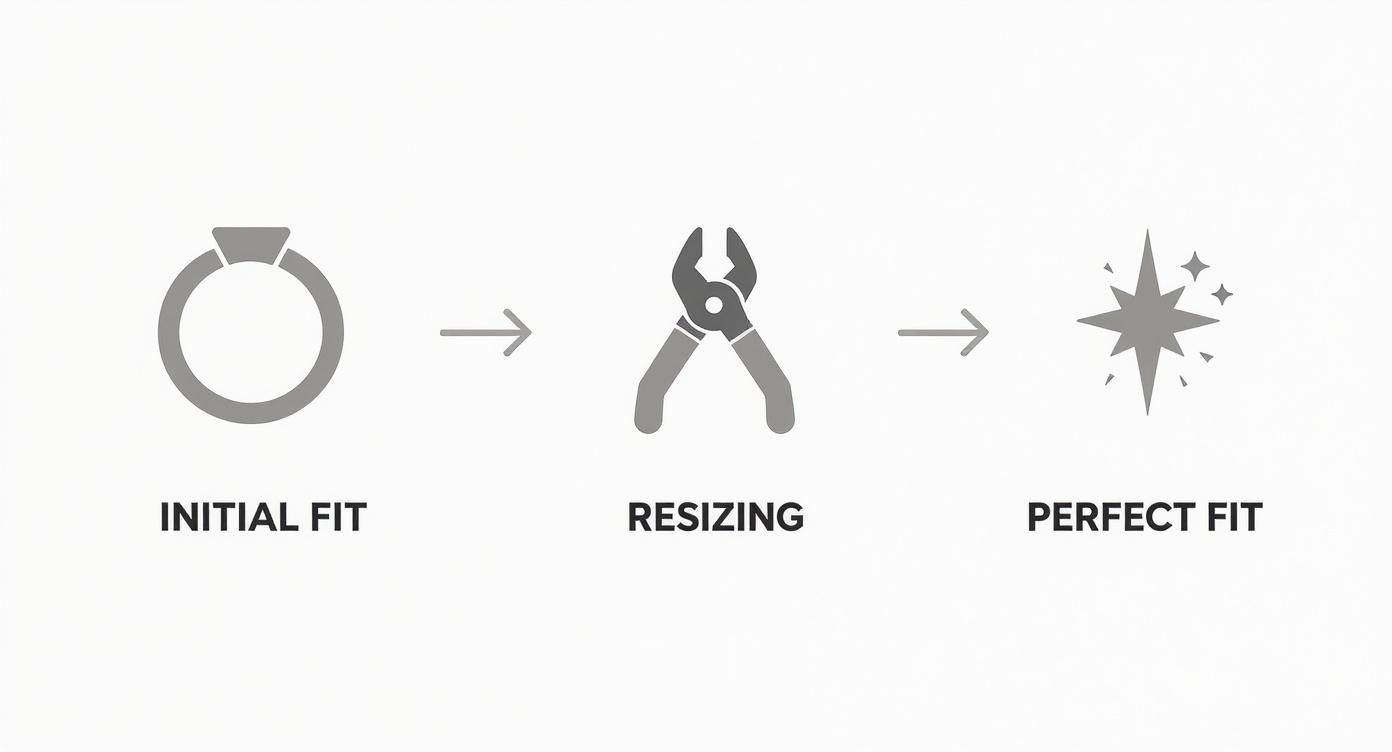
This simple three-step visual shows the journey from an initial assessment to achieving the perfect fit for your ring. It highlights how a professional service transforms an ill-fitting ring into one that feels like it was made just for you.
Making an Engagement Ring Smaller
When a ring is too loose, the goal is to reduce its circumference without leaving a trace. A jeweller has two main approaches for this, depending on how much smaller the ring needs to be.
The most common and effective method is the cut and solder technique. This is the gold standard for a permanent, flawless adjustment.
Measurement and Cutting: The jeweller first measures precisely how much metal to remove. They then make a clean cut at the bottom of the shank (the plain part of the band), taking out a tiny piece of metal.
Joining and Soldering: The two newly cut ends of the band are brought together perfectly. Using a specialised torch, the jeweller applies solder that exactly matches the ring’s metal and melts it to create a strong, permanent bond.
Finishing and Polishing: The final stage is all about making the join disappear. The jeweller carefully files, buffs, and polishes the area until it’s perfectly smooth and completely indistinguishable from the rest of the band.
For very minor adjustments, or for rings that are top-heavy and tend to spin, a jeweller might suggest adding sizing beads. These are two small metal balls added to the inside of the band. They create a snugger fit without permanently altering the ring’s size, making them a great semi-permanent fix.
Making an Engagement Ring Larger
Making a ring larger requires adding new material or carefully expanding what's already there. The right method depends on the ring's design and how much bigger it needs to get. For a tiny increase—often half a size or less—a jeweller might use a stretcher. This tool gently expands the metal, but it can only be used on plain bands as it can thin the shank and risk damaging stone settings.
For more significant size increases, adding metal is the superior method. It strengthens the ring and maintains its original thickness and proportions, which is critical for the long-term security of your gemstones.
This process mirrors the 'cut and solder' technique but in reverse. The jeweller will:
Cut the shank at the bottom of the band.
Insert a small, perfectly matched piece of metal (gold, platinum, etc.) into the gap.
Solder the new piece securely on both sides to form a new, larger band.
Meticulously file and polish the joins until they are completely invisible.
This method ensures the ring’s structural integrity is not just maintained but reinforced. When performed by an expert, the result is a seamless, stronger ring that fits you perfectly, with no evidence of the intricate work that took place.
When Ring Resizing Gets Tricky
While resizing a ring is bread-and-butter work for any good jeweller, some rings are far from straightforward. Certain designs, metals, and settings introduce complexities that demand a true master's touch. In some cases, the usual methods just won't work at all.
Knowing what makes a resize complicated helps you have a much better conversation with your jeweller. It sets realistic expectations and ensures you understand what’s possible with your specific ring.
The Challenge of Stone-Set Bands
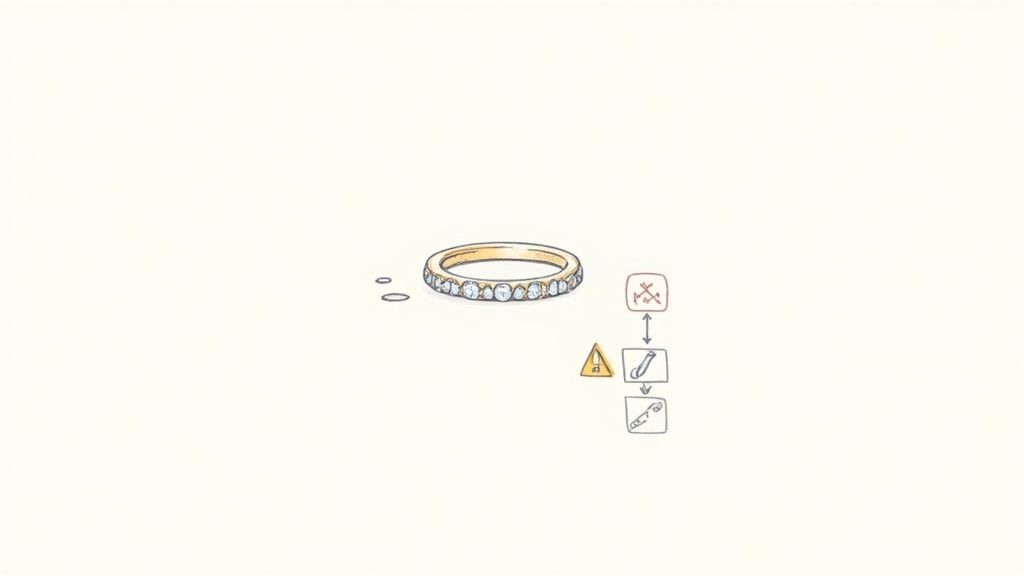
Rings with diamonds or other gems set along the band are stunning, but they’re also the most delicate to adjust. When you change the ring's perfect circle, even slightly, you alter the precise tension that holds all those tiny stones in place.
Pavé and Micro-Pavé Settings: These popular styles feature lots of small stones held by tiny metal beads. Altering the band's curve can easily disturb this delicate grid, causing stones to loosen or even pop out. The jeweller has to work with extreme care to avoid it.
Channel Settings: Here, stones are nestled in a channel between two metal walls. Sizing down can cause the walls to pinch the gems, risking chips. Sizing up can create gaps, leaving them loose and prone to rattling or falling out.
The ultimate challenge is the eternity band. With an unbroken circle of gemstones, there’s simply no plain metal at the bottom to work with. For these designs, traditional resizing is almost always impossible.
How Different Metals Affect the Job
The metal your ring is made of plays a huge part in how complex—and costly—the resize will be. Think of it like working with different woods; some are soft and easy to shape, while others are dense and need specialist tools.
Gold (Yellow, Rose, and White) Gold is the most cooperative metal for resizing. It’s relatively soft and malleable, making it easier for jewellers to cut, solder, and reshape without fuss. This is why adjusting a gold ring is usually the most straightforward and affordable option.
Platinum Platinum is a different beast entirely. It's much denser and stronger than gold, with a significantly higher melting point. This means a jeweller needs a much hotter torch and specialist skills to work it. The soldering process is more demanding, requiring a higher level of expertise to create an invisible join. As a result, resizing a platinum ring is typically more expensive.
Modern and Alternative Metals Some contemporary metals are notoriously difficult, or even impossible, to resize with traditional workshop methods.
Titanium and Tungsten: These metals are exceptionally hard. Their sheer strength makes them almost impossible to cut and solder cleanly. Trying to resize them often ends with the ring cracking or shattering.
Stainless Steel: While less common for engagement rings, steel is also very tough to work with and rarely resized.
Intricate Designs and Unique Settings
Beyond the stones and metals, the fine details of a ring can also throw a spanner in the works.
We’re seeing a big trend towards larger, more unique rings—the average carat weight for lab-grown diamonds is on the rise, and cuts like ovals are more popular than ever. These bigger, more elaborate styles often need an expert hand to resize them perfectly so they sit comfortably and securely. You can discover more insights about UK engagement ring trends to see what's driving this need for specialist services.
Other complex features to watch out for include:
Detailed Engravings or Patterns: If your ring has a message engraved inside or a pattern on the outside, the jeweller has to be incredibly careful. Cutting the band risks ruining the design. A true expert will try to make the cut in a discreet spot or may even need to re-engrave a section to restore its original look.
Tension Settings: In a tension setting, the gem is held in place purely by the pressure of the two ends of the band—a very precise and delicate balance. Resizing this type of ring is extremely complex because changing the band’s structure alters the very tension that secures the stone. Only a highly specialised jeweller should ever attempt it.
Resizing Costs and Timelines: What to Expect
Let's talk about the two biggest questions on everyone's mind: "How much is this going to cost?" and "How long will I be without my ring?" The good news is, the answers are usually quite straightforward.
Here in the UK, especially in a jewellery hub like London's Hatton Garden, the price for a resize isn't a random number. It's a direct reflection of the materials, the complexity of your ring's design, and the goldsmith's time. A simple job costs less than a tricky one. It’s that simple.
What Shapes the Final Cost?
Several things factor into the final bill for resizing your ring. Each one plays a part in the skill, time, and precious metal needed to get that perfect, invisible finish.
Type of Metal: Gold is a dream to work with, making it the most budget-friendly option. Platinum is a different story. It’s denser and has a much higher melting point, so it demands special tools and a lot more work from the jeweller, which pushes the price up.
How Much Bigger or Smaller?: Going down a size is generally cheaper because it just involves cutting out a tiny piece of the band. Sizing up costs a bit more, as the jeweller needs to add a new piece of perfectly matched metal.
The Ring's Design: A simple, plain band? That's the easiest and quickest job. But if your ring has a delicate pavé setting, channel-set diamonds, or intricate engravings, the work becomes far more meticulous to protect every detail. Naturally, this is reflected in the price.
To give you an idea, making a plain 9ct gold ring smaller might cost as little as £50. On the other hand, sizing up a complex platinum ring with a full band of diamonds could be £150 or more. It's always best to pop in and get a direct quote.
How Long Does Resizing Take?
Just as costs vary, so do the timelines. While getting your ring back the same day sounds great, quality craftsmanship can't be rushed. A little patience ensures the job is done right, protecting the strength and beauty of your ring for years to come.
For most standard resizing jobs, you can expect to be without your ring for one to two weeks. This gives the goldsmith enough breathing room to do the work carefully—from the first cut to the final polish—without cutting any corners. A more complex piece, especially one in platinum or with lots of small stones, will probably be closer to the two-week mark.
Some workshops can offer a 'while-you-wait' or same-day service for very simple jobs, like taking a plain gold band down half a size. But for most engagement rings, this isn't possible or even a good idea. Rushing can seriously compromise the quality of the work.
Want to know more about what goes into the timing? You can learn exactly how long ring resizing takes in our dedicated guide.
To help you plan, we've put together a table with some typical costs and timeframes you'll find here in the UK.
Estimated UK Ring Resizing Costs and Timelines
This table gives you a general idea of what to expect for different types of rings. Remember, these are just estimates—we'll give you a precise quote when we see your ring.
Ring Type / Metal
Estimated Cost Range (£)
Typical Turnaround Time
Same-Day Possibility
Simple Gold Band
£50 - £90
1 - 7 days
Often, for simple jobs
Gold Band with Stones
£70 - £120
7 - 14 days
Unlikely
Simple Platinum Band
£80 - £130
7 - 14 days
Very Rare
Platinum Band with Stones
£100 - £180+
10 - 16 days
No
These figures should give you a realistic starting point for budgeting your resizing. The most important thing is finding a trusted jeweller who will treat your ring with the care it deserves.
How to Choose a Jeweller You Can Trust
Handing your engagement ring over to someone, even for a day, takes a huge amount of trust. This isn't just another piece of jewellery; it's a symbol packed with sentimental value. Finding the right professional is easily the most important part of the whole resizing process.
The search can feel a bit overwhelming, but there are a few clear signs that separate the true craftspeople from the rest. You're looking for someone who has the technical skill, of course, but who also gets the emotional weight of the piece they're working on.
Prioritise an On-Site Workshop
One of the first things to check for is a jeweller with their own workshop on-site. When the work is done in-house, the goldsmiths are right there—accountable and accessible. There’s no risk of your ring being packaged up and sent off to some unknown third party, which just adds unnecessary risk of it being mishandled or lost.
An on-site workshop gives you transparency and complete peace of mind. You can often speak directly with the person who'll actually be doing the work. This is priceless, especially if you have a ring with a tricky design, like a pavé band or detailed engravings.
Choosing a jeweller with an in-house workshop drastically cuts down the turnaround time and boosts security. You know exactly where your ring is and who is responsible for it from start to finish.
Key Questions to Ask Before Committing
Before you hand anything over, have a proper chat with the jeweller. A real professional will be happy to answer your questions and will give you clear, confident answers.
Make sure you ask:
"What's your experience resizing rings like this one?" Show them your ring. Have they worked on similar metals, settings, or intricate designs before? If you have a platinum pavé ring, you want someone who handles those every day.
"Can you walk me through the exact process you'll use?" They should be able to explain whether they’ll be cutting and soldering, stretching, or adding a new piece of metal, and why that’s the best method for your specific ring.
"What insurance do you have for items left in your care?" This is non-negotiable. Any reputable jeweller must have comprehensive insurance covering the full value of your ring while it's in their workshop.
"Do you guarantee your resizing work?" Ask about their warranty. If a stone loosens a week after the resize, you need to know they'll stand by their work and fix it without any fuss.
Do Your Research and Trust Your Instincts
Your homework doesn't end when you leave the shop. Spend a bit of time checking genuine online reviews on Google or Trustpilot. Look for consistently good feedback, especially from people talking about resizing. A personal recommendation from a friend or family member is gold.
In the end, trust your gut. Did you feel comfortable and listened to in their shop? The right jeweller will make you feel confident they'll take proper care of your ring. If you’re not sure where to have a ring resized, taking that extra time to find a local expert you trust is always worth it.
Aftercare and What to Check on Your Resized Ring
Your ring is back, but the job isn't quite finished. That final, crucial step is giving it a once-over yourself to make sure the resizing work is up to scratch. Taking a moment to check the details in the shop gives you total peace of mind.
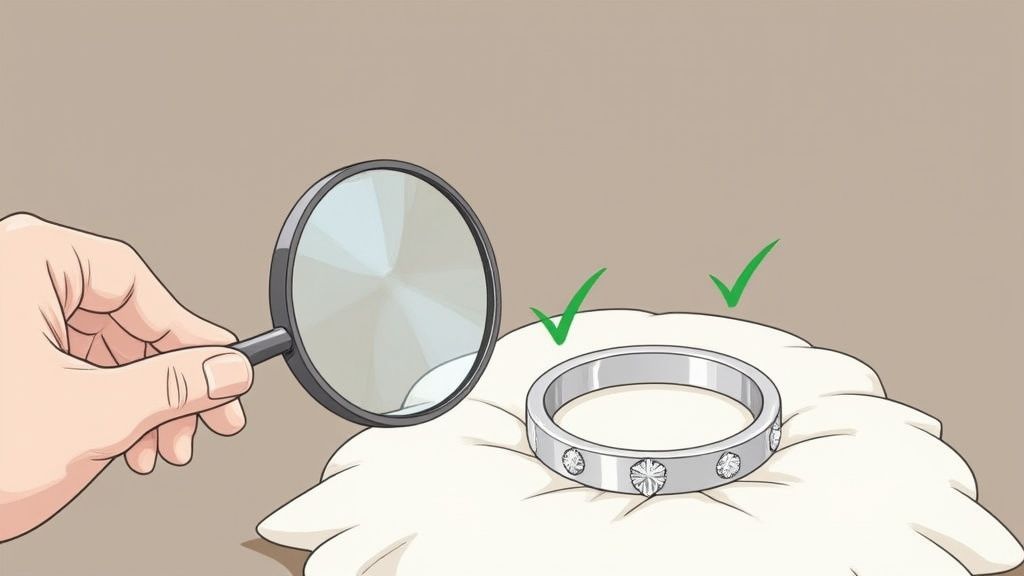
When the jeweller hands your ring back, take a breath and have a proper look. Don't feel rushed. A true professional will expect and encourage you to inspect their work. This is your chance to confirm every detail is perfect.
Your Final Inspection Checklist
Before you head out, run through these simple but vital checks. Your jeweller should be more than happy to talk you through what they’ve done.
Check the Solder Joint: The spot where the ring was cut and rejoined should be completely invisible. Run your finger over the area—it must be perfectly smooth. Look for any tell-tale seams, shadows, or even a slight change in colour. A flawless finish means you’ll never even know it was altered.
Inspect the Stones: Gently touch each gemstone near the area that was worked on, especially tiny pavé or channel-set stones. They should feel absolutely solid in their settings, with no wiggling or rattling. A quality resize always includes tightening any stones that might have shifted during the process.
Examine the Shape and Finish: Hold the ring up and look at it from all angles. The band should be a perfect, uniform circle, not slightly oval or distorted. The entire ring should be polished to a high shine, with no scuffs or tool marks left behind.
A reputable jeweller stands behind their craftsmanship. They should offer a warranty or guarantee on their resizing work. It's always a good idea to ask for this in writing before you leave, so you know they’ll sort out any issues that might arise from the alteration.
Long-Term Aftercare for Your Ring
Once you’re happy with the work, a little ongoing care will keep your ring looking beautiful and structurally sound for years. A proper fit is the first line of defence, as it stops the ring from getting knocked about or, worse, slipping off.
To keep it in pristine condition, regular cleaning is key. A simple wash with a soft-bristled brush and some warm, soapy water will gently remove the everyday grime that can dull its sparkle and get trapped in the settings. This simple habit keeps your ring looking as brilliant as the day you first got it.
Finally, think about getting your ring professionally checked and cleaned once a year. A jeweller can inspect the prongs and settings for any signs of wear and tear, catching potential problems before a stone comes loose. It’s a proactive approach that ensures your resized engagement ring remains a secure and stunning symbol for a lifetime.
Your Ring Resizing Questions, Answered
You’ve got questions, and we have the answers. We hear these queries all the time in our Hatton Garden workshop, so we’ve put together some clear, straightforward advice to give you confidence in the process.
Can a Ring Be Resized More Than Once?
Yes, it's possible, but it’s not something we recommend doing often. Every time a ring is cut, heated, and reshaped, the metal is put under a little stress, which can gradually weaken its structure. It’s best to keep resizing to a minimum, especially for rings with delicate pavé settings or detailed engravings that need to stay crisp.
How Many Sizes Can a Ring Be Changed?
As a rule of thumb, most jewellers will advise going no more than two full sizes up or down. Stretching a ring further than this can seriously compromise its integrity and the security of its settings.
Think of it this way: making a ring much larger thins out the band, while shrinking it too much can warp its shape and loosen the very claws holding your precious stones in place.
Will Resizing Devalue My Engagement Ring?
Absolutely not, as long as it’s done by a skilled professional. A high-quality resizing is completely undetectable. In fact, by making sure your ring fits perfectly, you’re protecting your investment from getting lost or damaged. The only time value is affected is with a botched job that leaves visible seams or damages the settings.
What Happens If My Ring Can’t Be Resized?
Some designs, like a full eternity band, simply can't be cut and rejoined. But that doesn't mean you're out of options. In many cases, an expert jeweller can completely rebuild the shank (the plain part of the band). We can use the original precious metal and meticulously reset your stones into a brand-new band, made to the perfect size, preserving its original character and all its sentimental value.
At Opulence Jewellery Services, our Hatton Garden workshop is home to master jewellers who handle every piece with the care it deserves. For a flawless, same-day resizing consultation, get in touch with our team.
Discover the professional way to polish a diamond and restore its fire. Learn the risks of DIY methods and how experts bring back that brilliant shine.